When most people hear 'powder metallurgy industry', they picture a straightforward press-and-sint er process—blend powder, press it, heat it, done. That's the textbook version, and it's a dangerous oversimplification that leads to a lot of subpar parts and frustrated engineers. The reality is messier, more nuanced, and frankly, where the real engineering happens. It's not just about making a shape; it's about managing porosity, controlling grain boundaries post-sintering, and understanding how alloying behaves when it starts as a dust. I've seen too many designs fail because they treated PM as a cheap substitute for machining, ignoring its unique material characteristics.
The Alloy Conundrum and Density Realities
Let's talk materials. The promise of special alloys like nickel-based or cobalt-based ones in powder form is huge for wear and high-temp applications. But the gap between promise and part is wide. You can't just take a wrought alloy spec and expect the powder version to hit the same numbers. The pre-alloyed powder versus elemental mix route is a fundamental choice that dictates everything from dimensional stability during sintering to final fatigue strength. With elemental blends, you're banking on diffusion being perfect during the thermal cycle—it rarely is, leading to heterogeneous microstructures if the cycle isn't just right.
This ties directly into density. Aiming for near-full density often means moving beyond standard sintering. We're talking about metal injection molding (MIM) or hot isostatic pressing (HIP). But each step up in density comes with a cost jump and geometric constraints. For instance, HIP is fantastic for eliminating residual porosity in a complex powder metallurgy part, say a turbine blade prototype, but it's not a cure-all for a poorly designed sintering run. The porosity has to be closed and isolated for HIP to heal it effectively; interconnected surface porosity won't get fixed.
A practical headache? Sinter hardening steels. They allow you to achieve high strength straight out of the sintering furnace, bypassing a secondary heat treatment. Sounds perfect. But the cooling rate in your sintering belt becomes a critical process parameter. Too slow, and you don't get the martensitic transformation; too fast, and you risk distortion. I've spent weeks tweaking gas flows and belt speeds for a simple flange component, only to find that a slight change in part mass from a design tweak threw everything off again. It's a constant balancing act.
Where PM Meets Machining: The Inevitable Handshake
Almost no complex PM part is truly net-shape. Even with the best tooling and process control, you'll need secondary operations. This is where the relationship between a powder metallurgy specialist and a precision machinist gets critical. You can't machine a PM part like you'd machine a wrought block. The residual porosity is an abrasive that eats cutting tools. It also affects surface finish and thread strength.
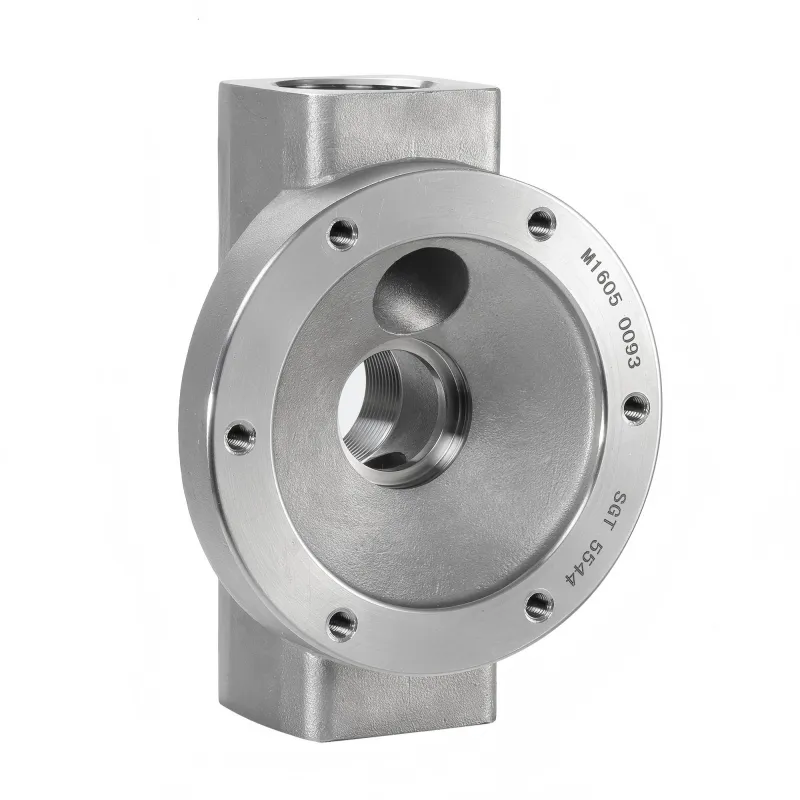
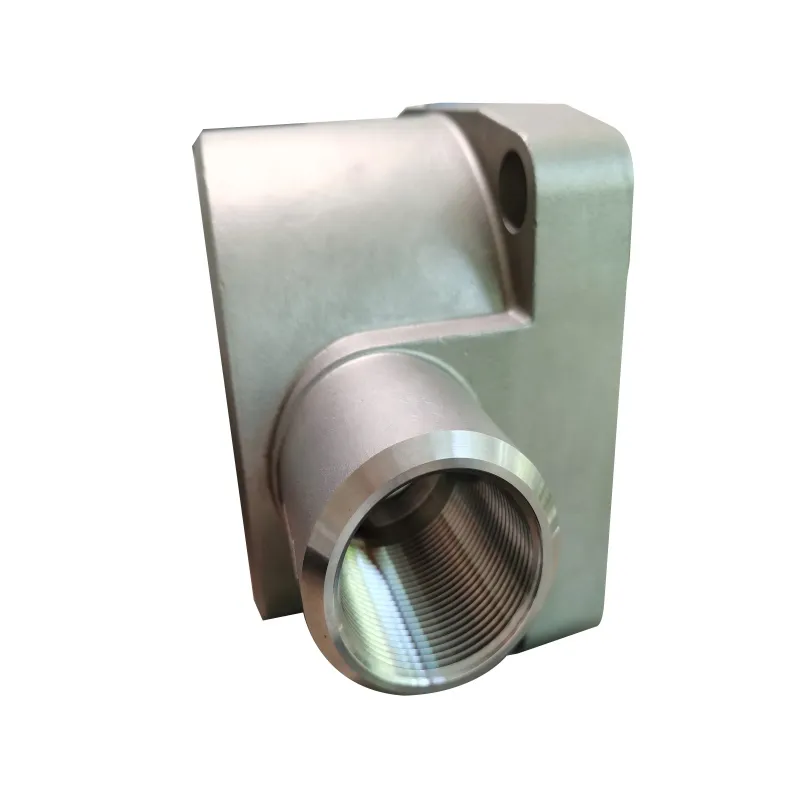
This is a synergy I've seen done well. Take a company like Qingdao Qiangsenyuan Technology Co., Ltd. (QSY). With their deep background in investment casting and CNC machining, they get material behavior. When a PM part, say a stainless steel valve body needing precise port threads, comes off the sinter, they know how to handle it. They'd understand that drilling into a sintered surface requires specific tool geometries and feeds to avoid crumbling the edge. It's not just a machining job; it's a continuation of the consolidation process. Their experience with special alloys in casting translates to an intuition for handling similar materials in sintered form. You can check their approach on their site at https://www.tsingtaocnc.com—their integrated process from molding to machining is essentially what advanced PM components demand.
The worst failures I've witnessed were when PM and machining were siloed. A designer specified a thin wall next to a machined pocket on a ferrous PM part. The PM shop made it to spec, but the wall had maybe 85% density. The machinist, used to solid steel, took a standard cut. The wall vibrated, the tool chattered, and the porous structure literally tore apart. The lesson? DFM (Design for Manufacture) for PM must include the machining strategy. Sometimes, it's better to machine a relief before sintering, or to specify a localized densification.
The Tooling Trap and Good Enough Tolerances
Tooling is the heart of press-and-sinter, and it's a massive upfront cost. The temptation is to design a multi-level part to maximize the process, cramming in all sorts of features. But every level, every undercut, increases tool complexity, wear, and the risk of density gradients. I fell into this trap early on. We designed a brilliant gear with an integrated sintered clutch profile. The tool was a nightmare, required delicate core rods that bent, leading to inconsistent fill in the clutch splines. The parts were to print but performed poorly due to those density variations.
Sometimes, the smarter play is to make a simpler, more robust PM preform and machine the complex features. It feels like a concession, but it's often more reliable and cost-effective in volume. Tolerances are another area of misplaced ambition. Holding ±0.025mm on a sintered diameter across a batch is asking for trouble and 100% inspection. The industry has standard tolerance classes for a reason. Understanding when to apply Class X (higher precision) versus Class Y, and communicating that to the customer, is a key part of the job. It's about managing expectations with the reality of compacting powder and watching it shrink and warp in a furnace.
And shrinkage isn't linear. It can vary with the compacting direction (anisotropic), which is a nightmare for long, thin parts. We once made a series of actuator levers. They met length and width specs after sintering, but the twist (a form of warp) was inconsistent. The root cause? Minor fluctuations in powder fill height in the die, which changed the initial green density distribution. Solving it required a redesign of the feed shoe system, not just a furnace adjustment.
The Green State: Where Everything is Decided
The unsung hero—or the silent saboteur—of PM is the green part. That's the pressed-but-unsintered compact. Its integrity is everything. A hairline crack or laminations from improper ejection won't heal in sintering; they'll get worse. Handling green parts requires a light touch. I've seen entire pallets of parts reduced to rubble because a new technician handled them like machined blanks.
Green strength is a property you specify with binders and lubricants. But it's a trade-off. More lubricant eases ejection and improves density uniformity, but it leaves more residue to burn off during sintering, which can affect carbon control in steels. It's a chemistry problem disguised as a mechanical one. For a company like QSY, whose expertise in shell and investment casting revolves around mold materials and burnout cycles, this sintering atmosphere and thermal debinding phase would be a familiar landscape. The principles of controlled thermal decomposition are parallel, just applied to a powder compact instead of a wax pattern.
Inspecting green parts is an art. You can't use most non-destructive methods. It often comes down to visual inspection under good light and a feel for how the part should sound when lightly tapped. It's low-tech but vital. A flawed green part is scrap; you're just wasting energy to sinter it.
Looking Forward: It's Not a Commodity Process
The biggest risk to the powder metallurgy industry is being perceived as a commodity. If it's just about pressing cheap iron parts, that work will eventually move to the lowest-cost bidder. The future is in advanced materials, complex functional integration, and hybrid manufacturing. Think of PM as a material synthesis platform. You can create composites—like aluminum reinforced with silicon carbide particles—that are impossible to melt-cast. Or functionally graded materials where the composition changes within the part.
The integration with additive manufacturing is also blurring lines. Binder jetting of metals is, at its core, a powder metallurgy process. The challenges of sintering, distortion, and microstructural control are all there, amplified by the typically lower green density. It's the same family of problems, just with a different shaping method. This is where the deep process knowledge from traditional PM becomes invaluable.
So, it's not a sunset industry. It's evolving. But it demands a shift from being just a part supplier to being a materials and manufacturing process consultant. You have to guide the design, own the entire chain from powder to finished machined component, and be brutally honest about the process's capabilities and limits. That's how you move beyond being a press shop and become an essential engineering partner. The companies that get this, the ones with the machining and material science chops to back up the PM process, are the ones that will stick around for the next 30 years.