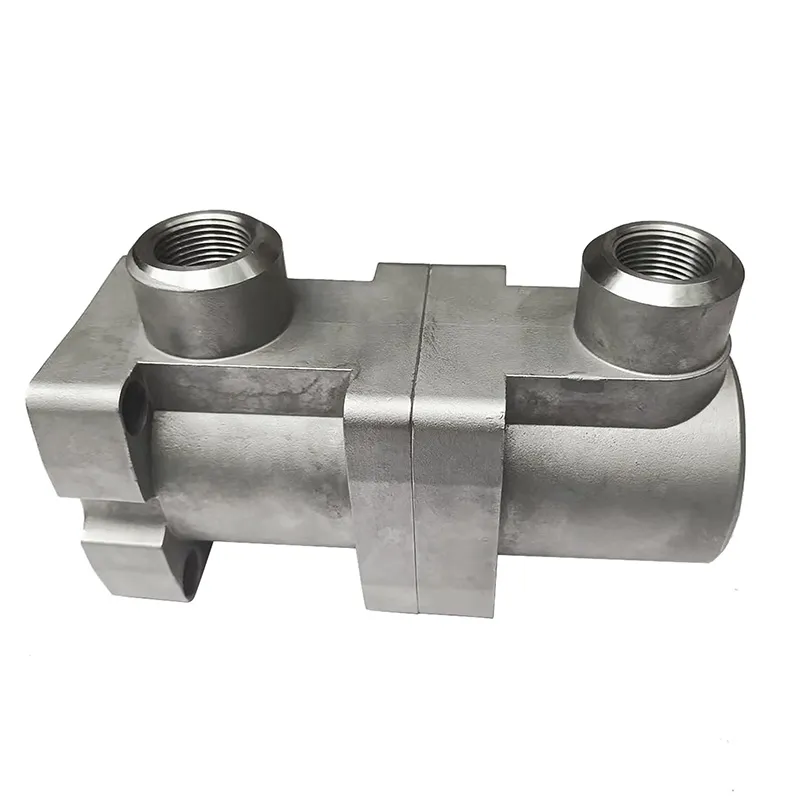
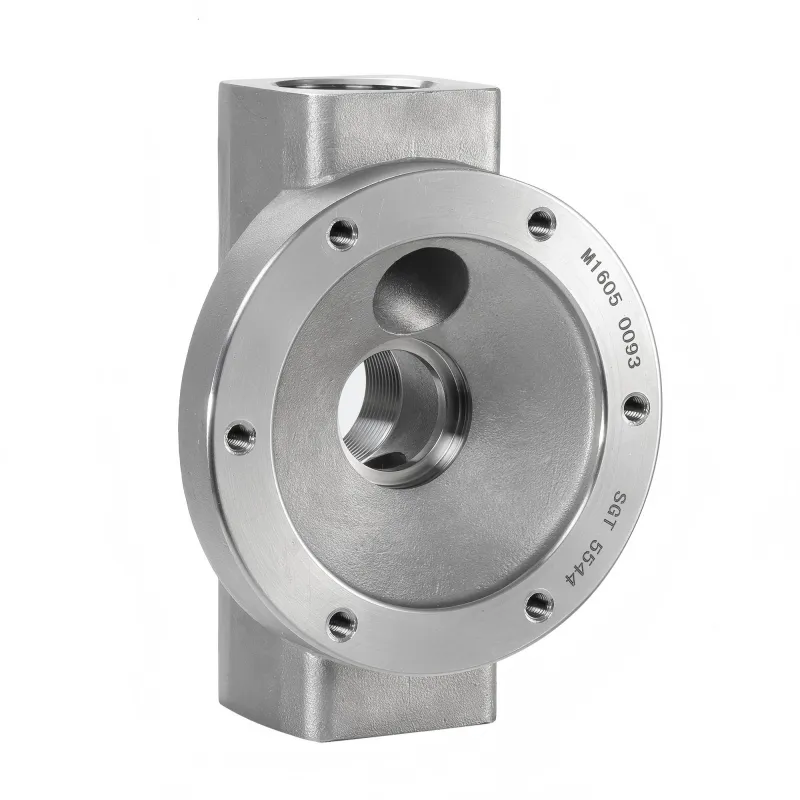
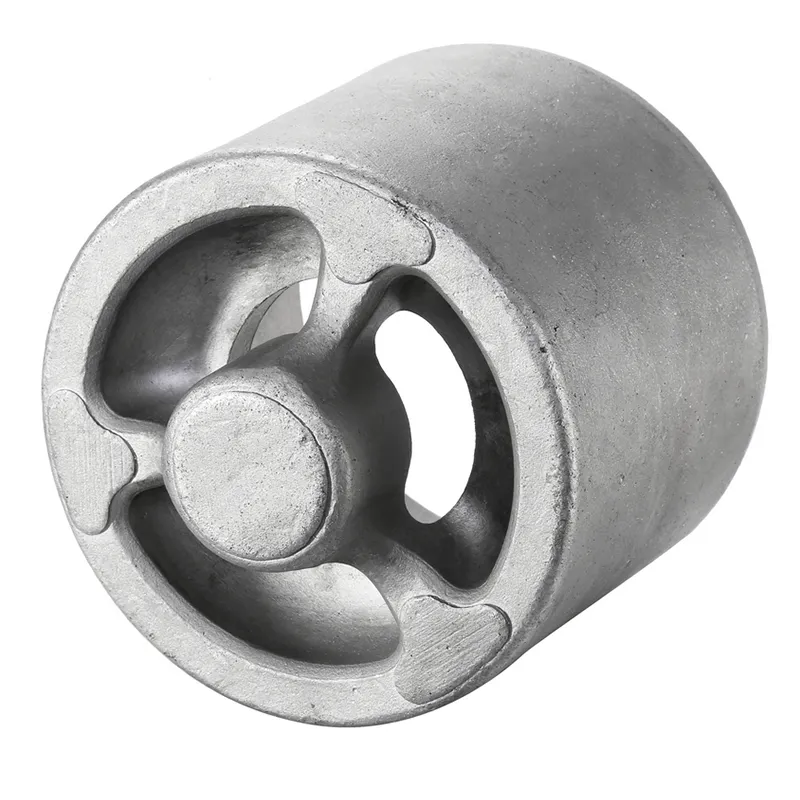
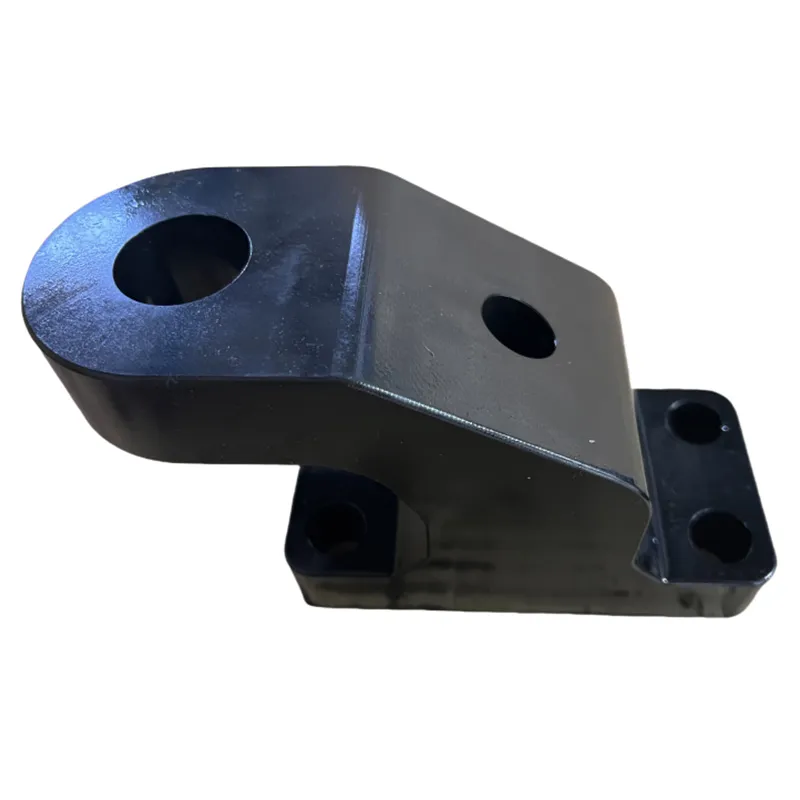
When someone asks about 'powder metallurgy types,' the immediate textbook answer is usually a neat list: press and sinter, metal injection molding, hot isostatic pressing, and so on. But in practice, that classification is almost too clean. It misses the nuance of why you'd pick one over another for a specific part, and the real-world compromises that come with each. I've seen too many designs come in where the choice seemed based on a catalog description rather than a deep understanding of the process constraints. Let's talk about what these types actually mean when you're trying to make a part that works, lasts, and doesn't blow the budget.
The Workhorse: Conventional Press and Sinter
This is where most people start, and for good reason. It's cost-effective for high volumes of relatively simple shapes. You take the metal powder, fill a die, press it under high pressure, and then sinter it in a furnace to bond the particles. The key here is 'relatively simple.' Undercuts? Forget it. Significant variations in wall thickness? You're asking for trouble with density gradients that'll show up in performance.
We once had a project for a small gear component. The drawing looked perfect for press and sinter. But the client had a sharp, deep groove for a retaining ring. In the sintering stage, that thin section warped. We had to go back and redesign the groove to a more gentle radius, which then required a change to the mating part. It's these little details that aren't in the brochure. The mechanical properties are decent, but they're anisotropic – stronger perpendicular to the press direction. If your load case isn't aligned with that, you need to know.
The material range here is broad, from iron-copper-carbon mixes for basic structural parts to low-alloy steels. But when you get into requests for things like stainless steel for a press and sinter part, you have to be careful. The sintering atmosphere needs to be tightly controlled to prevent chromium oxidation, which adds cost. Sometimes, it's more sensible to suggest a different powder metallurgy route or even a different manufacturing process altogether.
When Complexity is Non-Negotiable: Metal Injection Molding (MIM)
MIM is the answer when your part looks like a plastic injection molded component but needs to be metal. Think complex, tiny, intricate shapes—brackets with multiple holes at odd angles, surgical instrument jaws, miniature lock components. The process mixes fine metal powder with a polymer binder, injection molds it, debinds the binder, and sinters it. You get near-full density and excellent shape fidelity.
The catch? It's a longer, more delicate process chain. The debinding stage is critical and slow; rush it, and you get cracks or blisters. The shrinkage during final sintering is also significant and predictable, but you must design the mold tooling to compensate for it precisely. I recall a batch of connector components where the tooling was cut based on an early, slightly off material shrinkage factor. The entire run came out a few percentage points undersize. Useless. The lesson was to always, always run trials with the exact powder and binder feedstock you plan to use for production.
Cost-wise, it's higher per part than press and sinter, but for the right application, it's unbeatable. We've sourced MIM parts for clients needing complex, high-performance shapes where machining from solid would be prohibitively expensive. Companies like Qingdao Qiangsenyuan Technology Co., Ltd.(QSY), with their deep background in precision casting and machining, often provide valuable secondary operations on MIM parts, like precision CNC machining a critical datum surface after sintering to hit a tolerance that the MIM process alone can't guarantee.
The High-Performance Arena: Hot Isostatic Pressing (HIP) and Beyond
This is where you go for parts that can't have any voids. I mean, zero porosity. Aerospace turbine blades, premium medical implants, critical downhole oil & gas components. HIP subjects a pre-formed powder compact (often encapsulated in a sealed container) to high temperature and isostatic gas pressure from all sides simultaneously. The result is a fully dense, homogeneous microstructure.
The cost is steep. The equipment is incredibly expensive to buy and run. It's not a high-volume process. You're using it for the most demanding applications. An interesting hybrid approach is using HIP to heal internal defects in castings. This is an area where a supplier's material expertise is paramount. For instance, working with special alloys like nickel-based or cobalt-based ones—common in the investment casting work done by firms like QSY (you can see their material range at https://www.tsingtaocnc.com)—requires precise knowledge of how the powder behaves during the HIP cycle to avoid undesirable phase formation.
Beyond HIP, there's a whole world of emerging and specialized types. Spark Plasma Sintering for advanced ceramics and composites. Additive manufacturing of metals, which is essentially layer-by-layer powder metallurgy. But with AM, you're trading the isotropic pressure of HIP for the thermal stresses of a laser or electron beam. The as-built surface finish and internal stress state are entirely different beasts, often requiring a HIP post-process anyway to close up micro-porosity. It's less a distinct type and more a new tool in the powder consolidation toolbox.
The Material is the Message
You can't separate the process type from the material. Talking about powder metallurgy types without discussing powder is like talking about cooking without mentioning ingredients. Water atomized powder is cheaper, irregular in shape, and good for press and sinter. Gas atomized powder is spherical, flows better for MIM or AM, but is more expensive. The alloying method matters too—are you using pre-alloyed powder or mixing elemental powders? Pre-alloyed gives more uniform properties but is costlier. Elemental mixing can lead to inhomogeneity if not processed correctly.
We had a failure analysis case on a sinter-hardening steel part. It was specified for a high-wear application. The part passed initial QC but failed prematurely in the field. Metallurgy showed localized areas of retained austenite, which is soft. The root cause? Inconsistent mixing of the graphite (carbon) additive with the base iron powder before pressing. During sintering, the carbon didn't diffuse uniformly, so some areas didn't harden properly. The fix was a switch to a pre-alloyed steel powder with the carbon already in solution. Problem solved, but at a 15% material cost increase. That's the kind of trade-off that happens daily.
This is why partnering with a foundry or machine shop that understands materials at this level is crucial. A company with 30 years in casting and machining, like QSY, brings that metallurgical intuition. They might not be making the powder, but they know how these materials behave under heat and stress from their work with cast iron, steel, stainless steel, and special alloys. That cross-process knowledge is invaluable when you're selecting a PM route and anticipating how the part will perform post-sintering.
Convergence with Traditional Manufacturing
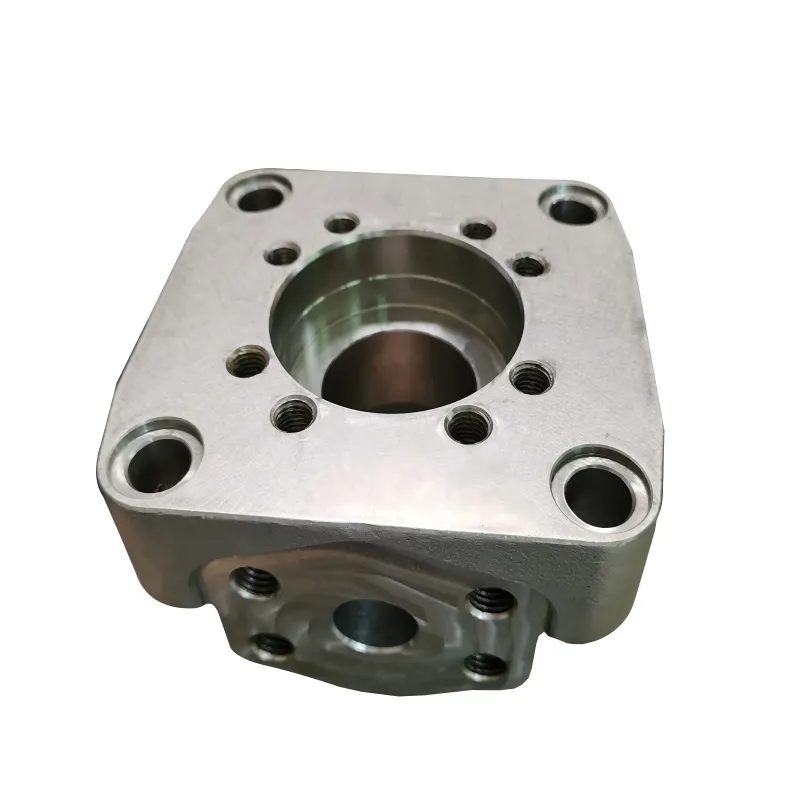
The lines are blurring. A very common path now is a powder metallurgy near-net-shape process followed by precision machining. You might MIM or press and sinter a part to 95% of its final shape, then bring in a CNC mill to machine a precision bore, threads, or a critical sealing surface. This hybrid approach optimizes cost and performance.
I've worked on valve bodies where the main complex internal passages were formed via MIM, but the flange faces and thread ports were CNC machined post-sintering. It was the only way to achieve the required surface finish and geometric tolerances on those specific features. A supplier that offers both PM expertise and in-house machining, as indicated in QSY's focus on shell mold casting, investment casting, and CNC machining, is positioned well for this kind of integrated manufacturing solution. It streamlines communication and accountability.
The choice of PM type, then, isn't an isolated decision. It's the first step in a manufacturing plan. You have to ask: What secondary operations will be needed? How will the part be finished? Coated? The sintering process affects the surface chemistry, which can impact plating adhesion or paint performance. It's all connected. Thinking of it as just picking a 'type' from a menu is the biggest mistake you can make. It's about engineering a supply chain and a process chain that delivers a functional component. The powder is just the beginning.