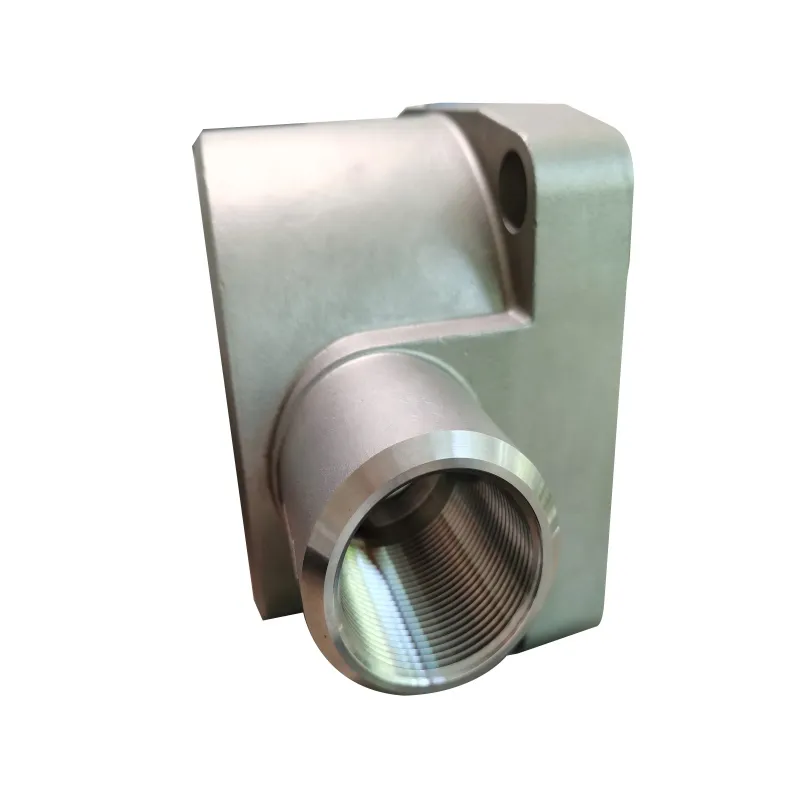
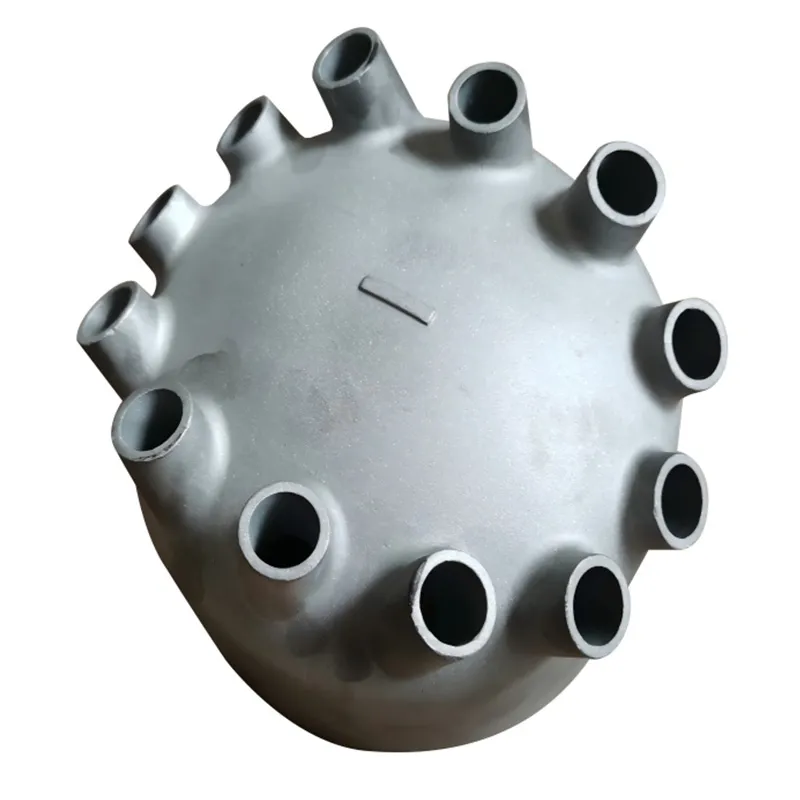
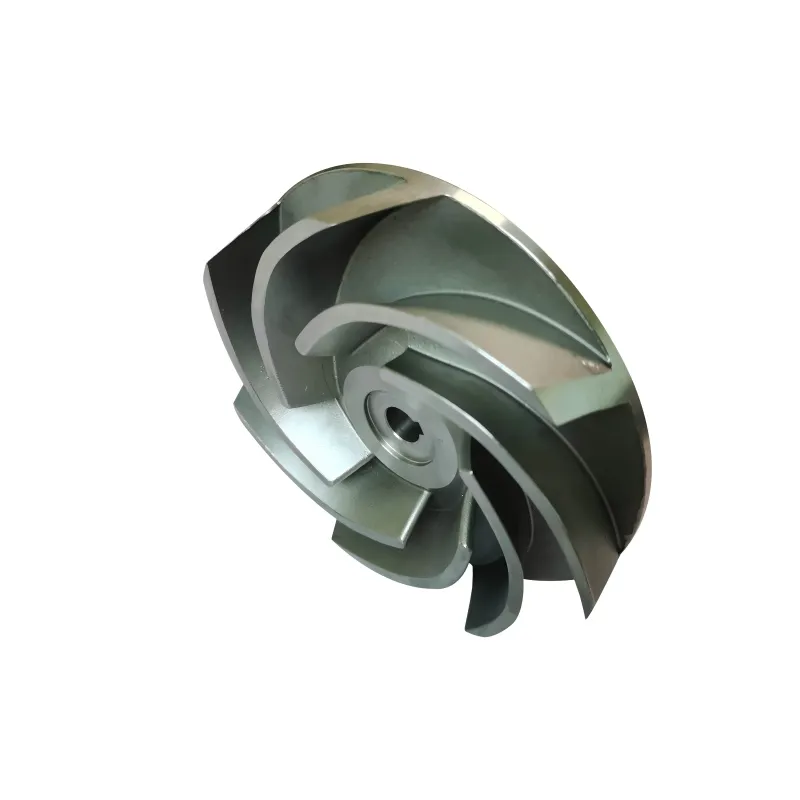
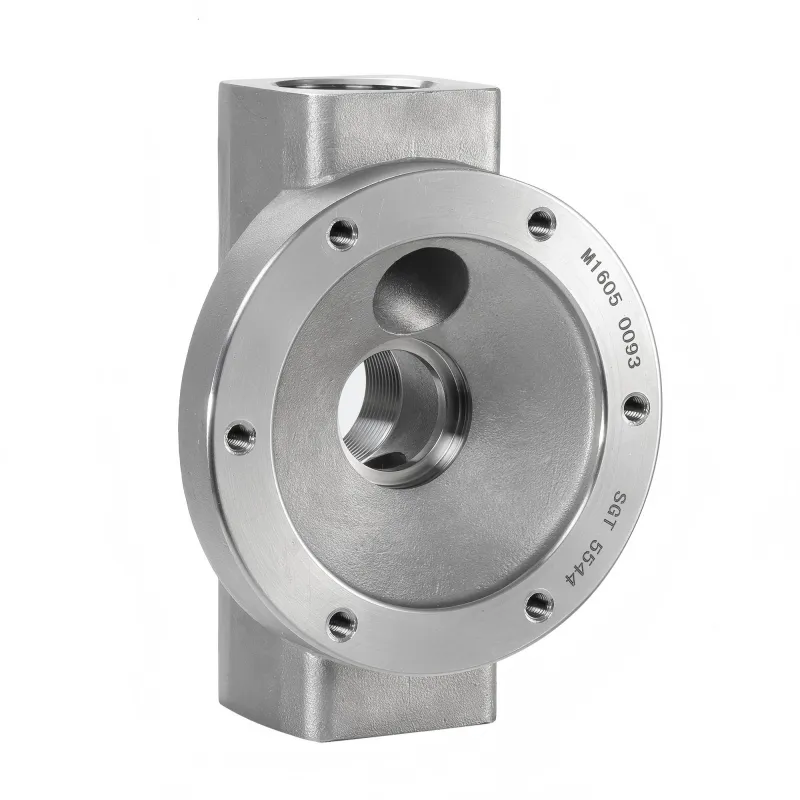
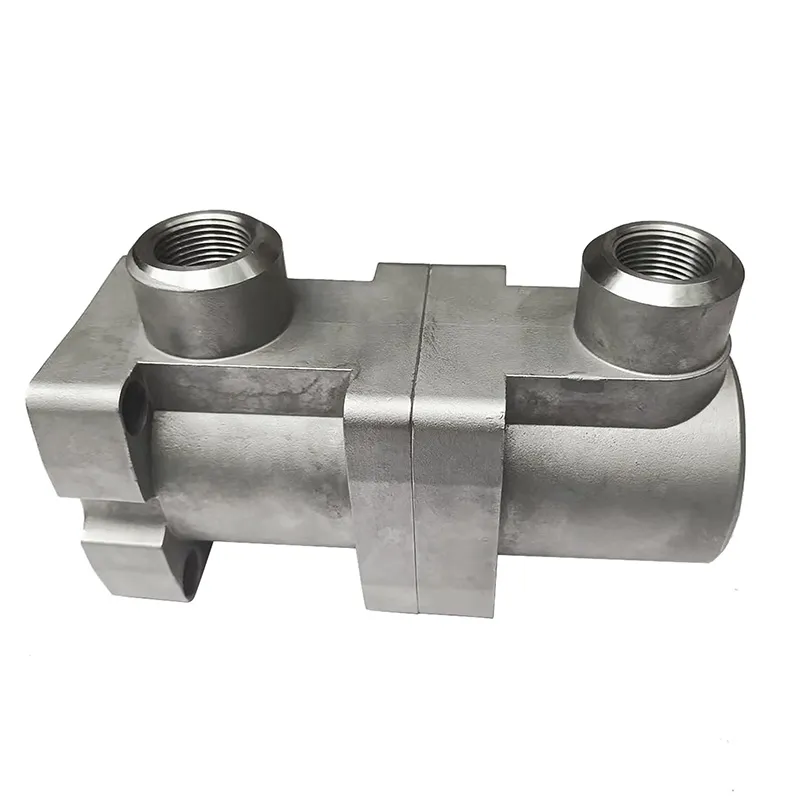
When you hear 'precision casting corp', what comes to mind? Probably a glossy website with shiny metal parts and promises of micron-level accuracy. That's the marketing ideal. The reality on the shop floor, the one that actually determines if your turbine blade flies or your medical implant integrates, is messier. It's about managing heat, chemistry, and human judgment in a dance where the margin for error is often less than the thickness of a human hair. Many clients, even engineers, conflate 'precision' with just tight tolerances on a drawing. They miss the process integrity—the gating design, the thermal control during solidification, the post-casting stress relief—that actually delivers that tolerance consistently, batch after batch. That's where the real 'corp', the corporate body of knowledge and practice, proves its worth... or doesn't.
The Shell Game: It's Not Just About the Mold
Take shell mold casting, a staple for many. The term itself is almost too neat. In practice, it's a battle against time and ambient humidity. I recall a project for a series of pump housings in duplex stainless steel. The prints called for a specific surface finish and minimal residual stress. We had the ceramic formula down, but a humid summer week played havoc with the shell drying cycles. The molds felt right, passed the standard tap tests, but we had a gut feeling—the green strength was off. Poured anyway. The result? A higher-than-usual scrap rate due to veining and minor metal penetration. Not a catastrophe, but a hit on margin and timeline. The fix wasn't in a manual; it was installing dehumidifiers in the drying area and recalibrating our 'feel' for the shell condition against hard data loggers. That's the 'precision' part nobody sells you: the environmental control infrastructure.
This is where a firm's longevity speaks volumes. A company like Qingdao Qiangsenyuan Technology Co., Ltd. (QSY), mentioning them because their public-facing site at tsingtaocnc.com states over 30 years in casting and machining, would have undoubtedly weathered dozens of these seasonal shifts. That institutional memory—knowing how the local climate in Qingdao affects slurry viscosity in April versus October—is irreplaceable. It turns reactive fire-fighting into proactive parameter tweaking.
Investment casting, or lost-wax, is another beast. The allure is complexity. You can cast parts that look like they were grown, not machined. But the wax pattern itself is a masterpiece of compromise. Inject it too cool, and you get flow lines that transfer to the ceramic shell. Too hot, and it distorts during handling. Then there's the dewaxing: steam autoclave or flash fire? Each method imposes different thermal shock on the shell, creating micro-cracks that later invite finning. I've seen beautiful, intricate patterns ruined because the dewaxing ramp rate was a few degrees per minute too fast. The precision casting process is a chain of a hundred links, and ninety-nine of them are invisible in the final part.
Material Alchemy: When Special Alloys Aren't Special Enough
Everyone lists 'special alloys' on their capability sheet. Nickel-based, cobalt-based. It's table stakes. The real differentiator is what you do with them during the pour. These alloys are often viscous, prone to segregation, and have a nasty habit of reacting with oxygen or nitrogen if you don't control the melt atmosphere. We once worked with a Hastelloy C-276 component for chemical processing. The spec was unforgiving on intergranular corrosion resistance. The melt looked fine, the chemistry check passed. But post-casting heat treatment, following a standard recipe, led to precipitated carbides at the grain boundaries—a death sentence for corrosion resistance. The failure was in assuming a 'standard' recipe existed.
The solution came from cross-referencing melt logs with subsequent heat treat batches and finally tweaking the solution annealing temperature and quench rate. It was a week of lost production and metallurgical analysis. A precision casting corp worth its salt doesn't just pour metal; it maintains a detailed, traceable process history for each heat and alloy. It's this database that allows for intelligent deviation, not guesswork. QSY's mention of working with these specific alloy families suggests they've built, or had to build, similar libraries of knowledge to avoid these costly dead ends.
And let's talk about machining these castings. You can't separate casting from machining in high-integrity parts. The as-cast surface has a disturbed layer, maybe a few tenths of a millimeter deep, with different hardness and residual stress. Your CNC program needs to account for that. A brute-force approach with aggressive feeds will tear the surface, potentially exposing subsurface porosity. The machining has to be a continuation of the controlled process, not a separate operation. This integrated mindset is critical, which is why the combination of casting and CNC under one roof, as indicated in their operational scope, isn't just a convenience—it's a necessity for true dimensional and structural control.
The Gating Paradox: Feed the Part, Starve the Profit
Gating and riser design is the dark art of the foundry. It's where fluid dynamics, solidification shrinkage, and yield percentage collide. The goal is to feed molten metal to the part as it cools and shrinks, leaving all the voids in the risers, which are cut off and recycled. Simple in theory. In practice, over-engineering gates for 'safety' can murder your yield. I've seen designs where the gating system weighed more than the part itself. You're melting, handling, and cleaning metal you'll just throw back into the furnace.
Conversely, under-feeding leads to shrinkage porosity inside the part itself—a reject. The sweet spot comes from simulation software now, yes, but also from the courage to test and iterate. We ran a trial for a series of valve bodies in low-alloy steel. Simulation said a single top riser would work. First pour, beautiful surface. X-ray showed a spongy heart. We had to go back, add a chill to one section to directionalize solidification, and use a smaller but more strategically placed side riser. Yield improved from an initial 45% to a sustainable 68%. That 23% jump is pure profit, and it came from trusting the simulation as a starting point, not a gospel, and being willing to scrap a few trial castings to get it right.
This is the unglamorous core of a precision casting operation: the willingness to invest in process development, to eat the cost of trials, and to build that empirical knowledge. It's not about having the fanciest simulation suite; it's about having the engineers who can interpret its results in the context of their own furnaces, their own sands, their own alloys.
Inspection: The Final, Unforgiving Judge
All the process control is for nothing if your inspection is weak. Dimensional checks with CMMs are standard. The real depth shows in non-destructive testing (NDT). Radiography (X-ray) is common, but interpreting those grayscale images is a skill. Is that faint shadow a harmless inclusion, a cluster of microporosity, or a crack? It takes a trained eye, often certified to ASNT or equivalent standards. Then there's dye penetrant for surface breaks, ultrasonic for internal integrity on thicker sections. Each method has blind spots.
A case in point: a compact, high-strength aluminum bracket for aerospace. It passed X-ray and dye penetrant. But during proof loading, it failed at a fraction of the spec. The culprit? Incipient hot tears, fine cracks that were tightly closed and oriented in a way that neither X-ray nor dye penetrant could reliably catch. Only a destructive test on sample castings from the same batch revealed the pattern, traced back to a slightly too-high mold temperature during pouring. The lesson was expensive: for critical new components, your first-article validation protocol must include destructive analysis. You have to sacrifice parts to save the batch.
This level of rigorous, sometimes skeptical, inspection is what separates a job shop from a reliable manufacturing partner. It's the final gatekeeper of the 'precision' promise.
The Human Factor in a Digital Age
With all the tech—CAD, simulation, automated pouring, robotic grinding—the human element remains decisive. The furnace operator who senses a slag carryover from the sound of the arc. The mold assembler who feels a slight misalignment in a core before clamping. The machinist who hears a change in the cutter's sound, indicating a hard spot in the casting.
Automation can standardize, but it can't improvise. I've seen an automated pouring system shut down because a laser level sensor was fogged by condensation. The veteran pourer, meanwhile, would have judged the mold fill by the back-pressure and the metal meniscus, and completed the pour. The key is not to replace these instincts but to augment them. Use the data from sensors to inform and validate the human senses, creating a feedback loop. A precision casting corp with decades of operation, like the 30-year background noted for QSY, likely has a cadre of such experienced personnel. That depth on the bench is a competitive moat that's very hard to replicate quickly.
Ultimately, the label 'precision casting corp' is earned daily, not declared on a website. It's earned in the quiet decisions to scrap a questionable melt, in the tedious logging of furnace atmospheres, in the collaborative argument between design and foundry engineers over a riser location, and in the honest communication with a client when a process limit is reached. The precision is as much in the thinking and the communication as it is in the metal. The companies that last, the ones you can rely on for a critical component, understand that it's a holistic discipline, a craft supported by science, and never the other way around.