When you hear 'precision casting for medical devices', the immediate image is often of flawless, sterile components coming off a pristine production line. That's the marketing gloss. The reality, from where I've stood for years, is a grittier dance between metallurgy, geometry, and the unforgiving demands of the human body. A common misconception is that it's just about making things small and shiny. It's not. It's about predictable performance in an environment where failure isn't an option, and where the choice between, say, a cobalt-chromium alloy and a specific grade of surgical stainless steel can hinge on a fatigue life curve that only reveals itself after months of testing. Let's talk about what that actually looks like on the shop floor.
The Material is the Message
You start with the alloy. Always. Picking a material for a surgical instrument or an implant isn't like choosing stock for a bracket. There's biocompatibility, sure, but that's just the ticket to the game. The real work is in how it behaves during and after precision casting. Take 316LVM stainless. Great corrosion resistance, widely used. But its flow characteristics during investment casting are different from, say, a cobalt-based alloy like CoCrMo. The latter has a higher melting point and different shrinkage behavior. If you run the same shell mold and pouring parameters for both, you're asking for trouble—internal porosity in one, hot tears in the other. I've seen projects stumble right here, assuming a one-size-fits-all process.
This is where long-term material familiarity matters. A shop that's handled thousands of heats of different medical-grade alloys develops a kind of tacit knowledge. They know that a particular nickel-based alloy might be prone to micro-shrinkage at certain wall-thickness transitions, something a standard simulation might miss. It's not just about having the certification; it's about having the memory in the foundry. Companies that have been in the thick of it, like Qingdao Qiangsenyuan Technology Co., Ltd. (QSY), with their three decades in casting and machining, have literally poured these materials through iterations of technology. That history translates directly into fewer failed first articles.
The post-casting heat treatment is another minefield. Stress relief, solution treatment, aging—it's all critical for achieving the final mechanical properties. Get the cycle wrong, and you can embrittle the part or ruin its corrosion resistance. I recall a case with a trauma plate where an overly aggressive aging cycle led to premature fatigue failure in simulated testing. The culprit? An assumption that the recipe for a similar alloy would work. It took a joint review with the metallurgist and a step back to the alloy spec's isothermal transformation diagram to fix it.
The Shell Game: More Than Just a Mold
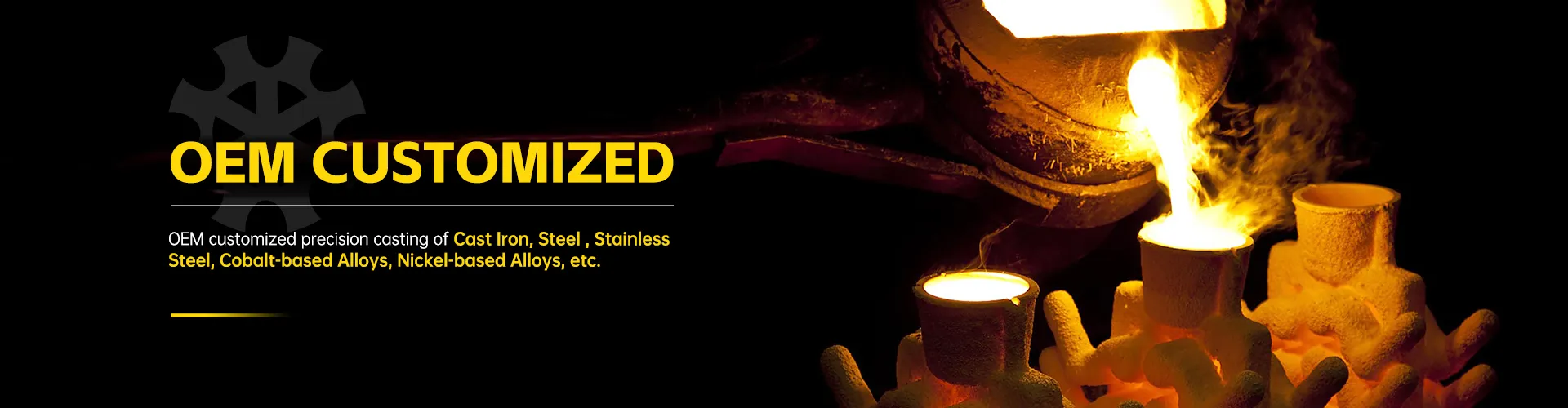
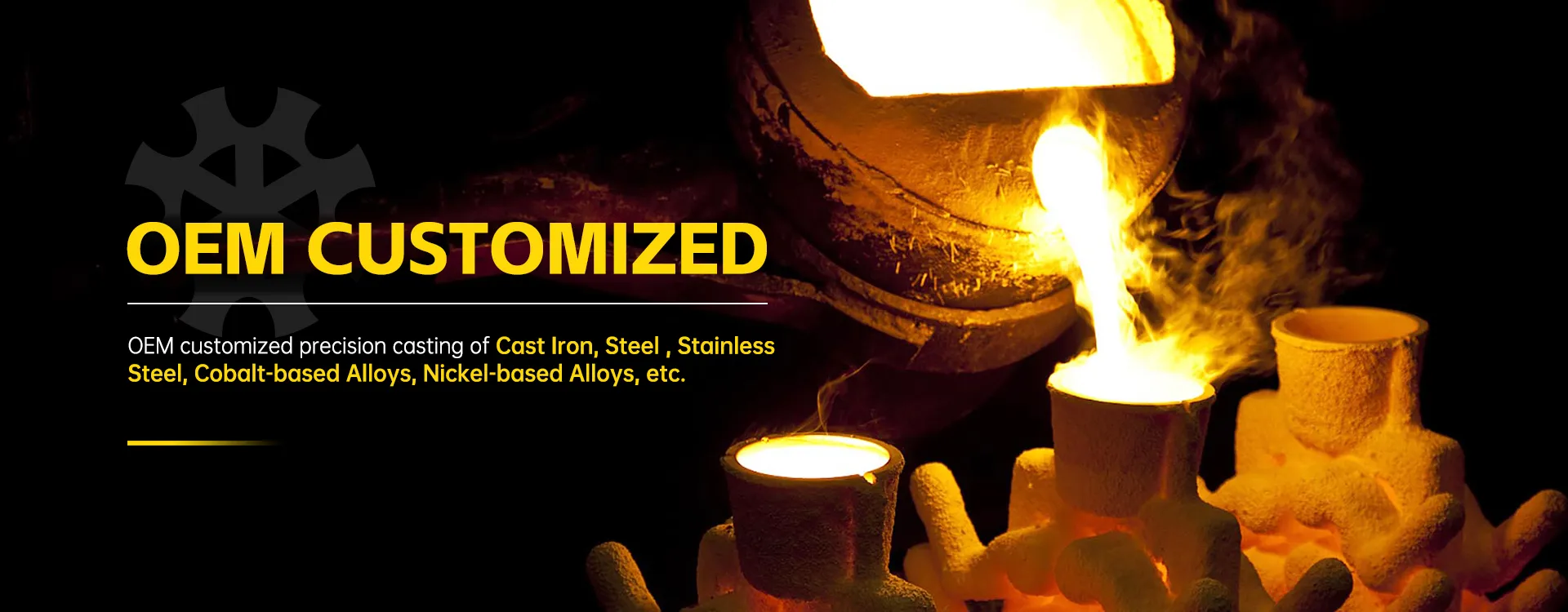
Investment casting, or shell mold casting, is the heart of this. The wax pattern process is delicate, but the shell building is where the art meets science. Each slurry dip, each stucco sand application, builds up a ceramic shell that must withstand the thermal shock of molten metal while maintaining dimensional integrity. The thickness isn't uniform; you might build it thicker around massive sections to control cooling. I've spent hours with process engineers debating the viscosity of the primary slurry coat—too thin, and you get poor surface finish; too thick, and you risk trapping air or causing shell cracking during dewaxing.
Dewaxing itself is a violent step. You're rapidly melting or steaming out the wax from inside that fragile shell. Do it wrong, and the shell cracks from thermal stress, rendering it useless. Modern autoclaves help, but you still need to dial in the pressure and temperature ramp rates for the specific wax blend and shell thickness. It's a step that feels more like a controlled explosion than a manufacturing process.
The final shell, after high-temperature firing, is this incredibly fragile, porous, yet strong structure. Pouring the metal into it is the moment of truth. The gating system design—often overlooked by designers focused solely on the part—is critical. It's not just a channel for metal; it's a thermal management and feeding system. A poorly designed gate can cause turbulence (leading to inclusions) or fail to feed shrinkage in the last place to solidify. We once had a complex orthopedic component that kept showing shrinkage porosity in a hidden internal corner. Redesigning the gate and adding a strategic riser solved it, but it required cutting apart dozens of castings to diagnose.
Precision is a Journey, Not a Snapshot
Tolerances in medical device casting are tight, often in the microns for critical features. But as-cast tolerance is a myth. Every casting will have some variance. The real skill is in controlling that variance predictably and knowing what will be cleaned up in subsequent CNC machining. This is why integrated facilities that combine casting and CNC machining under one roof, like QSY's setup, have a distinct advantage. The machinists and foundry engineers can talk. They can decide, for instance, to leave an extra half-millimeter of stock on a difficult-to-cast bore because it's easier and more reliable to machine it to final size than to chase a perfect cast surface.
The first article inspection report is the most important document. It's not a pass/fail sheet. It's a map of the process capability. You're looking for patterns in the deviations. Are all the dimensions on one side of the nominal? That might indicate a consistent mold shift. Is surface roughness higher on upward-facing surfaces? That could be a slag or oxide inclusion issue. This data feeds back directly into adjusting the process. It's iterative, sometimes frustratingly so.
And then there's the cleaning. After shakeout, you have a part fused with ceramic gates and a rough surface. The deburring, ceramic removal (often with aggressive blasting or chemical leaching), and passivation for stainless parts are where many surface defects are introduced if not carefully controlled. An overly aggressive blast can work-harden and smear the surface, masking subsurface porosity that later becomes a crack initiation point. It's a step that requires as much finesse as the pouring.
When It Goes Wrong: The Learning Moments
Failures are the best teachers, provided you're allowed to be open about them. One early project involved a laparoscopic scissor component, a small, intricate part. The prototypes looked perfect, passed initial inspection. But during functional life testing, the pivot hole elongated, causing play. The failure analysis pointed not to a casting defect, but to the material's yield strength. We had specified a standard 17-4PH condition, but for that specific geometry and loading, it needed a different heat treatment to achieve higher hardness. The precision casting was flawless, but the material specification for the application was wrong. It was a brutal lesson in systems thinking.
Another time, we faced inconsistent wall thickness in a thin-walled cannula. The wax injection was fine, the shell looked good. The problem traced back to the wax pattern assembly tree. The angle at which this particular part was attached to the central sprue was causing non-uniform shell drainage during dipping, leading to a slightly thinner ceramic coat on one side, which translated into a thicker metal wall. A slight rotation of the part on the tree fixed it. These are the kinds of minute, non-obvious process interactions you only learn through hands-on, repeated exposure.
These experiences underscore why partnering with a seasoned manufacturer isn't just about outsourcing a drawing. It's about tapping into that reservoir of practical problem-solving. A company's longevity, like QSY's 30-year operation, often means they've encountered and solved these obscure problems before, saving you the time and cost of rediscovering them.
The Future Isn't Just Additive
There's a lot of buzz around 3D printing for medical devices, and for good reason. But for medium-to-high volume production of small, complex, metal components, investment casting remains incredibly tough to beat on a cost-performance basis. The surface finish, metallurgical integrity, and mechanical properties from a well-run casting process are still superior for many load-bearing implants and instruments. The future, I think, is in hybridization. Using 3D printing to create impossible wax patterns or even direct ceramic shells for prototyping or ultra-complex one-offs, then leveraging the established, scalable, and cost-effective precision casting process for production.
The digital thread is also tightening. Simulation software for mold filling and solidification is getting better, but it's still a guide, not an oracle. The most effective use I've seen is comparing the simulation prediction with the actual first-article dimensional data and porosity maps from X-ray inspection. Calibrating the model to your specific shop floor conditions—your alloy melt, your shell properties—that's where the real value is. It reduces the iteration cycles.
So, where does that leave us? Precision casting for medical devices is a mature technology, but it's far from static. It's a deep craft, driven by details and empirical learning. The goal isn't a perfect casting every time—that's impossible. The goal is a predictable process where you understand the failure modes, control the critical parameters, and have the expertise to diagnose and adapt. That's what separates a component that looks good on a spec sheet from one that performs reliably inside a person.