When you hear 'precision casting supplier', most minds jump straight to tolerances and material certs. That's the table stakes. The real game, the part that actually determines if your project flies or dies in prototyping, is about everything that happens around those numbers. It's the communication gaps, the unspoken assumptions about surface finish, the lead time gamble on a new alloy. I've seen too many engineers pick a supplier based on a glossy PDF capability sheet, only to get parts that are technically in-spec but utterly useless for assembly because the draft angles were an afterthought. The supplier checked their box, but the part failed. That distinction—between making a casting and delivering a functional component—is where the real expertise of a precision casting supplier lies, or should lie.
The Shell Game: More Than Just a Mold
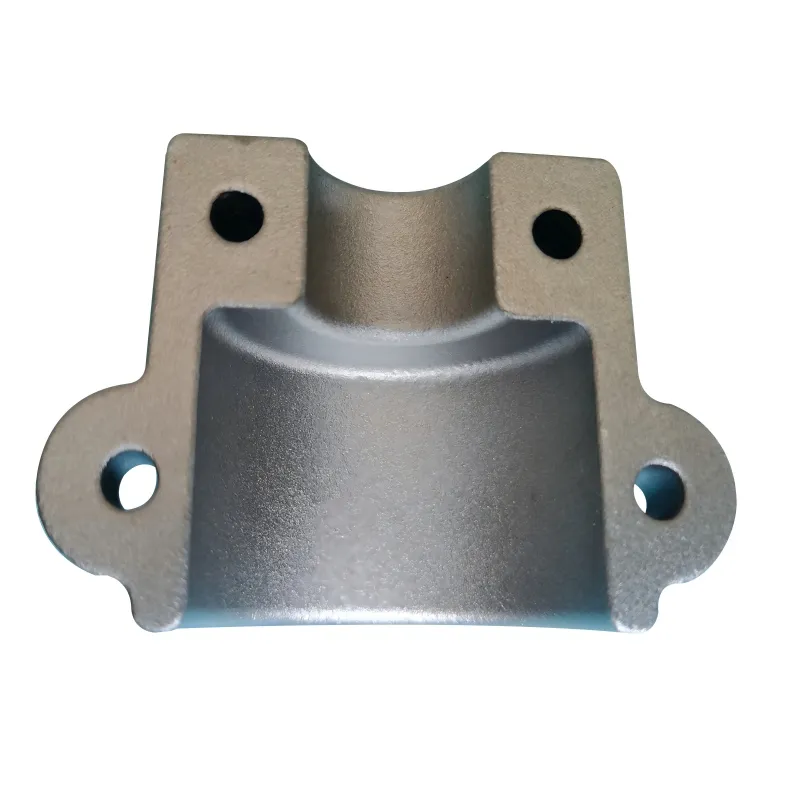
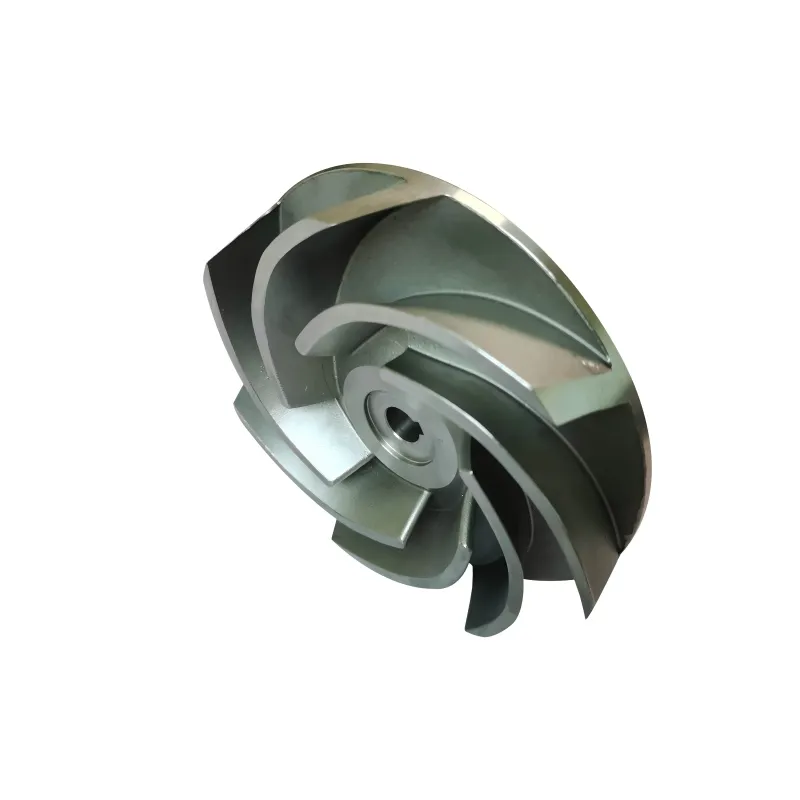
Let's talk about shell mold casting, one of our core methods at QSY. It's often presented as a cost-effective alternative to full investment casting for certain volumes. The brochure point is dimensional stability. True enough. But the nuance is in the pattern. We learned this the hard way years ago on a run of pump housings. The pattern was perfect, the wax injection was fine, but the ceramic shell kept cracking during dewaxing. Turns out, the client's design had a thick section transitioning to a very thin flange too abruptly. The thermal stress during the autoclave cycle was the culprit. The spec sheet said we could do the geometry. Reality demanded a design-for-manufacturability conversation we hadn't initiated early enough. Now, that conversation is step zero. It's not about saying 'no', but about asking 'how will this drain?', 'can we taper this wall?'. A good precision casting supplier operates as an extension of your engineering team, not just a order-taker.
Material choice here is another rabbit hole. Carbon steel, stainless—standard. But when a client comes with a request for a high-nickel alloy for a corrosive environment, the process parameters shift dramatically. The pre-heat temperature for the shell before pouring, the pouring speed itself, even the composition of the face coat of the ceramic shell might need adjustment to prevent metal-mold reaction. This isn't button-pushing. It's a craft, built on decades of trial and error. At Qingdao Qiangsenyuan Technology Co., Ltd., that 30-year history isn't just a marketing line; it's a library of failed pours and successful workarounds that inform every new project. You can't Google that database.
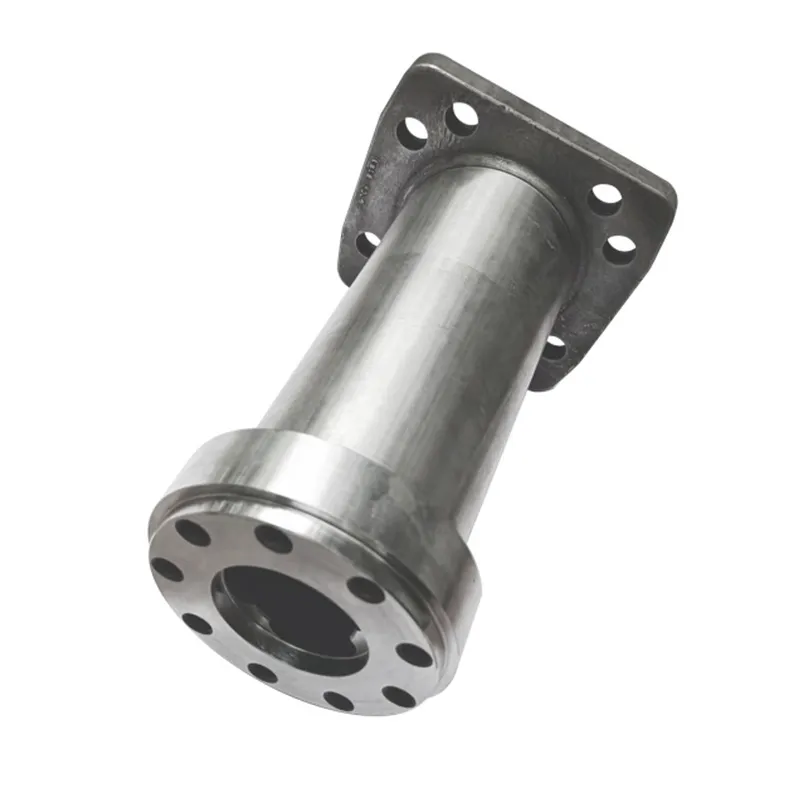
The finish machining integration is the final, critical piece. Having CNC machining in-house isn't just for convenience; it's for control. We recently did a batch of valve bodies via shell molding. The castings were sound, but the true position of several threaded ports was borderline. If we'd had to ship these out for machining, the delay and logistics would have killed the timeline. Because our machining team is down the hall, they could come to the foundry floor, we could fixture the raw casting based on actual datum features (not the ideal CAD ones), and machine the ports to perfect alignment. That seamless handoff from casting to machining is where 'precision' is actually locked in. Outsourcing that step introduces a risk most don't calculate.
Investment Casting: The Illusion of Anything is Possible
Investment casting, or lost-wax, gets the glory. The promise of complex, near-net-shape parts is seductive. And it's real. But the biggest misconception is that complexity is free. Every undercut, every internal passage, every sharp corner adds cost and risk in wax tooling, shell building, and finishing. I recall a prototype for an aerospace bracket. The designer, brilliant, had created a gorgeous, organic, lattice-like structure to save weight. Looked amazing on screen. The wax pattern was a nightmare to extract from the mold without distortion, and the ceramic shell couldn't support the fine webs during pouring—they simply melted away. We went through three iterations of simplifying the lattice geometry before we got a castable part. The final part was still lighter than a machined bracket, but it wasn't the digital masterpiece they started with. A supplier that just says yes to that first model is either lying or ignorant.
Surface finish is another trap. Ra 3.2 μm as-cast is commonly advertised. What they don't tell you is that achieving that consistently across a part with both thick and thin sections is incredibly difficult. Differential cooling rates affect grain structure, which affects how the surface responds to the shell and subsequent cleaning. A part might hit Ra 3.2 on the thick boss but be Ra 6.3 on a thin wall. If your application is for a dynamic seal face, that variation is a disaster. At QSY, we've had to develop specific shell slurry recipes and controlled cooling protocols for families of parts to minimize this. It's not standard; it's developed. You can find our approach to these challenges detailed in our process documentation at https://www.tsingtaocnc.com.
Then there's the question of alloys. We work with cobalt and nickel-based superalloys regularly. These aren't like pouring aluminum. The heat treatment is critical and often proprietary to the alloy producer. You can't just follow a generic HIP (Hot Isostatic Pressing) schedule. We partnered with a turbine repair shop once, casting a replacement vane segment in a legacy nickel alloy. The material certs were perfect, the dimensions were perfect. It failed in bench testing. The issue? Our standard solution heat treatment cycle, while correct for the alloy family, wasn't the exact ramp-and-hold sequence used by the original equipment manufacturer decades ago. The microstructure was subtly different. We had to source the original, obscure spec sheet and replicate it exactly. The lesson: with exotic alloys, the precision casting supplier needs metallurgical depth, not just a furnace that gets hot enough.
The Machining Handshake: Where Casting Meets Reality
This is the make-or-break phase that many pure-play foundries gloss over. You get a beautiful casting. Now you need to put bolt holes in it. Where do you datum from? If the casting has some inherent, permissible warp (and they all do), do you machine to bring it back to nominal, or do you adjust the machining coordinates to follow the casting's as-is geometry? There's no universal right answer. For a gearbox housing, you must machine to true position, so you may take an uneven cut. For a structural bracket, you might follow the casting to preserve wall thickness.
We had a project for a marine component in duplex stainless steel. The casting was sound, but during rough machining, our CNC operator noticed intermittent hard spots. The material analysis showed it wasn't a segregation issue, but localized, accelerated cooling from a particular cluster of cooling fins on the mold. The hardness was just outside spec. We stopped, consulted with the client, and agreed on a localized annealing step before proceeding with finish machining. If machining was a separate vendor, they'd likely have just blasted through, maybe broken a tool, and shipped a part with compromised fatigue life. The integration allowed for real-time correction.
Fixture design is an art in itself for castings. You're not holding a billet. You're holding a sometimes-delicate, variable geometry. We design fixtures that reference the casting's primary features—often the ones that solidify first and are most stable—and allow for some compliance. It's a blend of rigid clamping and strategic soft jaws. This isn't textbook CNC work; it's applied knowledge of how castings behave under cutting forces. This capability is central to what we offer at Qingdao Qiangsenyuan Technology Co., Ltd. (QSY)—turning a raw casting into a ready-to-install component under one roof, with one chain of responsibility.
Failures Are the Best Curriculum
Nobody likes to talk about these, but they're the most instructive. Early on, we took on a job for a high-volume, small aluminum investment casting. The part was simple, a small lever. To be competitive, we optimized the wax tree to hold dozens of parts. The first pour was a disaster—massive shrinkage porosity in every single part. The gating and risering that worked for six parts on a tree completely failed for forty. We'd prioritized quantity over thermal management. We scrapped the entire batch, re-designed the tree with proper feeding channels, and accepted a lower part count per mold. We lost money on that job, but gained the fundamental insight that casting layout is a thermal simulation first, a logistics exercise second.
Another failure was about communication. A client sent us a drawing for a stainless steel guard, specifying mirror polish. For us, that meant a specific progression of grinding and buffing to a defined Ra. We delivered what we thought was a beautiful finish. They rejected it. Why? Their mirror polish was a literal optical mirror finish for a decorative application, requiring a different, more labor-intensive process we didn't typically offer. We both assumed we meant the same thing. Now, we have a finish sample kit—physical blocks with different finishes—that we align with clients before production starts. It eliminates the ambiguity of language.
These failures taught us that being a reliable precision casting supplier isn't about having a perfect first-attempt yield. It's about having the systems and the humility to catch problems early, diagnose them correctly, and communicate them transparently. It's about building a process that is robust, not just a product that looks good once.
Looking Ahead: The Real Value Proposition
So, when you're evaluating a precision casting supplier, look past the equipment list and the ISO certificate. Ask them about their last major failure and what they learned. Press them on how they handle a design with problematic thermal mass. Inquire about the handoff between their foundry and machine shop. The answers will tell you everything.
The value of a partner like QSY isn't just in making a shape out of metal. It's in navigating the hundred small decisions between the drawing and the shipped part—the draft angle tweak, the riser placement, the machining datum strategy, the heat treatment nuance. It's about providing certainty in a process full of variables. That capability is built from 30 years of solving problems, not just running machines.
In the end, precision is a promise. And that promise is kept not by the tolerance on the quote, but by the experience and integrated problem-solving that happens on the shop floor, every single day. That's what separates a parts vendor from a true manufacturing partner.