When most people hear 'precision CNC machining', they immediately think of tight tolerances – you know, those ±0.001 numbers plastered all over websites. That's part of it, sure, but it's the easiest part to promise and often the hardest part to deliver consistently, especially when you're dealing with complex geometries or temperamental materials like Inconel. The real precision isn't just in the machine's repeatability; it's in the entire process chain – from how you interpret the drawing, to your fixturing strategy, right down to managing thermal expansion in the shop on a hot afternoon. I've seen too many jobs where the parts measure perfectly on the CMM but fail in assembly because someone machined all features from a single datums without considering how the part actually gets used. That's a different kind of precision, one you don't find on a spec sheet.
The Material is the First Customer
You can have the best 5-axis mill in the world, but if you treat 17-4 PH stainless the same way you treat 6061 aluminum, you're in for a world of hurt. This is where experience, or rather, specific material experience, becomes non-negotiable. We run a lot of precision CNC machining on special alloys – nickel-based, cobalt-based stuff for the energy and aerospace sectors. These materials work-harden in a blink. Your tool path, feed, speed, and even the type of insert geometry need to be in a constant dialogue with the material. A slight harmonic vibration that you'd ignore in steel can instantly crater a $200 end mill in Hastelloy. It's less about brute force and more about a controlled, consistent shearing action. You learn to read the chips – their color and shape tell you more than any sensor sometimes.
This is why a shop's background matters. A place that's spent decades in casting, like Qingdao Qiangsenyuan Technology (QSY), often has a leg up when it comes to machining. They're not just seeing a billet; they understand the grain structure, potential inclusions, and stress states from the upstream process. Machining a cast component isn't the same as machining a wrought bar. You might need to take a lighter first cut to 'find' the true surface, or adjust your strategy for a porous section. That kind of process knowledge is baked in over 30 years, and it directly impacts the precision of the final machined part.
I remember a job for a turbine component from a cobalt alloy. The print called for a mirror finish on an internal channel. We nailed the dimensions, but the surface finish was scrappy, showing tiny tears. The issue? We were using a tool path and coolant pressure optimized for stainless. It took a week of trial, a switch to a high-pressure through-spindle coolant system with a specific oil-based mixture, and a radical reduction in feed rate at the final pass to get that glassy finish. The 'precision' here was as much about surface integrity as it was about dimensional accuracy. The machine could do it, but the process knowledge made it possible.
Where Casting Meets Machining: The Critical Handoff
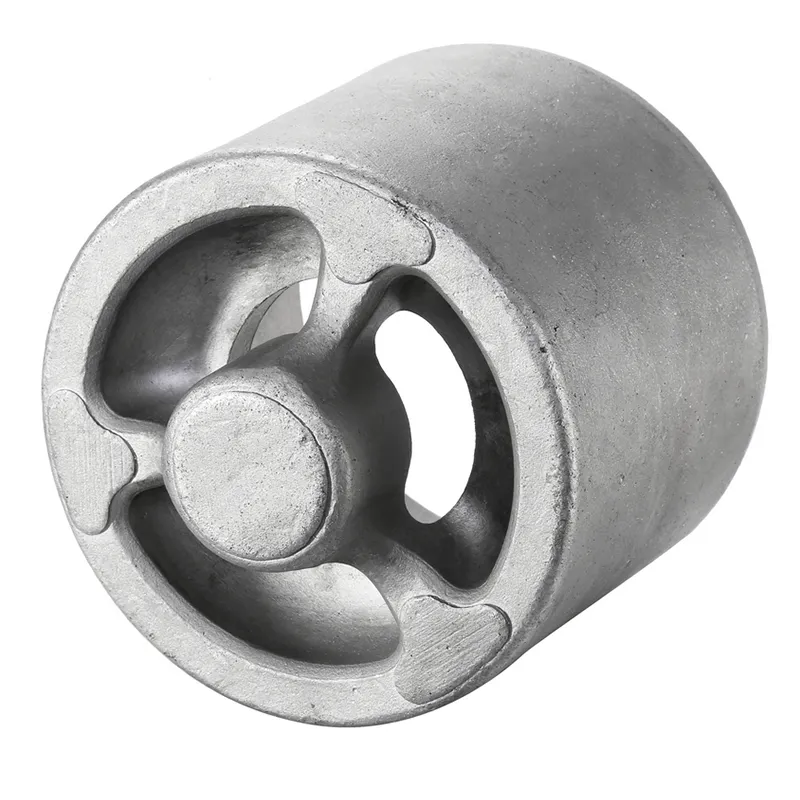
This is a huge, often overlooked, area for error. A shop that only does CNC machining gets a casting and might just chuck it up and start cutting. But where do you establish your primary datum? If the casting has a slight warp or a non-critical surface is used as a clamp face, you can machine a perfectly in-spec part that is essentially useless. The precision has to start before the first tool touches the part.
Integrated operations have a massive advantage. At QSY, for instance, because they handle both the shell mold/investment casting and the machining in-house, the handoff is designed-in. They can cast in locator pads or datum features that are non-functional but perfect for machining setup. They understand the shrinkage allowances and can pre-program the CNC to compensate. This co-design approach is a game-changer for complex parts. The machinist isn't fighting the casting; they're partnering with it. I've seen this reduce scrap rates on high-value alloy components by 30% or more, simply because the machining team was in the loop during the casting design review.
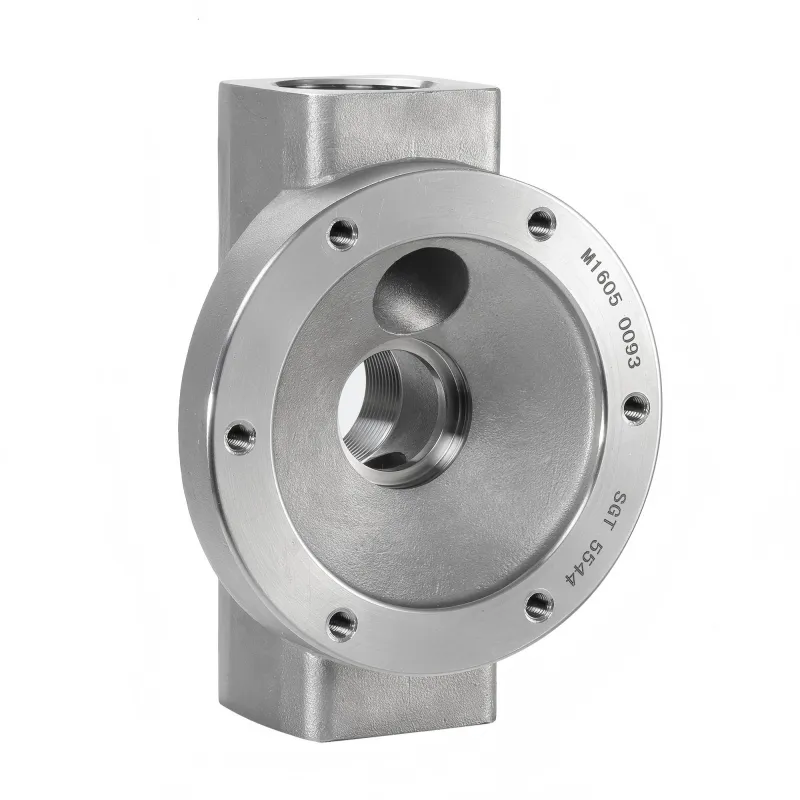
A practical example: a valve body for a subsea application. It was a duplex stainless steel investment casting. The critical part was the sealing face and the bolt hole pattern. By designing the casting mold so that the parting line and the gating system left clean, machinable surfaces exactly where the CNC needed to locate, we saved two setup operations. More importantly, we ensured the wall thickness around the ports was uniform straight from the cast, so the finishing cut was minimal and stress-balanced. The precision was built in from step one.
The Tooling & Fixturing Mindset
Talk to any seasoned machinist, and they'll tell you the machine is only as good as what's holding the part and the tool. For precision machining, especially in low-volume, high-mix work, modular fixturing is king. But it's not just about buying a nice kit. It's about designing fixtures that respect the part's stiffness, provide access for tools, and, crucially, allow for predictable thermal growth. Aluminum fixtures expand at a different rate than steel parts – you need to account for that if you're running a long cycle and the shop temperature drifts.
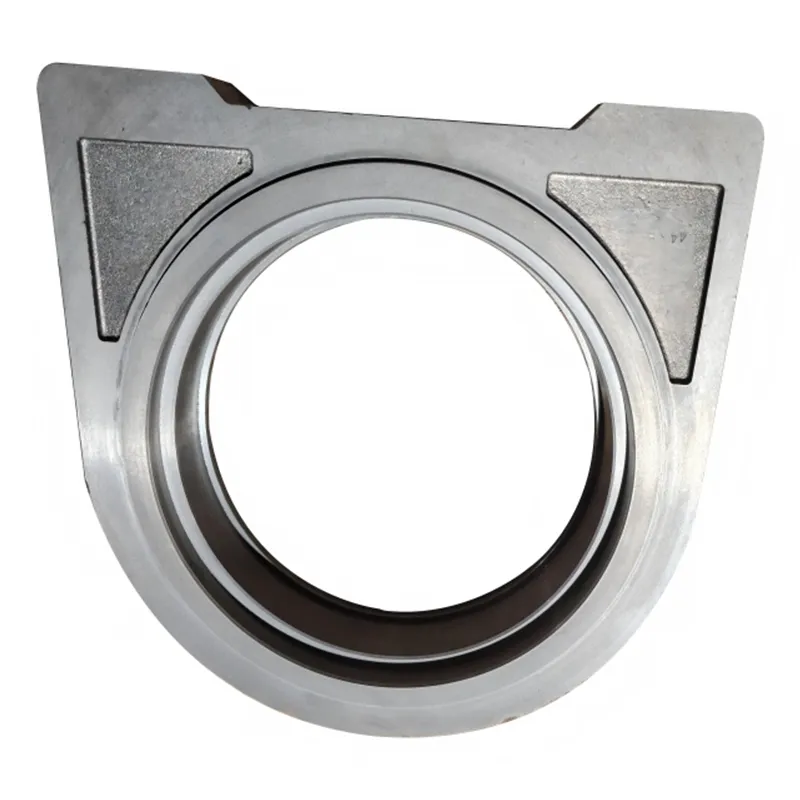
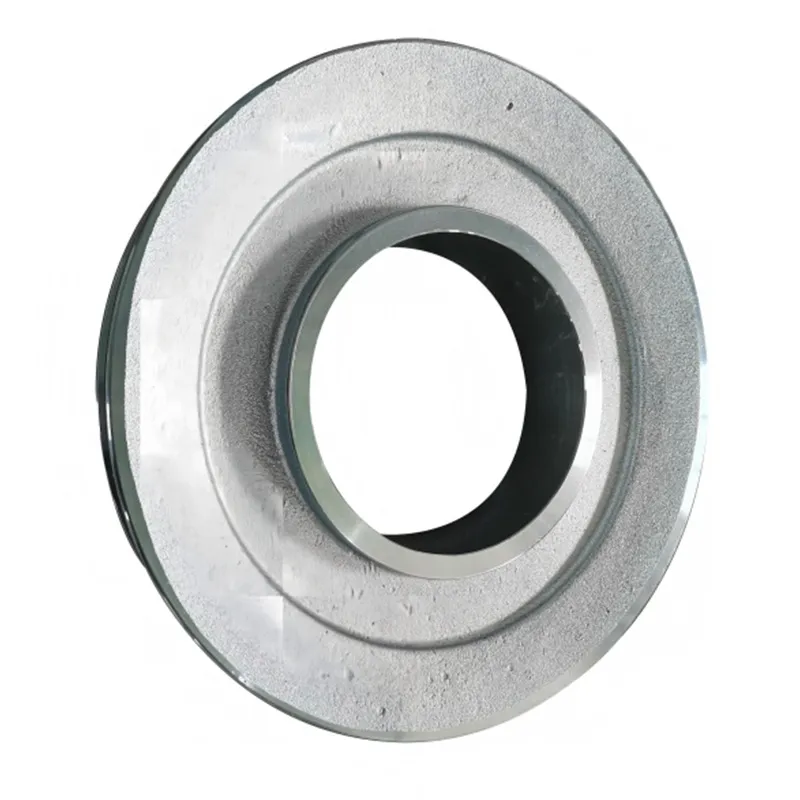
We once scrapped a batch of large-diameter seal rings because we used a massive, overly rigid steel fixture. It held the part so tightly that when we released it after machining, the internal stresses from the clamping caused it to spring just enough to fail inspection. The lesson? Fixturing must be precise, but it also must be sympathetic. Sometimes, a softer clamp or a strategic support is more 'precise' in the real world than absolute rigidity.
Tooling selection is another rabbit hole. For high-temp alloys, I've moved away from chasing the newest, fanciest coated carbide. Sometimes, a more forgiving grade with a tougher substrate, run at conservative parameters, gives better overall results and tool life. The precision comes from consistency, not peak performance. If a tool starts to degrade predictably, you can plan for it. If it fails catastrophically, you've lost the part, the tool, and maybe the fixture. I keep a log for different materials – not just speeds and feeds, but which tool brand and geometry gave the most predictable wear pattern on the flank. That's real, actionable data for precision work.
Measuring What Matters (And Knowing Why)
Here's a common pitfall: over-measuring. You can get a first article inspection report that's 10 pages long, checking every single dimension on the print. But does that guarantee the part works? Not always. The real skill is in identifying the critical-to-function (CTF) dimensions and focusing your measurement strategy there. Is that ±0.0005 callout on a cosmetic flange really necessary, or did it just get copied from an old drawing? Often, the conversation with the engineer is more valuable than the CMM report.
For instance, on a pump housing we machined from cast iron, the true 'precision' requirement was the perpendicularity and positional accuracy of the bearing bores relative to each other, not necessarily their absolute diameter to the fourth decimal. We spent our energy ensuring the setup and tool path guaranteed that relationship, even if it meant letting a non-critical outer dimension sit at the wider end of its tolerance band. This functional approach to precision saves time and cost without compromising performance.
This ties back to having a full-process view. A company that understands the part's application, like one that has been in casting and CNC machining for decades, is better positioned to have these conversations. They've likely seen how the parts are assembled and used in the field. They can look at a drawing and instinctively know which dimensions are 'for manufacturing' and which are 'for function.' That judgment call is a form of precision that doesn't use a micrometer.
The Human Factor in a Digital Process
Finally, let's not romanticize the automation. Precision CNC machining is driven by code, but it's guarded by people. The programmer who adds a 0.5mm radius at the root of a sharp internal corner because they know it's a stress concentrator in a vibrating assembly. The operator who hears a slight change in the cutting sound and pauses the cycle to check a tool, even though the load monitor hasn't tripped yet. The quality inspector who feels a burr with their fingernail that the vision system missed.
This accumulated, tacit knowledge is the final layer of precision. It's what turns a good part into a reliable one. You can't download it or program it into a new machine. It comes from running thousands of jobs, making mistakes, and learning from them. It's the reason why a shop's history – like QSY's 30-year journey from casting into machining – is a tangible asset. That longevity means they've debugged processes across material families and industry cycles. They've probably machined a version of your part before, even if the drawing is new.
So when you're looking for a partner for precision work, look beyond the machine list. Ask about their material journals, their fixture philosophy, how they handle the casting-to-machining transition, and what their failure log looks like. The real precision is in the thinking behind the tool path, not just the tool path itself. It's a messy, iterative, deeply human process of problem-solving, where the machine is just one very capable tool in the box.