When someone says precision CNC machining services, what picture does that paint? For a lot of folks shopping online, it's a shiny, automated factory spitting out perfect parts. The reality, the one I've lived for years, is messier. It's about the gap between what a CAD model promises and what a chunk of 17-4PH stainless actually does under a cutter. It's about the quiet decisions made at 2 AM to hold that ±0.0005 tolerance not just on one part, but on a run of five hundred. That's where the real service begins—after the quote is accepted.
The Foundation: It Starts with the Casting
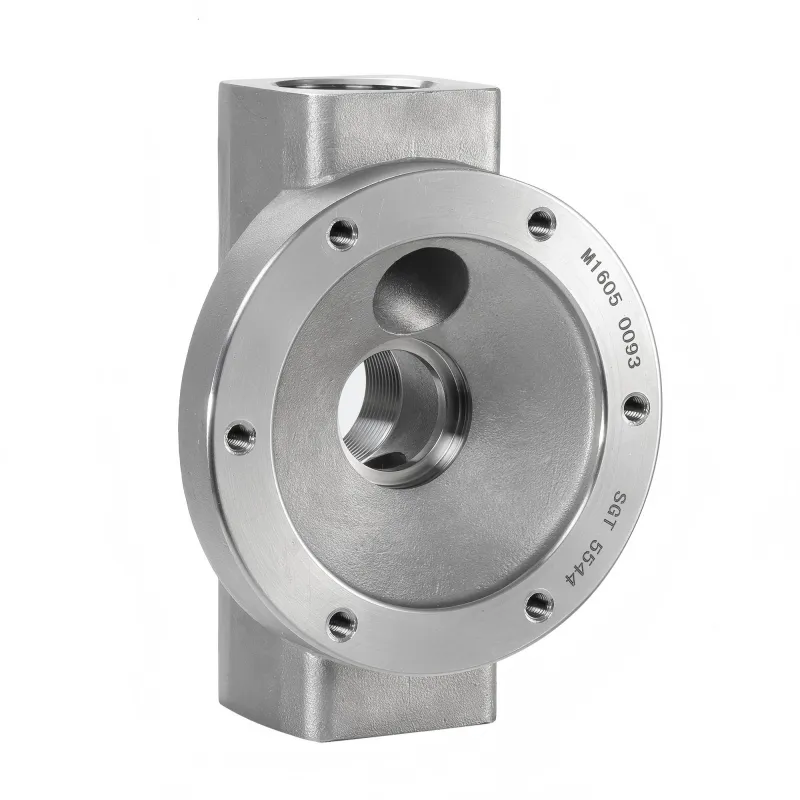
You can't talk about precision CNC machining in our context without starting upstream. A perfect machining program is useless if the raw casting has hidden porosity or inconsistent wall thickness. I've seen it too many times. That's why our approach at QSY is integrated. We've been doing shell mold and investment casting for three decades, so by the time a casting like a complex pump housing or a valve body gets to the CNC floor, we already know its biography. We know how the 316L stainless solidified, where the stress might be. This isn't just theory; it means we can pre-emptively adjust fixturing or tool paths to account for that slight variance from the nominal model. Machining a casting you made yourself is a different ball game—you're not fighting someone else's unknowns.
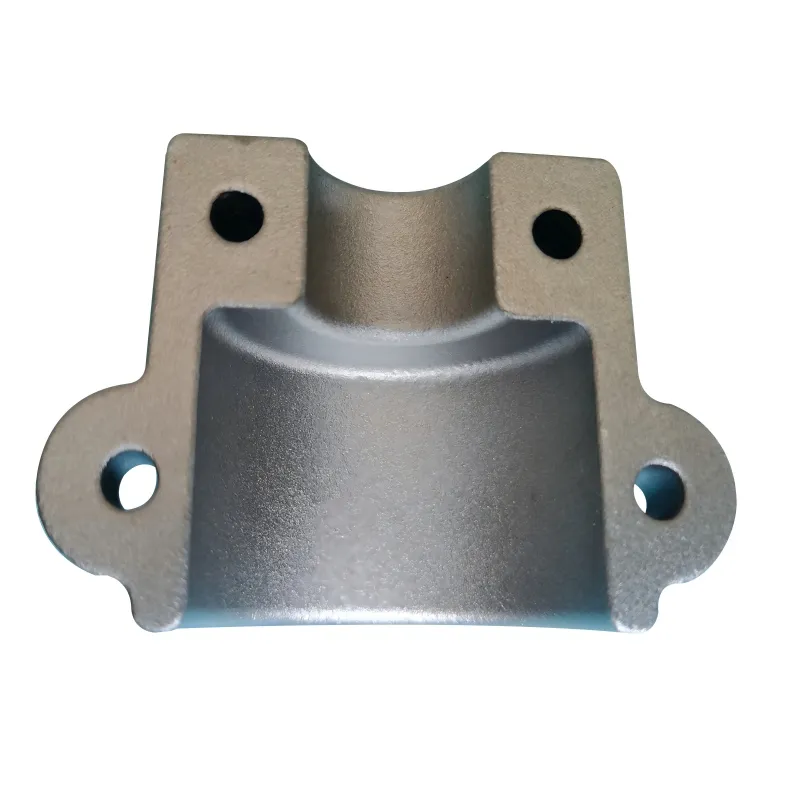
This is a common pitfall for buyers. They source a cheap casting from one vendor and send it out for CNC machining services elsewhere, expecting magic. The machinist gets a part with hard spots from uneven cooling or sand inclusions right in a critical sealing surface. The job stalls, fingers get pointed, costs balloon. The service part gets lost in translation. An integrated house like QSY absorbs that risk internally. The foundry team and the machining foreman talk the same language because they're in the same building, looking at the same job traveler.
Take special alloys, like nickel-based ones (think Inconel 718). Machining them is a nightmare if you treat them like mild steel. But if you've cast them, you intimately understand their grain structure, their work-hardening behavior. You know that the heat from casting affects the machinability in specific zones. So your CNC strategy for a cast Inconel turbine component will be fundamentally different—slower SFM, specific carbide grades, maybe even a different sequence of operations—compared to machining it from a wrought bar. That knowledge is baked into the process from day one.
Tolerances Aren't Just Numbers on a Print
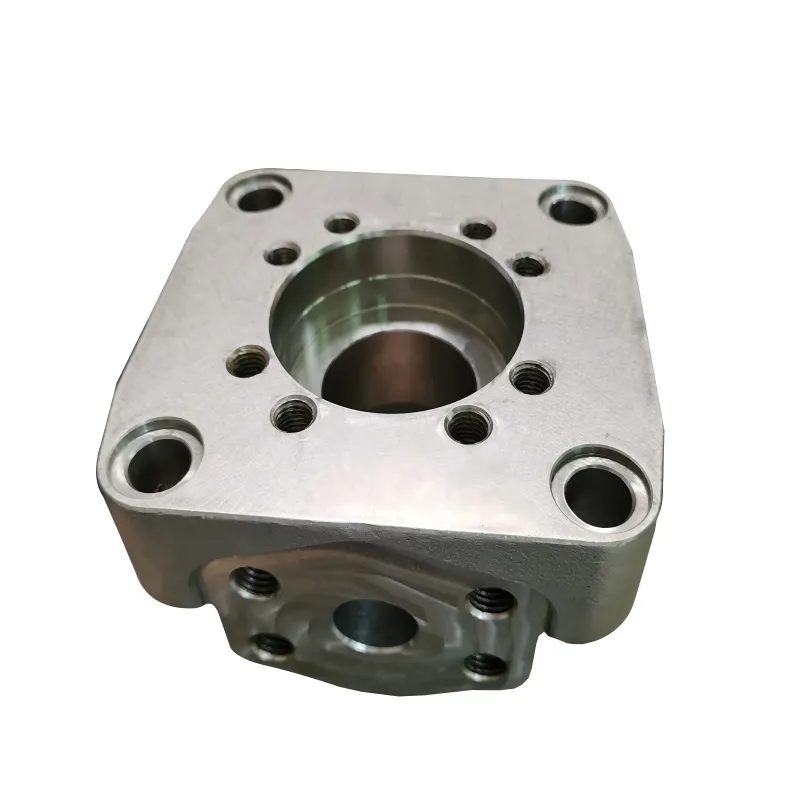
Here's a practical truth: anyone can machine one part to a crazy tolerance in a climate-controlled lab with a brand-new machine. The service is defined by doing it consistently, on schedule, for a production batch. I remember a job for a hydraulic manifold block, cast ductile iron, needing true position callouts within 0.05mm across a network of cross-drilled ports. The challenge wasn't the first-off part. It was maintaining that through tool wear, thermal drift in the machine over an 8-hour run, and the minute variations in the castings.
We had to build a dedicated fixture that referenced off the as-cast datum features, not the ideal ones. Then, we implemented in-process probing on our Okuma CNC mill to check critical bore positions every 10 parts, automatically compensating. That's the service – the sunk engineering time in process design that the customer never sees on the invoice line item for precision machining. They just get a pallet of parts that all fit, every time. If you're not offering that level of process engineering, you're just a machine shop, not a precision service provider.
And sometimes, you have to push back. A young engineer once specified a ±0.001 tolerance on every non-critical external dimension of a large steel housing. It was a cosmetic part, essentially. Applying that level of precision CNC everywhere would have tripled the cost and time. Our service included a call to explain: Look, let's hold that on the mounting face and the bore, but let's relax the rest to a standard commercial tolerance. It'll save you 40% and get it to you two weeks faster. That consultation is part of the package. It builds trust and shows you're thinking about their total project, not just your spindle time.
The Material Dictates the Dance
Working with the materials QSY specializes in—from common cast irons to exotic cobalt alloys—means your machining playbook needs multiple volumes. Grey iron machines like butter, but the graphite dust gets everywhere, wreaking havoc on way covers and ball screws if your shop isn't set up for it. We have dedicated zones and extraction systems for that. Stainless steel, like 304 or 316, is all about combating work hardening. You need sharp tools, positive rake, and you absolutely cannot let the tool dwell. It's a rhythm you develop.
Then you jump to something like Monel or Hastelloy. Different beast entirely. The chips don't break; they come off stringy and tough, like chewing gum. They can weld onto the insert and cause catastrophic failure. Here, the service is in the tiny details: high-pressure coolant aimed exactly at the cutting edge to break and evacuate chips, variable helix end mills to disrupt harmonic vibration, and a very specific feed/speed recipe that often feels counter-intuitively aggressive. You learn this by ruining a few expensive blanks, frankly. That's the over 30 years part you see on the QSY site—it's a library of those hard-learned lessons for each material family.
I recall a prototype for a chemical processing valve in a cobalt-based alloy. The print called for a mirror finish on a tapered seat. Every standard polishing approach failed; the material was just too abrasion-resistant. We ended up having to develop a custom micro-abrasive flow machining pass after the CNC work. It wasn't in the original scope, but it was necessary to meet the functional spec. That's the unglamorous side of CNC machining services—problem-solving with the client, not just for them.
When Precision Meets Delivery
This is where many shops fall down. They can hit the quality mark, but they can't do it at volume or on time. Precision isn't just a dimensional measure; it's a promise of predictability. Our investment in multi-pallet horizontal machining centers wasn't just for speed. It's for continuity. While one pallet is running a 4-hour cycle on a batch of stainless fittings, the operator is setting up the next fixture for a cast iron job on another pallet. The spindle never stops. For the client, this means their delivery date is rock solid.
But even the best system hits snags. A tool breaks unexpectedly. A casting has a defect that wasn't visible until the first cut. The service is defined by the response. Do you hide it and hope to catch up? Or do you communicate immediately? We've built a habit of over-communicating. A quick email with a photo: Found a sand hole on part 3 at station B. It's salvageable with a weld repair, will add 8 hours. Proceeding unless instructed otherwise by 5 PM. It keeps the partnership real. Clients appreciate the transparency, even when it's bad news. They know they're not being fed a line.
This operational rhythm is critical for the industries we serve—oil & gas, pumps, heavy machinery. A delayed precision-machined component can hold up a multi-million dollar assembly line. The weight of that is felt on the shop floor. It transforms the work from just making parts to being a critical link in someone else's supply chain. That responsibility shapes every decision, from which job gets loaded next to how much spare tooling we keep on the shelf for high-runner items.
The Digital Handshake
Finally, the front end. A potential client lands on a site like tsingtaocnc.com. They need a quote for a precision CNC machining job. The ease and clarity of that process is the first test of your service. We get RFQs with everything from perfect 3D STEP files to a blurry photo of a hand-drawn sketch on a napkin. The service is in how you handle both. For the napkin sketch, it's a quick call to ask the right questions: function, material, critical interfaces. For the perfect STEP file, it's a detailed DFM (Design for Manufacturability) report within the quote, highlighting potential cost drivers like deep, small-diameter holes or ultra-thin walls that might vibrate during cutting.
This consultative quoting is what separates QSY from a faceless online machining portal. It's based on seeing thousands of jobs cross the threshold. You develop an instinct. You can look at a model and immediately know the two or three features that will be the challenge. Pointing that out upfront, maybe suggesting a slight design tweak that halves the machining time, builds immense credibility. It shows the CNC machining services are backed by real shop floor experience, not just a sales team.
In the end, precision CNC machining as a service is a continuum. It starts with understanding the raw material's genesis, flows through the gritty reality of chips and tolerances on the shop floor, and is cemented by reliable delivery and honest communication. It's not a commodity. It's a craft supported by systems, and it's the only way to turn a customer's blueprint into a part that works, batch after batch, year after year. That's the real output, far more important than just the metal itself.