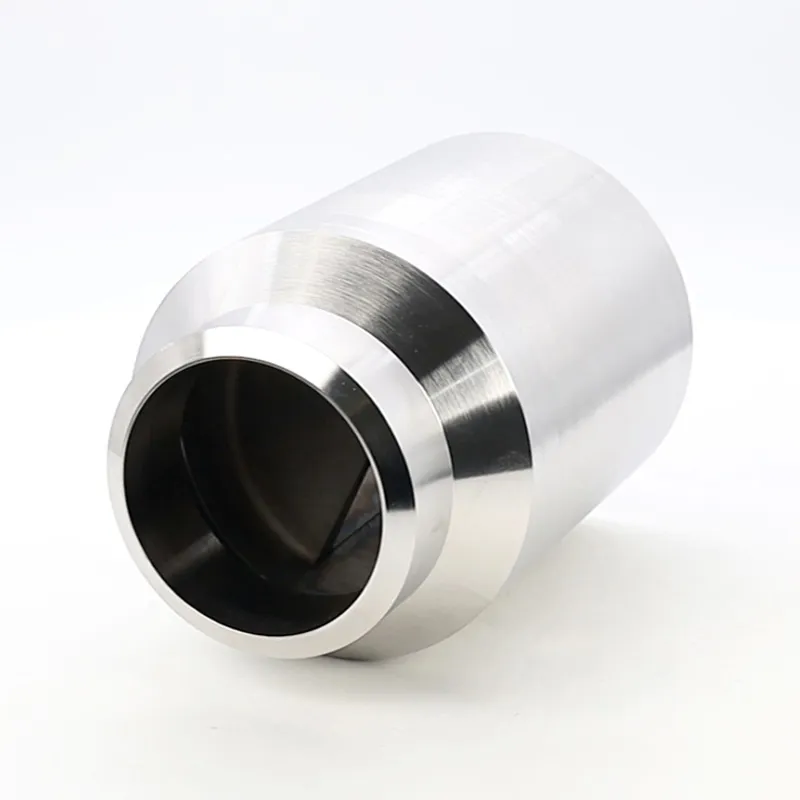
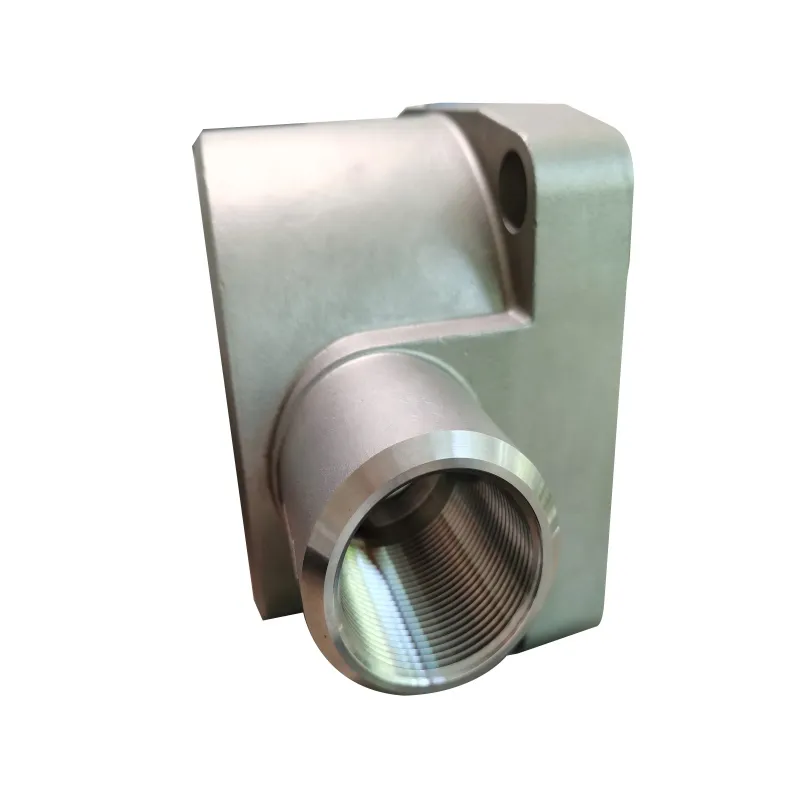
When you hear 'precision investment casting factory', most minds jump straight to aerospace or medical implants. That's the glossy brochure version. The reality on the shop floor is messier, more nuanced. It's not just about achieving tight tolerances; it's about sustaining them batch after batch, through humidity shifts, alloy inconsistencies, and human variables. Many clients come in fixated on the 'precision' part, often overlooking the 'factory'—the complex, living ecosystem of processes that actually delivers it. That's where decades of operation, like the thirty-plus years at a place like Qingdao Qiangsenyuan Technology Co., Ltd. (QSY), stop being a marketing line and start meaning something tangible: institutional memory for failure modes.
The Shell Game: Where Precision Actually Begins
Everyone talks about the final dimensional report, but the real battle is won or lost in the ceramic shell room. This is the first major divergence point from a standard investment casting operation. In a precision-focused facility, the slurry viscosity, stucco grain size distribution, and drying environment aren't just checked; they're statistically tracked. At QSY, for instance, they've moved beyond simple Zircon-based primary coats for all jobs. For thin-walled, complex geometries in stainless steel, they might opt for a fused silica system from the start to control shell expansion differently. It's a judgment call based on the CAD model and past headaches.
The automation level here is telling. A true precision factory isn't necessarily fully robotic in dipping, but the process is regimented. The dwell time in slurry, the drainage angle, the fluidized bed for stucco application—these are locked down. I recall a project for a turbine sensor housing where we saw consistent wall thickness variation on one flange. After chasing the wax injection molds, we realized the issue was in the third slurry coat: the drying fans in that bay had an inconsistent airflow pattern, causing slight differential drying and shell warpage before the next dip. A 'precision' process failed on factory maintenance.
That's the thing. Precision investment casting is a chain of maybe 50 critical steps. You can have 49 perfect, and one—like ambient humidity during shell drying—can pull the final casting out of spec. Facilities that have been around, like the one behind https://www.tsingtaocnc.com, have logs filled with these correlations. They know that when the monsoon season hits Qingdao, the dehumidifier settings in the shell-building area need a pre-emptive tweak, not a reactive one. That's operational precision.
Material is Not Just a Selection on a Datasheet
Clients specify 316L stainless steel or Inconel 718, and think that's the end of it. In a precision context, the material story starts much earlier. The pedigree of the master alloy, the melting practice, and crucible history matter immensely. For their nickel-based and cobalt-based alloy work, a foundry like QSY isn't just buying certified ingots; they're auditing the supplier's melt practice. Trace elements, grain refiners, even the charge makeup (percentage of revert material) are controlled inputs. A 'special alloy' isn't special if its behavior during the controlled solidification of investment casting isn't predictable.
I've seen a batch of what was supposed to be standard 17-4PH precipitate-hardening stainless yield inexplicably low ductility. The certs were fine. The culprit? The master melt was fine, but the revert material blended in at the supplier end had a slightly different thermal history, altering the nucleation sites during our casting solidification. It didn't affect tensile strength much, but it killed the impact resistance. A precision factory needs the metallurgical depth to diagnose that, not just blame the metal supplier. It often means running your own additional checks—like thermal analysis during a trial melt—to see how the alloy actually freezes, not just trusting the textbook phase diagram.
This extends to post-casting. With materials like duplex stainless steels, the rapid cooling of investment casting can lock in an unfavorable phase balance. The 'precision' then shifts to the heat treatment department. It's not a standard recipe; it's a recipe developed for the specific section thickness and geometry of that casting to normalize the structure without inducing distortion. The machining division, which they also operate, gets involved early here. They might advise adding 0.5mm of stock on a critical face knowing that stress relief will cause a predictable shift, which they'll then machine back to the perfect final dimension.
CNC Machining: The Unspoken Partner in Precision
This is a critical point many standalone foundries miss. No investment casting, no matter how precise, is truly 'net-shape' for all features. Critical sealing surfaces, threads, and mating interfaces will need machining. The synergy between the casting and machining divisions under one roof, as at QSY, is a massive hidden advantage for precision. The machinists aren't dealing with a black-box vendor's part; they're machining a casting they helped design for manufacturability.
The feedback loop is immediate. If a core pin in the wax mold is causing a slight deviation that's a nightmare to fixture for machining, the pattern shop hears about it the same day. They can adjust the wax tooling for the next batch. More importantly, the CNC programmers understand the casting's likely stress state and residual stock distribution. They'll sequence operations to minimize re-distortion. For a complex pump housing, they might rough machine, then do a vibrational stress relief, then come back for the finish passes. This isn't a theoretical workflow; it's daily practice when both sides report to the same management and share the same goal of a part that fits perfectly on the customer's assembly line.
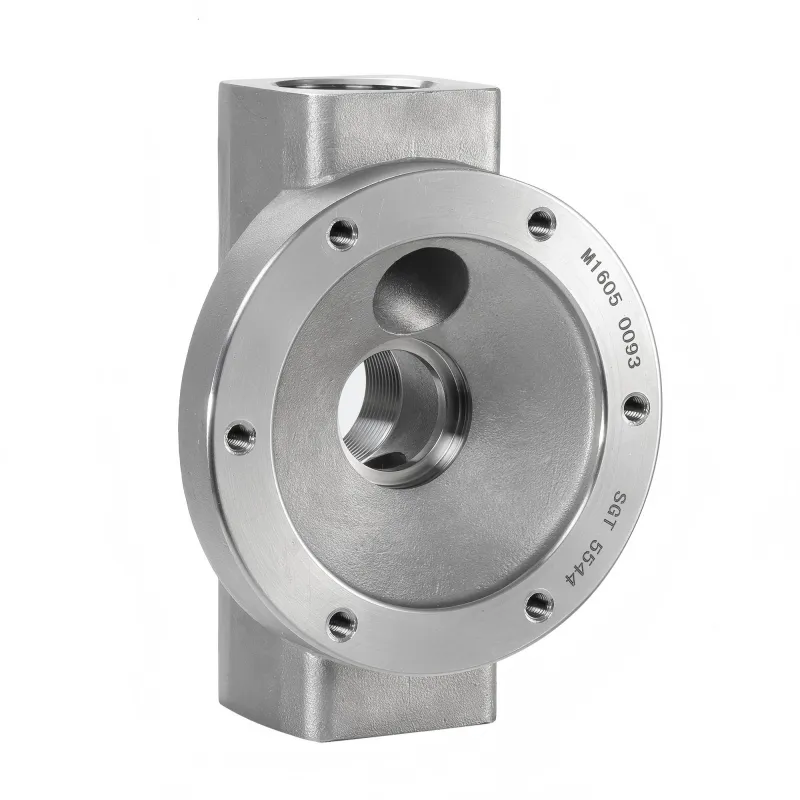
I remember a valve body in cast iron where the as-cast bore was within the drawing tolerance, but had a barely perceptible taper. For a hydraulic seal, it was unacceptable. A separate machine shop would have simply bored it out round and to size. Their in-house team looked at it, realized the taper was consistent and related to solidification shrinkage against a core. They modified the gating in the casting process to feed that section better for the next order, eliminating the root cause. The current batch was saved by skilled CNC work, but the future batches were improved at the casting source. That's the integrated precision factory model.
The Gating & Feeding: More Art Than Science (At First)
Simulation software is fantastic, but it's a starting point. The final gating design on the wax tree is always a blend of simulation results and tribal knowledge. A new engineer might design a beautiful, symmetrical feeding system for a stainless steel bracket that the simulation says will be sound. An old-hand pattern maker might look at it and say, That runner will cool too fast and shut off feed to the thick boss here, pointing to a spot the simulation's meshing might have coarsely approximated.
This is where the 30 years of precision investment casting operation for a company like QSY becomes a tangible asset. Their pattern library is a history of solved problems. They know that for a certain family of aluminum bronze marine components, you need a heavier sprue and slower pour to avoid turbulence, even if the simulation says you can go faster. They've learned through expensive scrap that for thin-walled sections in superalloys, sometimes you need to 'heat sink' part of the shell with a custom ceramic insert to direct solidification front, a trick you won't find in basic software packages.
The true test is first-article inspection. You cut up the sacrificial samples, do a dye penetrant check, look at the macro-etch. You're looking for shrinkage porosity, hot tears, inclusions. If you find them, you don't just tweak the process parameters; you often go back to the wax tree design. Maybe add a chill, maybe reposition a gate. This iterative, physical R&D loop is what separates a job-shop caster from a precision investment casting factory. The factory has the systems and patience to run these trials methodically because they know it pays off in yield and reliability over a 10,000-piece order.
Measurement & Validation: The Final Arbiter
All the process control is meaningless without metrology that you trust. And I don't just mean a CMM in an air-conditioned room. I mean the measurement of wax patterns, of ceramic cores, of intermediate shell dimensions before dewaxing. Dimensional drift can happen at any stage. A robust precision operation will have checkpoints at each major transition.
For example, they might use laser scanning on critical wax patterns assembled onto the tree, comparing to the nominal CAD model. A slight bend in a wax airfoil section can be corrected with a warm tool before it's committed to ceramic. After shell building, they might use ultrasonic thickness gauges on green shells in key areas to ensure uniform coating. It's about catching drift early, when it's cheap to correct.
The final CMM report is the certificate, but the story is in the process capability indices (Cpk) they can provide for critical dimensions over a production run. A shop that can show a Cpk of 1.33 or better on a bore diameter across 500 pieces has demonstrated true process mastery. This data is gold. It's what lets a design engineer shrink their tolerances, knowing the process can hold them. It's what transforms a supplier from a vendor into a design partner. When you look at the scope of a vertically integrated operation like the one detailed at https://www.tsingtaocnc.com, encompassing shell mold casting, investment casting, and finishing, this end-to-end control over data is the ultimate output, more valuable than any single perfectly cast part.