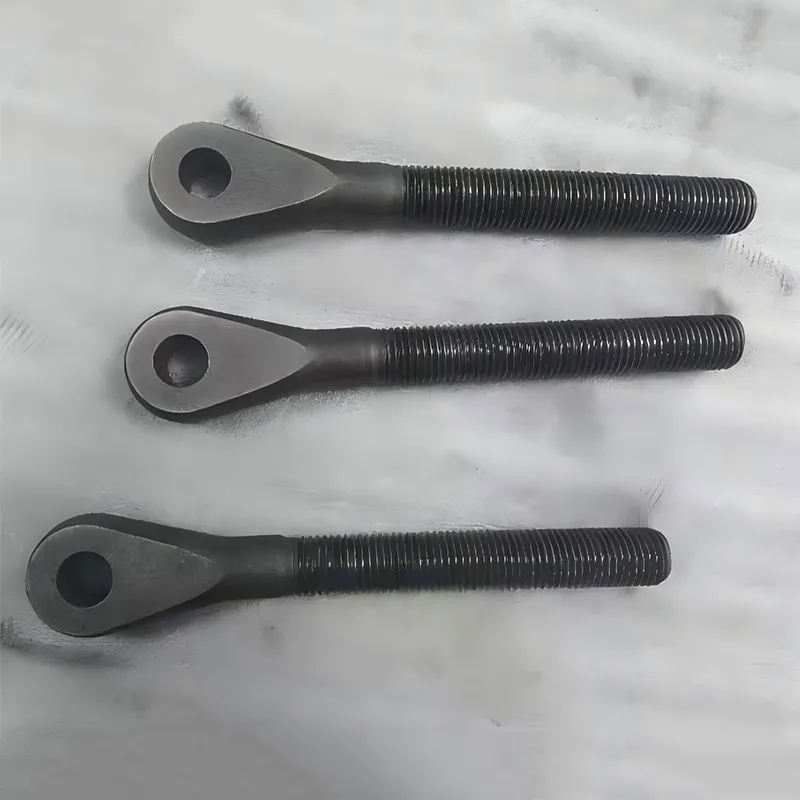
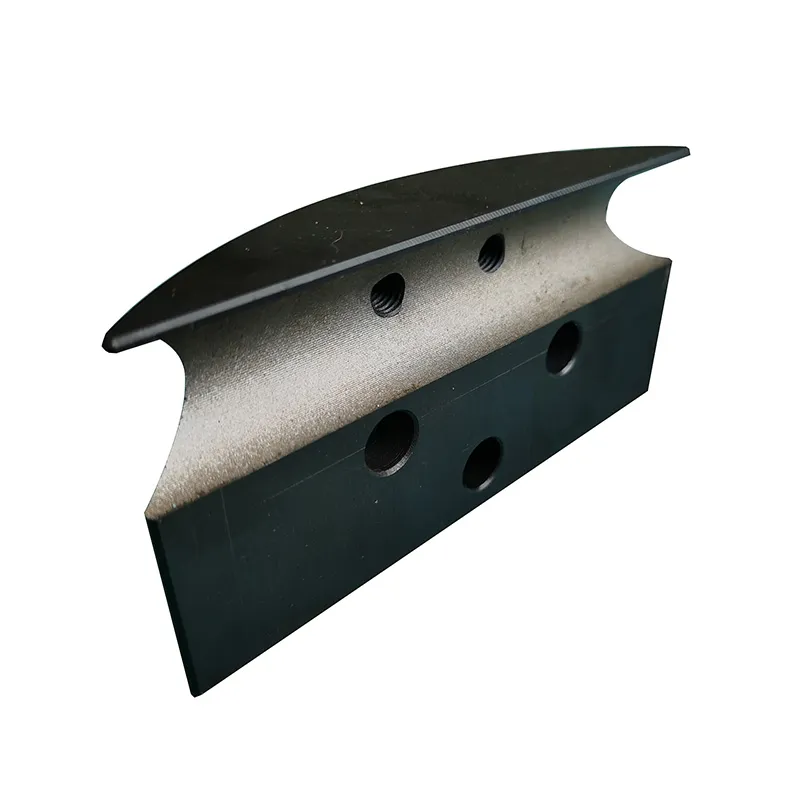
When most people hear 'precision machining', they immediately think of tight tolerances, maybe ±0.001 or less, and shiny, flawless finishes. That's the brochure version. The reality, the daily grind of it, is that hitting those numbers is only half the battle—the easy half, frankly. The real challenge is making a part that not only measures right on a CMM but also functions perfectly under load, at temperature, or after a thousand cycles. I've seen too many drawings where the engineer has specified a tolerance that's tighter than necessary, driving the cost up 300% for a gain that's purely theoretical. It's not just about the machine's capability; it's about understanding what the part actually needs to do. That's where decades of handling different materials, from simple cast iron to nightmarish cobalt-based alloys, pays off. You start to develop a feel for what the metal wants to do, where it might spring, or how a thin wall might chatter no matter how perfect your tool path is.
The Foundation: It Starts with the Casting
You can't machine precision into a bad casting. This is the first and most common pitfall. I've had clients send us a print for a complex component, demanding micron-level accuracy on every feature, but the raw casting they provide is full of hard spots, shrinkage porosity, or inconsistent wall thickness. It's a losing battle from the start. Our approach at Qingdao Qiangsenyuan Technology Co., Ltd. (QSY) is integrated because we control the front end. With over 30 years in both casting and machining, we see the whole process. For instance, when we do shell mold casting or investment casting in-house, we're already planning for the machining fixtures. We might add a little extra stock in a critical location, not just for cleanup, but to ensure there's solid, homogeneous material for the end mill to engage. It sounds simple, but this coordination prevents 90% of the quality headaches later on.
Take a valve body for the oil & gas sector, made from a nickel-based alloy. These alloys are brutally tough on tools. If the as-cast surface has a sand inclusion or a gas pocket right where you need a perfect seal face, you're scrapping a very expensive part. By managing the entire chain from the foundry floor to the CNC machining center, we can tailor the casting process—like adjusting the pouring temperature or the mold coating—to yield a workpiece that's not just dimensionally close, but structurally sound for machining. This isn't magic; it's just painful experience turned into a standard procedure. You learn which patterns are prone to distortion and compensate for it in the mold design phase, long before the first chip is cut.
There's a tangible difference in the shop. A casting that comes from a process you understand and control has a predictable personality on the machine. You know roughly how it will react to clamping forces, where residual stress might be hiding. An external casting is always a mystery until you start cutting. We've had to develop specific clamping strategies for thin-walled investment castings to avoid distortion, sometimes using low-melt-point filler supports during machining. These aren't textbook solutions; they're the kind of tricks you figure out after scrapping a few pieces and getting chewed out by the production manager.
The Material is the Boss
Talk to any machinist with salt, and they'll tell you: the material dictates everything. Programming, tool selection, speeds and feeds, even the coolant strategy—it all flows from what you're cutting. We run the gamut from cast iron to stainless steel and into the exotic realms of cobalt-based and nickel-based alloys. Each family behaves like a different animal.
Ductile iron machines beautifully; it breaks into nice, short chips. 316 stainless, on the other hand, wants to work-harden and gum up your insert if you're too gentle. But the superalloys? That's a different league. They're not just hard; they retain their strength at high temperatures, which means they fight the cutting tool all the way. The heat doesn't go into the chip; it goes into the tool, leading to rapid cratering and failure. Early on, we burned through a small fortune in carbide end mills trying to machine a Monel component using parameters that worked for alloy steel. The sound was wrong—a high-pitched screech instead of a consistent hum. The failure was in the planning; we treated it as just another hard metal. Now, we know it requires specialized, sharp, polished-flute tools, lower cutting speeds, high-pressure coolant directed right at the cutting edge, and a very rigid setup. Any chatter will instantly kill the tool.
This material knowledge directly informs our process at QSY. For a project involving a high-temperature cobalt alloy turbine seal, we didn't just quote the machining. We started with a material conference. Which specific grade? What was its typical as-cast hardness? Were there any known issues with carbide precipitation at the grain boundaries? This level of detail determines if the job is profitable or a nightmare. We might even run a small test coupon first to dial in the parameters before touching the actual casting. It's slower upfront, but it prevents catastrophic, unrecoverable waste later.
The Illusion of the Perfect Machine
There's a pervasive myth that buying a brand-new, million-dollar five-axis machining center solves all precision machining problems. It's a fantastic tool, but it's just a tool. I've seen shops with older, slower machines produce more consistent, higher-quality parts than the shop next door with all the latest gear. Why? Because the team understands their machine's quirks. They know that the Z-axis on machine 3 has a tiny bit of thermal growth after two hours of runtime, so they compensate for it. They've mastered the art of workholding for their specific parts.
The real precision comes from the system, not just the spindle. It's in the calibration of the probe, the cleanliness of the tool holder taper, the stability of the foundation block, and the environmental control in the shop. A temperature swing of 10 degrees Fahrenheit over a shift can throw off measurements on a large part. We learned this the hard way machining a large diesel engine block. Measurements taken in the cool morning were passing, but the same checks in the late afternoon heat were out of spec. The part itself was expanding. We had to implement a climate-controlled inspection area and let parts normalize to a standard temperature before final sign-off.
Furthermore, automation introduces its own variables. A robotic arm loading parts might introduce a consistent 0.0002 misalignment if not perfectly synchronized. The pursuit of precision is a constant battle against a million small variables. The machine is just one of them. At our facility, we spend as much time on metrology and process control as we do on actual cutting. It's the unsexy, behind-the-scenes work that makes the flashy tolerance possible.
When Good Enough is Perfect
This might sound heretical, but the highest level of precision machining expertise is knowing when not to chase absolute precision. Blindly adhering to every decimal point on a print can be an enormous waste of time and money. A functional dimension—like the location of a mounting hole that will use a washer and bolt—doesn't need to be held to a tenth (.0001). Holding it to two thousandths (.002) is often more than sufficient and can be achieved in one pass instead of three.
The real value we provide as a partner, which you can see in the project history at https://www.tsingtaocnc.com, is in this kind of value engineering. A client came to us with a legacy part—a hydraulic manifold—that had always been machined to incredibly tight tolerances on every surface. It was expensive and had a long lead time. We asked about its function. It turned out only three bore diameters and the sealing face flatness were truly critical for pressure integrity. We proposed relaxing the tolerances on the non-functional exterior features and the bolt hole pattern. The client was skeptical but agreed to a trial run. The part performed identically in testing, but the cost dropped by 40% and the machining time was cut in half. We didn't make it worse; we made it smarter.
This requires confidence and a deep dialogue with the customer's engineers. It's about shifting the focus from making the print to solving the problem. Sometimes, the most precise solution is an elegantly simple one that doesn't tax the limits of the technology. It's about applying effort where it matters.
The Human Factor in a Digital Process
Despite all the CAD/CAM, automation, and in-process probing, the skilled machinist's eye and intuition are irreplaceable. The screen might show a perfect tool path, but it can't hear the change in sound when a tool starts to dull or when a chip isn't evacuating properly. It can't see the slight discoloration on a chip that indicates you're generating too much heat in the cut.
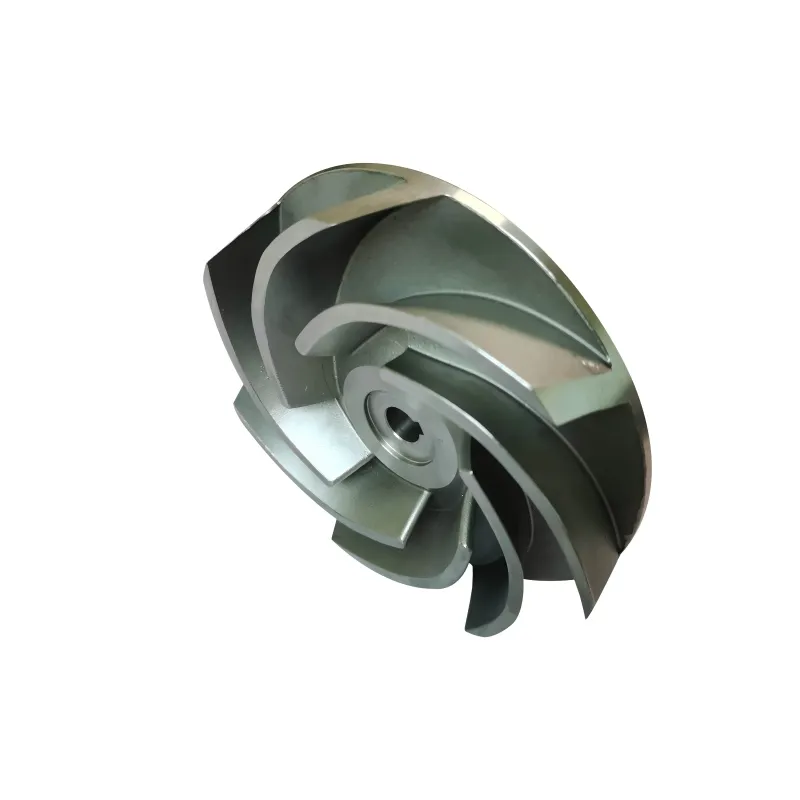
I remember a job machining a complex impeller from stainless steel. The program was verified, the tools were new, but on the first part, the finish on a concave surface was terrible—full of chatter marks. The CAM software had generated a perfectly uniform stepover, but the changing engagement angle in that contour was causing vibration. The programmer, an old hand, didn't just tweak speeds and feeds. He looked at the part, visualized the cutter engagement, and manually edited the tool path to vary the stepover and introduce a slight overlap in a problematic zone. It wasn't a textbook solution; it was a craft solution. The software alone couldn't diagnose that; it took a human who understood both the physics of cutting and the geometry of the part.
This is the culture we try to maintain. The machines and software are tools that extend our capability, but they don't replace judgment. The final check is always a person with a micrometer, a surface finish tester, and years of experience knowing what a good part looks and feels like. That tactile, sensory feedback loop is still the ultimate QC check, especially for complex assemblies where fit and feel matter as much as the numbers. It's this blend of technology and seasoned craftsmanship that defines true precision machining, turning a raw casting into a reliable, functioning component.