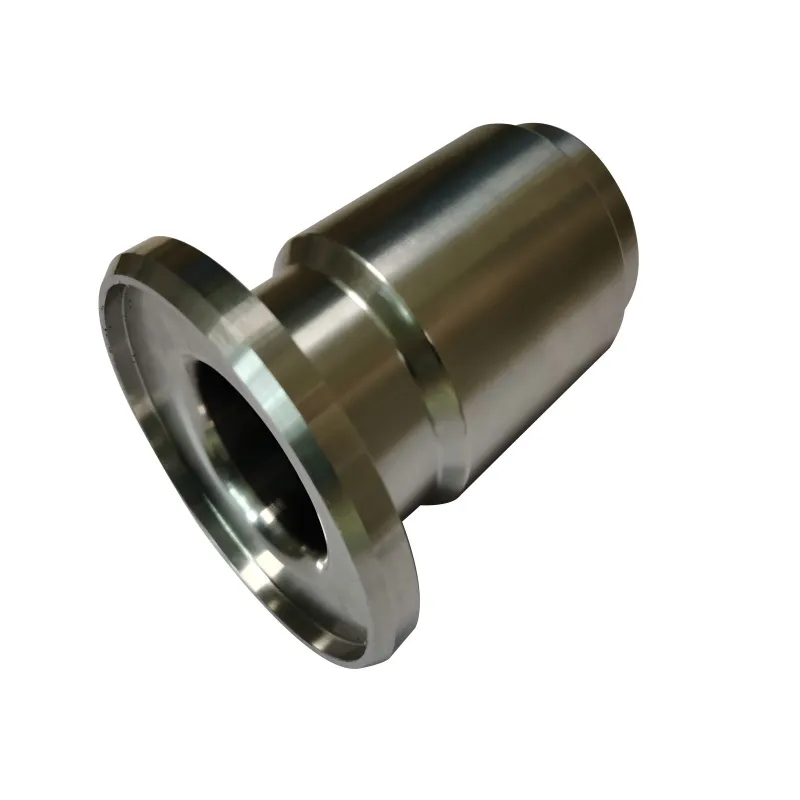
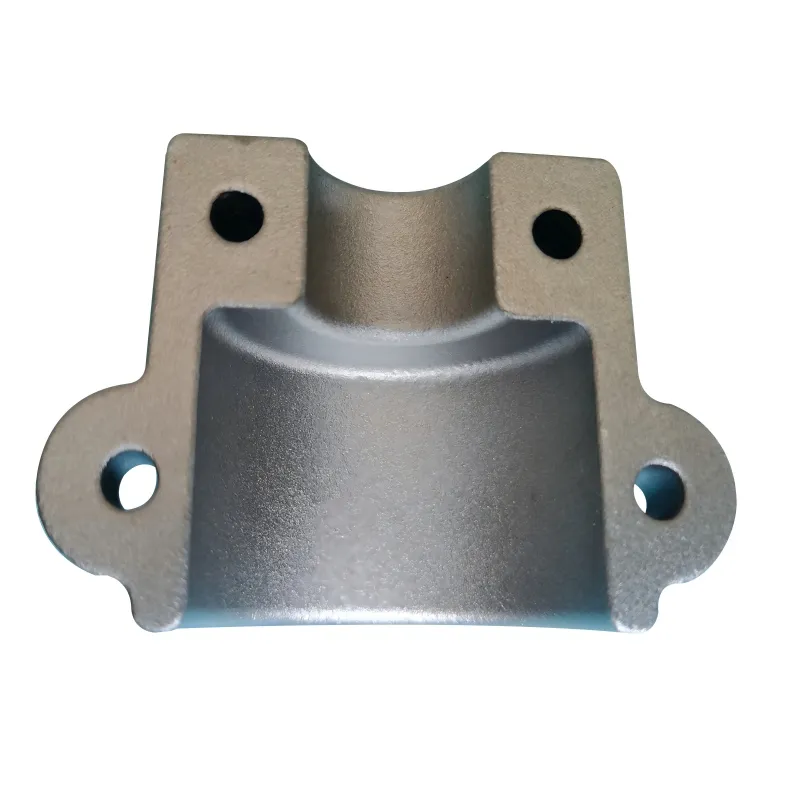
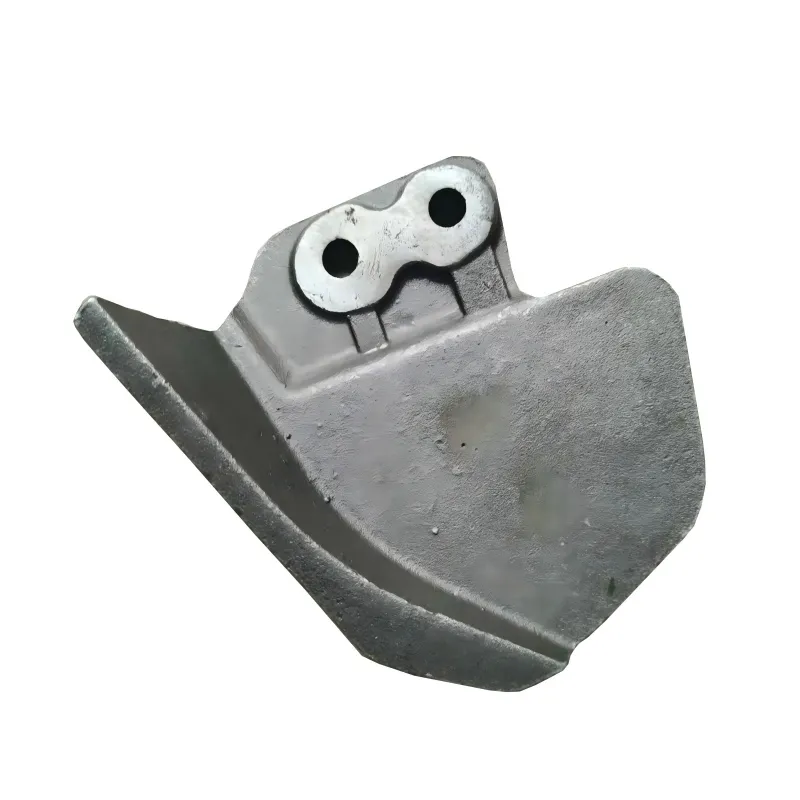
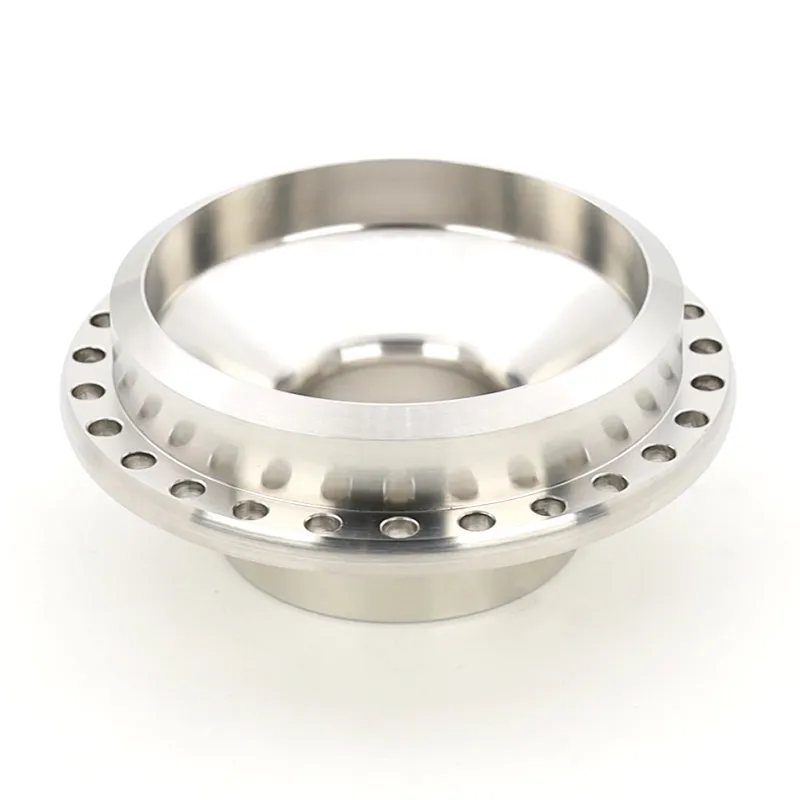
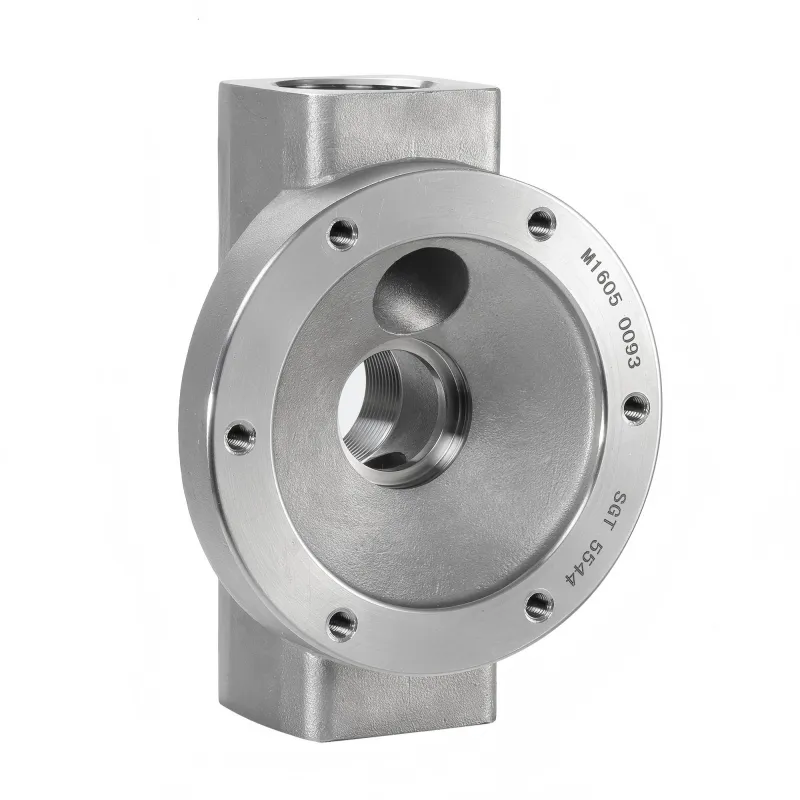
When you hear 'precision metal casting', most minds jump straight to investment casting. That's not wrong, but it's a starting point that often misses the forest for the trees. The real precision isn't just about the process name; it's about the entire ecosystem of control—from the alloy's melt fingerprint to the final machine tolerance. I've seen too many projects stall because someone specified 'precision casting' on a drawing without defining what that actually meant for their part's function. Was it the surface finish? The dimensional stability under heat? The consistency across a batch of 10,000 pieces? That ambiguity is where problems are born.
The Shell Game: More Than Just Sand
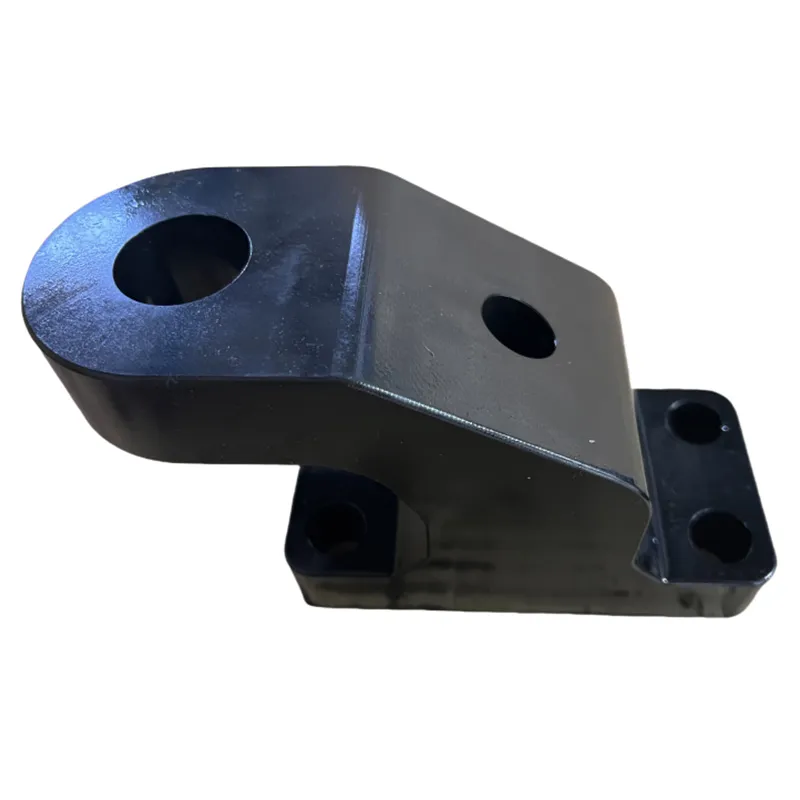
Take shell mold casting. It gets lumped in with simpler sand casting sometimes, but that's a disservice. The precision here comes from the resin-bonded sand mold itself. It's rigid. That rigidity means less mold wall movement during the pour, which translates directly to better dimensional fidelity. We're not talking about holding +/- 0.005 inches on every surface—that's for investment—but for certain geometries, especially larger, flatter components, it can be remarkably consistent and cost-effective. The trick is knowing when to use it. I recall a bracket for a heavy-duty pump, a fairly simple shape but with two critical bored holes. Green sand casting gave us too much variation in the cored holes, leading to a brutal machining setup time. Switching to shell mold fixed the core shift issue almost entirely. The mold cost was higher, but we saved more in machining labor and scrap. That's a practical precision metal casting decision.
Where shell mold can bite you is in surface finish expectations. You'll get a decent finish, certainly better than conventional sand, but it will have a characteristic grain texture. If the spec calls for a pristine, as-cast finish ready for plating, you might be disappointed. It often needs a light blast or machining. I learned that the hard way on an early project, assuming the customer would understand the 'as-cast' look. They didn't. Now, managing that expectation is part of the initial review.
Material choice plays in too. We run a lot of ductile iron and carbon steel through shell molds at our shop. The process handles the thermal shock of ferrous alloys well. But I've seen attempts to run high-nickel alloys through the same setup, and the thermal characteristics are different—it can lead to hot tearing if the gating and cooling aren't adjusted. That's the nuance. A process isn't just a button you press; it's a set of parameters that marry the material to the mold.
Investment Casting: The Obvious Choice, With Hidden Complexities
Investment casting is the poster child for precision metal casting, and for good reason. The ceramic shell formed around a wax pattern gives you that fantastic surface finish and ability to capture fine details. But 'precision' here isn't automatic. The wax pattern process itself is a potential source of variation. If the injection parameters for the wax aren't locked down—temperature, pressure, cooling rate—the pattern dimensions waver, and that wavering gets replicated in every shell and every final casting. I've spent weeks dialing in wax processes for a new part family. It's tedious, foundational work that doesn't look glamorous but determines everything that follows.
Then there's the shell building. The dip coats, the stucco application. It's manual, artisanal work even in a modern facility. The skill of the technician applying the primary slurry coat matters immensely for capturing fine detail. Too thin, and you risk shell failure or metal penetration. Too thick, and you might lose sharp corners. We once had a issue with thin walls on a stainless steel manifold. The wax patterns were perfect, but the metal was 'washing away' the ceramic in certain areas during the pour. The solution wasn't brute force; it was adjusting the viscosity of the first slurry coat and the grade of the stucco material to build a more resilient, yet still precise, initial layer. This is the granularity of control that defines real precision.
And shrinkage. Everyone knows about linear shrinkage allowances, but the interaction between the alloy and the ceramic shell during cooling creates constraints. For a complex part, the alloy doesn't shrink uniformly. This can lead to residual stress or, in the worst case, hot cracks. We work with a lot of stainless steel and special alloys like cobalt-based alloys for valve trim. These materials have their own unique shrinkage behaviors and strength-at-temperature curves. The gating system has to be designed not just to feed metal, but to allow the casting to shrink with minimal resistance from the shell. It's a dance between geometry, metallurgy, and ceramic science. A failed pour on an expensive nickel-alloy component teaches you more about that dance than any textbook.
The Machining Handshake: Where Casting Precision is Proven
No discussion of precision metal casting is complete without touching machining. They are inseparable. A casting can be dimensionally beautiful on a CMM, but if it lacks machinability or has inconsistent hardness, it's a nightmare on the CNC floor. This is where integrated operations, like what we've built over the years, show their value. The feedback loop is short. If the machining team finds that drill bits are wearing out too fast on a batch of castings, they can walk back to the foundry and we can look at the microstructure. Was the cooling rate off? Is there an unexpected carbide formation in this heat of cast iron?
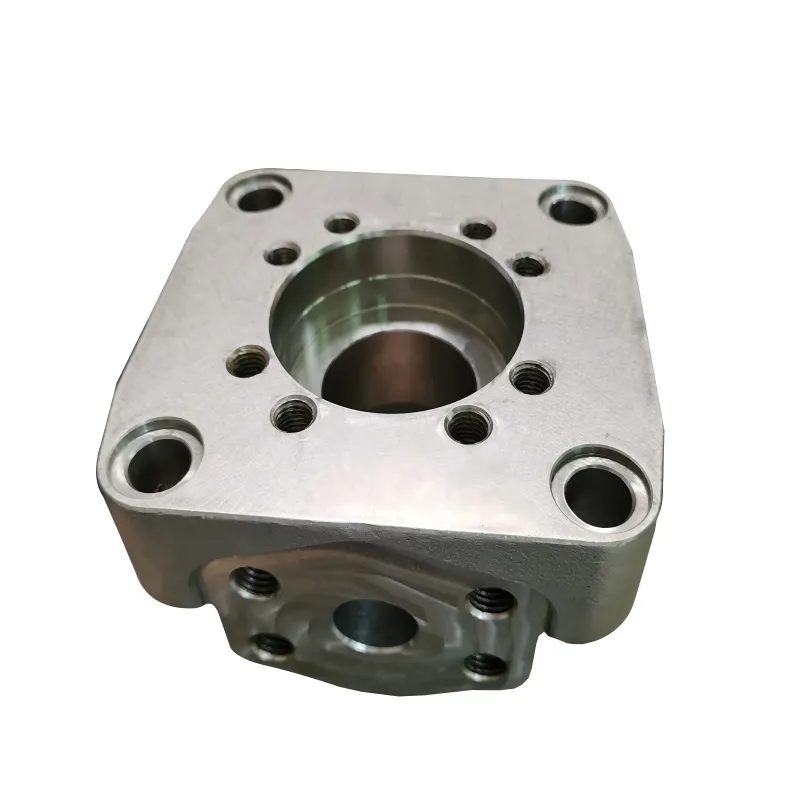
I remember a component for a hydraulic block. The investment casting was near-net-shape, but it had six deep, precision-tolerance holes to be drilled and tapped. The first few batches machined fine. Then, a new batch started causing tap breakage. The casting dimensions were identical. The issue traced back to a slight variation in the phosphorus content of the stainless steel feedstock, which made the material 'stringier' and less friendly to tapping. The fix was a minor chemistry adjustment and a tweak to the annealing cycle post-casting. Without controlling the entire chain, you'd just be shipping out castings that your customer couldn't machine efficiently, damaging the relationship. Precision is a delivered result, not just a shipped condition.
This is why companies that combine casting and machining under one roof, like Qingdao Qiangsenyuan Technology Co., Ltd. (QSY), have an inherent advantage for critical components. Having operated for over three decades, they understand that the handoff from furnace to CNC isn't a transaction; it's a continuum. The machinist's need for a stable, predictable base material directly informs the foundryman's process. When you're dealing with special alloys that are both expensive and difficult to machine, this integration isn't a luxury; it's a necessity for achieving reliable, cost-effective precision metal casting outcomes.
Material is the Message
You can't talk precision without talking material. The alloy isn't just a line item on a spec sheet; it dictates the entire process. Steel and stainless steel behave differently in the mold. Stainless, with its higher melting point and different fluidity, often requires higher pouring temperatures and more careful gating design to avoid mistruns or oxide inclusions. The so-called 'special alloys'—the nickel-based and cobalt-based alloys—are another world. They're often poured for extreme service: high temperature, high corrosion, wear resistance. Their precision challenge is often about integrity. Porosity in a standard fitting might be acceptable; in a jet engine turbine blade cast from a nickel superalloy, it's catastrophic.
We worked on a component for a chemical processing pump, specified in a duplex stainless steel. The corrosion resistance was paramount. The initial casts met dimensional specs but failed in corrosion tests. The problem? The ferrite-austenite phase balance was off because the cooling rate through a critical temperature range wasn't controlled tightly enough in the ceramic shell. Achieving 'precision' meant managing the metallurgical structure, not just the outer shape. We had to modify the shell composition to slightly alter its insulating properties and implement a controlled cooling protocol post-pour. It added steps, but it was the only way to meet the material performance requirement, which was the true purpose of the precision cast.
This is where generic foundries hit a wall. Handling exotic materials isn't just about having a furnace that can reach the temperature. It's about the knowledge of how that alloy solidifies, how it reacts with different mold materials, and what post-casting heat treatments are needed to bring out the required properties. It's deep, specialized knowledge that builds up over years, often through trial and error. You learn which alloys are prone to micro-shrinkage, which ones need a hot isostatic press (HIP) cycle as a standard procedure to collapse any internal porosity. That knowledge is a core part of the precision equation.
The Real Measure: Consistency in Volume
Finally, the ultimate test of a precision metal casting process isn't a single perfect prototype. It's the 500th piece in a production run being as good as the first. Repeatability is king. This is where process control documents, rigorous inspection schedules, and statistical process control (SPC) come in. It's less about the art and more about the science. Monitoring the viscosity of the slurry bath daily, checking the wax pattern dimensions with go/no-go gauges every few cycles, performing periodic destructive tests on sample castings to check internal soundness.
We supply cast components for an automotive transmission assembly. The volume is high, the tolerances are tight, and the failure cost is enormous. The precision here is defined by the CpK values on the critical dimensions. To hit those numbers consistently, every variable in the chain has to be monitored and controlled. The temperature of the metal before the pour, the pre-heat temperature of the molds, the ambient humidity in the shell drying room (it affects drying rates). It's a system.
When you work with a partner like QSY, their 30 years in casting and machining translates to established, refined systems for this kind of volume precision. They've likely seen the failure modes, built the checkpoints, and understand the cost of letting a parameter drift. For a buyer, that historical process maturity is often more valuable than a shiny new machine. It means fewer surprises. And in manufacturing, no news is good news. Delivering batch after batch that simply fits and functions—that's the quiet, unglamorous truth of industrial-grade precision metal casting. It's not about making one masterpiece; it's about making ten thousand identical, reliable components that someone else can build their product around without a second thought.