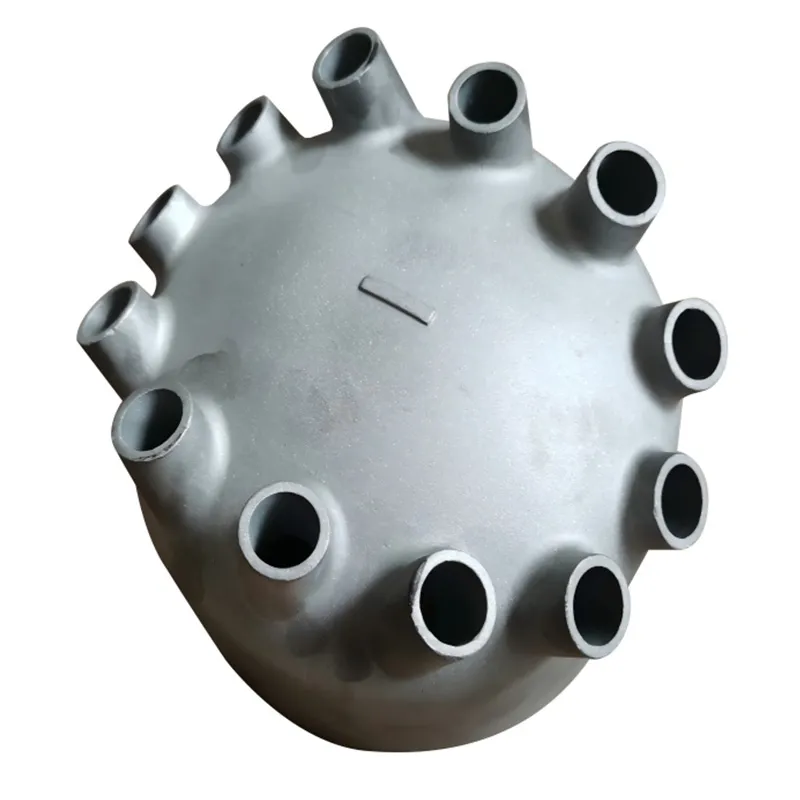
When most people hear 'precision plastic machining', they picture a CNC machine humming away, maybe a clean room, and parts that look perfect. That's the marketing image. The reality, the one you learn after scrapping a few hundred dollars' worth of PEEK or watching a tight-tolerance UHMWPE part warp a week after delivery, is that precision here is as much about material psychology as it is about machine calibration. It's a negotiation between the rigidity of metal-cutting dogma and the flexible, often temperamental, nature of polymers. A lot of shops that are brilliant with steel stumble here, treating plastic like a softer aluminum, and that's where the problems—and the real learning—begin.
The Material is the First Variable, Not the Constant
You can't just load a generic plastic program. Every polymer family behaves like a different species. Machining delrin (POM) is a dream—it's stable, predictable, chips nicely. You get a false sense of security. Then you switch to nylon or PTFE, and suddenly you're fighting moisture absorption and thermal expansion mid-cut. The part you measured perfectly on the machine bench is out of spec an hour later. I learned this the hard way early on with a run of POM bushings that had to mate with stainless pins. We nailed the tolerances, but the client called back: the bushings were squeaking. Why? We'd machined them too cleanly, the surface was too smooth for the intended lubricity. Sometimes, for plastics, the right surface finish isn't the smoothest one on the chart.
This is where a background in broader material processing becomes invaluable. Take a company like Qingdao Qiangsenyuan Technology Co., Ltd. (QSY). With over 30 years in casting and machining metals—especially tricky stuff like nickel-based alloys—they approach materials with a deep-seated respect for inherent properties. That mindset translates. When they handle precision plastic machining, it's not a sideline; it's an application of that same rigorous material science. Knowing how to manage the heat input and stress in a superalloy gives you an intuitive edge for managing the same in a high-performance plastic like PEEK, where residual stress is the enemy of dimensional stability.
The cooling method is a classic pitfall. Flood coolant? Often a terrible idea for many hygroscopic plastics. It can seep in and cause later swelling. Compressed air is better, but you have to manage static and chip evacuation. For some geometries, we found the best results came from a simple, targeted mist coolant with the right dielectric fluid, something we tweaked after talking to a mold maker. It's these little process adaptations, never mentioned in the machine manual, that define true precision.
Tooling and Fixturing: The Subtle Art of Holding Back
Everyone obsesses over tool geometry—rake angles, helix for plastics, etc. That's critical, sure. But fixturing is where jobs live or die. Clamp too hard on a thin-walled PC or acrylic tube? You'll see the imprint, or worse, create a stress point that cracks later. Vacuum chucks are great, but for prototype or low-volume runs, you get creative. We've used custom soft-jaws machined from a lower-durometer urethane, or even strategic use of double-sided tape for tiny, non-ferrous parts. The goal is to hold it just enough to resist cutting forces, but not to distort it. It's a feel you develop.
Tool wear happens differently, too. In steel, you see a flank wear land. In abrasive-filled plastics like glass-filled nylon, the cutting edge can get a polished, almost dulled look long before it chips, and your surface finish degrades quietly. You need to track this by part quality, not just by the hour meter. We instituted a simple log for certain materials: Part 50 surface Ra check. It caught more than one degrading tool before it ruined a batch.
When Precision Meets the Real World
A case that sticks with me was a client who needed a small, complex manifold out of PVDF for a chemical analysis device. The prints called for ±0.025mm on several interconnecting bores. We machined it, measured it on the CMM, and it was perfect. We shipped it. It failed in their assembly. Why? They were using a stainless steel threaded insert, and the act of pressing it in generated enough localized heat and stress to distort the adjacent bore by a few microns—enough to break tolerance. Our precision machining was flawless, but we didn't account for the next step in the part's life.
That failure forced a process change. For subsequent parts, we added a stress-relief annealing step post-machining, and then a final light finishing pass. It added cost and time, but it delivered a part that stayed stable in the field. That's the hidden layer of precision plastic machining: it's not just the state of the part when it leaves the shop, but its state when it's put to work. This holistic view is something you often see in shops with a legacy in critical components. QSY, for instance, with its history in investment casting and machining for demanding alloys, is structurally used to thinking about post-processing, heat treatment, and final performance, not just the machining step in isolation.
The Bridge from Metal to Plastic
There's a misconception that plastic machining is a step down from metal. It's not. It's a parallel track with its own PhD-level challenges. In fact, expertise in difficult-to-machine metals can be a huge advantage. The discipline of controlling vibration, heat, and tool deflection when milling Inconel directly informs how you approach a glass-filled composite. The mentality of process engineering over simple machining is key.
I look at the capabilities of a firm like QSY. Shell mold casting, investment casting, CNC machining of cobalt and nickel alloys—these are processes demanding extreme control. Applying that same control framework, that same scrutiny to material certificates and process parameters, to plastics is what elevates it from simple part-making to reliable precision plastic machining. It means understanding that the stock shape (rod, plate, molded blank) has its own stress history, that the shop environment's temperature matters, and that the packaging for shipping could affect moisture content.
In the End, It's About Anticipation
So, what's the takeaway after years of this? Precision isn't just a number on a print. It's a system. It starts with truly listening to the material—knowing that nylon will absorb water, that acetal has a low melting point, that PTFE will creep under load. It continues with designing a process that respects those quirks, with toolpaths that minimize heat, fixtures that don't distort, and measurements taken in a stable environment after the part has normalized.
It ends, most importantly, with anticipating what happens to the part after it's left your bench. Will it be assembled? Will it see temperature cycles? Will a metal component be installed into it? That final bit of foresight is what separates a competent machinist from a true manufacturing partner. It's the difference between making a part that's precise in a vacuum and delivering a component that ensures the client's assembly line doesn't stop, or their end product doesn't fail. That's the real goal, and frankly, the only thing that matters. The machines are just the tools to get there; the knowledge is what makes it precise.