When you hear 'premier precision machining,' what comes to mind? Probably a clean room, a million-dollar Swiss lathe, and parts with tolerances that make your head spin. That's part of it, sure, but the label gets thrown around so much it's lost its edge. In my book, it's less about the shiny brochure and more about the gritty, unglamorous process of making a promise to a client and then sweating every single micron to keep it. It's the difference between a shop that can hit ±0.005 and one that can consistently hold ±0.0002 on a complex Inconel 718 aircraft bracket, batch after batch, while managing thermal drift and tool wear in real-time. That's the plateau. A lot of shops claim it; far fewer live there day in and day out.
The Foundation: It Starts with the Casting
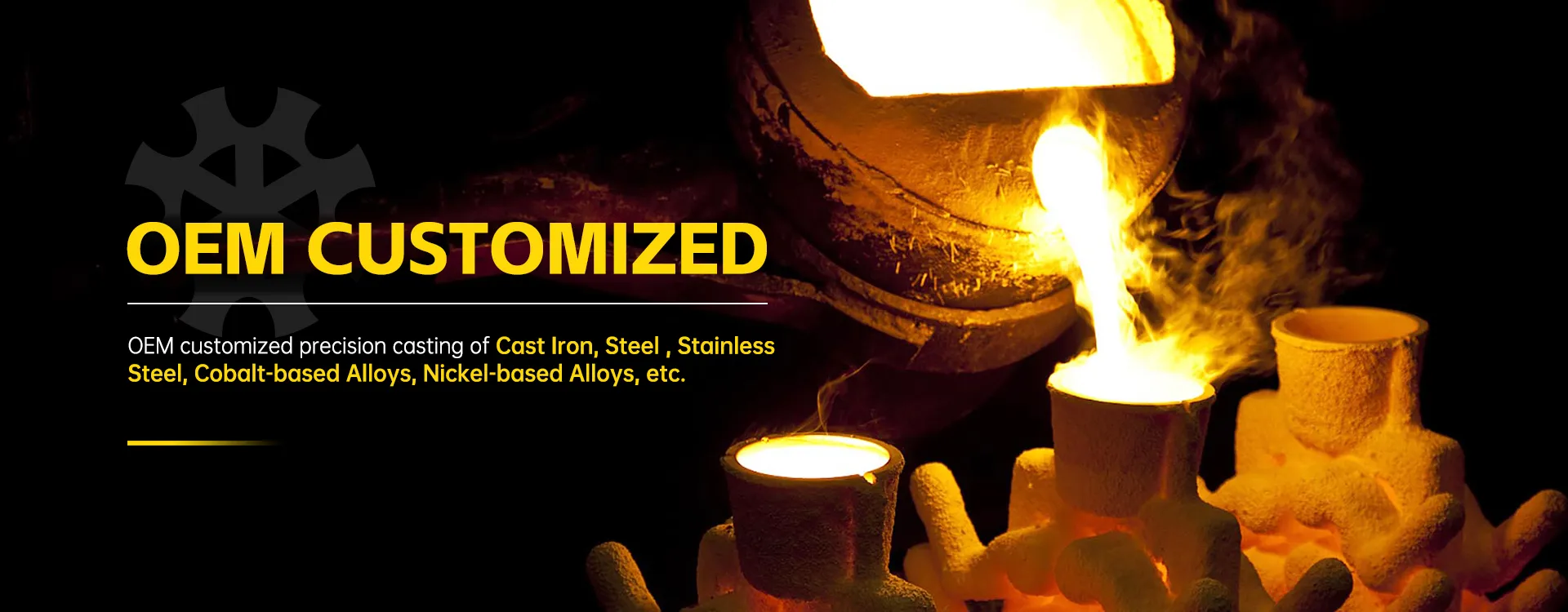
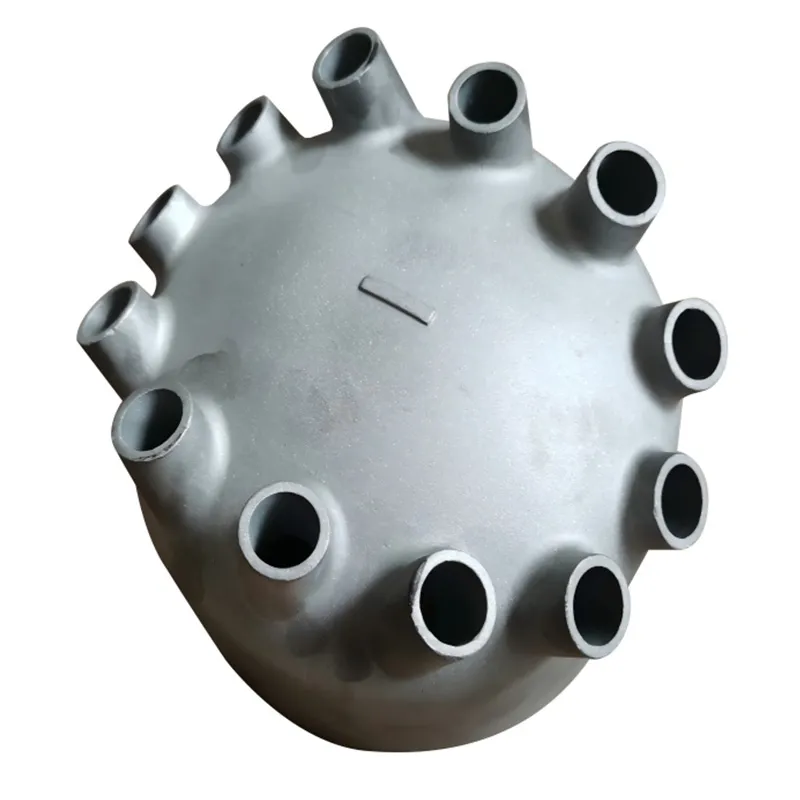
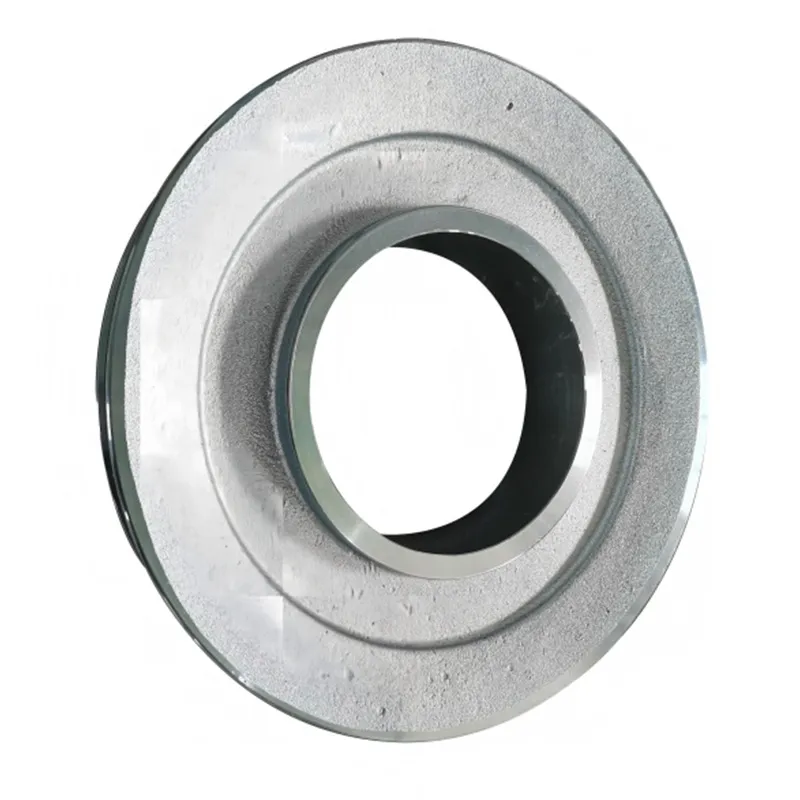
You can't talk about true precision machining without starting upstream. If your raw stock is garbage, you're just machining garbage to a very precise dimension. This is where a lot of integrated outfits fall short. I've seen beautifully programmed CNC work ruined by subsurface casting porosity that only showed up on the final finishing pass. That's a total loss. This is why the model of a company like Qingdao Qiangsenyuan Technology Co., Ltd. (QSY) makes sense. With 30 years in both casting and machining, they get this link intrinsically. Their starting point is their own foundry work—shell mold and investment casting. By controlling the casting process, they control the grain structure, the material integrity, and the initial stock allowance. Machining a part you cast yourself is a different conversation; you know its secrets, its stress points, where it might have shrunk a bit more. That's a foundational advantage for premier precision machining that pure job shops don't have.
Take their work with nickel-based alloys, for instance. These materials are brutal on tools and love to warp. If the casting isn't stress-relieved properly from the get-go, no amount of fancy machining will save it. QSY's approach of handling the entire chain, from molten metal to finished part, means they can bake in stability from stage one. They're not just cutting metal; they're managing the entire life cycle of the workpiece before it even hits the CNC bed. This isn't a theoretical benefit—it's what prevents a perfectly machined turbine blade from distorting after it's pulled off the vacuum chuck.
I recall a project for a marine pump impeller in duplex stainless steel. The client came to us after two failed attempts elsewhere. The issue wasn't the machining; it was catastrophic corrosion cracking that originated from micro-shrinkage in the casting. We started over, not with a bought-in forging, but by overseeing the investment casting process ourselves—much like QSY's core competency. We adjusted the pour temperature and the mold pre-heat to eliminate that shrinkage zone. Only then did we move to machining. The part passed all its ASTM A923 tests. The lesson? Precision is a continuum, not a single operation.
The Tooling & Technique Conundrum
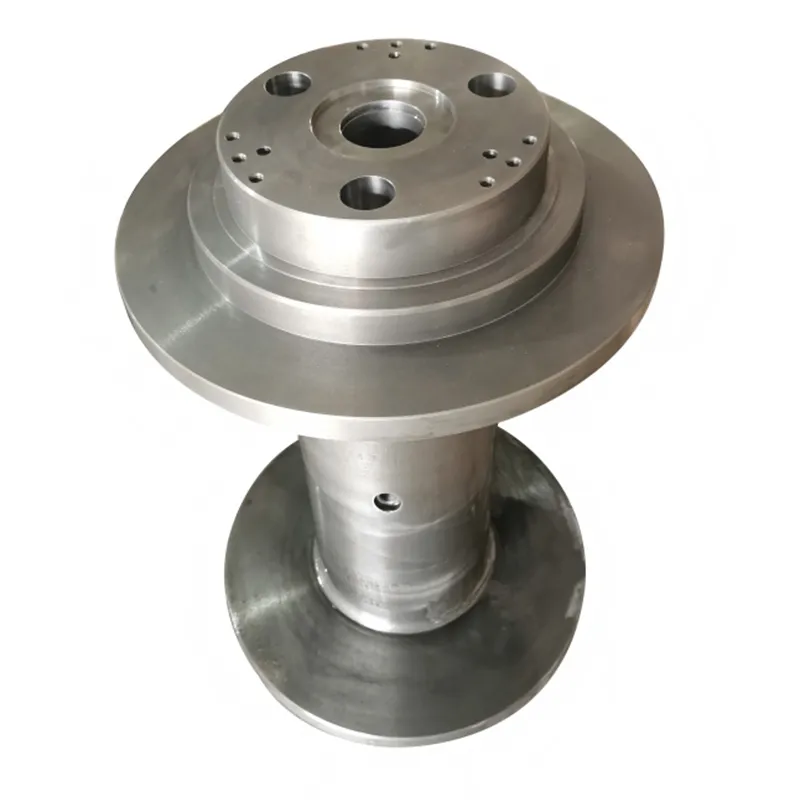
Alright, so you have a sound casting or forging. Now the real dance begins. Premier precision isn't just about buying the latest 5-axis mill. It's about the marriage of tooling, fixturing, and programmer intuition. For high-volume parts, we'd design custom carbide form tools. For one-offs in cobalt alloys, it might be about ultra-slow, high-pressure coolant strategies and single-point diamond turning on a retrofitted lathe. There's no playbook.
One of the biggest traps is over-relying on the machine's stated accuracy. The environmental control of the shop floor is a bigger factor than most admit. We learned this the hard way on a batch of large-diameter bearing races. We held tolerance perfectly in the cool morning. By mid-afternoon, with the sun on the shop's east wall, thermal expansion in the machine structure itself threw us out by half a thou. The fix wasn't more expensive machines; it was installing climate control and instituting a protocol for in-process verification at set intervals. Real premier precision machining accounts for the humidity in the air.
Fixturing is another dark art. For a complex, thin-walled aerospace component, we spent more time and money on the multi-stage, stress-free fixture than on the programming. It used a low-melt-point alloy to support the part during aggressive milling, then was melted out for final finishing. It looked Rube Goldberg-esque, but it was the only way to prevent chatter and distortion. This is the kind of problem-solving that never makes the sales sheet but defines the tier of work.
Materials: Where Theory Meets the Insert
Everyone lists the materials they work with: cast iron, steel, stainless, special alloys. The devil is in the details. Machining Grade 5 titanium is different from Grade 23. A 17-4PH stainless part needs to be machined before age-hardening, and you better account for the dimensional shift that happens during heat treatment. This is where deep, practical material science knowledge is non-negotiable.
Companies that have been in the thick of it, like QSY with their stated focus on special alloys like cobalt and nickel-based ones, develop a tactile library of knowledge. They know, for example, that Inconel 718 work-hardens instantly, so you must maintain a constant, positive feed rate—no dwelling. They know that for certain cast irons, a ceramic insert might be better than carbide for finishing. This isn't just data sheet info; it's written in broken tools and scrapped parts over decades. You can see this depth on a site like https://www.tsingtaocnc.com, where the focus isn't just on listing capabilities but presumably on applying them to solve specific problems in energy, marine, or automotive sectors.
I once saw a fantastic machinist, a true artist with a lathe, ruin a batch of Monel 400 parts because he used the same beautiful, curling chip flow technique he used on mild steel. The material galled and welded to the tool. We had to switch to a high-polish, sharp-edged insert with extreme-pressure additive in the coolant. The process looked less pretty, but the parts were perfect. Material dictates process, not the other way around.
Measurement & Metrology: The Final Arbiter
This is the truth-telling stage. You can think you've done everything right, but the CMM report is the final judge. In-house metrology capability is the hallmark of a premier shop. It's not just about having a CMM; it's about having the programs, the probes, and the skill to measure not just simple geometries but free-form surfaces, true positional tolerances, and surface finish on a curved profile.
We implemented a laser scanner for complex investment-cast parts that needed to be digitally compared to their original CAD model for deviation analysis. The first few times, it was humbling. It showed us distortions we couldn't feel or see with a micrometer. This feedback loop is critical. It directly informs the machining process—sometimes telling you to take a lighter final pass, or to adjust a clamping strategy.
Without this closed loop, you're guessing. A shop that offers end-to-end service, from casting to final inspection, embeds this quality check at every stage. They're not just checking the final part; they're checking the casting against the drawing before it ever goes to the CNC cell. This layered verification is what builds reliability.
The Integrated Advantage & Real-World Trade-offs
So, is the integrated model—controlling casting and machining under one roof—the holy grail for premier precision machining? Often, yes, but it's not automatic. It requires intense internal communication. The machining team needs to be able to feed back to the foundry about machinability issues, and the foundry needs to listen. When it works, it's seamless. You get faster turnaround, better traceability, and shared accountability.
Looking at a provider like QSY, their three-decade history suggests they've likely worked through these internal kinks. The value for a client is a single point of responsibility. If a part fails in fatigue testing, you don't have a casting supplier and a machining shop pointing fingers at each other. There's one team to solve the problem. That's a massive, practical benefit that transcends technical specs.
However, the trade-off can sometimes be flexibility. A fully integrated shop might be optimized for certain material families or part sizes. You probably wouldn't go to them for machining aluminum billets or plastic components. Their premier precision is rooted in their metallurgical and foundry expertise. That's a focused strength, not a generalist's claim. It means when your project fits their wheelhouse—a high-integrity, high-value component in steel or exotic alloy—the depth of control they can exert is significant. It moves the conversation from Can you machine this? to How do we engineer this part for ultimate performance and manufacturability from the very beginning? That's the pinnacle of the craft.