When most people hear 'products made by powder metallurgy', they immediately think of those small, intricate sintered gears or self-lubricating bearings. That's not wrong, but it's a bit like describing a car only by its spark plugs. The reality is far more embedded in everyday industrial life than that. There's a common misconception, especially from those who work primarily with molten metal, like in our foundry, that PM parts are just a cheaper, lower-performance alternative. Having spent decades at Qingdao Qiangsenyuan Technology Co., Ltd. (QSY) around shell mold and investment casting, I used to share a bit of that bias. It was only through direct collaboration with PM suppliers and trying to substitute certain components that I truly grasped where powder metallurgy shines—and where it absolutely doesn't.
The Texture of the Business: Where PM Fits In
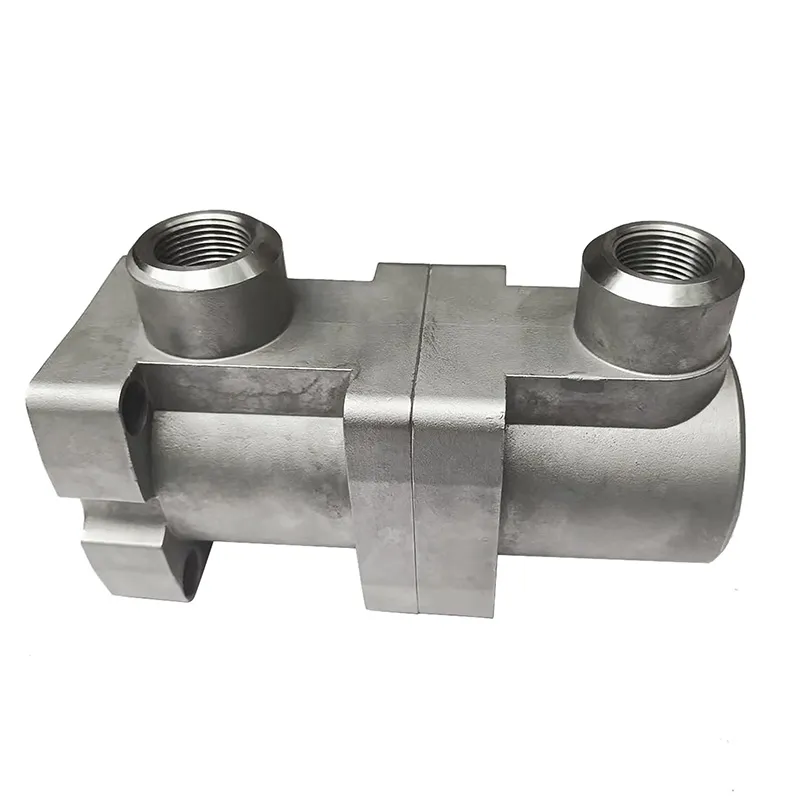
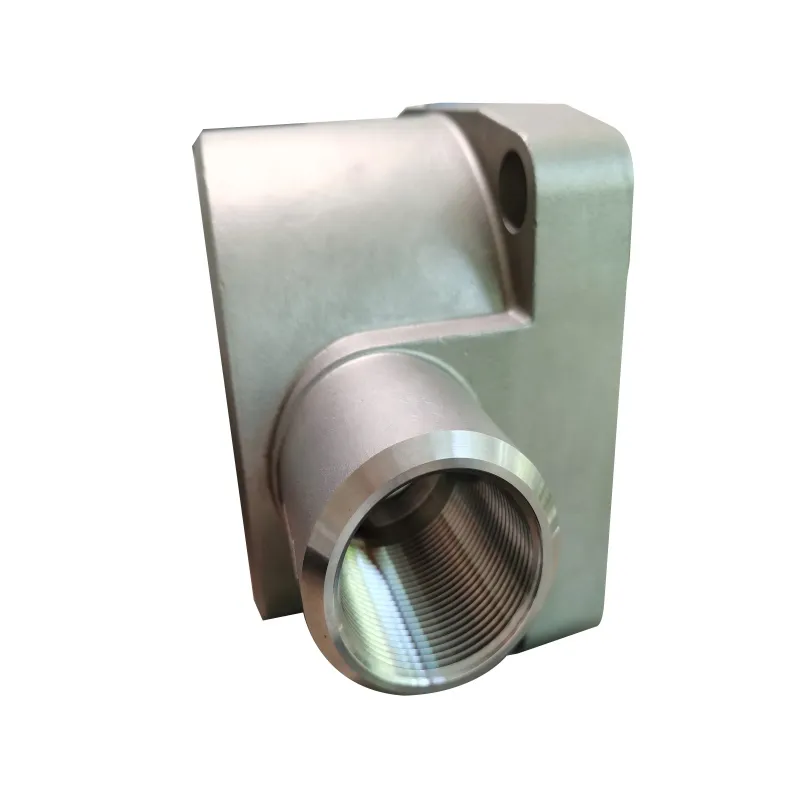
At QSY, our world is liquid metal—pouring, solidifying, machining. So, when a client for a hydraulic valve assembly insisted on using a PM-made valve spool instead of our CNC-machined version from bar stock, I was skeptical. The drawing called for a complex internal channel structure that was a nightmare to machine. The PM supplier delivered a near-net-shape part. The density and surface finish were the immediate concerns. It worked, but the pressure rating had to be derated slightly compared to a wrought equivalent. That trade-off—complexity for a slight concession in ultimate mechanical properties—is the daily calculus in this field.
This is where the real decision happens. It's not about which process is 'better' in a vacuum. For a high-stress turbine blade in a nickel-based alloy, investment casting is our fortress. But for a high-volume, complex-shaped cam in a ferrous alloy, where material utilization from machining would be below 40%, powder metallurgy starts singing its siren song. The economic and material waste argument is overwhelming, provided the design is optimized for compaction and sintering from the start.
I recall a failed attempt to use a PM connecting rod in a prototype engine. The fatigue data looked good on paper, but we missed the nuance of the anisotropic properties. The part failed along a pressing plane under cyclic loading, a classic PM failure mode that a forged or cast part wouldn't exhibit in the same way. It was a hard lesson that you can't just take a drawing for a wrought part and send it to a PM shop. The design must speak the language of the process.
Material Conversations: Alloys and the PM Advantage
This leads to materials. Our work at QSY with special alloys like cobalt-based and nickel-based ones is often for extreme environments—high temperature, corrosion. Powder metallurgy has a unique play here that casting can't easily match: metal matrix composites and graded structures. I've seen PM parts where ceramic particles are uniformly dispersed in an aluminum matrix for wear resistance, something nearly impossible to achieve without severe segregation in casting.
For high-speed steel tools, PM is king. The fine, uniform carbide structure you get from atomizing and consolidating the powder results in a tool that grinds better and wears more evenly than its conventionally cast counterpart. We source PM-made tool blanks for our own CNC machining centers. The difference in consistency between batches is noticeably tighter.
Yet, there's a limit. For large, structurally critical components in stainless steel for marine applications, we still lean towards casting. The sheer integrity of a well-cast part, its isotropic nature, and the ability to produce very heavy sections still give it the edge. PM parts, beyond a certain size, struggle with density uniformity. It's a physical constraint of the pressing process.
The Dimensional Dance: Tolerances and Secondary Operations
A huge point of contention, or rather misunderstanding, is dimensional tolerance. The 'near-net-shape' promise of powder metallurgy is real, but 'near' is the operative word. For features perpendicular to the pressing direction, you can hold impressive tolerances, sometimes within a couple of thousandths of an inch. But in the pressing direction, you're dealing with the compact's springback and sintering shrinkage, which adds variability.
Almost every serious PM part we've dealt with undergoes some secondary operation. That's where a company like ours, with deep CNC machining expertise, often comes into the picture. A sintered gear might need a broaching or grinding on its bore, or a structural component might need a critical face machined to ensure seal flatness. The synergy is clear: PM creates the complex geometry efficiently, and precision machining adds the final critical touches. It's a handshake between processes, not a replacement.
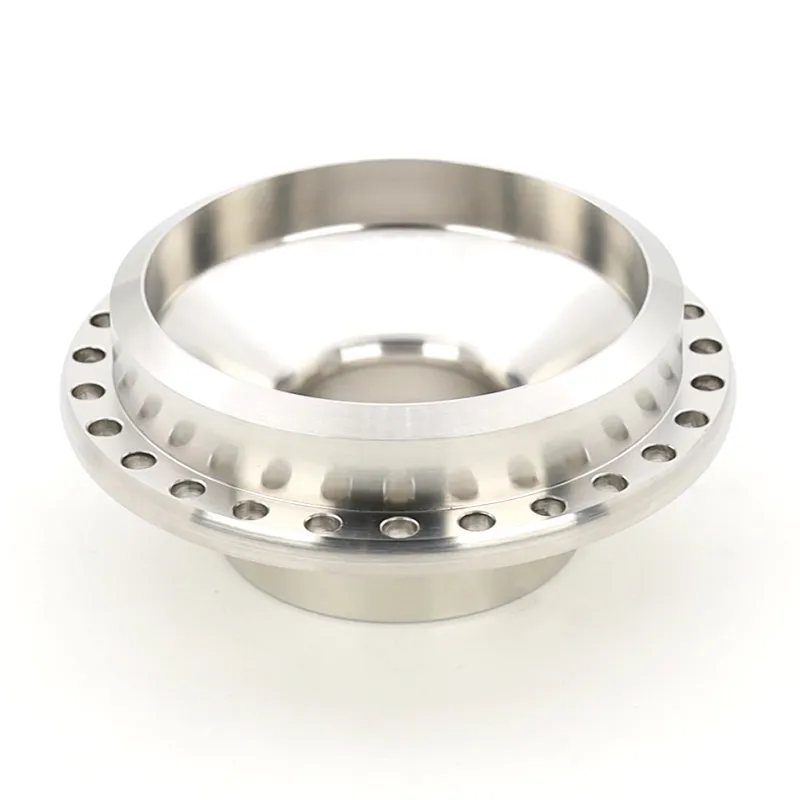
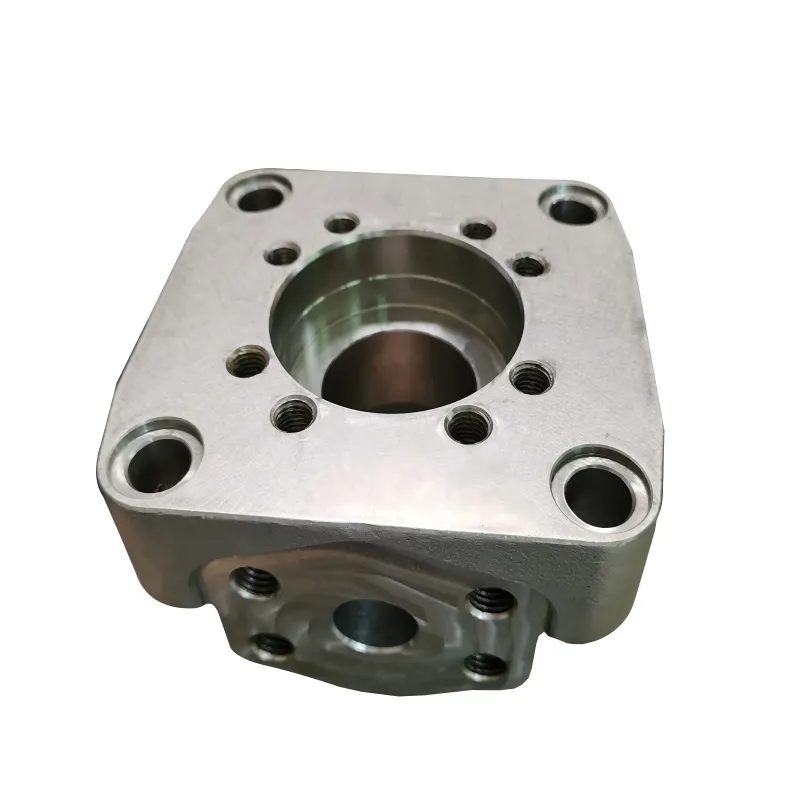
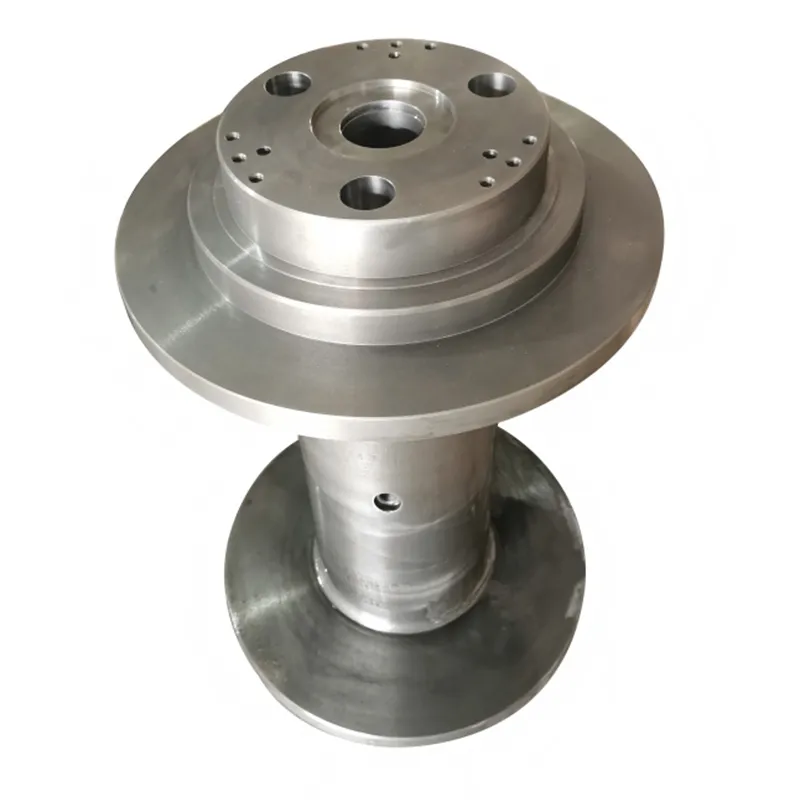
I remember inspecting a batch of PM flanges where the bolt hole circle was slightly elliptical post-sintering. The cause? Non-uniform density from an off-center fill in the die. The PM vendor had to add a coining step to correct it. This kind of process nuance is invisible on a data sheet but is the daily reality of manufacturing.
Costing the Invisible: The Real Economics
Everyone talks about the material savings of PM, which is real—you're not turning 60% of your material into chips. But the real cost story is in tooling and volume. The molds for powder compaction are expensive, complex, and hardened. They make sense for a production run of 50,000 pieces, not for 500. This is the complete opposite of our sand casting pattern logic, where a wooden pattern is cheap and fast.
There's also the hidden cost of powder itself. High-quality, pre-alloyed metal powder isn't cheap. For a standard iron-copper-carbon mix, it's competitive. But once you venture into those nickel-based or tool steel powders, the raw material cost per kilogram can give you pause. You're paying for the atomization process and the controlled particle size distribution. The justification has to come from performance and the elimination of downstream processing steps.
We did a total cost analysis for a family of small lever parts. At 5,000 units, CNC machining from bar stock was cheapest. At 50,000 units, PM was 30% cheaper. At 500,000 units, the gap widened to nearly 50%. But this only held if the part design was consolidated into a single press. Adding a second-level feature via a separate operation killed the margin. The economic break-even point is a moving target, deeply sensitive to design complexity.
Looking Across the Aisle: Casting vs. PM Perspective
From my seat in a casting and machining company, the rise of PM has been instructive. It has forced us to be sharper about our own value proposition. For parts with internal cavities—like an impeller with a shrouded blade—investment casting is still unbeatable. PM can't do that. For parts requiring ultimate density and fatigue life, like a crankshaft for a high-performance engine, forging still reigns, though PM forging is making inroads.
But for that vast middle ground of structural, wear, and magnetic components—think sintered filters, clutch hubs, pole pieces for motors—powder metallurgy is often the undisputed best choice. It's a mature, sophisticated process. The evolution of techniques like metal injection molding (MIM) has further blurred the lines, allowing for tiny, incredibly complex parts that neither traditional PM nor micro-casting could handle economically.
In the end, it's about having the right tool for the job. At Qingdao Qiangsenyuan Technology Co., Ltd., our strength is in transforming liquid metal into precise, reliable components. Powder metallurgy is a parallel universe where solid metal particles are assembled into equally vital parts. The smartest engineers I know don't pledge allegiance to a single process. They understand the language of all of them—casting, machining, forging, and powder metallurgy—and choose the dialect that best tells their product's story. The real work happens in the translation.