You see a lot of talk about pump efficiency, impeller design, material grades. The casing? Often treated as the dumb housing, the afterthought. That's a costly mistake. In reality, the pump casing is the pressure vessel that contains everything, dictates flow patterns, handles the abuse, and often dictates the maintenance schedule. Get it wrong, and the best impeller in the world won't save you.
The Core Misconception: It's Just a Casting
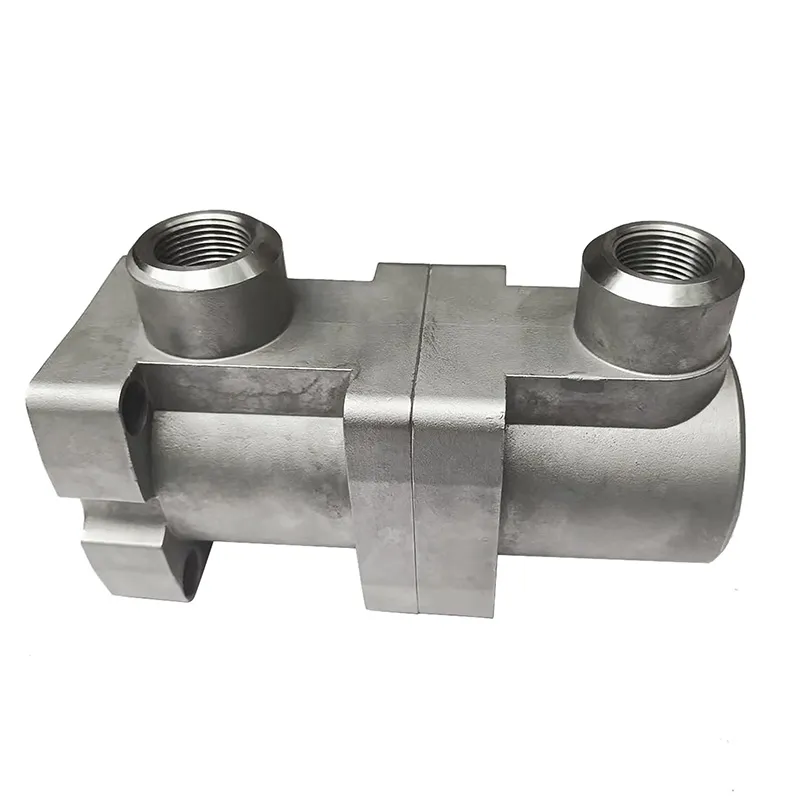
When engineers spec a pump casing, the drawing goes out with material specs and tolerances. The assumption is that a foundry will pour it, a machine shop will finish it, and it'll bolt right up. Reality is messier. The choice between a static cast and a shell mold casting, for instance, isn't just about surface finish. It's about internal integrity. A poorly gated casting can leave residual stress zones right in the volute's throat. You won't see it on an inspection report, but you'll hear it as a persistent vibration at certain operating points, a problem that gets blamed on rotordynamics for months.
I learned this the hard way on a boiler feed water pump project years back. The casings were specified in duplex stainless steel for corrosion resistance. The foundry delivered to print, visually perfect. But during hydro-test, we had a weep from a seemingly solid section. NDT found a shrinkage cavity cluster, not large enough to fail the test outright, but a guaranteed failure path under thermal cycling. The root cause? The foundry's feeding and risering design for that particular alloy and wall thickness junction was inadequate. They were great with standard CF8M, but duplex behaved differently during solidification. That's the nuance you only get from a supplier who understands metallurgy as part of the casting process, not as a separate checkbox.
This is where a company's depth shows. I've reviewed suppliers like Qingdao Qiangsenyuan Technology Co., Ltd. (QSY). Their long-term focus on shell mold casting and investment casting for precision components, especially in special alloys, suggests they've likely wrestled with these solidification challenges across many projects. For a critical pump casing in a nickel-based alloy for high-temperature service, that process experience is what you're actually buying, not just the machining tolerance.
Machining: Where the Theoretical Meets the Physical
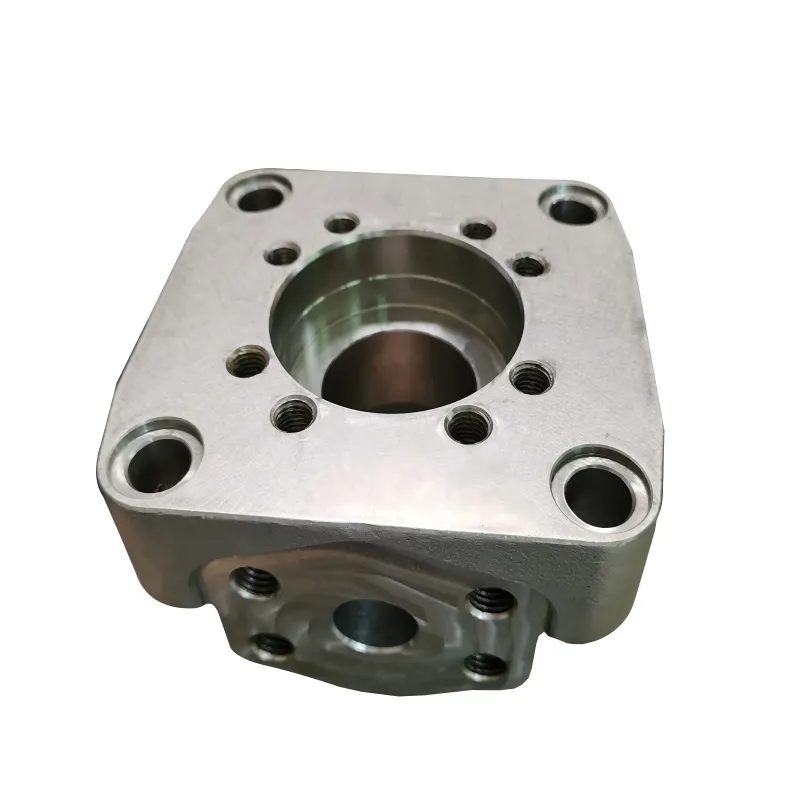
Even with a perfect casting, the machining phase can introduce its own failures. The classic error is treating the casing as a simple workpiece to be clamped on a CNC table. The casing isn't rigid; it's a complex, thin-walled geometry. Incorrect fixturing or aggressive cutting can release the inherent casting stresses, causing the part to move after the first operation. You end up with flange faces that aren't square or bolt hole patterns that drift.
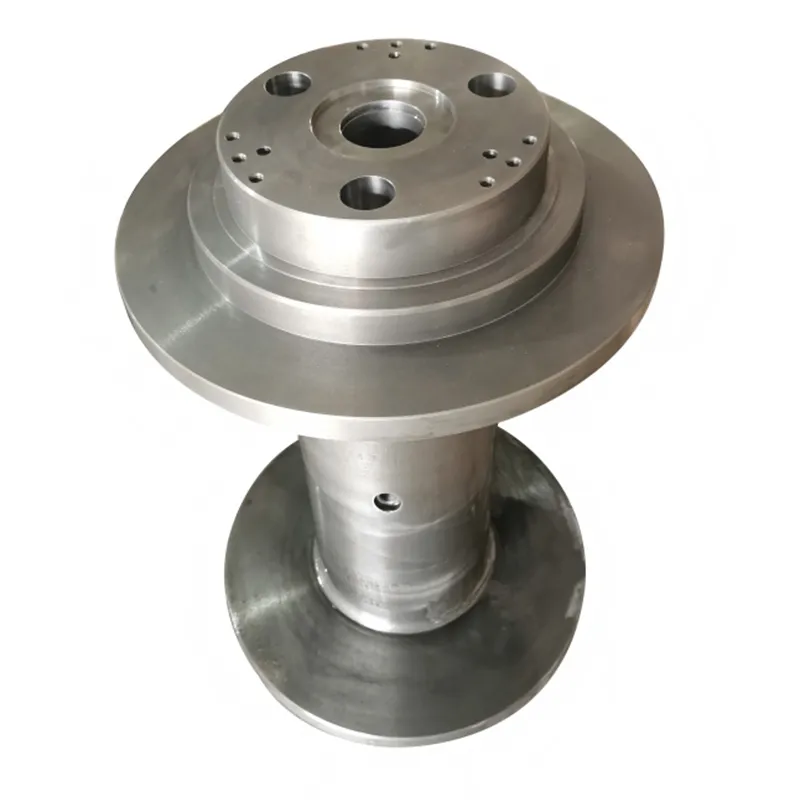
The sequence matters immensely. Do you rough out the volute profile before or after finishing the flange and seal faces? There's debate. Some machinists prefer to establish the datum features first from the as-cast state. Others argue for removing the bulk of the volute material to relieve stress, then re-fixturing for finish machining. I've seen both work and both fail, depending on the casing size and geometry. A shop that also does the casting, like QSY with their integrated CNC machining capability, has a major advantage. They can plan the entire process from the pattern stage, knowing exactly how the part will be held and cut, potentially even designing casting lugs that double as machining fixtures.
Then there's the boring of the shaft bore and seal chambers. This seems straightforward, but concentricity and surface finish here are everything for seal life. A chatter mark you can barely feel with a fingernail will destroy a mechanical seal in weeks. A good machinist will have a feel for the right tool path, feed, and coolant application for different materials—cast iron, 316 stainless, or a gummy duplex. It's not just a program.
The Material Maze: Beyond Stainless Steel
Specifying stainless steel for a pump casing is practically meaningless. Is it a standard austenitic like 304/316? A martensitic like CA15 for erosion resistance? A super duplex like 2507 for chloride environments? Or a nickel-based alloy like Inconel 625 for extreme heat and corrosion? Each behaves wildly differently during casting, machining, and in service.
I recall a seawater cooling pump project where the initial spec was 316L. It should have worked. But in that specific estuary water, with high chlorides and microbiological activity, we got severe pitting and crevice corrosion at gasket faces within a year. The fix was a switch to a higher-grade super duplex. The catch? Super duplex is notoriously tricky to cast and heat treat correctly to maintain its phase balance. You need a foundry that can precisely control the cooling rate and solution annealing. If they miss it, you get sigma phase precipitation, making the material brittle. A supplier experienced with special alloys, as mentioned in QSY's portfolio, would inherently have the protocols for this. They'd know the heat treat charts for these materials by heart.
For less corrosive but abrasive services—think slurry or ash handling—cast iron with nickel-chrome hard facing in specific areas might be the pragmatic choice. The decision isn't just about the fluid; it's about total cost of ownership, weighing the initial material cost against expected wear life and maintenance downtime.
Integration & The Real-World Test
The final proof of a pump casing is on the skid, under pressure. This is where all the hidden issues surface. One persistent headache is gasket seating. Flange flatness on the drawing is one thing; achieving a mirror-finish, wave-free surface across a large, irregular casting flange after machining is another. I've spent days with blue dye and scrapers hand-seating large casings that leaked on the first hydro-test because of a slight crown in the middle of the flange face. Modern CNC milling should eliminate this, but tool deflection on a long reach or residual stress can still cause it.
Another integration pain point is the fit with internal wear parts. The clearance between the casing wear ring and the impeller wear ring is critical. If the casing bore distorts even slightly after machining (again, stress relief), or if the casing isn't supported correctly when bolted to its pedestal, that clearance can go out of spec, killing efficiency. You sometimes have to final-bore the casing with it mounted on its baseplate, a fussy but necessary step for large, high-energy pumps.
The most telling sign of a quality casing? How it behaves during strip-down after years of service. A good one will show even wear in the volute. A poor one will have distinct erosion patterns, cavitation pits in specific spots, or cracks originating from stress concentrations at sharp internal corners—corners that should have been filleted but perhaps weren't due to pattern-making or core assembly limitations.
Conclusion: The Unseen Backbone
So, no, the pump casing isn't just a shell. It's the foundational pressure boundary, the flow guide, and often the limiting factor for reliability. Its quality is a direct function of deeply integrated expertise—in metallurgy, casting process design, stress-aware machining, and practical assembly knowledge. You can't check it with a simple checklist. It requires a supplier partner whose experience spans the entire journey from molten metal to final fit-up, the kind of vertical integration that firms with decades in casting and machining naturally develop. The difference doesn't show up on the purchase order; it shows up in the mean time between failures on site, which is the only metric that truly matters.