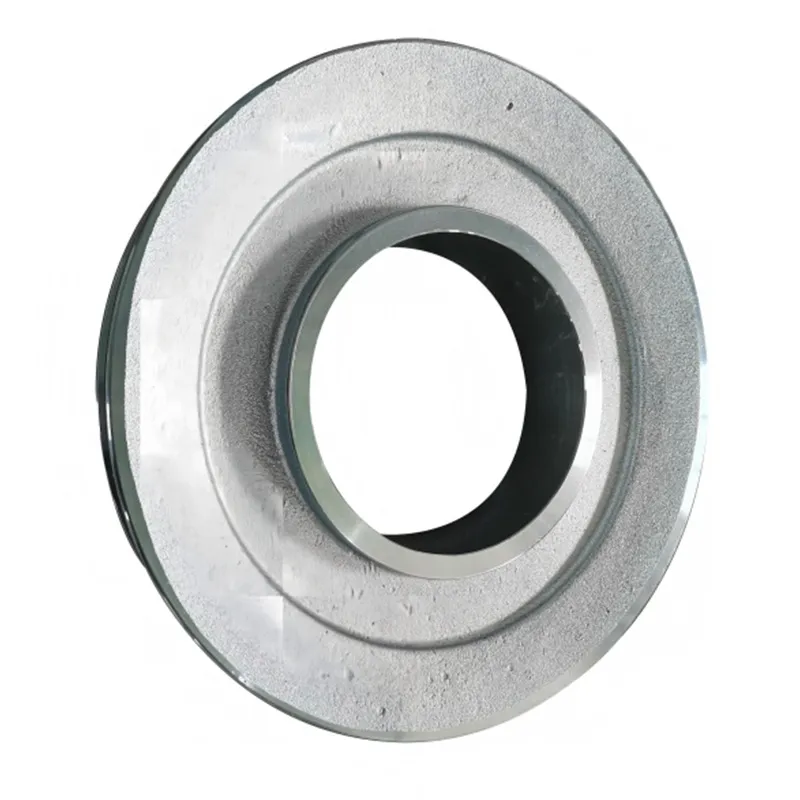
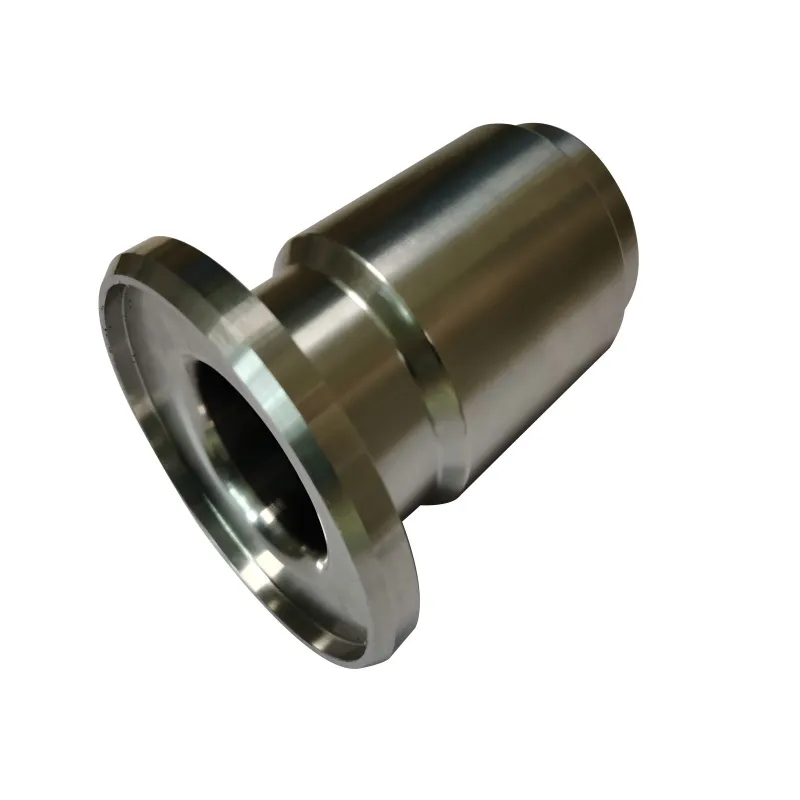
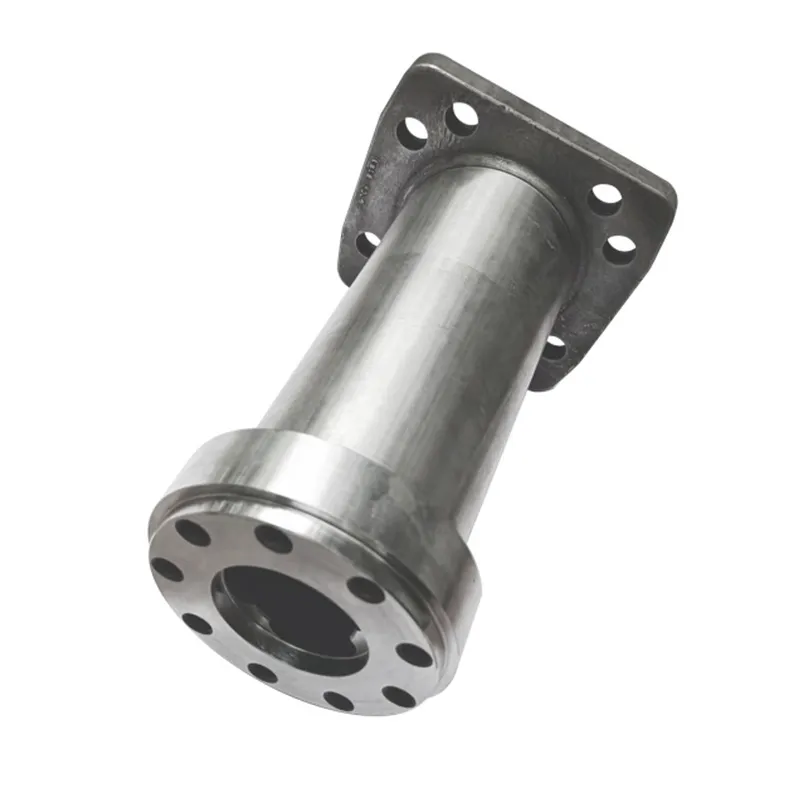
You see QT450-10 on a drawing or a material request, and it's easy to just think ductile iron and move on. But that's where a lot of the assumptions start, and frankly, where some projects begin to drift off spec. The 450 refers to the tensile strength in MPa, and the 10 is the elongation percentage – that's the basic code. The real story, the one that matters on the shop floor or when a part fails in the field, is about the matrix structure, the nodule count, and how it was poured and heat-treated. I've seen too many RFQs where the buyer just slaps on QT450-10 because it's a common grade, without realizing the performance window it actually defines. It's not a magic bullet; it's a balance of strength and ductility that needs to be matched to the actual service conditions.
The Practical Reality of Specifying and Sourcing
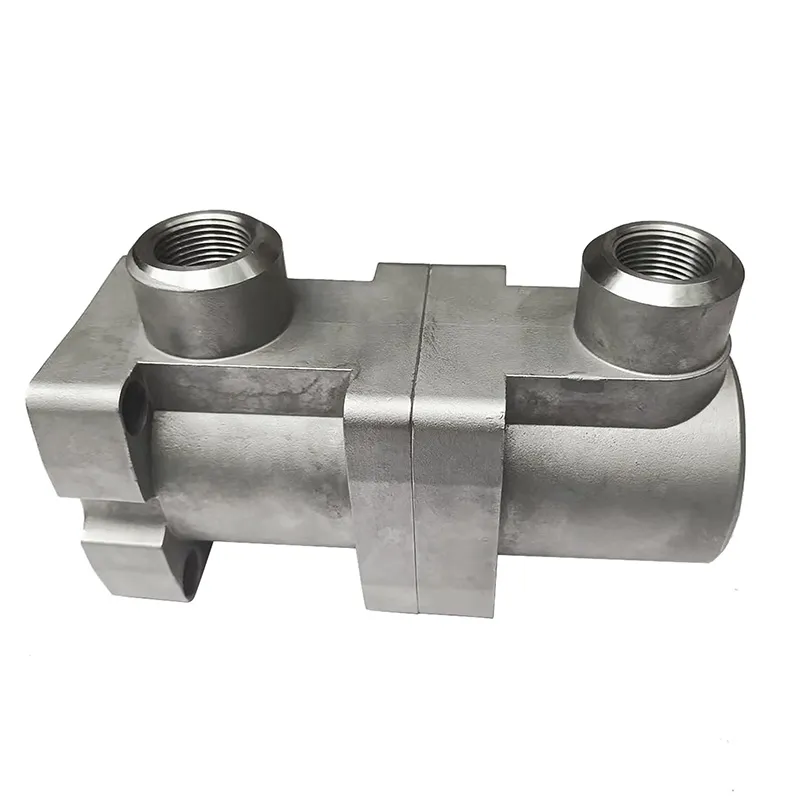
When you're sourcing a component in QT450-10, you're not just buying a material. You're buying a process capability. The QT stands for quenched and tempered, which means the foundry must have the right furnace setup and process control to achieve that ferritic-pearlitic matrix consistently. I recall a job for a hydraulic valve body a few years back. The print called for QT450-10, and we sourced it from a new supplier who promised the grade. The parts machined beautifully, but during pressure testing, we had a few crack. The lab report came back: tensile was fine, but the elongation was only around 7%. The matrix had too much pearlite, likely from an inconsistent tempering cycle. The supplier met the literal number on the cert, but the material wasn't truly in the heart of the QT450-10 range. It was borderline.
This is why long-term partnerships with foundries matter. A company like Qingdao Qiangsenyuan Technology Co., Ltd. (QSY), with their 30 years in casting, typically has the institutional knowledge to navigate this. They've seen what happens when heat treatment curves aren't followed precisely. For a complex shell mold casting that needs to be both pressure-tight and machinable, just hitting the chemical composition isn't enough. The QT450-10 process has to be ingrained in their practice. I'd trust them more for a critical application than a shop that just pours iron and outsources heat treatment. You can check their approach on their site at https://www.tsingtaocnc.com – their focus on shell mold and investment casting for various alloys suggests a handling of processes that are more controlled than simple green sand molding.
Another practical point: machinability. QT450-10 is generally good, but it's not uniform across all batches. The hardness range (typically 150-200 HB) is broad enough that you can get a batch that leans toward the higher end, which chews through tools faster. If you're doing high-volume CNC machining, like the services QSY offers, this variance matters. A good supplier will work with you to target a specific hardness within the range to optimize your machining cycle times. It's this kind of collaboration that turns a standard material spec into a reliable production part.
Where It Fits and Where It Doesn't
This grade is the workhorse for good reason. Gearboxes, pump housings, heavy-duty brackets – applications where you need more shock resistance than a gray iron like Class 35 can offer, but don't need the higher (and more expensive) strength of a QT600-3 or QT700-2. The 10% elongation is key. It gives that bit of give. I've used it for mounting plates on heavy machinery that need to absorb vibrational loads without cracking. It's often the default upgrade from gray iron when weight reduction or higher pressure ratings are needed.
But there are traps. Don't specify it for thin-walled sections if you're doing sand casting. The ductile iron solidification characteristics need a certain modulus to prevent shrinkage defects or carbides. If the design has rapid changes in section thickness, you might end up with hard spots that ruin machinability and ductility locally. Sometimes, the design engineer calls for QT450-10 in a geometry that's better suited for a steel forging or even a malleable iron. You have to push back and discuss the casting feasibility first. This is where a foundry's engineering input is crucial, something a multi-process provider like QSY, dealing with everything from cast iron to nickel-based alloys, would likely flag early.
Corrosion is another mild misconception. It's better than plain carbon steel, but it's not stainless. For wet environments, a paint system or coating is still mandatory. I've seen unpainted QT450-10 parts in a damp warehouse surface-rust within months. The spec defines mechanical properties, not environmental resistance.
The Heat Treatment Dance
The QT is everything. The as-cast ductile iron (often called as-cast 450-10, which is different) has a different microstructure. The quench and temper cycle transforms it. But the devil is in the details: austenitizing temperature, quench medium (oil is common), tempering temperature and time. A few degrees variance in tempering can shift the hardness and impact values. A foundry running its furnaces on a tight SOP will have less lot-to-lot variation.
We audited a supplier once who was having consistency issues. Their furnace load was inconsistent – they'd pack too many small parts together, leading to uneven heating and quenching. The parts on the outside of the load basket met QT450-10, the ones in the middle were softer. They fixed it by redesigning their fixturing and implementing stricter load management. It's a simple thing, but it makes or breaks the material. This level of process control is what separates a job shop from a specialist. When a company lists shell mold and investment casting alongside CNC machining, as QSY does, it implies a focus on precision from the mold to the finished part, which naturally extends to controlled heat treatment.
Post-casting steps matter too. If you need to weld it, which is possible but not always recommended, you need pre-heat and post-heat treatment to avoid creating hard, brittle zones in the heat-affected area. It's often better to design around welding or use a different material.
Failure Analysis and Learning
The most educational moments come from broken parts. I had a QT450-10 lever arm fail in fatigue. The fracture surface showed a classic beachmark pattern, but initiation was at a sharp internal corner – a stress concentrator that wasn't on the drawing but was a result of the core print design. The material itself tested fine. The lesson wasn't about the grade; it was about communicating the loading conditions to the foundry so they could review the mold design for stress risers. A good foundry partner acts as an extension of your engineering team. They should question features that look problematic.
Another case: parts that passed all mechanical tests but failed in a salt spray test prematurely. The culprit? Incomplete cleaning after heat treatment. Residual quenching oil or tempering furnace contaminants trapped in blind holes accelerated corrosion. The specification was mechanical, but the application required environmental durability. The fix was adding a specific cleaning and passivation step to the work order. It's these ancillary processes that complete the picture.
Looking at the Broader Supply Chain
In today's global landscape, knowing your supplier's core competency is non-negotiable. QT450-10 is a global standard, but the execution isn't uniform. A foundry that primarily does stainless steel investment casting might treat ductile iron as a side business, and their process might not be optimized for it. Conversely, a foundry deeply experienced in cast irons, likely working with a range from gray to ductile to special alloys, will have a better grasp. From their company intro, QSY's material list explicitly includes cast iron and steel alongside special alloys, suggesting a broad but relevant material base. For a standard but performance-sensitive grade like QT450-10, that's a positive signal.
Finally, always get first-article testing and regular certs. But don't just file the certificate of compliance. Look at the actual numbers. Is the elongation consistently at 12-13%, or is it bouncing between 10 and 11? The former shows a process in control. The latter might indicate something is drifting. The material, QT450-10, is reliable only as far as the process that produces it. It's not a commodity you can buy on price alone. The real cost is in the reliability of the final component in your assembly, and that's dictated by decades of experience, controlled processes, and a supplier that understands the difference between making a shape and engineering a performing part.