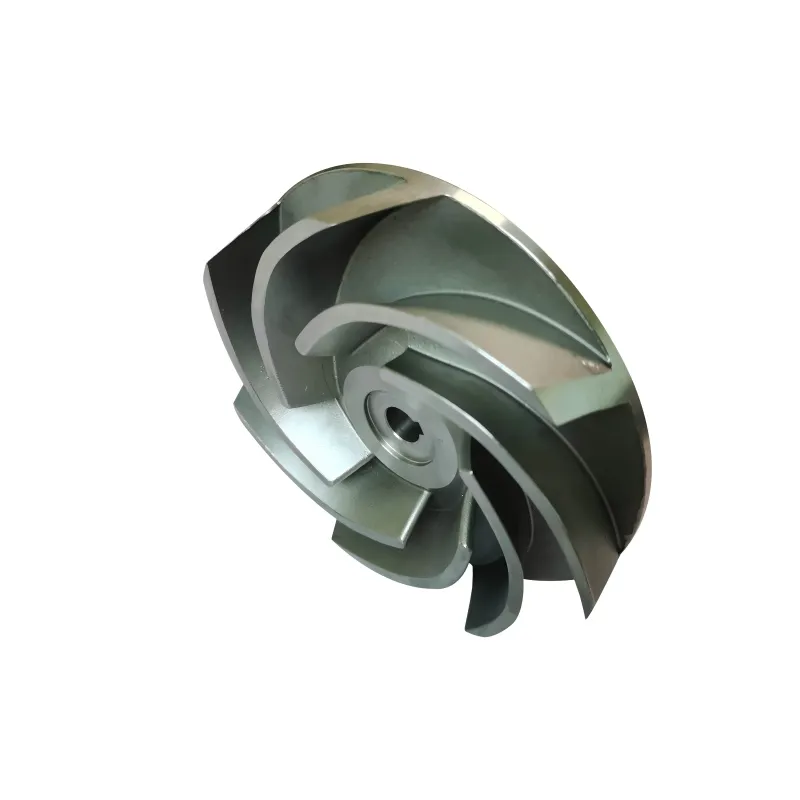
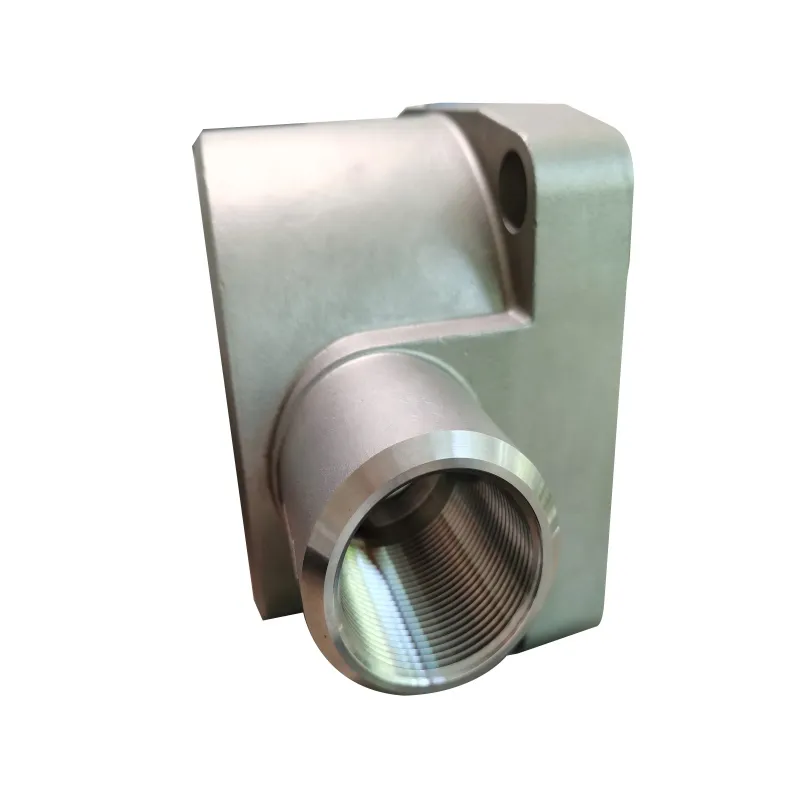
Let's be real: when most engineers hear 'rapid prototype investment casting', they picture a magic box where a CAD model goes in and a finished, functional metal part comes out in 48 hours. That's the marketing dream, but the shop floor reality is a gritty, nuanced dance between speed, cost, and integrity. It's not just about being fast; it's about being strategically fast. The real skill lies in knowing when to push the process for speed and when to hold back for quality—a judgment call that only comes from burning your fingers a few times. I've seen too many projects derailed by chasing the 'rapid' at the expense of the 'prototype' actually being useful for testing.
The Shell Game: Where Rapid Really Happens
The core of speeding up investment casting is the shell building process. Traditional dips and stuccos take days to cure properly. For prototypes, we often switch to faster-drying binders or even hybrid methods, like using a printed ceramic shell for the face coat backed up by conventional layers. The trick is managing the thermal shock. A shell that builds too fast can be brittle, leading to cracks during dewax or pour. I remember a batch of valve prototypes for a client where we accelerated the drying with dehumidified air—saved a day, but then had a 30% shell failure rate during the burn-out. We ended up redoing the lot, losing all the time we 'gained'. That's the classic trap.
Wax pattern production is another bottleneck. While 3D printing wax-like resins has become the go-to for true rapid turnaround, it introduces its own headaches. The ash content from these printed patterns is different from traditional injected wax. If you don't adjust the burn-out cycle accordingly, you get residual carbon on the shell surface, which leads to surface defects on the final casting—pinholes, inclusions, you name it. It's a detail that's easy to miss when you're focused on the clock.
This is where a foundry's experience is non-negotiable. A company like Qingdao Qiangsenyuan Technology Co., Ltd.(QSY), with their 30 years in investment casting, has likely seen every permutation of shell failure. That institutional memory is what prevents costly, time-consuming repeats. They've probably standardized a few trusted 'fast-track' shell systems for different material groups, which is more valuable than chasing every new 'rapid' material that hits the market. You can check their approach on their site at https://www.tsingtaocnc.com—the focus on special alloys like nickel-based ones tells me they're used to dealing with high-integrity applications where process control is everything, speed be damned.
Material Matters: The Alloy Speed Limit
You can't talk about speed without talking about metal. The choice of alloy sets a hard physical limit on how 'rapid' your process can be. Aluminum and bronze prototypes? You can be aggressive. But when you step into the realm of stainless steel or, god forbid, nickel or cobalt superalloys, the physics of solidification and cooling stress demand respect. Rushing the cooling of a complex, thin-walled Inconel prototype is a surefire way to introduce hot tears or locked-in stress that will only show up during machining or testing.
I recall a project for a turbine component prototype where the design called for a cobalt-based alloy. The client needed it 'yesterday'. We used every shortcut in the book on the front end—printed patterns, rapid shell. But when it came to the pour and cooling, we had to follow the alloy's rulebook. We still saved overall time compared to a full production cycle, but the 'rapid' part was front-loaded. The post-casting heat treatment alone took over 24 hours. That's the reality. A foundry that lists those materials, as QSY does, would never promise a one-week turnaround on such a part. If they do, be skeptical.
The gating and feeding design for a rapid prototype also differs from production. For a one-off, you might over-engineer the gating to ensure soundness, accepting the extra machining cleanup time. It's a trade-off: spend more engineering time upfront to guarantee the cast part is usable, versus risking a scrapped casting that blows your entire schedule. This is pure foundry craftsmanship, something that isn't automated by any software yet.
The CNC Handshake: Where the Prototype is Proven
This is the make-or-break phase that often gets omitted from the glossy 'rapid casting' story. You get a raw casting out of the shakeout. Now what? A true functional prototype almost always needs machining. The alignment between the casting process and the machining process is critical. If the casting distorts slightly due to residual stress (more common in rapid cycles), your machinist needs to know how to locate and clamp it without inducing more stress.
Having integrated CNC machining under one roof, like the services highlighted by QSY, is a massive advantage for rapid prototyping. It means the same team that oversees the casting's solidification can advise the machinist on datum surfaces, potential hard spots from chilling, or expected dimensional variance. This closed-loop feedback is what turns a 'rapid casting' into a 'rapid, usable prototype.' I've dealt with the nightmare of sending a rushed casting to a separate machine shop that didn't understand the process; they blamed every issue on the casting, and the project stalled in a blame game.
The goal is to machine the prototype to a state where it can be tested—whether that's a pressure test, a fit-check in an assembly, or even a short-duration functional run. That final machined surface also tells you a story about the casting's internal quality. A good, experienced machinist becomes a quality inspector in this phase.
Fail Fast, Learn Faster: The Prototype Mindset
The ultimate value of rapid prototype investment casting isn't just to have a part quickly; it's to learn quickly. Sometimes, the most valuable prototype is the one that fails in test, revealing a fundamental design flaw before you've committed to production tooling. The process should be tuned for this. It might mean sacrificing ultimate surface finish for a faster, cheaper cycle that lets you test three design iterations instead of one.
We once used it for a complex pump housing. The first casting, done on a fast cycle, revealed a hot spot we hadn't simulated correctly. It warped. Instead of a failure, it was a data point. We modified the gating, slowed down the shell building for that specific region on the next iteration, and the second prototype was sound. The 'rapid' cycle gave us the time to fail and correct within the project timeline.
This iterative, learning-focused approach is what separates a prototype service from a production job shop. You need a partner who asks 'what are you testing for?' rather than just 'what are the dimensions?' The foundry's role evolves from a pure manufacturer to a co-developer in the early stages. From the description of QSY's long-term operation, they've likely been through this cycle with clients countless times, which builds a different kind of expertise.
Looking Beyond the Clock: The Real Cost of 'Rapid'
Finally, let's talk economics. Rapid prototype casting is almost always more expensive per unit than a part from production tooling. You're paying for engineering time, expedited processes, and lower batch efficiency. The real cost-saving is in the overall product development timeline and risk mitigation. The question to ask is: what is the cost of a delay, or the cost of a design flaw discovered after production molds are made?
It's also about total lead time, not just casting time. A foundry that controls the entire chain—from pattern to machined part—can optimize the total flow, even if individual steps aren't the absolute fastest. Logistics, communication, and responsibility sit in one place. When browsing a site like tsingtaocnc.com, that integrated offering (casting + CNC) is a strong signal they're set up for this total timeline management, especially for precision components in those demanding alloys.
In the end, successful rapid prototype investment casting feels less like a sprint and more like a well-rehearsed relay race. Each segment—pattern, shell, melt, pour, machine—needs to be executed with precision, and the handoffs need to be flawless. The 'rapid' comes from eliminating downtime, rework, and miscommunication, not just from pushing each step to its breaking point. That's the professional reality, far removed from the buzzword.