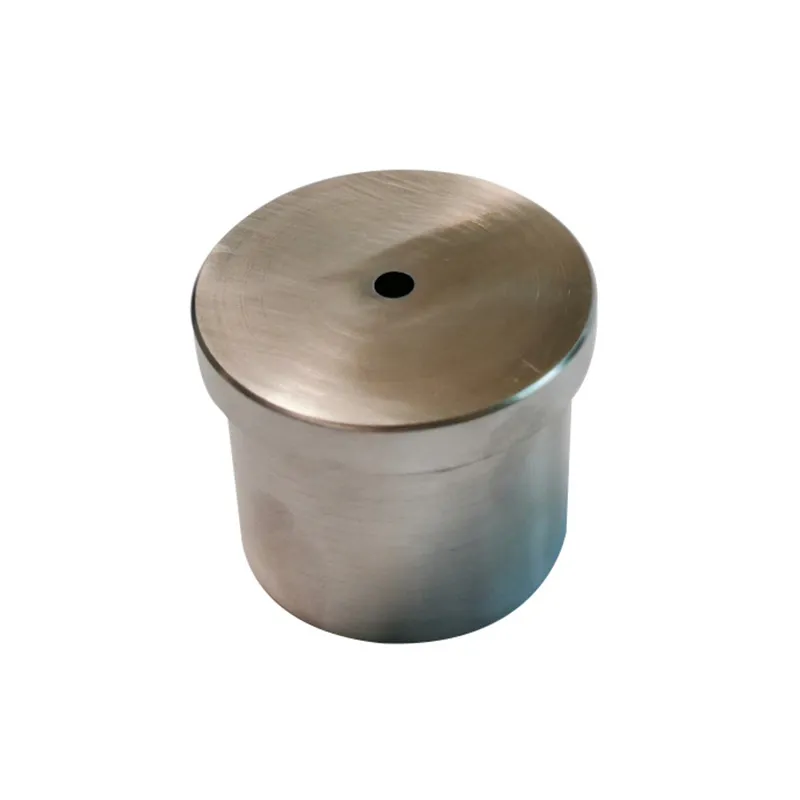
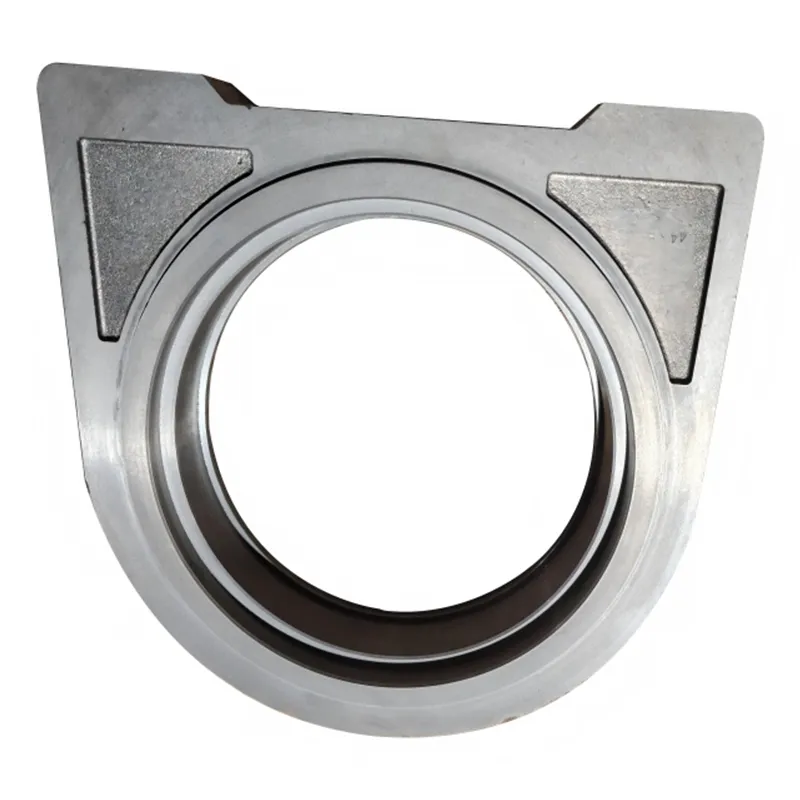
When you hear rapid sand casting, the immediate thought is speed. That's the promise, right? But in the foundry, rapid is a relative term. It's not just about slapping together a mold and pouring metal. The real challenge is achieving that speed without sacrificing integrity, which is where a lot of shops, even experienced ones, can stumble. They chase the clock and end up with scrap rates that eat all the supposed efficiency gains. Having been around patterns and molding lines for decades, I've seen the cycle—the push for faster turnaround often overlooks the foundational steps that make speed sustainable.
The Core of True Rapid Production
So, what does functional rapid sand casting look like on the floor? It starts long before the sand is even mixed. The pattern equipment is king. If you're using worn, wooden patterns designed for low-volume jobbing work, you'll never achieve consistent, rapid cycles. The shift to high-density urethane or metal patterns with proper drafts and integrated gating is non-negotiable. I recall a project for a series of pump housings where we transitioned from old wooden patterns to machined aluminum ones. The initial investment was significant, but the reduction in mold preparation time and the dramatic drop in core shift defects paid for it in under six months. The speed came from reliability, not just moving faster.
Then there's the sand system itself. Green sand molding gets all the attention, but for true rapid, high-volume production, a well-tuned chemically bonded sand system often wins. The key is process control—monitoring the sand temperature, binder ratios, and mixer efficiency religiously. A lapse here doesn't just slow you down; it creates a cascade of defects. We learned this the hard way on a run for automotive brackets. A slight seasonal humidity change threw off our catalyst setting time, leading to a batch of molds with soft spots. The rapid process came to a grinding halt for rework. Speed is fragile; it's built on a bedrock of controlled variables.
This is where the experience of a long-standing partner matters. A company like Qingdao Qiangsenyuan Technology Co., Ltd. (QSY), with its 30-year history in casting, understands this deeply. They don't just sell castings; they manage these intricate processes. When you're pushing for rapid cycles, having a supplier that knows how to balance alloy characteristics—like the flowability of a specific stainless steel or the hot strength of a nickel-based alloy—with molding parameters is invaluable. Their expertise in shell and investment casting informs their sand casting work, emphasizing how precise process design enables speed.
Gating, Feeding, and the Hidden Time Sinks
If mold making is the body of rapid casting, the gating and feeding system is the nervous system. This is an area ripe for misconception. A common error is to simply scale down a gating system from a slower process. For rapid sand casting, you need a system designed for faster fill rates to avoid turbulence, but also one that accounts for the potentially different solidification dynamics. Computational simulation has become a game-changer here, but it's not a magic bullet. You still need the practical judgment to interpret the results and adjust for real-world variables like slight sand permeability differences.
I remember prototyping a gearbox cover in ductile iron. The simulation looked perfect—fill was smooth, feeders were adequately sized. But in production, we kept getting shrinkage porosity in a thick section. The simulation assumed ideal cooling. In reality, our rapid molding cycle meant the molds were still slightly warmer from the previous pour, altering the local solidification time. The fix wasn't to slow down; it was to add a small, external chill to that specific area of the mold. The solution was simple, but diagnosing it required peeling back the layers of the rapid process to see the actual thermal environment. Time saved in molding can be lost in machining if the internal quality isn't there.
This ties directly into secondary operations. A truly rapid process views machining as part of the continuum. For instance, QSY's integrated CNC machining capability is a critical component. When they produce a sand-cast component, they're already designing the casting with machining datums and stock allowances in mind. This alignment prevents the all-too-common scenario where a casting produced quickly in the foundry becomes a bottleneck at the machine shop because of inconsistent wall thickness or poor datum surfaces. Their work with special alloys like cobalt-based ones further underscores this; you can't rapidly cast a complex, hard-to-machine alloy and then waste time figuring out how to hold it for milling. The processes have to be co-engineered.
Material Choices: The Speed Limiters and Enablers
Not all alloys are created equal for rapid production. Common cast irons and low-carbon steels are relatively forgiving. But when you move into the realm of high-alloy steels, stainless, or the superalloys QSY lists, the game changes. The rapid aspect here is less about the pouring cycle and more about everything that surrounds it. These materials often require precise pre-heating of molds, controlled pouring temperatures within a very narrow window, and specific cooling protocols to prevent cracking or undesirable metallurgical phases.
Attempting to apply a standard rapid cycle to a duplex stainless steel component, for example, is a recipe for disaster. The high chromium and molybdenum content make it prone to segregation and secondary phase formation if the solidification isn't managed correctly. You might produce a mold every 90 seconds, but if 30% of the castings require extensive heat treatment or repair, you've lost. The real skill in rapid sand casting with these materials is knowing where you can accelerate (like in core assembly or mold handling) and where you must apply deliberate control (like pouring and cooling). It's a rhythm, not a sprint.
This is another area where deep material familiarity pays off. A foundry that routinely handles nickel-based alloys for investment casting, like QSY, brings a rigorous mindset to material science that benefits their sand casting operations. They understand the thermal profiles and fluidity characteristics intrinsically. This means when a client comes with a request for a rapid prototype in 17-4 PH stainless, they can make informed judgments on gating design and cooling rates from day one, avoiding the trial-and-error that kills timelines.
When Rapid Fails: Lessons from the Floor
No discussion is honest without talking about failures. The pursuit of speed has led to some spectacularly expensive lessons. One that stands out was an order for several hundred conveyor brackets. To meet a tight deadline, we approved a shortcut: using a reclaimed sand mix with a higher-than-usual fines content to speed up mold production. The theory was that the molds would strip easier. The reality was that the reduced permeability caused gas defects and penetration scars on every single casting. The time saved in molding was multiplied tenfold in cleaning, welding repair, and ultimately, remelting a large portion of the run. It was a blunt reminder that in sand casting, the mold's physical properties are sacrosanct. You cannot cheat the sand.
Another classic pitfall is over-automating too early. Investing in a high-speed molding line for a product family that hasn't been fully validated is a huge risk. The automation demands perfect consistency in pattern equipment, core dimensions, and sand quality. Any variation becomes a stoppage. I've seen lines installed where the engineering team designed for an ideal world, and the production team spent a year fighting to make real-world components fit that ideal. Sometimes, a semi-automated, well-understood process is genuinely faster than a fully automated, problem-plagued one. Speed must be engineered in stages.
These experiences shape a more resilient approach to rapid sand casting. It's why partnering with a seasoned manufacturer isn't just about outsourcing; it's about leveraging their accumulated trial and error. A company with QSY's longevity has undoubtedly navigated these failures and baked the lessons into their standard operating procedures. When they quote a rapid turnaround, it's based on a proven, controlled system, not just optimistic machine cycle times.
The Integrated View: Casting as a Link in the Chain
Ultimately, the most successful rapid sand casting operations are those that see the process not as an isolated event but as the first link in a manufacturing chain. The goal isn't just a fast pour; it's a fast delivery of a finished, functional part. This requires integration. How does the casting design facilitate quick fixturing on a CNC mill? How do the specified tolerances on non-critical surfaces prevent unnecessary machining passes? How does the packaging protect the parts for swift logistics?
This holistic view is what separates a job shop from a true manufacturing partner. It's the difference between saying yes, we can make it fast and yes, we can get it to your assembly line fast and ready to install. The latter requires the capabilities QSY highlights: casting expertise married with precision machining, all under one roof. For rapid sand casting, this integration is the final accelerator. It eliminates the delays and finger-pointing that occur when casting and machining are separated.
So, when I think about rapid sand casting now, I think less about the stopwatch on the molding line and more about the total timeline from order to installed part. The real speed is born from robust pattern engineering, obsessive process control, deep material knowledge, and seamless handoffs to downstream operations. It's a disciplined kind of haste, one that respects the physics of metal and sand. Anything less is just rushing, and in this business, rushing is the slowest path to the finish line.