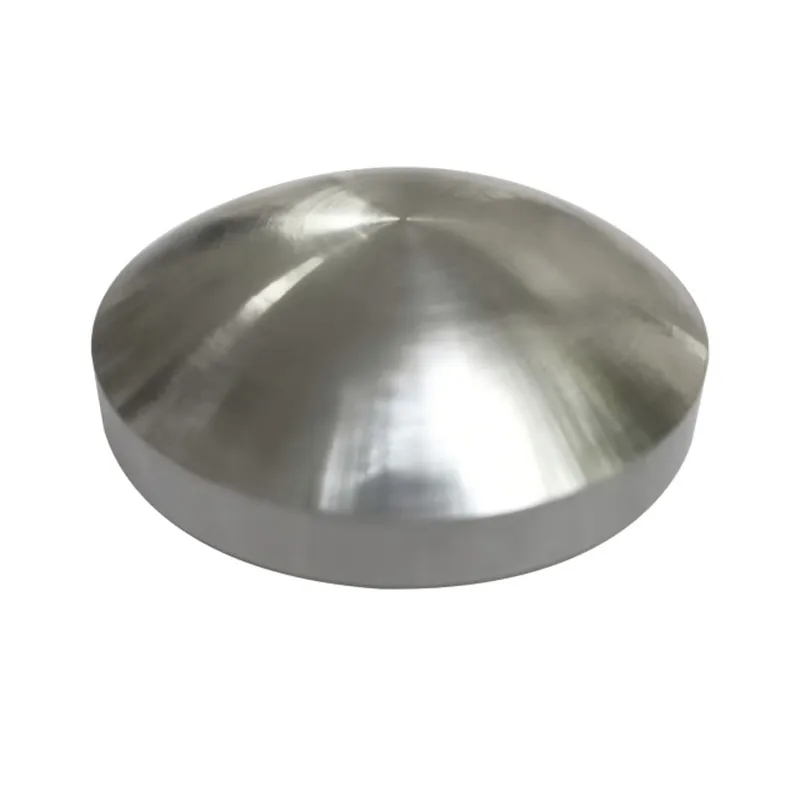
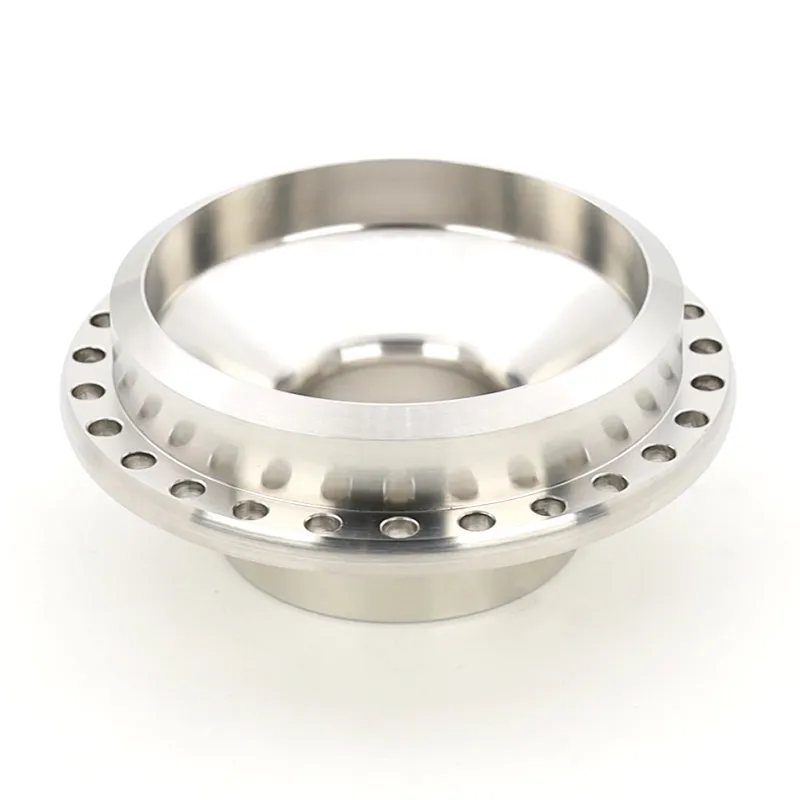
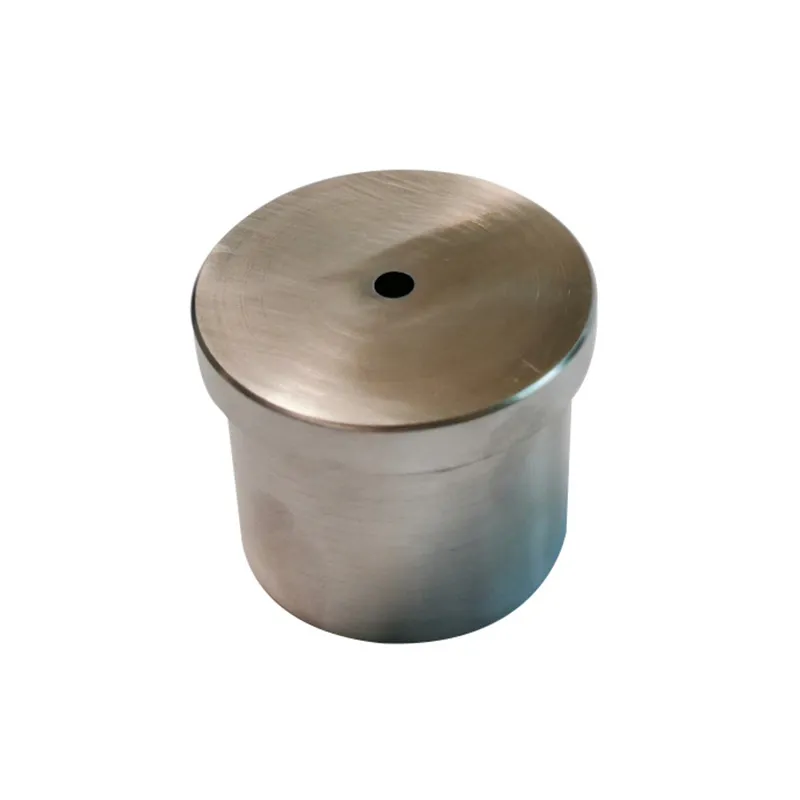
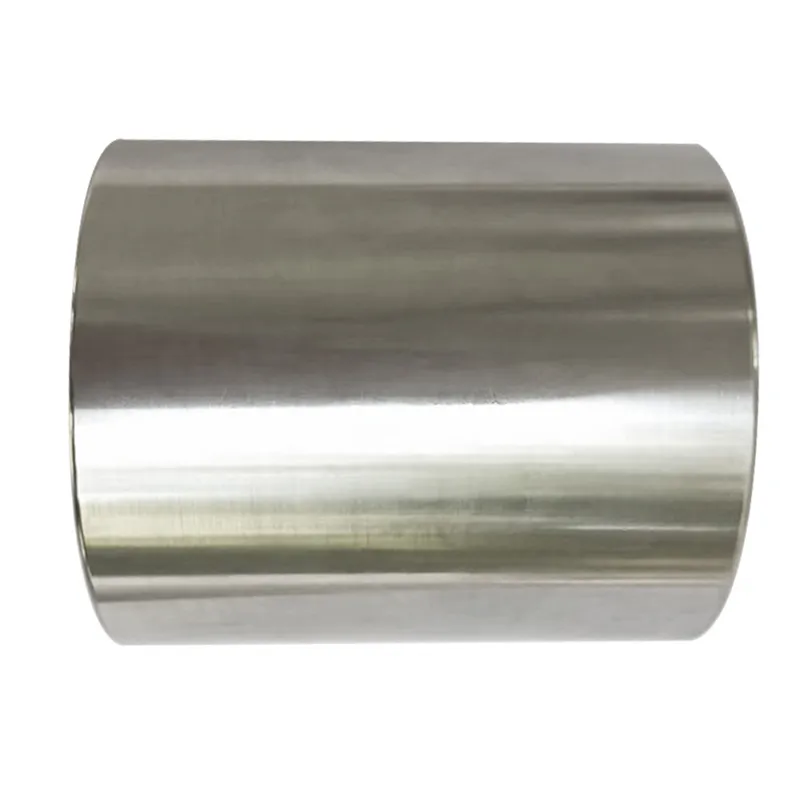
When you talk valves, everyone jumps to the disc, the stem, the actuator. The seat ring? It's often an afterthought, a commodity part. That's the first mistake. In my three decades around castings and machined components, I've seen more valve failures trace back to the seat than any other single part. It's the interface that seals the deal, literally. A perfect valve body is useless if the seat can't hold pressure or withstand the media. The misconception is that it's just a metal ring you press in. It's not. It's a precision component whose performance hinges on material compatibility, machining tolerances, and installation integrity.
Material is Not Just a Spec Sheet
You get a drawing calling for a 316 stainless steel seat ring. Easy, right? Not quite. Is it for a standard water line or for a sour gas service with H2S? The base alloy might be the same, but the failure mode won't be. We learned this early on. A batch of seats for a chemical plant, machined from a standard 316 bar stock, started showing micro-cracks after six months. The spec was technically met, but the reality of chloride-induced stress corrosion cracking wasn't on the print. The client assumed 316 covered it. Now, we drill deeper. If it's for severe service, we push for a closer look at the melt chemistry and even suggest a lean duplex or a nickel-based alloy like Inconel 625 for the seat ring, especially if it's paired with a hard-faced disc. It's not about upselling; it's about the ring surviving the first thermal cycle and the hundredth.
This is where long-term foundry and machining experience pays off. At QSY, with over 30 years in shell mold and investment casting, we've poured and machined almost everything. Cast iron seats for low-cost gate valves, CF8M for general chemical duty, and then the specials: cobalt-based Stellite 6 overlays for high-temperature steam, or solid Hastelloy C-276 rings for the really nasty acids. The material choice for the seat ring dictates everything downstream—the casting method (shell mold for complexity and volume, investment for superalloys and intricate shapes), the machining strategy, and the final inspection criteria.
I remember a retrofit project for a refinery. They were replacing valves in a coker unit. The existing seats, made from a standard 410 stainless, were eroding away in weeks. The problem wasn't just heat; it was the combination of heat and particulate abrasion. We proposed a seat ring with a base of 304 but with a flame-sprayed tungsten carbide coating on the sealing face. The machining had to be perfect—the substrate needed a specific surface profile for the coating to adhere, and the final grinding post-coating had to be sub-micron to maintain seal flatness. It worked, extending service life by over a year. The lesson? The seat ring material isn't monolithic; it can be a composite system.
Precision Machining: Where Theory Meets the Chuck
Here's the gritty part. You can have the perfect alloy, but if the machining is off, the seat ring is scrap. The sealing surface finish, the flatness or concentricity, the back-angle for press-fit—these aren't just numbers on a drawing. They're feel. On a CNC, you program it, but you also have to know it. Cutting a soft, gummy Inconel seat ring is a world apart from machining a brittle, hard cast iron one. The tool wear, the coolant pressure, the feed rate—they all change. A slight chatter on the final pass on a seat ring sealing surface can create a leak path invisible to the eye but clear as day in a helium leak test.
We do a lot of this at our facility. The URL https://www.tsingtaocnc.com doesn't just lead to a brochure; it represents the floor where these parts are made. For a high-pressure gate valve seat, we might machine it from a solid forged blank. The process starts roughing, then stress relieving, then semi-finishing, then a final finish cut with a CBN tool to get that Ra 0.8 μm mirror-like surface. The tolerance on the OD for an interference fit might be +0.000/+0.0005. That's half a thou. You breathe wrong, and it's out of spec. And you can't just measure it once; you measure it after it cools down to 20°C, because metal grows.
A common pitfall is assuming the seat ring is a simple turned part. For ball valve seats, especially in trunnion-mounted designs, the geometry is complex—it might have a spherical pocket, bolt holes, and seal grooves. The CNC program has to account for tool deflection in different axes. We once had a batch where the groove for the secondary elastomeric seal was a few microns too shallow. The seats passed dimensional inspection, but during assembly, the O-ring didn't compress enough. Result? Low-pressure sealing test failure. Had to scrap 200 pieces. The fix wasn't just adjusting the program; it was verifying the tool tip radius hadn't worn down, changing the effective cut depth.
The Installation Gambit
This is the moment of truth, and it's often out of our hands as the manufacturer. A beautifully crafted seat ring can be destroyed in two seconds by a heavy-handed fitter. The classic method is a hydraulic press or even a hammer and drift. The risk? Cocking the ring in the bore, galling the soft seating surface, or creating micro-fractures from impact. For a press-fit seat ring, we always specify the lead-in chamfer angle and the maximum press force. Sometimes we even supply a custom installation mandrel to distribute the load evenly.
I advocate for shrink-fitting where possible. Heat the valve body, drop the room-temperature seat ring in. It's cleaner, more uniform. But you need to calculate the differential thermal expansion coefficients precisely. Heating a carbon steel body to 250°C to fit a stainless steel seat ring works because stainless expands less. Drop it in, it cools, and you get a consistent, high-retention force fit. The key is controlling the temperature so you don't affect the body's temper or the seat's hardness. We've supplied installation procedure sheets for critical applications, detailing the heating method, temperature points, and cooling rate. It seems excessive for a ring, but it prevents call-backs.
The worst failure I witnessed was due to improper staking. After pressing the seat ring in, some designs call for a few punch marks (staking) around the valve body to deform metal over the ring's back and lock it. A field technician used a pneumatic punch that was too powerful. The shock cracked the seat ring radially from the staking point. The valve held during the hydro test, but the crack propagated under cyclic operation and the seat ring literally split in half after three months, causing a major leak. The root cause? The staking procedure was not aligned with the seat ring material's brittleness. Now, for brittle materials, we often recommend a threaded or welded seat ring design instead of a staked press-fit.
Case in Point: The Thermal Power Plant Debacle
A real story that cemented my views. A thermal plant ordered a set of main steam isolation valves. The seats were specified as Stellite 6 faced. The supplier (not us at the time) faced them by welding a Stellite rod onto a carbon steel backing ring. Sounds standard. But the welding process created localized heat-affected zones with high residual stress. During machining, the stress was partly relieved, but not fully. When the seats were installed and the system went online, the rapid thermal cycling from ambient to 540°C caused the Stellite layer on a few seats to delaminate and peel off like a banana skin. Catastrophic leak.
The post-mortem pointed to the substrate preparation and welding technique. When Qingdao Qiangsenyuan Technology Co., Ltd. (QSY) was brought in to supply replacements, we took a different approach. For the seat ring, we used a solid Stellite 6 casting via investment casting for the entire ring. More expensive? Yes. But it eliminated the bimetal interface and the associated risk of delamination. The machining was slower, using ceramic tools, but the result was a homogeneous structure. Those valves are still running. The takeaway for the seat ring here is that the manufacturing process—whether it's bimetal overlay, solid casting, or powder metallurgy—is as critical as the material grade itself. You can't separate the two.
This experience feeds directly into how we operate now. For critical seat ring applications, we don't just look at the material spec; we review the entire service environment—temperature cycles, pressure shocks, media composition, and even the actuation speed (a slam-shut valve is harder on the seat than a slow-closing one). This holistic view often leads us to suggest a more robust solution from the start, even if it costs a bit more upfront. It builds reliability.
Beyond the Metal: The Future and The Fundamentals
There's chatter about advanced polymers, ceramics, and even 3D-printed lattice structures for seats. For some niche, low-pressure, corrosive applications, PEEK or reinforced PTFE seats are great. But for the bulk of industrial valve applications—oil and gas, power, chemical—metal seat rings aren't going anywhere. The evolution is in the details: tighter tolerances via better CNC, non-destructive testing like phased array ultrasound to detect bonding flaws in overlays, and advanced coatings like PVD ceramic films to reduce friction and wear.
Yet, all this tech rests on the fundamentals. A clean, well-documented heat treat cycle for the seat ring blank. A calibrated, rigid CNC machine. A metrology lab that understands gage R&R. And most importantly, people on the floor who know that the final pass on that sealing face isn't just another operation—it's what makes or breaks the valve. At QSY, that 30-year history isn't just a number; it's institutional memory of a thousand small lessons learned on the shop floor, lessons that get applied every time a new seat ring job comes in.
So, next time you're looking at a valve drawing or a quote, don't gloss over the seat ring line item. Ask questions. What's the true service environment? How is it being made—cast, forged, machined from bar? How is it being installed? That little ring carries the entire pressure load when the valve is closed. Its performance is the difference between a tight shut-off and an environmental incident or a process shutdown. Treat it with the respect a linchpin deserves. Get the material and the process right, and the rest of the valve often takes care of itself.