You know, when people outside the trade hear 'powder metallurgy', they often jump straight to the pressing—the compaction of that fine, dry powder into a recognizable 'green' part. That's the visible bit. But the real alchemy, where the material's soul is truly decided, happens in the furnace during sintering. It's a deceptively simple term for a process fraught with nuance. Get it wrong, and you're not just looking at a weak part; you're looking at scrap that passed through several expensive steps only to fail at the final, thermal hurdle. It's not just 'heating it up'; it's a controlled dance of diffusion, neck formation, and pore rounding, all hanging on the precise management of time, temperature, and atmosphere.
The Atmosphere Isn't Just Background Gas
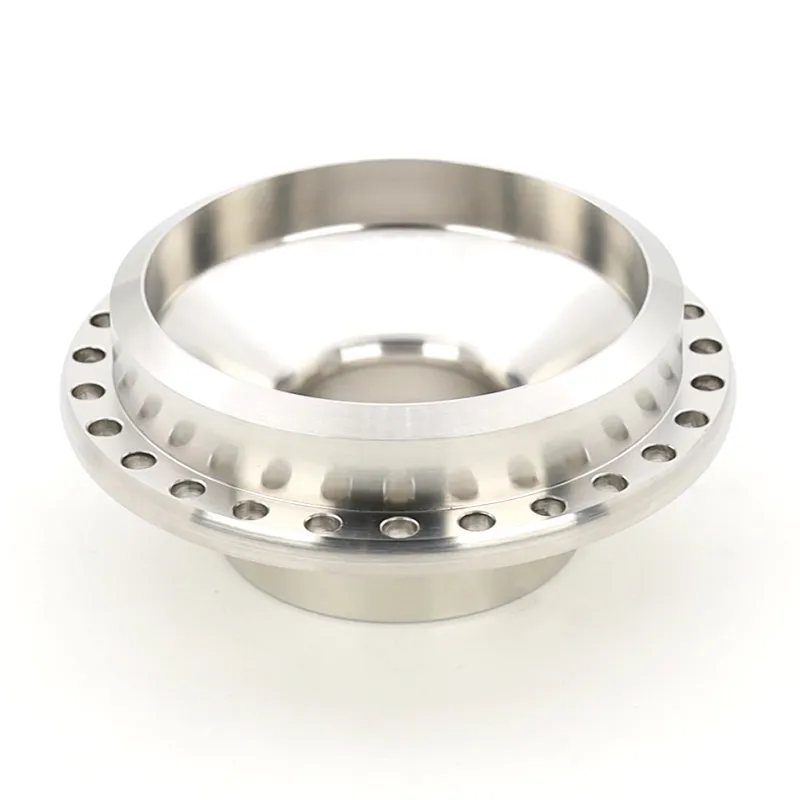
Early on, I learned this the hard way. We had a batch of low-alloy steel flanges, pressed beautifully. The furnace cycle was set from an old standard recipe. But the atmosphere control was having an off day—slight fluctuations in the endothermic gas composition, a bit more dew point than ideal. The result? Surface decarburization on critical load-bearing faces. The parts looked okay, passed a casual visual, but under microhardness testing, they showed a soft skin. Useless for the application. That's when it clicked: the sintering atmosphere isn't a passive environment; it's an active participant. For steels, it's about maintaining carbon potential. For stainless, it's about preventing chromium oxide formation, which might mean a high-purity hydrogen or vacuum run. I remember sourcing a special batch of gas from a provider we trusted, and the difference in final part consistency was night and day.
This ties into the materials we often handle. At QSY, with our background in investment casting and machining special alloys like nickel-based ones, the mindset is similar but the execution differs. Casting deals with molten metal flow; powder metallurgy sintering deals with solid-state diffusion. But the material knowledge crosses over. When a client comes with a request for a cobalt-chromium component that needs high wear resistance, we know from our casting experience how sensitive these alloys are to thermal history. Translating that to a PM route means understanding that sintering temperature for such an alloy isn't a single point but a narrow window—too low, and density suffers; too high, and you risk excessive grain growth or even liquid phase formation that distorts the part. The furnace profile becomes critical.
You can't talk atmosphere without touching on vacuum furnaces. They're a godsend for reactive materials. We ran some trials with 316L stainless powder compacts. In a hydrogen atmosphere, you can get good results, but vacuum sintering? It produced parts with cleaner grain boundaries and superior corrosion resistance, crucial for some of the marine fittings we've been asked about. The downside is the cost and cycle time. It's a constant trade-off evaluation: does the performance gain justify the production cost? That's a real-world calculation we make daily, not just a textbook question.
Temperature and Time: It's a Profile, Not a Setting
Another common pitfall is treating the sintering temperature as a single number you set and hold. In reality, the ramp-up rate, the soak times at intermediate temperatures (like for binder burn-off in powder injection molded parts), and the cooling rate are all part of the 'profile'. I recall a project for a complex gear where we experienced cracking during cooling. The culprit? Too rapid a cool from the sintering temperature. The thermal gradients induced stresses that the still-consolidating microstructure couldn't handle. We had to modify the furnace program to include a controlled slow-cool zone. It added hours to the cycle but saved the whole batch.
This is where practical feel comes in. Textbooks give you phase diagrams and theoretical density curves. But on the shop floor, you're watching for signs. The color of the parts coming out, the sound they make when lightly tapped (a dull thud versus a faint ring), even the way they sit on the sintering tray—warpage is a dead giveaway of uneven heating or poor support during the thermal cycle. It's these qualitative checks, honed over time, that catch problems before the CMM or tensile tester does.
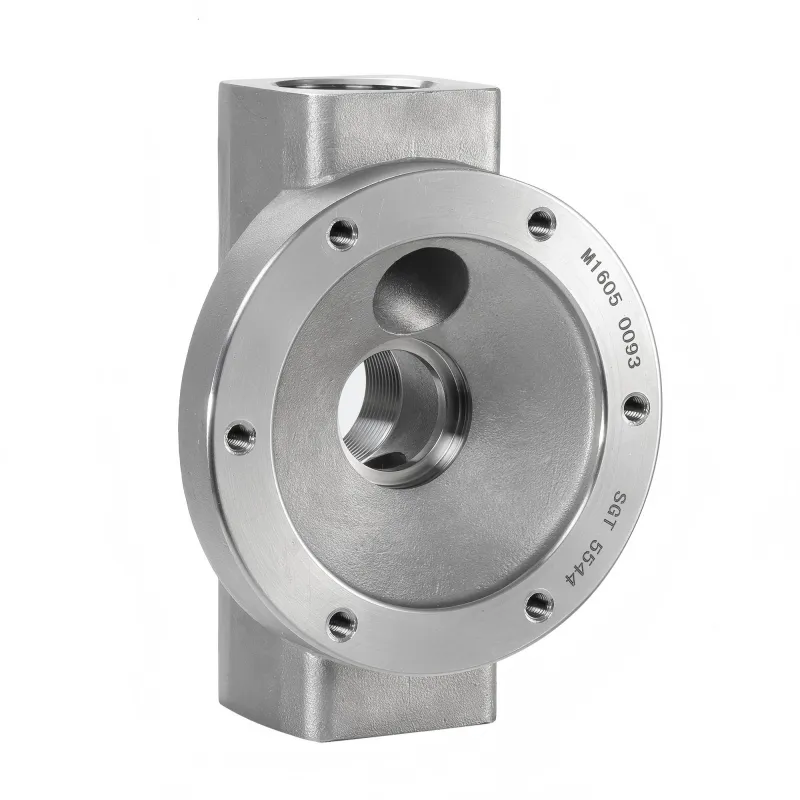
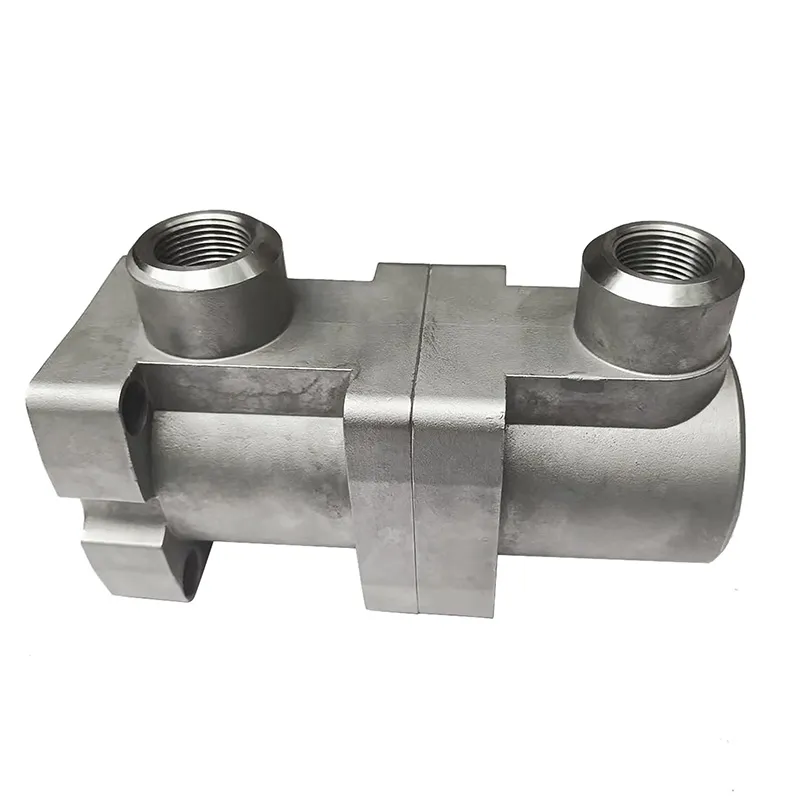
Linking this back to our integrated capabilities at Qingdao Qiangsenyuan Technology Co., Ltd. (QSY), the sintering step isn't an island. A part might come out of the furnace at 95% theoretical density. For many applications, that's fine. But for a hydraulic valve body needing absolute leak-tightness, it might need a secondary operation like resin impregnation. Or, it might go straight to our CNC machining cells for finishing of critical dimensions—drilling precise holes, threading, creating sealing surfaces. The fact that we manage both the sintering process and the subsequent machining under one roof means we understand how the sintered microstructure behaves during cutting. A poorly sintered part can be abrasive and chew through tools; a well-sintered one machines cleanly. That feedback loop between the furnace shop and the machining center is invaluable.
The Green Part's Legacy
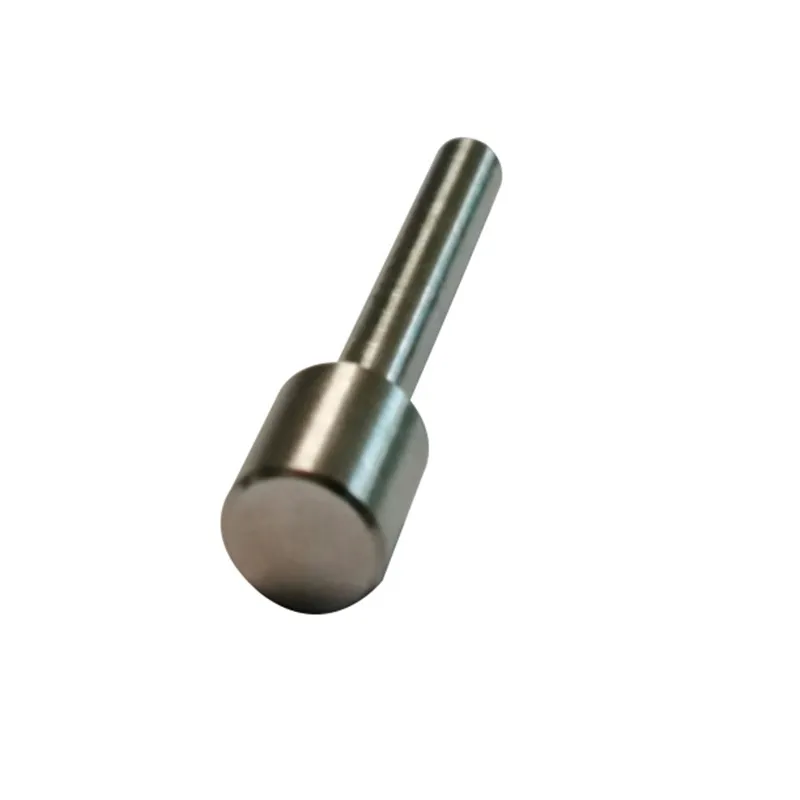
Everything in sintering is predetermined by the state of the green compact. The density gradient from pressing, any lamination flaws, the uniformity of powder distribution—these don't get healed in the furnace; they get amplified. A slight density variation can lead to differential shrinkage, turning a minor pressing flaw into a major dimensional rejection post-sinter. We once had issues with a long, thin pin. They kept coming out bent. After chasing furnace profiles, we finally looked back at the tooling. A minor misalignment in the press was causing uneven powder fill and, consequently, uneven green density. Fix the press, fix the sintered part. The lesson: sintering often gets blamed for problems born much earlier in the process chain.
This is especially true for complex shapes. In investment casting, which is QSY's other core competency, the mold defines the shape. In PM, the die defines it initially, but then the part shrinks during sintering—and it doesn't always shrink isotropically. Designing the tooling requires anticipating this anisotropic shrinkage, which comes from the pressing direction and particle orientation. It's an empirical art as much as a science. We have libraries of shrinkage factors for different materials and part geometries, built up over years, that guide our tool design. You won't find those exact numbers in a handbook.
When Things Go Subtly Wrong
Catastrophic failures—melting, severe distortion—are obvious. The tricky ones are the subtle defects. Incipient melting at grain boundaries because you nudged too close to the solidus line. Over-sintering leading to bloating, where closed pores swell with trapped gas. Or under-sintering, leaving the part with insufficient strength, a flaw that might only show up in fatigue testing long after shipment. I'm particularly cautious with alloys. Our work with special alloys in casting gives us a healthy respect for their phase stability. Applying that to PM, sintering a nickel-based superalloy component isn't just about achieving density; it's about ensuring the correct gamma prime precipitate formation during cooling, which dictates its high-temperature performance. That requires a very specific post-sinter heat treatment, often integrated into the cooling cycle of the furnace itself.
Quality control post-sinter isn't just dimensional checks. It's metallography. Cutting a part from each furnace load, mounting, polishing, and etching it to look at the pore structure and grain size. Are the pores rounded and isolated (good) or interconnected (bad)? Has the grain structure grown excessively? This hands-on analysis is non-negotiable. It's the final report card for the sintering process. Sometimes, you see something unexpected—like oxide inclusions from contaminated powder—and the investigation has to trace back even before pressing.
Sintering as a Value Gate
Ultimately, in a competitive landscape, the sintering process is a major gate for adding value—or losing it. You can have perfect powder, perfect pressing, but mediocre sintering, and you end up with a mediocre product. Conversely, mastering sintering can unlock the full potential of the material, allowing you to offer properties that rival wrought or cast materials, but with the net-shape economic advantages of PM. For a company like QSY, which spans casting, machining, and engages with PM processes, the perspective is holistic. We see sintering not as an isolated thermal step, but as the definitive microstructural creation event in the PM chain. It's where the powder particles cease to be individuals and become a cohesive, functional engineering material. Getting it right is what separates parts that merely exist from parts that perform reliably in the field. And that, in the end, is what manufacturing is all about.