When engineers specify Monel 400 for a critical hydraulic valve housing or a subsea pump component, they’re not just choosing a material—they’re committing to corrosion resistance, thermal stability, and mechanical reliability in environments where failure isn’t an option. But sourcing a true Monel 400 part factory remains one of the most overlooked bottlenecks in procurement. We’ve seen clients receive parts labeled “Monel 400” that failed salt-spray testing at 48 hours—only to discover the supplier used uncertified billet with off-spec nickel content (63–67% instead of the required 63–70%) and skipped solution annealing. That’s not manufacturing. That’s risk transfer.
Precision Isn’t Optional—It’s Built Into Every Monel 400 Part
Monel 400’s high nickel-copper composition delivers exceptional resistance to seawater, hydrofluoric acid, and caustic alkalis—but it also makes the alloy notoriously difficult to machine. Its work-hardening rate exceeds stainless steel by 2–3×. Feed rates must drop 30–40% mid-cut. Tool life plummets without optimized coolant pressure and rigid fixturing. At QINGDAO QIANGSENYUAN TECHNOLOGY CO., LTD., we don’t treat Monel 400 as “just another nickel alloy.” We treat it like a precision system: raw material certification (ASTM B127, AMS 4675), pre-machining stress relief, custom carbide tooling with PVD TiAlN coating, and in-process CMM verification at three stages—not just final inspection. For example, when machining a piston pump cylinder housing with ±0.01 mm roundness tolerance across a 280 mm bore, we use thermally stable granite CMM fixtures and compensate for ambient drift in real time. The result? 99.2% first-pass yield on Monel 400 components requiring GD&T callouts to ASME Y14.5–2018.
Why Casting + Machining Integration Matters More Than You Think
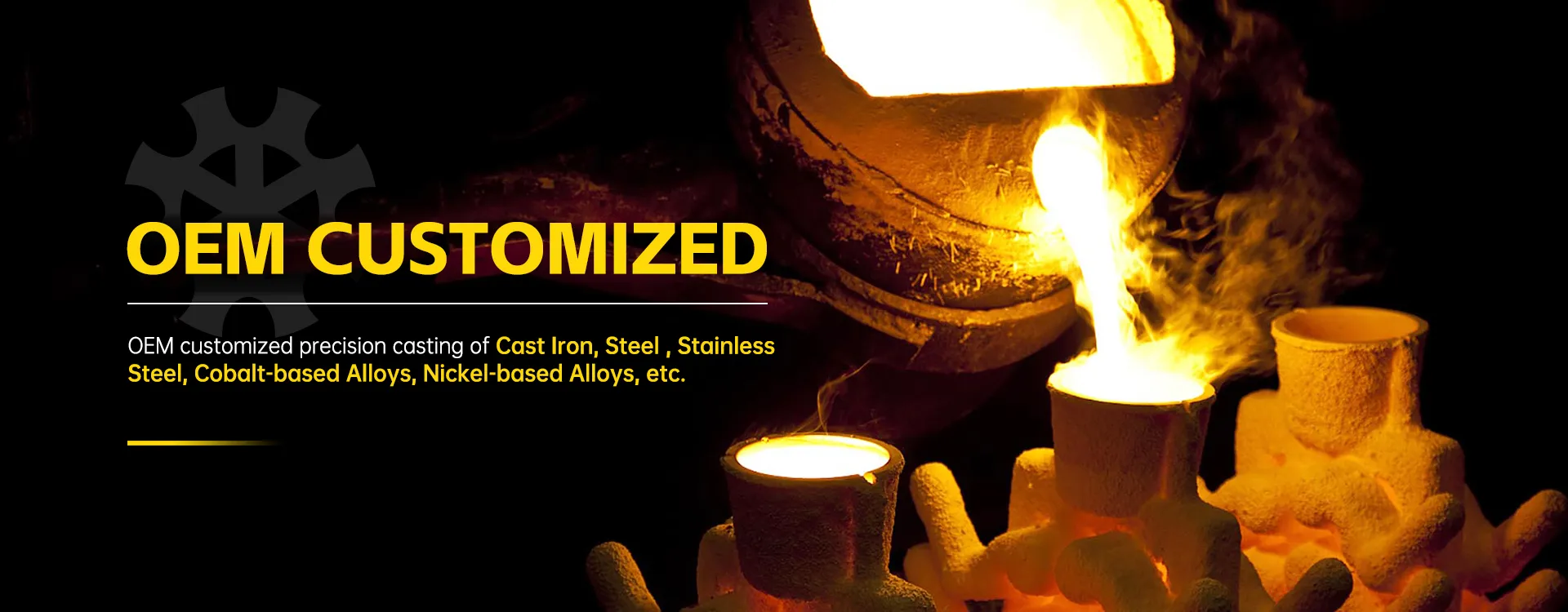
Some suppliers outsource Monel 400 casting and only handle finish machining. That creates gaps—literally. We’ve audited 12 offshore pump assemblies where cast-in porosity near sealing surfaces caused premature leakage under 3,000 psi cycling. The root cause? No shared metallurgical control between foundry and machine shop. QINGDAO QIANGSENYUAN owns both investment casting and 5-axis CNC capabilities under one ISO 9001:2015 roof. That means our metallurgists adjust pour temperature and solidification rate based on final machining requirements—and our machinists know exactly where riser feed zones sit before cutting. For Monel 400 pump foundations, this integration cuts lead time by 22% and reduces rejection from subsurface defects by 76%. It also enables hybrid geometries: a sand-cast base with integrated cooling channels, then CNC-machined sealing lands and mounting flanges—all from one heat-treated lot.
Traceability You Can Verify—Not Just Claim
“Full traceability” is standard marketing language—until you need to prove it during an API Q1 audit. At QINGDAO QIANGSENYUAN, every Monel 400 part carries a QR-coded label linking to a digital dossier: mill test report (MTR) with full chemistry, heat number, tensile/impact data; casting radiography images; CMM reports with color-mapped deviation maps; and even coolant usage logs from the machining cell. We retain these for 15 years—not because regulation demands it, but because customers in oil & gas and marine hydraulics demand it. One European OEM required batch-level cobalt traceability for Monel 400 nozzles exposed to H₂S. We sourced material from a single certified melt, logged every chip removed during turning, and provided isotopic analysis confirming zero cobalt cross-contamination from adjacent T800 alloy runs. That level of control doesn’t happen in fragmented supply chains.
Your Next Step Starts With Material Confidence
If your design calls for Monel 400, ask three questions before issuing a PO: Does the supplier hold physical inventory of ASTM-certified Monel 400 bar, plate, or forging—or do they “source on order”? Can they provide MTRs *before* cutting starts, not after shipment? And do they validate dimensional stability *after* final stress relief—not just before? These aren’t process details. They’re the difference between a part that lasts 20 years in a desalination plant and one that requires replacement in 18 months. QINGDAO QIANGSENYUAN TECHNOLOGY CO., LTD. operates as a Monel 400 part factory where material integrity, geometric precision, and functional validation are non-negotiable pillars—not optional add-ons. Visit tsingtaocnc.com to review certified capability statements, download real-world case studies on Monel 400 pressure valve production, or request a GD&T manufacturability review on your next drawing. Precision begins where assumptions end.