When you hear sustainable innovation and ductile iron in the same sentence, a lot of folks in the trade might just roll their eyes. The immediate thought is often about weight, energy-intensive melting, and the old-school image of foundries. That’s the common trap—thinking sustainability is only about the material itself, not the entire lifecycle and process innovation around it. Having been around castings for a couple of decades, I’ve seen that shift in thinking, but it’s messy, not some clean, linear progression.
The Weight of Legacy and Lightweighting Attempts
One of the first things we wrestled with was the weight. Ductile iron is dense, no way around it. In automotive or machinery, lighter often equals less energy consumption in operation. So, the push was towards thin-wall casting. We ran trials, pushing the limits of fluidity and mold design to get sections down to 3mm, sometimes even less on smaller components. It worked, technically. We produced some impressively light manifolds. But the scrap rate? It skyrocketed. The cost of achieving that lightweighting through extreme process control often ate up the environmental benefit when you factored in the energy for remelting rejects. It was a classic case of solving one problem and creating another. You can’t just talk about the final part’s weight; you have to account for the yield in the foundry.
This is where the real work happens. It’s not just about the iron. It’s about the mold. Switching from traditional green sand to something like shell molding for certain high-volume, precision parts—that’s where we saw tangible gains. The sand-to-metal ratio improves dramatically, you use less binder, and the finish is better, often reducing machining stock. I remember a project for a hydraulic valve body where the switch to shell mold cut our machining time by nearly 15% because the cast surface was so much cleaner. Less machining means less energy, less tool wear, less coolant waste. That’s a sustainability win that doesn’t always get the headline.
Then there’s the alloying itself. People forget that ductile iron is highly recyclable. Most of our charge is scrap steel and returns. The carbon footprint of the material is largely in the melting. We’ve been experimenting with more efficient furnace lining materials and better pre-heating of charges, something a long-established player like Qingdao Qiangsenyuan Technology Co., Ltd. (QSY) has the operational history to optimize over years. It’s not sexy tech, but tweaking the melt practice to reduce hold times by 10% can have a massive cumulative effect on energy use. Their experience across shell mold casting and working with special alloys probably gives them a nuanced view on heat management that a newer shop wouldn’t have.
Beyond Casting: The Machining Equation
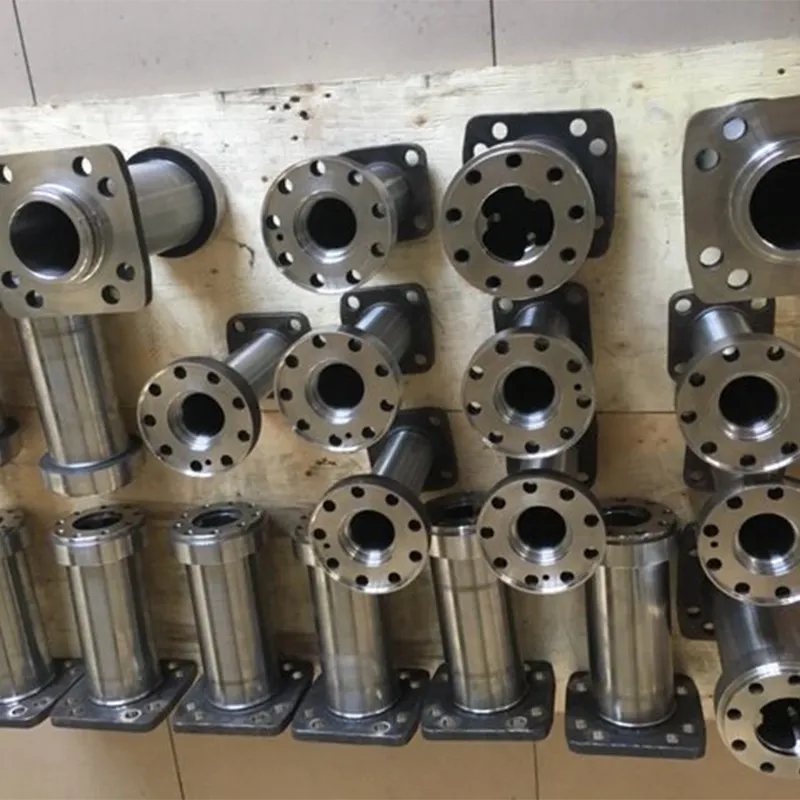
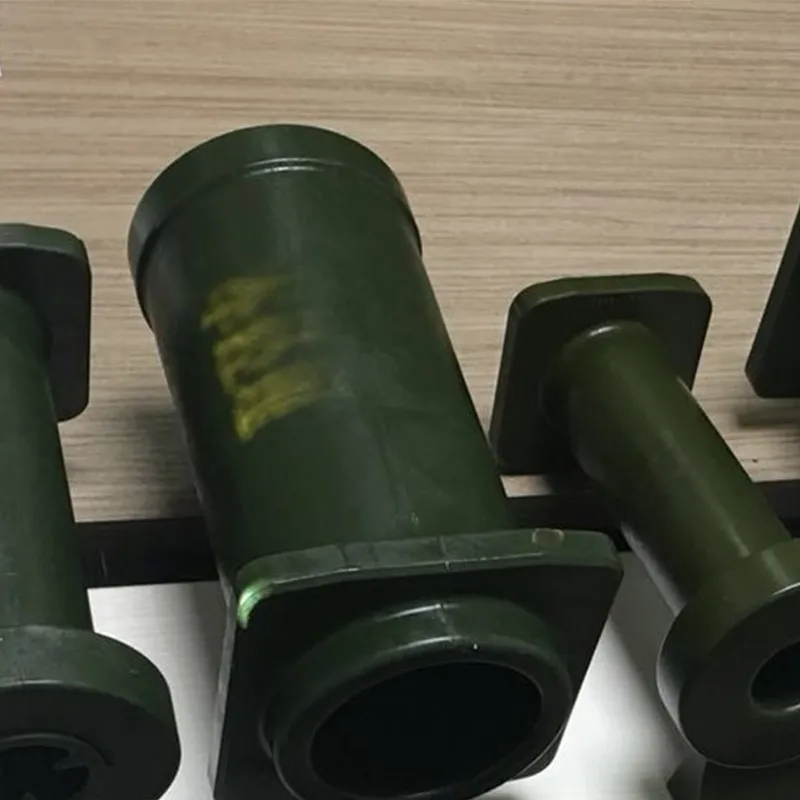
This is critical, and often the blind spot. You can cast a near-net-shape part, but if your machining process is wasteful, you lose the advantage. Sustainability trends now have to look at the entire chain. We integrated CNC machining data back into our pattern design. By analyzing tool paths and stock allowances, we could add a millimeter of material exactly where the CNC needed it for clean-up, and reduce it everywhere else. This collaboration between the foundry and the machine shop—something QSY highlights by offering both casting and CNC machining—is vital. It prevents over-engineering the casting just to be safe, which wastes metal and energy.
Coolant and swarf management became a huge focus. Dry machining isn’t always possible with ductile iron, but moving to minimum quantity lubrication (MQL) systems for certain operations cut our coolant consumption by about 70%. The swarf—those iron chips—are now meticulously collected, cleaned of oil, and sent straight back to the melting furnace as a known, high-quality feedstock. Closing that loop seems obvious, but it requires discipline in shop-floor logistics that many places still lack. It turns a waste stream into a resource, which is the core of industrial sustainability.
We also looked at tool life. Ductile iron is kinder to tools than steel, but optimizing insert grades and cutting parameters extended tool life significantly. Fewer insert changes mean less tungsten carbide, cobalt, and the energy embedded in tool manufacturing. Again, it’s a small piece of a very large puzzle, but these are the tangible, operational details that define real progress, not just marketing claims.
The Alloy Diversification Play
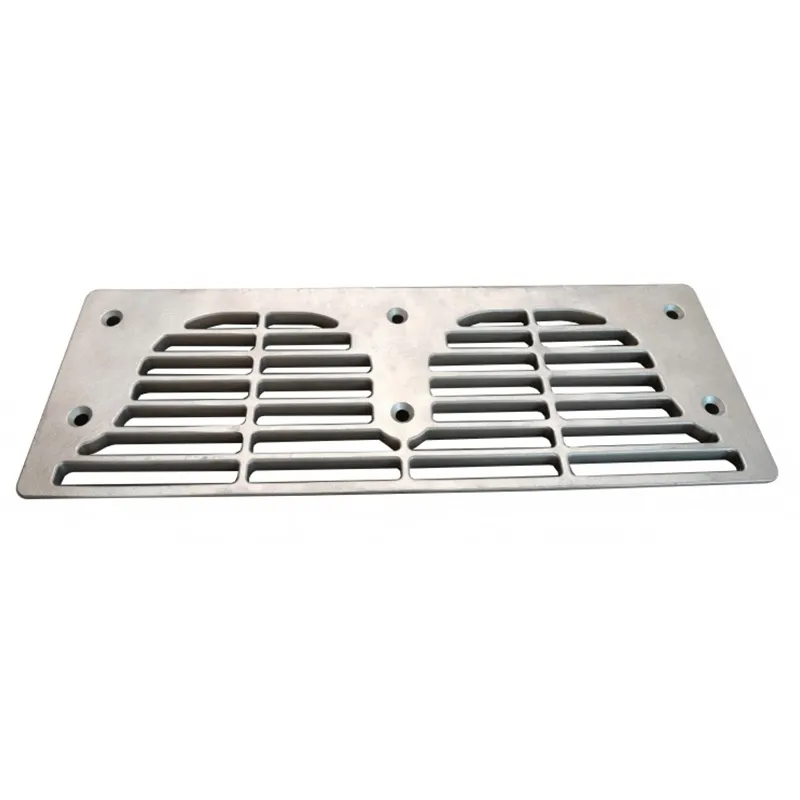
This might sound counterintuitive. How is working with special alloys a sustainable trend for ductile iron? It’s about longevity and performance. Sometimes, the most sustainable part is the one that lasts three times longer, even if its initial production footprint is slightly higher. We’ve seen this in pump components for corrosive environments. A standard ductile iron impeller might last two years. By shifting to a nickel-alloyed ductile iron (austempered ductile iron, or ADI, in some cases), we’ve gotten parts to last over six years in the same duty.
The math on lifecycle assessment (LCA) becomes compelling. The energy and carbon for production, amortized over six years instead of two, plus the avoided downtime and replacement installation impacts, paints a different picture. This is where a company’s material expertise, like QSY’s work with nickel-based alloys and cobalt-based alloys, directly feeds into sustainable innovation. It’s not about abandoning ductile iron; it’s about enhancing its family to solve tougher problems for longer. You can find examples of this approach in their portfolio at their site, tsingtaocnc.com.
The challenge here is cost and education. Convincing a procurement manager to pay a 50% premium upfront for a part that will save money in four years is an uphill battle. A lot of sustainable innovation stalls right here, at the commercial negotiation, not the technical feasibility. We’ve lost bids because of this, even with a solid LCA report. The market isn’t always ready to pay for long-term value.
Digital Shadows and Process Control
The biggest trend I’m cautiously optimistic about is the digital thread. Sensors on furnaces tracking temperature and power consumption in real-time, paired with spectral analysis of the molten metal. The goal is predictive quality. If you can be 99.9% sure a heat will produce good nodules and the right microstructure before you even pour, you eliminate a huge portion of downstream waste—failed mechanical tests, machining only to find a subsurface flaw, etc.
We piloted a system like this last year. It was clunky, and the data overload was real. The engineers were drowning in charts. The innovation wasn’t the data collection; it was figuring out which three key metrics actually predicted our specific quality issues. For us, it was the rate of temperature drop during inoculation and the trace levels of certain elements like titanium. Focusing on those let us build a simpler, actionable dashboard for the furnace operators. It reduced our casting-related scrap by about 8% in six months. Not revolutionary, but a solid, profitable improvement that also happens to be more sustainable.
This ties back to the human element. The trend is towards AI and big data, but on the ground, it’s about giving experienced melters better tools. They still make the final call. The innovation is in the interface between the algorithm and the guy in the heat-resistant suit, not in replacing him.
So, Are They Truly a Trend?
Looking back, sustainable innovation for ductile iron parts isn’t a single silver bullet. It’s a grind. It’s lightweighting with an eye on yield, it’s integrating casting and machining, it’s using alloys to extend life, and it’s applying just enough digital tech to aid human expertise. The trends are holistic, moving from a focus on the material to a focus on the system—from the scrap yard to the finished component in service.
The companies that will do well are the ones with deep process knowledge across that chain. They understand that a sustainable part is often the result of a hundred small, unglamorous optimizations, not one breakthrough. It’s about doing the fundamentals exceptionally well and being smart about where to apply new technology. That’s the real trend: a return to precision and efficiency, amplified by data, and driven by a full lifecycle cost perspective that finally includes environmental impact as a core metric.
In the end, ductile iron remains a remarkably versatile material. The innovation is making its production and use smarter, leaner, and more durable. The sustainability part isn’t a separate add-on; it’s becoming the benchmark for how we judge whether an innovation is actually worth adopting. And that, perhaps, is the most significant shift of all.