You hear a lot about durability in gravity cast iron, but most of the chatter misses the point. It’s not just about the iron grade or the wall thickness. The real trend, from where I stand after three decades in the foundry, is a shift from treating durability as a fixed spec to managing it as a process variable, heavily influenced by subtle changes in technique and post-casting decisions. Everyone wants a part that lasts forever, but the path there is getting more nuanced.
The Misconception of Material as King
When clients ask about durability, the first thing they jump to is material grade. Give me Class 35 or better. Sure, tensile strength matters. But I’ve seen too many projects where they spec a high-grade iron, then compromise everything else in the process to save a few cents per unit. The melt chemistry gets tweaked for faster pour times, the inoculation is rushed—suddenly, that premium iron is full of undercooled graphite or excessive carbides. The gravity cast iron parts come out testing to spec on paper, but the microstructure is brittle. They fail in the field under cyclic loading, and everyone blames the material. It wasn’t the material; it was the process around the material.
We had a case a few years back for a hydraulic valve body. The spec was tight, requiring good pressure integrity. The initial runs used a standard foundry-grade pig iron with careful superheating and a proprietary inoculant we developed in-house. The parts passed all tests. A competitor undercut our price significantly. We later found out they used a higher-grade base iron but cut corners on mold temperature control and pouring speed. Their parts passed the initial hydrostatic test but started showing micro-cracks after about 500 pressure cycles. Ours were still running at 5000+. The client came back. The lesson? The pedigree of the iron is less important than how you treat it during the gravity casting process.
This leads to the real first trend: a focus on process consistency as the primary durability driver. It’s about controlling every variable—mold coat thickness, pouring temperature gradient, cooling rate in the mold—with religious fervor. The data loggers on our furnaces and pouring lines aren’t just for show; they’re how we trace a durability issue back to a 10-degree Celsius drop in ladle temperature at the end of a pour.
Where Durability is Really Won or Lost: The Unseen Geometry
Durability isn’t designed on the CAD model; it’s cast into the part. This is a huge shift in thinking. Engineers design for function, but they often design geometries that create stress concentrations during solidification. Sharp internal corners, abrupt section changes—these are durability killers. The trend I see is closer collaboration before the mold is made. We’re spending more time on simulation software not just to avoid obvious defects, but to model thermal stresses during cooling.
For instance, a bracket for a heavy-duty compressor. The design had a beautiful, weight-saving rib structure. But our simulation showed a high probability of hot tearing at the rib junctions. We suggested adding slight fillets, not for strength in use, but for strength during creation. The design team resisted—it added minimal weight. We produced one batch as-is, and one with our modifications. The as-is batch had a 30% scrap rate from cracks only visible under dye penetrant inspection. The modified batch? Near zero. The durability of the sound casting was inherently higher because it survived its own birth without internal flaws.
This proactive simulation is becoming a non-negotiable step for us at QSY. It’s an investment that pays off by avoiding the catastrophic, hidden flaws that lead to field failures. It moves durability upstream.
The Post-Casting Gambit: Heat Treatment and Machining
Here’s a contentious one. Stress relief annealing. Some shops treat it as a mandatory box to tick. Others skip it to save time and energy. Our stance has evolved. We now view it as a selective tool. For complex, enclosed shapes like pump housings, it’s essential. The residual stress from uneven cooling can be massive. Skipping stress relief is like winding a spring inside the part; machining will release it, causing distortion, and in-service loads will work on a pre-stressed component.
But we’ve also over-treated parts. A simple, open-frame lever made of grey iron underwent a full stress relief cycle. It didn’t just relax stresses; it slightly softened the material, reducing its wear resistance in a key bearing area. It was a case of applying a standard recipe without thinking. Now, we decide based on geometry, wall thickness variation, and the final machining depth. Sometimes, for a stable, simple part, controlled cooling in the mold is enough. This selective application is a trend towards smarter, not just more, processing.
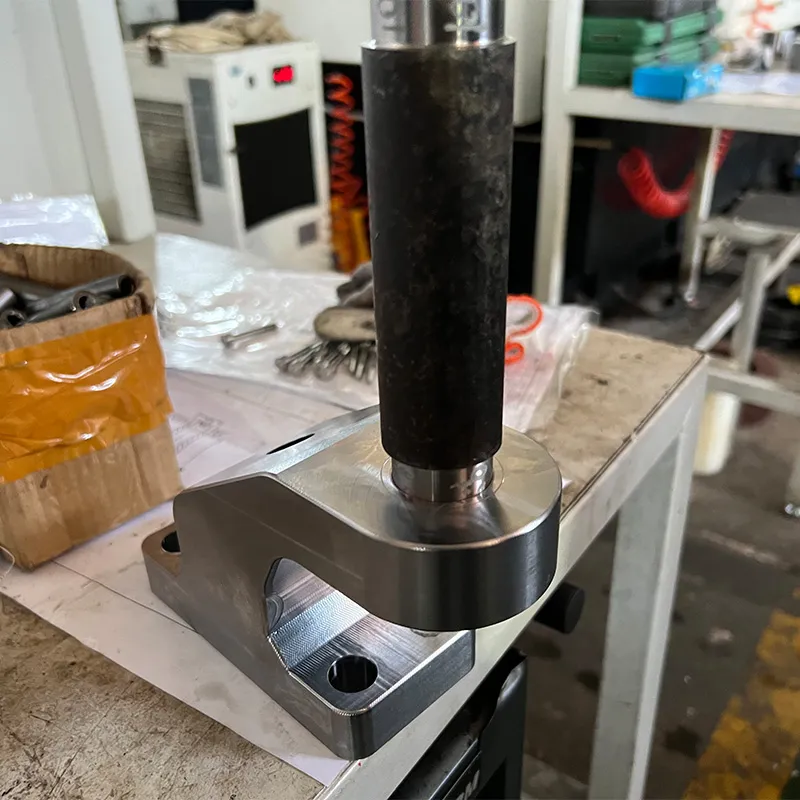
Then there’s machining. A beautifully cast part can be ruined by aggressive machining. We integrated CNC machining partly to control this last crucial step. Taking a heavy, fast cut on a cast iron part can tear the graphite matrix at the surface, creating a network of micro-fractures that become initiation points for fatigue. Our machinists know to use specific tool geometries and feeds/speeds for our castings. It’s not just about hitting a dimension; it’s about preserving the integrity we worked so hard to create in the foundry.
The Alloying Subtlety: Not Everything is a Superalloy
The buzz is always about exotic alloys. But for many industrial applications, the durability gains from alloying grey or ductile iron are more about finesse than brute force. Small additions of copper, tin, or chromium. We’re not talking about moving to nickel-based alloys, but about tweaking the matrix.
We worked on a wear plate for a mining conveyor system. Pure grey iron wore too fast. Ductile iron was too tough and expensive. We settled on a grey iron with a controlled addition of chromium and copper. The chromium promoted a harder, pearlitic matrix for abrasion resistance, while the copper refined the graphite and improved strength without major brittleness. The durability trends here are towards micro-alloying for specific property profiles, often guided by years of trial and error in our own records. It’s less glamorous than saying we use superalloys, but it’s often more effective and cost-efficient for the application.
This is where a foundry’s experience is irreplaceable. You can’t just pull these recipes from a handbook. They depend on your base iron source, your melting practice, even your local climate’s effect on mold drying. The secret sauce is often just decades of logged data.
Failure as the Best Teacher: A Personal Anecdote
Early in my time here at Qingdao Qiangsenyuan Technology Co., Ltd. (QSY), we had a major failure that reshaped our approach. A batch of ductile iron gearbox covers for a marine application. They passed all QA checks. Six months into service, we got a panicked call: cracks were appearing around the bolt holes. It was a disaster.
The post-mortem was brutal. The material met nodularity and grade. The design was sound. The culprit? A change in the sand binder system to a newer, faster product. It improved our mold production rate slightly, but it altered the cooling dynamics just enough in the critical sections around the bolt bosses. It created a zone of slightly higher carbide content, making it brittle. The constant stress from engine vibration found that weakness. We lost the client, paid for replacements, and nearly lost our reputation.
That failure forced us to institutionalize change control. Any change—new binder, new inoculant, new ladle liner material—now goes through a pilot batch and rigorous sectioning and micro-analysis. We don’t just test to standard specs; we look for those subtle microstructural shifts. That painful lesson did more for the real-world durability of our gravity cast iron parts than any textbook ever could. It’s a trend born from scars: systemic rigor over chasing minor efficiencies.
So, where are the trends heading? Away from simple answers. Towards integrated process control, from simulation to selective heat treatment to gentle machining. Towards micro-alloying based on deep historical data. And above all, towards respecting that durability isn’t a property you test into a part; it’s a culture you build into the process. It’s the boring, meticulous, non-negotiable control of a hundred variables that nobody sees—until the part is still working flawlessly years later. That’s the real trend. You can find some of our philosophy applied across our processes detailed on our site at tsingtaocnc.com, but the real knowledge, as always, is on the foundry floor.