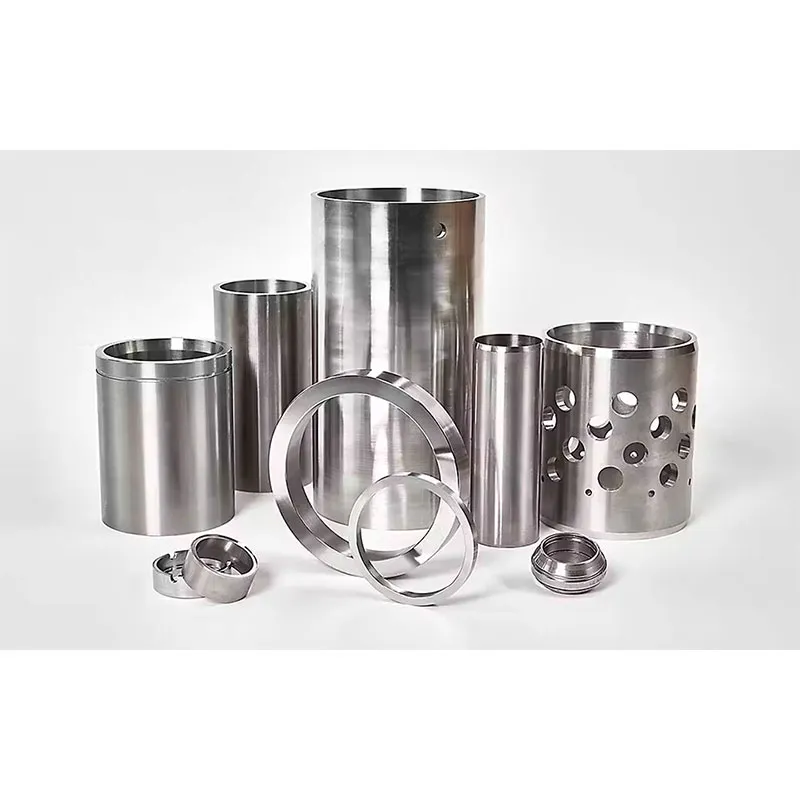
Gravity permanent mold casting is a precision metal forming process that utilizes reusable molds, typically made from steel or iron, and relies on gravity to fill the cavity with molten metal. Unlike high-pressure die casting, this method produces components with superior mechanical properties, minimal porosity, and excellent dimensional stability. For industrial buyers seeking reliable OEM partners, QINGDAO QIANGSENYUAN TECHNOLOGY CO., LTD. offers specialized manufacturing capabilities in this domain, delivering high-performance parts for hydraulic systems, engineering vehicles, and oil gas equipment.
What Is Gravity Permanent Mold Casting?
Gravity permanent mold casting, often referred to as gravity die casting, is a manufacturing process where molten metal is poured into a pre-heated, reusable metal mold under the force of gravity alone. No external pressure or vacuum is applied during the filling stage. This distinguishes it from low-pressure casting or high-pressure die casting (HPDC).
The process is particularly valued for producing non-ferrous components, such as aluminum and magnesium alloys, though it is also applicable to certain iron and steel applications when using specialized refractory coatings. The resulting castings exhibit a fine grain structure due to the rapid cooling rate against the metal mold walls. This microstructure translates to higher tensile strength and better fatigue resistance compared to sand casting.
For engineers and procurement specialists, understanding the nuances of this process is critical when specifying parts for mission-critical applications. The balance between cost-efficiency and mechanical integrity makes gravity permanent mold casting a preferred choice for medium-to-high volume production runs where consistency is paramount.
How the Process Works: Step-by-Step
The operational workflow of gravity permanent mold casting involves several controlled stages to ensure quality and repeatability. At QINGDAO QIANGSENYUAN TECHNOLOGY CO., LTD., these steps are rigorously monitored to meet ISO-compliant standards.
- Mold Preparation: The reusable metal mold is cleaned and pre-heated to a specific temperature. A ceramic coating is applied to protect the mold surface and control the cooling rate of the casting.
- Mold Assembly: The two halves of the mold are clamped together securely. Core pins, if required for internal features, are inserted and locked in place.
- Metal Pouring: Molten metal is ladled or poured directly into the mold’s sprue or pouring basin. The flow is steady and controlled to prevent turbulence and air entrapment.
- Solidification: The metal cools and solidifies within the mold. The metal mold acts as a heat sink, promoting directional solidification from the outer surfaces inward.
- Ejection: Once the part has reached sufficient structural integrity, the mold is opened, and the casting is ejected using ejector pins or manual removal tools.
- Post-Processing: The gating system is removed, and the part undergoes cleaning, heat treatment, and CNC machining as specified by the customer’s drawing requirements.
Gravity Permanent Mold Casting vs. Other Casting Methods
Selecting the right casting method depends on factors such as volume, complexity, material type, and required mechanical properties. Below is a detailed comparison to help decision-makers evaluate whether gravity permanent mold casting aligns with their project needs.
| Feature | Gravity Permanent Mold Casting | Sand Casting | High-Pressure Die Casting (HPDC) |
| Mold Type | Reusable metal mold (Steel/Iron) | Disposable sand mold | Reusable metal die |
| Filling Method | Gravity only | Gravity only | High pressure injection |
| Surface Finish | Smooth (Ra 1.6–6.3 μm) | Rough (Ra 6.3–25 μm) | Very Smooth (Ra 0.8–3.2 μm) |
| Dimensional Accuracy | High (±0.5 mm typical) | Low to Medium | Very High (±0.1 mm typical) |
| Porosity Level | Low (dense structure) | Medium to High | Can be high (gas entrapment) |
| Tooling Cost | Medium | Low | High |
| Production Volume | Medium to High | Low to Medium | Very High |
| Mechanical Properties | Excellent (fine grain) | Good | Good (but anisotropic) |
This comparison highlights why gravity permanent mold casting is often the “sweet spot” for components requiring better mechanical performance than sand casting can offer, but without the excessive tooling costs associated with HPDC for moderate volumes.
Key Advantages of Gravity Permanent Mold Casting
For industries such as hydraulic systems and engineering vehicles, the benefits of this casting method extend beyond simple geometry formation. The inherent characteristics of the process deliver tangible value in performance and lifecycle costs.
Superior Mechanical Integrity
The rapid cooling rate induced by the metal mold results in a finer grain structure compared to sand casting. This fine grain structure enhances the tensile strength, yield strength, and hardness of the final component. For parts like piston pump cylinder housings or pressure valves, this means greater resistance to deformation under high-pressure conditions.
Consistent Dimensional Accuracy
Reusable molds do not degrade with each shot in the same way sand molds do. This ensures that the first casting and the thousandth casting maintain tight tolerances. This consistency reduces the need for extensive secondary machining, lowering overall production costs. At QINGDAO QIANGSENYUAN TECHNOLOGY CO., LTD., precision manufacturing is supported by multi-axis CNC machining capabilities, ensuring that even complex contours meet strict GD&T requirements.
Reduced Porosity and Defects
Since the metal flows smoothly under gravity without turbulent injection, there is less risk of air entrapment and oxide formation. The resulting castings are denser and more suitable for applications requiring pressure tightness or subsequent heat treatment. This is particularly crucial for components in oil and gas equipment where leakage is not an option.
Cost-Effectiveness for Medium Volumes
While the initial tooling cost is higher than sand casting, the per-unit cost decreases significantly over medium to high production runs. The longevity of the metal mold allows for thousands of cycles before maintenance is required, making it an economically viable solution for sustained production orders.
Materials Compatible with Gravity Permanent Mold Casting
The choice of material significantly influences the casting process parameters and the final application performance. QINGDAO QIANGSENYUAN TECHNOLOGY CO., LTD. specializes in handling a diverse range of materials, including difficult-to-machine superalloys and standard industrial metals.
- Aluminum Alloys: Widely used for their lightweight and corrosion-resistant properties. Common grades include A356 and A380, ideal for automotive and aerospace components.
- Magnesium Alloys: Offer even lighter weight solutions with good damping capacity, suitable for portable equipment and handheld tools.
- Copper and Bronze Alloys: Used for components requiring high thermal conductivity and wear resistance, such as bushings and valve bodies.
- Iron and Steel Castings: While less common in traditional gravity die casting due to high melting points, advanced refractory coatings enable the casting of certain steel and iron grades for high-strength applications.
- Cobalt-Nickel Alloys: A specialty of QINGDAO QIANGSENYUAN TECHNOLOGY CO., LTD., these materials, such as AMS 5387 Cobalt Alloy 6 and T800 alloy, are used in extreme environments. Their processing requires precise temperature control and expert handling to maintain metallurgical properties.
The company’s expertise in sourcing certified raw materials and collaborating with suppliers ensures consistent metallurgical properties across batches. This is vital for critical components like cobalt alloy nozzles and plugs, where material failure could lead to significant operational downtime.
Applications in Critical Industries
Gravity permanent mold casting is not a one-size-fits-all solution. It excels in sectors where component reliability directly impacts system safety and efficiency. The following industries represent the core demand for this manufacturing technique.
Hydraulic Systems and Pump Assemblies
Hydraulic components operate under extreme pressure and dynamic loading. Parts such as piston pump cylinder housings, pressure valves, and pump foundations require high dimensional accuracy and structural integrity. Gravity castings provide the necessary density and strength to withstand these conditions without failing. The smooth surface finish also reduces friction and wear in moving parts.
Engineering Vehicles and Heavy Machinery
In the construction and mining sectors, vehicles are subjected to harsh vibrations and heavy loads. Components like onboard winch center shaft rollers and structural brackets benefit from the fatigue resistance of gravity castings. The ability to produce complex geometries with integrated mounting points simplifies assembly and reduces the number of welded joints, which are potential weak points.
Oil and Gas Equipment
The oil and gas industry demands materials that can resist corrosion and high temperatures. Cobalt-nickel alloy components produced via gravity casting are ideal for valve trim, nozzles, and plugs in drilling and extraction equipment. The dense microstructure prevents fluid permeation and ensures long-term sealing performance.
Specialized Industrial Machinery
From food processing equipment to chemical manufacturing, machinery often requires non-standard, custom-fabricated parts. Gravity permanent mold casting allows for the economical production of these bespoke components with high repeatability. The vertical integration at QINGDAO QIANGSENYUAN TECHNOLOGY CO., LTD. supports this by combining casting with precision CNC machining and surface finishing.
Design Guidelines for Optimal Casting Results
To maximize the benefits of gravity permanent mold casting, designers should adhere to specific guidelines. These recommendations help mitigate common issues such as shrinkage, warping, and mold sticking.
- Uniform Wall Thickness: Maintain consistent wall thickness wherever possible to ensure uniform cooling. Sudden changes in section thickness can lead to stress concentrations and cracking.
- Generous Radii: Use generous fillets and radii at internal corners. Sharp corners act as stress risers and can cause hot spots in the mold, leading to premature mold failure.
- Draft Angles: Incorporate adequate draft angles (typically 1–3 degrees) on vertical surfaces to facilitate easy ejection of the part from the mold without damage.
- Riser and Gating Design: Proper placement of risers and gates is essential for feeding molten metal to shrinking areas and allowing air to escape. Expert simulation tools are often used to optimize this design phase.
- Material Selection: Choose alloys with good fluidity and casting characteristics. For high-performance applications, consult with manufacturing experts early in the design phase to validate manufacturability.
QINGDAO QIANGSENYUAN TECHNOLOGY CO., LTD. offers project management support that includes drawing validation and feedback on manufacturability. This early engagement enables risk mitigation and cost-effective design realization, ensuring that the final product meets both functional and economic goals.
Quality Control and Assurance Standards
In B2B industrial manufacturing, trust is built on consistent quality. QINGDAO QIANGSENYUAN TECHNOLOGY CO., LTD. employs a disciplined quality management approach embedded at every stage of production.
Quality control begins with incoming material verification. Certified raw materials are inspected to ensure they meet chemical composition specifications. During the casting process, in-process dimensional inspections are conducted using Coordinate Measuring Machines (CMM) and optical measuring instruments. This real-time monitoring allows for immediate adjustments to process parameters if deviations are detected.
Final assessment includes both visual and functional testing. Parts are checked for surface defects such as cracks, porosity, or inclusions. For critical components, non-destructive testing (NDT) methods like X-ray or ultrasonic testing may be employed to verify internal integrity. Full traceability is retained for all critical components, allowing customers to track the history of each batch from raw material to finished product.
The company’s adherence to documented inspection protocols and ISO-compliant practices ensures that every shipment meets international dimensional and material standards. This level of rigor is essential for serving global markets in North America, Europe, and Southeast Asia, where regulatory expectations are stringent.
Why Choose QINGDAO QIANGSENYUAN TECHNOLOGY CO., LTD.?
As a technology-driven enterprise headquartered in Qingdao, China, QINGDAO QIANGSENYUAN TECHNOLOGY CO., LTD. stands out as a reliable partner for complex, mission-critical parts. The company’s operational model integrates design support, material selection, precision manufacturing, and strict quality assurance.
Key strengths include deep technical competence in processing high-performance alloys like AMS 5387 and T800 grade materials. This expertise is supported by proven application experience in pump and valve systems. Furthermore, the vertically integrated capabilities spanning casting, CNC machining, and finishing allow for tight control over dimensional stability, microstructure integrity, and surface quality.
The focused product portfolio, centered on functional industrial components such as pressure valves, cylinder housings, and winch system shafts, ensures domain-relevant engineering insight. This specialization enables process optimization that generalist manufacturers cannot match. With structured production planning and lean workflow practices, the company ensures stable delivery timelines for both prototype and medium-volume production orders.
Frequently Asked Questions (FAQ)
What is the difference between gravity casting and low-pressure casting?
Gravity casting relies solely on the weight of the molten metal to fill the mold, while low-pressure casting uses a small amount of pressure (typically 0.02–0.07 MPa) to push the metal up into the mold. Low-pressure casting generally offers better filling of thin walls and lower porosity, but gravity casting is simpler and often more cost-effective for thicker, robust components.
Can gravity permanent mold casting be used for steel?
Yes, but it is more challenging than for aluminum or magnesium due to the higher melting point of steel. Specialized refractory coatings and mold materials are required to withstand the thermal shock. QINGDAO QIANGSENYUAN TECHNOLOGY CO., LTD. has capabilities in steel and stainless steel castings, leveraging advanced process controls to manage these challenges.
What is the typical lead time for gravity permanent mold casting?
Lead times vary based on complexity and volume. Tooling fabrication typically takes 4–6 weeks. Once tools are ready, production samples can be delivered within 2–3 weeks. For medium-volume orders, the efficient workflow at QINGDAO QIANGSENYUAN TECHNOLOGY CO., LTD. ensures timely delivery, often matching or exceeding industry standards.
Is post-casting machining necessary?
While gravity permanent mold casting offers good dimensional accuracy, most industrial components require some level of secondary machining to achieve tight tolerances on critical features such as bearing seats, threaded holes, or mating surfaces. The company’s integrated CNC machining services ensure seamless transition from casting to finished part.
How does gravity casting affect the environmental footprint?
Gravity permanent mold casting is considered environmentally friendly compared to sand casting because it eliminates the need for disposable sand molds and binders. The reusable metal molds generate less waste, and the process energy efficiency is higher due to shorter cycle times and no need for mold preparation in each cycle.
Conclusion and Next Steps
Gravity permanent mold casting represents a strategic choice for manufacturers seeking a balance between performance, precision, and cost. Its ability to produce dense, high-strength components with excellent surface finish makes it indispensable for industries ranging from hydraulics to oil and gas. By partnering with a specialized manufacturer like QINGDAO QIANGSENYUAN TECHNOLOGY CO., LTD., businesses can leverage advanced metallurgical expertise and vertically integrated production capabilities to bring high-quality products to market efficiently.
Whether you require standard aluminum components or specialized cobalt-nickel alloy parts, the key to success lies in early collaboration and clear communication of technical requirements. The company’s commitment to responsive technical consultation and transparent engineering review ensures that your project risks are mitigated from the start.
Ready to optimize your supply chain with precision casting solutions?
Contact our engineering team today to discuss your specific application needs. We provide comprehensive support from drawing validation to final delivery, ensuring your components meet the highest standards of quality and performance.
Get a Quote / Contact Us for Technical Consultation