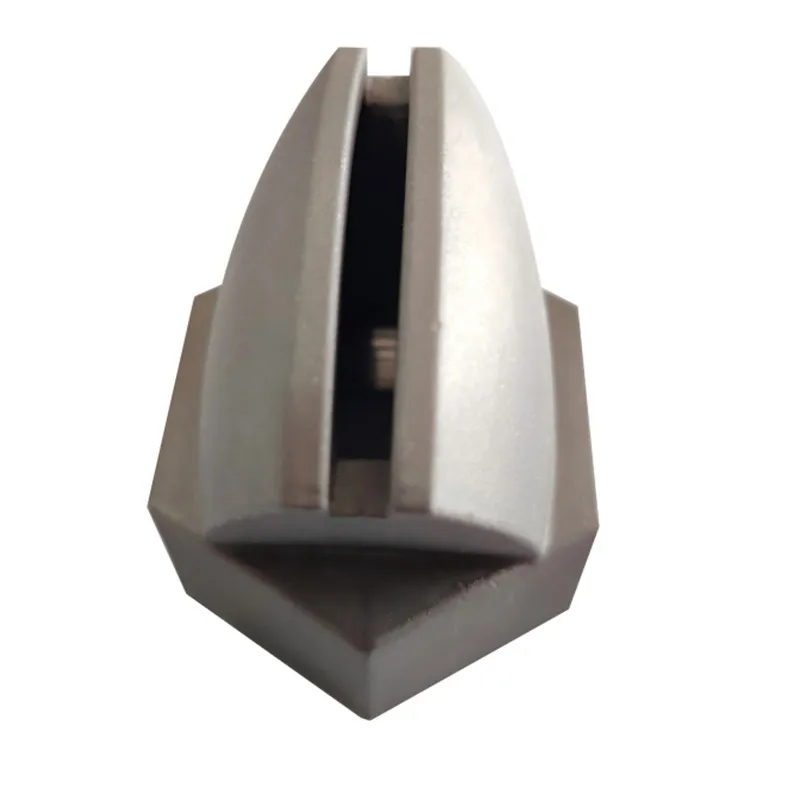
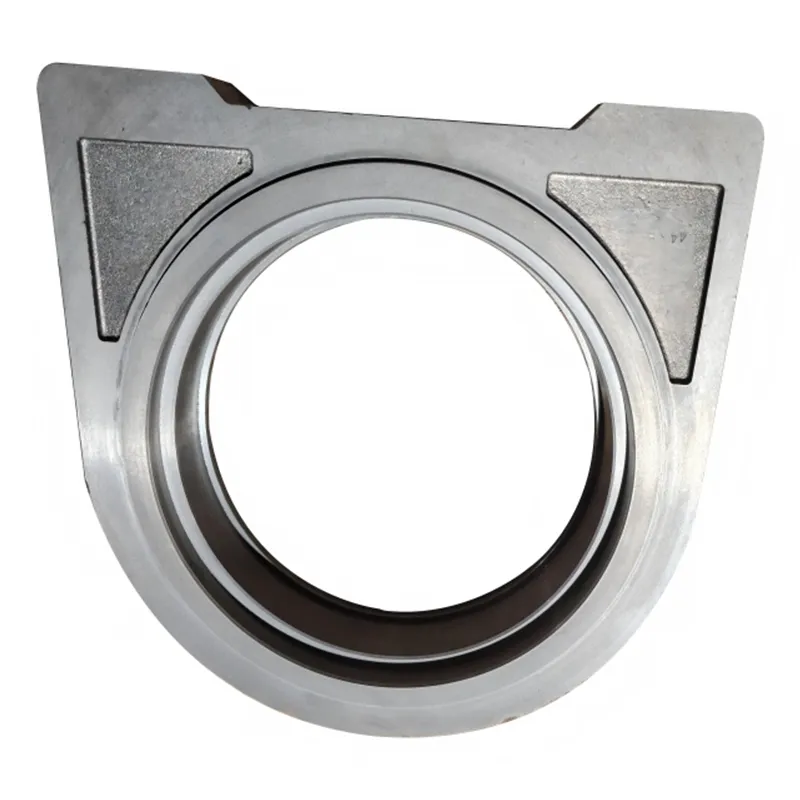
When most people hear 'special alloy fasteners', they think of high-strength bolts for a jet engine or a race car. That's part of it, sure, but it's also where the first big misconception lies. It's not just about ultimate tensile strength. It's about the environment it fails in. I've seen too many projects where a team sourced a high-nickel alloy bolt for corrosion resistance, only to have it gall and seize during installation because they overlooked the galling tendency of annealed special alloy fasteners in high-clamp force applications. The spec sheet said it was 'corrosion-resistant,' and they stopped reading there. The real work starts after you've chosen the base material.
The Special in the Alloy Isn't Magic
Let's talk about what makes an alloy 'special' for fasteners. It's usually the addition of elements like nickel, cobalt, molybdenum, or chromium in significant percentages to achieve a specific property profile. Think Inconel 718, Hastelloy C-276, or MP35N. But here's the practical catch: these alloys are notoriously difficult to machine. Their work-hardening rates are extreme. If your machining parameters are off by a bit—feed rate too slow, for instance—you're not cutting the material anymore, you're just hardening its surface with the tool's edge, which leads to rapid tool wear and potential subsurface defects in the fastener. This isn't theoretical. We learned this the hard way early on with a batch of Waspaloy studs. The threads looked perfect post-machining, but during ultrasonic inspection, we found micro-cracks initiating from the thread roots. The cause? Residual stress from an overly aggressive turning operation that wasn't subsequently stress-relieved properly. The alloy's 'special' properties amplified the problem.
This is where partnering with a foundry and machine shop that has literal decades in the game matters. I'm thinking of a supplier we've worked with, Qingdao Qiangsenyuan Technology Co., Ltd. (QSY). Their background in investment casting and shell molding for over 30 years, especially with cobalt and nickel-based alloys, gives them a fundamental feel for how these materials behave from liquid state to finished part. It’s not just about running a CNC program. It's about knowing that a certain nickel alloy needs a specific inter-pass temperature during machining or it will distort. You can't pull that knowledge from a standard machining handbook. You can find more on their approach at their site, tsingtaocnc.com. It’s this process-level understanding that separates a usable fastener from a reliable one.
Another nuance is the heat treatment. For many stainless steels, you have a straightforward quench and temper. With precipitation-hardening nickel alloys, the aging cycle is everything. Time and temperature have to be controlled to the minute to get the right balance of strength and ductility. I recall a case where a client complained of brittle fracture in their Inconel 718 bolts. They'd sourced them to the right AMS spec. Upon investigation, we found they were aged at the correct temperature, but the oven load was too dense, causing uneven heating and a spread of mechanical properties across the batch. The ones that failed were from the cooler spots in the furnace. The 'special' alloy was let down by a standard industrial process executed without enough care.
Failure Points You Don't See Coming
Corrosion is a broad term. With special alloy fasteners, we're often dealing with pitting, crevice corrosion, or stress corrosion cracking (SCC) in specific media. A fastener might be perfect for a sour gas environment (H2S resistant) but will catastrophically fail from chloride-induced SCC in a coastal atmosphere. The choice isn't just corrosive or not. It's about the exact chemical soup it's sitting in, including trace elements. We once used titanium alloy fasteners for a seawater application, brilliant for general corrosion. But the system had traces of methanol as a hydrate inhibitor. Under certain stress levels, this introduced a risk of methanol-induced SCC, a failure mode not on our original radar. We had to backtrack and switch to a high-grade duplex stainless steel.
Then there's galvanic corrosion. Pairing a noble special alloy fastener like a cobalt-based one with an aluminum or carbon steel structure is asking for trouble. You're essentially sacrificing the base structure. The fastener will be pristine while it eats away the material around it. The solution isn't always a different fastener; sometimes it's about isolation with specific washers or coatings, but those coatings themselves must be compatible and not introduce hydrogen embrittlement risks. It's a chain of dependencies.
Installation is its own minefield. The high strength of these fasteners often means higher required torque. Achieving that clamp force without twisting the head off or exceeding the yield point of the mating part requires precision. Lubrication is critical. Using the wrong lubricant can contaminate the system in aerospace or food-grade applications. Using none can lead to the galling I mentioned earlier. We standardized on specific, certified anti-seize compounds for different alloy families, and that simple step eliminated about 80% of our field installation issues.
When Casting Meets Precision Machining
This is an interesting intersection. For complex fastener geometries—think a large, oddly shaped locking nut for a turbine casing, or a fastener with integrated fluid passages—investment casting can be a superior starting point to forging or machining from bar stock. You get near-net-shape, which minimizes the amount of expensive alloy you need to machine away. A company like QSY, with its dual focus on shell/investment casting and CNC machining, is set up for this kind of integrated manufacturing.
The advantage is material grain flow. A machined part cuts through the grain structure. A properly engineered casting, followed by a hot isostatic pressing (HIP) cycle to eliminate internal porosity, can have a more homogeneous structure for complex shapes. Then, the critical load-bearing features—threads, bearing surfaces, under-head radii—are precision machined in-house. This controls the entire value chain. The risk of getting a casting from one vendor, shipping it to a machine shop that isn't familiar with its specific dendritic structure and residual stress state, is high. Cracking during final machining is a common, and expensive, result.
I remember evaluating a large Monel K500 cast and machined flange bolt for a marine coupling. The initial samples from a disjointed supply chain failed at the thread transition. The failure analysis pointed to micro-shrinkage porosity from the casting that wasn't fully closed by HIP, which then acted as a stress concentrator during threading. Consolidating the process with a single-source provider who controlled both the casting integrity and the final machining parameters solved it. They adjusted the gating system on the casting mold and pre-machined the blank before a final HIP cycle, then finished the threads. The difference was night and day.
Cost vs. Reliability: The Real Calculation
No discussion about special alloy fasteners is complete without talking cost. A single Inconel bolt can cost 50-100 times more than a Grade 8 steel bolt. The instinct is to see where you can value engineer. This is where experience screams to be cautious. Substituting a lower-grade alloy or accepting a wider dimensional tolerance to save 15% on the part can multiply the risk of failure, whose cost includes downtime, collateral damage, and liability.
The calculation shifts from piece-part cost to total cost of ownership. In a subsea oil & gas Christmas tree, a fastener failure isn't a maintenance issue; it's a potential environmental disaster and a production shutdown costing millions per day. Here, the reliability engineered into the fastener through meticulous material selection, controlled manufacturing, and rigorous testing (like ASTM F606 testing for mechanical properties and NACE MR0175 for sulfide stress cracking) is the entire value proposition. It's an insurance policy.
Sometimes, the solution isn't the most exotic alloy. We had a high-temperature application (around 650°C) where the initial design called for a very expensive cobalt-based superalloy. By revisiting the design, we realized we could reduce the stress on the fastener by modifying the flange design slightly. This allowed us to downgrade to a more common but still capable nickel-chromium alloy, saving significant cost without compromising the 20-year design life. The key was engaging with the fastener and material expertise early in the design phase, not as a procurement afterthought.
The Takeaway: It's a System, Not a Component
So, what's the point of all this? A special alloy fastener is never just a commodity item you pull from a catalog. It's a highly engineered system component. Its performance is a function of the metallurgy, the manufacturing process chain (whether it's from a integrated supplier like QSY or a coordinated group), the installation procedure, and the specific operating environment. Ignoring any one of these links is an invitation to failure.
The industry is moving towards more traceability and documentation. It's no longer enough to have a material cert. Customers want full batch traceability, machining process records, and heat treat charts. This level of control is becoming standard for critical applications. It pushes you towards suppliers who have the systems and the discipline to provide it, not just the machine tools.
In the end, working with these materials teaches you respect. They're not a silver bullet. They're tools that, when understood and applied with a deep awareness of their quirks and requirements, enable technology to operate in places it otherwise couldn't—inside a jet turbine, at the bottom of the ocean, or in a corrosive chemical plant. That's the real value. The fastener itself is just the physical manifestation of a whole lot of specialized knowledge and controlled process.