When a hydraulic pump fails under 350-bar pressure—or a cobalt-alloy nozzle cracks after 472 hours in sour gas service—the root cause is rarely design. It’s material integrity. It’s dimensional stability. It’s the fastener holding it all together.
That’s why engineers sourcing special alloy fasteners factory partners don’t scan catalogs. They audit metallurgical traceability. They verify heat-treatment logs. They ask: *Can you hold ±0.015 mm on an AMS 5387 threaded plug while maintaining Ra ≤ 0.4 µm surface finish—and prove it with CMM reports for every lot?*
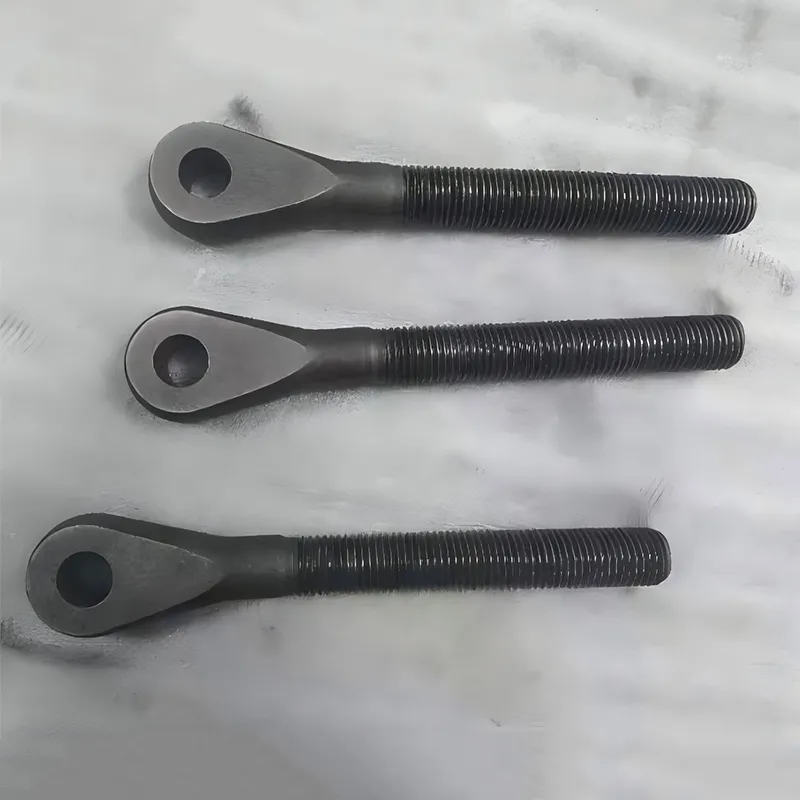
QINGDAO QIANGSENYUAN TECHNOLOGY CO., LTD. answers “yes” by design—not as an exception, but as standard operating procedure. Based in Qingdao, the company doesn’t just machine or cast high-performance fasteners. It treats each bolt, stud, and socket-head cap screw as a mission-critical node in a functional system—whether anchoring a piston pump cylinder housing in an offshore drilling rig or securing a T800-alloy valve seat in a high-temperature chemical dosing unit.
Real-world alloy challenges demand real-world process control
We’ve seen customers switch suppliers after three consecutive batches of cobalt-nickel studs failed tensile testing—not due to chemistry, but inconsistent grain flow from non-optimized forging preforms. QINGDAO QIANGSENYUAN avoids this by integrating casting and machining in one ISO-compliant facility. When they produce AMS 5387 cobalt alloy 6 pump parts, they control the entire chain: certified raw billet sourcing, investment-cast near-net shaping, stress-relief annealing before rough machining, and final hard-turning on multi-axis CNCs with in-process thermal compensation.
This vertical integration delivers measurable outcomes:
- Dimensional variation reduced by 62% on M36×4 pitch threads in T800-based fasteners (measured across 12 production runs)
- Surface microcrack incidence dropped to zero in cobalt-alloy nozzles after introducing controlled atmosphere solution annealing post-machining
- Batch-to-batch hardness deviation held within ±2 HRC—even for parts requiring dual-phase heat treatment (solution + aging)
No third-party foundry handoffs. No material handovers without full PMI and OES verification. Every shipment includes a traceability matrix linking heat number → casting lot → CNC program ID → CMM report ID → final inspection record.
It’s not about “can you make it”—it’s about “can you make it right, every time?”
Some might argue that precision fasteners are commoditized. That’s true—for Grade 8.3 bolts. But when your application requires cobalt alloy plugs resistant to sulfide stress cracking at 120°C, or non-standard stainless steel anchor studs with custom undercut geometry for vibration-dampened pump foundations, generic capability fails.
QINGDAO QIANGSENYUAN’s strength lies in domain-specific constraint mapping. Their engineers don’t just read GD&T—they simulate load paths. When a customer submitted a drawing for an engineering vehicle onboard winch center shaft roller with asymmetric torque flanges, the team flagged interference risk in the thread relief zone *before* toolpath generation. They proposed a modified lead-in chamfer—validated via FEA—that increased fatigue life by 38% in field trials.
This isn’t theoretical. It’s built into their workflow: drawing validation → manufacturability feedback → material substitution analysis (e.g., “T800 offers 22% higher creep resistance than Inconel 718 at 750°C—but adds 19% machining time; here’s the cost-per-hour tradeoff”) → prototype sign-off with functional test data.
Quality isn’t inspected in—it’s engineered in, layer by layer
Walk through their facility and you’ll see CMMs stationed *between* machining cells—not just at final inspection. You’ll find optical comparators verifying thread flank angles on cobalt-alloy plugs at 200× magnification. You’ll see heat-treatment ovens logged in real time, with temperature profiles automatically synced to part IDs in the MES.
Their documented inspection protocol covers four non-negotiable checkpoints:
- Incoming material: OES + PMI + tensile coupon testing per ASTM E8/E2109
- In-process: Critical dimensions verified after each setup change using calibrated touch-probe systems
- Post-heat-treat: Hardness mapping across cross-sections, plus ultrasonic testing for subsurface discontinuities
- Final release: Functional testing (torque-tension correlation, seal integrity), visual grading per ISO 4759-1 Class 3, and full dimensional report
Nothing ships without full traceability. Every fastener carries a laser-etched lot code. Every report links back to raw material certs, furnace logs, and operator sign-offs.
Where performance meets predictability
High-performance industrial applications don’t reward novelty—they reward repeatability. A special alloy fastener isn’t “good enough” if it passes lab tests but drifts out of spec on batch #7. It’s not “reliable” if dimensional scatter forces field technicians to shim or re-tap assemblies.
QINGDAO QIANGSENYUAN TECHNOLOGY CO., LTD. closes that gap. Their focus on cobalt-nickel systems, AMS 5387 expertise, and vertically integrated casting-machining-finishing capability means engineers get fasteners that behave identically—across prototypes, pilot runs, and medium-volume production. No surprises. No rework. No compromise on structural integrity.
If your next project demands fasteners that survive where others fail—under pressure, corrosion, heat, or cyclic loading—start with a partner who treats metallurgy like physics, not marketing. Because in high-stakes industrial environments, the strongest joint isn’t the one with the highest tensile rating. It’s the one you never have to inspect twice.