When you hear 'special alloy insert', the immediate image is often a shiny, indestructible cutting edge for tough materials. That's not wrong, but it's a starting point that glosses over the real, gritty decisions. The truth is, selecting and applying these inserts is less about picking the 'hardest' option and more about managing a complex trade-off between wear resistance, toughness, thermal stability, and the specific, often unpredictable, behavior of the workpiece. I've seen too many projects stall because someone just ordered the most expensive cobalt-based insert, assuming it was a magic bullet, only to face catastrophic chipping on the first interrupted cut on a nickel-based alloy casting. The material science is crucial, but the practical application is where the real knowledge lives.
Beyond the Brochure: Material Match is Everything
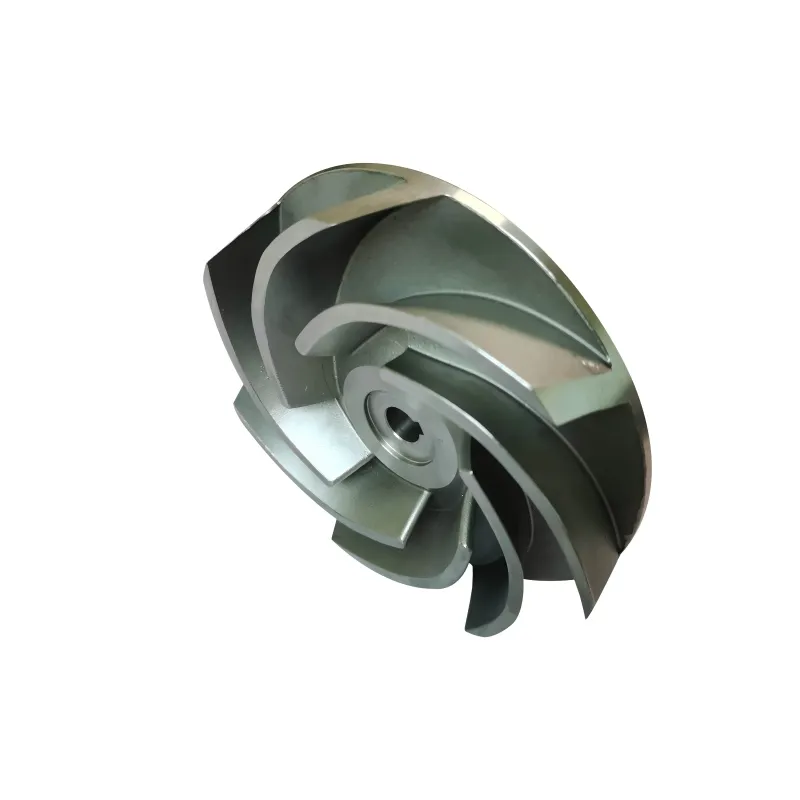
Let's talk about the alloys themselves. Working with a foundry and machine shop like QSY, you get a front-row seat to the entire lifecycle. We don't just machine these special alloys; we cast them. That process—whether it's shell mold or investment casting—imparts specific characteristics into the material. A nickel-based alloy like Inconel 718 straight from the investment casting process can have a different grain structure and residual stress profile compared to a wrought bar stock. That difference matters immensely for insert selection.
A common pitfall is treating all nickel-based alloys as a monolithic block. An insert grade with a sharp edge and a thin PVD coating might work beautifully on a consistent, fine-grained casting for a valve component. Try that same insert on a large, complex turbine blade casting with varying wall thicknesses and potential for hard spots or inclusions, and you'll be changing edges every ten minutes. The insert needs to absorb shock, not just resist abrasion. Sometimes, a slightly 'softer' but tougher carbide grade with a robust chipbreaker geometry outperforms the super-hard, brittle option the textbook might suggest.
This is where the 30 years of background at a place like QSY becomes tangible. It's not just about having the CNC machines; it's the ingrained knowledge of how their castings behave under the tool. They've seen which batches of their own cobalt-based alloy castings tend to run hotter, or which stainless steel grades from their foundry have a particular affinity for built-up edge. That internal feedback loop between casting and machining informs insert choice in a way no supplier catalog can.
The Geometry and Coating Dance
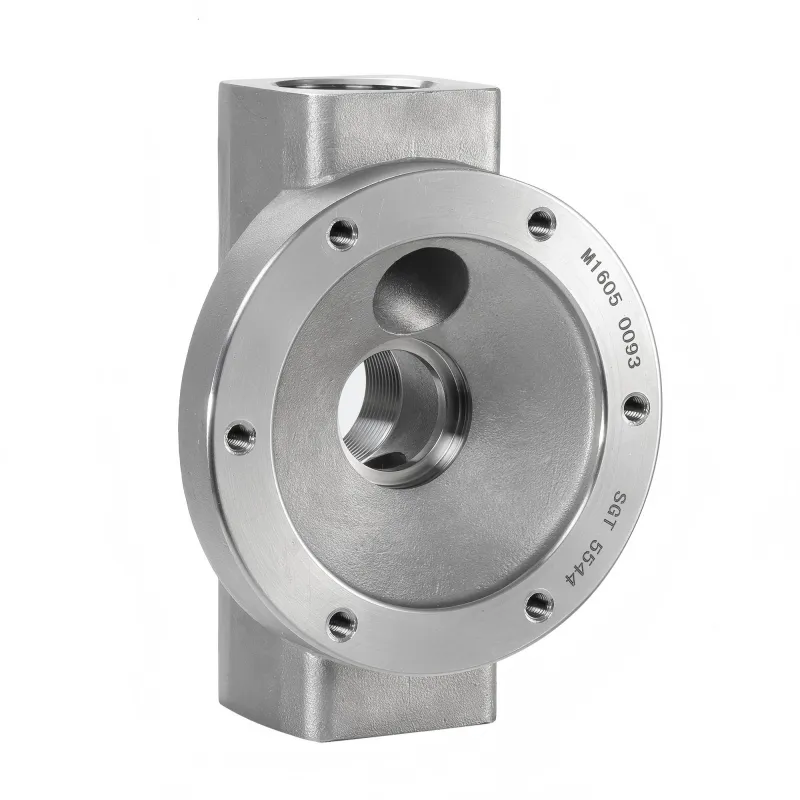
Okay, so you've matched the insert substrate grade to the workpiece's personality. Next comes geometry. I recall a job machining a series of deep, narrow channels in a duplex stainless steel pump housing. We had the material grade right—a tough carbide suited for stainless. But the standard 80-degree diamond shape was causing terrible vibration and poor chip evacuation. The part was chattering itself to death.
We switched to a round insert. The cutting force distribution changed completely. No more single-point loading, much smoother cutting action. The trade-off? A round insert can't do sharp corners. We had to redesign the tool path for the channel radii, adding an extra milling step for the corners. It was a compromise, but it worked. The takeaway: the shape of the special alloy insert dictates not just the cut, but potentially the entire machining strategy and even the part design tolerances.
Then there's coating. TiAlN, AlTiN, diamond-like carbon... it's a alphabet soup. The rule of thumb is that a coating like AlTiN provides great hot hardness, which is ideal for the high temperatures generated when turning or milling nickel alloys. But if your process isn't stable, if you have coolant interruption or inconsistent feed, that same coating can micro-crack under thermal cycling. For some interrupted cuts on investment cast parts with gates or riser pads, an uncoated but super-tough micro-grain carbide might be the safer, more predictable bet, even if its theoretical wear life is lower. You're prioritizing process reliability over pure tool life.
Real-World Failures and Adjustments
I'll share a failure that taught me more than a dozen successes. We were roughing a large block of Monel (a nickel-copper alloy) for a marine component. The casting from our own foundry was sound, but massive. We used a high-positive rake, polished-flute milling cutter with dedicated special alloy inserts designed for high-temperature alloys. The theory was perfect: reduce cutting force, lower heat generation in the part.
It failed. Not dramatically, but insidiously. The inserts didn't chip or break. They just wore out, uniformly and quickly, on the flank face. The problem? The high-positive geometry, while reducing force, also created a thinner, weaker cutting wedge. The Monel, with its nasty work-hardening tendency and stringy chips, was abrading the flank at an alarming rate. We were generating beautiful, shiny chips but killing the tool.
The fix was counter-intuitive. We went to a more neutral, stronger insert geometry with a heavier edge preparation (a honed edge, not sharp). This increased cutting force slightly, but it supported the cutting edge much better against abrasion. The chip was thicker, less stringy, and carried away heat more effectively. Tool life tripled. The lesson: in high-nickel alloys, sometimes you need to lean in to the cut with a strong edge, not try to skate over it with a delicate one.
Coolant: Friend or Foe in Special Alloy Machining?
This is a contentious one. The classic advice for machining titanium and nickel alloys is flood coolant, always. And for most operations, that's correct—it controls part temperature and helps with chip evacuation. But with these special alloy inserts, particularly those with certain ceramic or CBN (cubic boron nitride) grades, thermal shock is a real killer.
Imagine you're running a ceramic insert on a hardened steel die. The insert operates in a zone of extreme heat at the cutting edge; that's how it maintains its hardness. If a jet of room-temperature coolant hits that red-hot edge intermittently, you're asking for micro-cracks. In such cases, you might opt for an air blast, or better, a high-pressure mist system that provides some cooling and chip clearance without the massive thermal differential of flood coolant.
For the more common carbide inserts with PVD coatings on cobalt or nickel-based alloys, high-pressure through-tool coolant is often king. It's not just about cooling; it's about getting those stubborn, abrasive chips out of the cut zone immediately. A chip recut is a guaranteed insert failure. On their CNC machining centers, achieving reliable high-pressure coolant delivery to the exact cut point is a non-negotiable setup step for efficient special alloy work.
The Supply Chain and Practical Sourcing
Here's something you won't find in a technical paper: the logistical reality. These inserts are expensive. Holding inventory for every possible material and operation is a capital drain for a job shop. The relationship with a supplier who understands your specific mix of work—like the cast iron, stainless, and special alloys that QSY handles—is critical.
It's not about having the most brands, but about having a few trusted lines where you deeply understand the performance envelope. You learn that Grade XXX from your supplier is your go-to for 90% of your 17-4PH stainless work from the investment casting line, and Grade YYY is reserved for the really gnarly interrupted cuts on large Inconel 625 valve bodies. You build a mental—and then a physical—library of what works for your shop's recurring challenges.
This is also where a vertically integrated operation shows its strength. Because they control the casting process, they can sometimes adjust the heat treatment or even the casting design (adding a slight radius, changing a wall thickness) to make the part more machinable with a standard, reliable insert they already stock. That internal collaboration between the foundry and machine shop to optimize for manufacturability is a huge, often hidden, advantage that directly impacts the effective use of these precision cutting tools.
So, the next time you specify a special alloy insert, look past the datasheet. Think about the part's history (cast or wrought?), its geometry (interrupted cut or continuous?), your machine's rigidity, and your coolant strategy. It's a system, and the insert is just one critical component. Getting it right feels less like a science and more like a craft—a craft built on observed failures, subtle adjustments, and a deep respect for the material you're trying to tame.