When you hear 'stainless steel metal injection molding' or MIM, the immediate pitch is always about complexity and net-shape. But having been around this for a while, I find the real story isn't in the glossy brochure; it's in the gritty details of making a 17-4PH bracket hold a 0.005 tolerance batch after batch, or why a part designed for machining often fails miserably when you switch it to MIM. There's a pervasive misconception that MIM is just fancy plastic injection molding with metal powder—it's not. The debinding and sintering stages introduce variables that can humble even the most seasoned process engineer. It's a hybrid beast, sitting between casting and machining, and it demands respect for its own unique rulebook.
The Material Dance: It's Not Just Stainless Steel
You can't just say stainless steel and call it a day. For metal injection molding, the powder characteristics are everything. The particle size distribution, shape, and flowability with the binder system make or break the part. We've run jobs with 316L and 17-4PH mostly, but even within those grades, a different powder supplier can change the entire sintering shrinkage factor. I recall a project for a surgical instrument component where the spec called for 316L for corrosion resistance. The first few batches sintered beautifully, but the fatigue strength was just off. Turns out, the oxygen content in the powder, something we hadn't scrutinized enough, was a tad high, leading to minute inclusions. We switched to a gas-atomized powder with a tighter spec, and it solved it. It's these nuances that separate a prototype from a production-ready component.
This is where having a background in broader metalworking is invaluable. Working with a partner like Qingdao Qiangsenyuan Technology Co., Ltd. (QSY), who has decades in investment casting and CNC machining of stainless steels and special alloys, you get that ingrained material sensibility. They aren't just pressing powder; they understand how metal behaves under heat and stress from multiple manufacturing angles. That cross-process knowledge informs better MIM practice—knowing, for instance, how a sintered 304 might behave differently under a subsequent CNC spot operation compared to its cast equivalent.
The binder removal phase is the silent killer. Too fast, and you get cracks or blisters; too slow, and you're killing your furnace throughput and cost. For stainless steels, the carbon control during debinding is critical. Leave too much carbon residue, and you affect the corrosion resistance—the very reason you chose stainless in the first place. We learned this the hard way on an early project for a marine hardware clip. Parts passed dimensional checks but failed a simple salt spray test. The root cause was an incomplete thermal debind cycle that left carbon behind, locally depleting chromium. A revised, multi-stage debind process fixed it. It's a reminder that in MIM, you're not just shaping metal; you're meticulously rebuilding its microstructure from a powder state.
Design for MIM, Not Just for Function
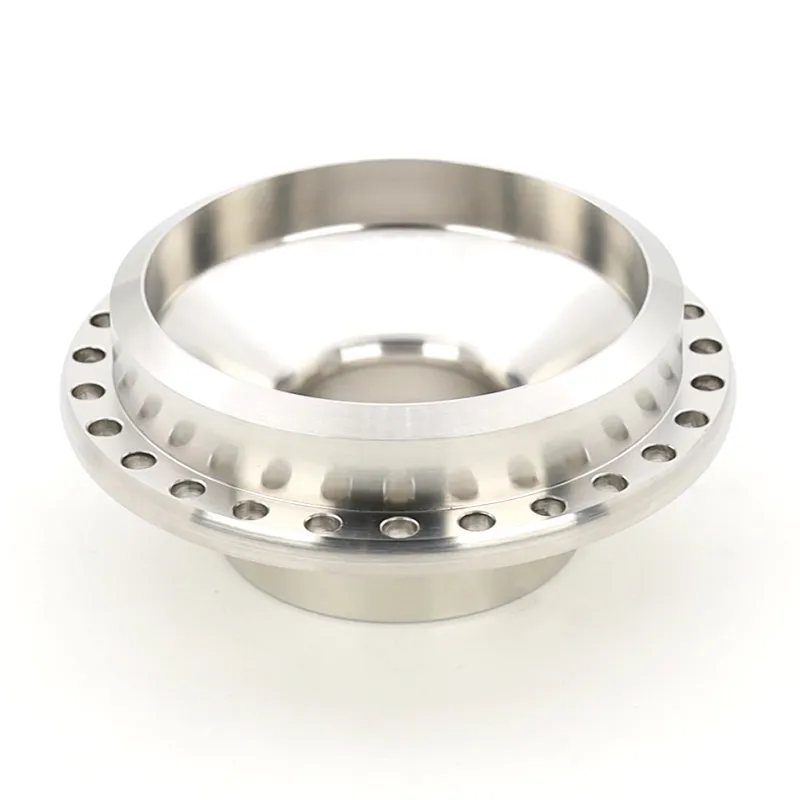
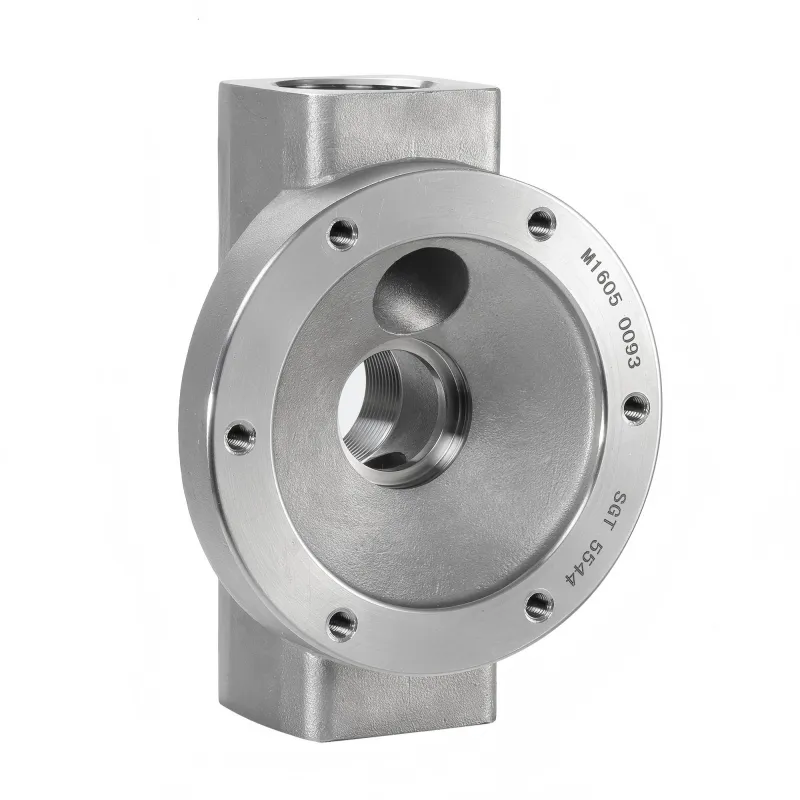
This is the biggest point of friction with design engineers. They hand over a part designed for machining or investment casting and expect MIM to just make it. It doesn't work like that. Uniform wall thickness is gospel. We had a client insist on a flange with a thick hub and thin, radial fins. The part warped like a potato chip during sintering because the differential shrinkage was massive. We had to go back, negotiate adding small gussets and slightly thickening the fins, which added negligible weight but saved the whole geometry. The tooling had to be modified, of course. It's a collaborative, sometimes iterative, dance.
Features like undercuts and internal threads are where MIM shines, but they require clever tool design. Ejector pin placement on a stainless part is trickier than on plastic—you can leave visible marks or even cause deformation on a green part. I remember a tiny gear with helical teeth where the ejector pins had to be placed on the gear face. We ended up using a custom, multi-stage ejection system and polishing the pins to a mirror finish to prevent marking. The tool cost went up, but the per-part cost and performance were unbeatable compared to any other process.
Another practical detail: draft angles. Yes, you need less draft than in traditional plastic injection molding, but you still need some, especially for deeper cavities. Trying to get away with zero draft to save on secondary machining might result in parts that stick in the tool or get scored during ejection. It's a false economy. The goal of stainless steel metal injection molding is net-shape, but net implies it comes out of the sintered furnace ready to use. Often, for critical interfaces, a light CNC skim or drilling is still needed. That's not a failure of MIM; it's a pragmatic hybrid approach. A company like QSY, with integrated CNC capabilities, handles this mindset seamlessly—they see the secondary ops not as a separate process but as the final step in the MIM workflow.
The Sintering Crucible: Where the Magic (and Heartbreak) Happens
Everything before sintering is just preparation. This is the phase where the loose, brown part becomes a dense, metallurgically sound component. For stainless steels, atmosphere control is paramount. You're typically using hydrogen, argon, or vacuum. Hydrogen is excellent for reducing surface oxides and cleaning the part, but you have to manage dew point meticulously. A leak introducing a bit of oxygen or nitrogen can ruin a whole furnace load.
Temperature uniformity is another beast. A +/- 10°C variation across the furnace can lead to a 0.2% difference in shrinkage. On a 50mm part, that's 0.1mm—enough to scrap a batch for a tight-tolerance application. We invested in furnace profiling with multiple thermocouples and found our perfect zone. Now, we load critical parts only in that zone. Less critical parts go on the edges. It's about managing the real estate of your furnace like a chessboard.
The cooling rate affects the final properties. For precipitation-hardening grades like 17-4PH, you can actually do the solution treatment and aging in-line with the sintering cycle if your furnace is set up for it. It's a huge advantage, consolidating steps. But getting the time-temperature-transformation curve right for the specific part mass is empirical. We built a small library of successful profiles for different part families. It's not textbook; it's shop-floor lore, written in thermal graphs and QC reports.
When MIM Isn't the Answer
As much as I believe in the process, it's crucial to know its limits. Metal injection molding struggles with very large parts (generally over about 250 grams for stainless) and very thin, extensive flat sections which are prone to warpage. We once quoted a thin, plate-like sensor housing about 2mm thick and 100mm across. Even with conformal tool cooling and sintering setters, we couldn't hold flatness. The client went with precision stamping and machining instead. It was the right call.
Extremely high-integrity structural parts for primary aerospace load paths are still often better served by forging or machining from billet. The isotropic properties of MIM are good, but for the most critical applications, the pedigree of a wrought material is still preferred. However, for countless components in medical devices, firearms, industrial tools, and consumer electronics, MIM offers an unbeatable blend of complexity, material performance, and cost at volume. It's about picking your battles.
This is why a supplier's broader experience matters. If you walk into a shop that only does MIM, they might try to force-fit your part. But a team that also handles investment casting and CNC machining, like the folks at QSY, will give you a more honest assessment. They can say, Look, for this geometry and volume, shell mold casting with a CNC finish might be more cost-effective for you. That objectivity builds trust. Their 30 years in casting and machining means they see MIM as one tool in a big toolbox, not the only tool.
The Real-World Grind: Quality and Consistency
Launching a MIM part is one thing; producing 500,000 of them with a CpK above 1.33 is another. The raw material checks are daily: powder lot consistency, binder batch viscosity. In-process checks on green part weight and dimensions catch drifts before sintering. But the real QC happens post-sinter. We do statistical process control on critical dimensions, density checks (aiming for typically >96% of theoretical for stainless), and periodic full metallurgy—tensile tests, hardness, corrosion checks. It's non-negotiable.
Failure analysis is part of the job. I've spent hours under a microscope looking at a fractured part. Was it a sintering pore, an inclusion from contamination, or a stress riser from a design flaw? Each has a different fingerprint. One recurring issue early on was catastrophic part failure in assembly. The parts passed all specs. Finally traced it to a handling issue—workers were dropping bins of sintered parts, causing micro-cracks that then propagated. The fix wasn't in the process; it was in putting foam in the bins. The lesson: the process doesn't end at the furnace.
Ultimately, successful stainless steel metal injection molding is about systems thinking. It's the marriage of materials science, mechanical design, toolmaking, thermal engineering, and rigorous quality control. It's not a magic bullet. It's a demanding, fascinating, and incredibly powerful process when you understand its language and respect its rules. The companies that thrive in it, like those with the deep foundational experience in related metal trades, are the ones that don't just sell parts—they sell reliable, engineered solutions.