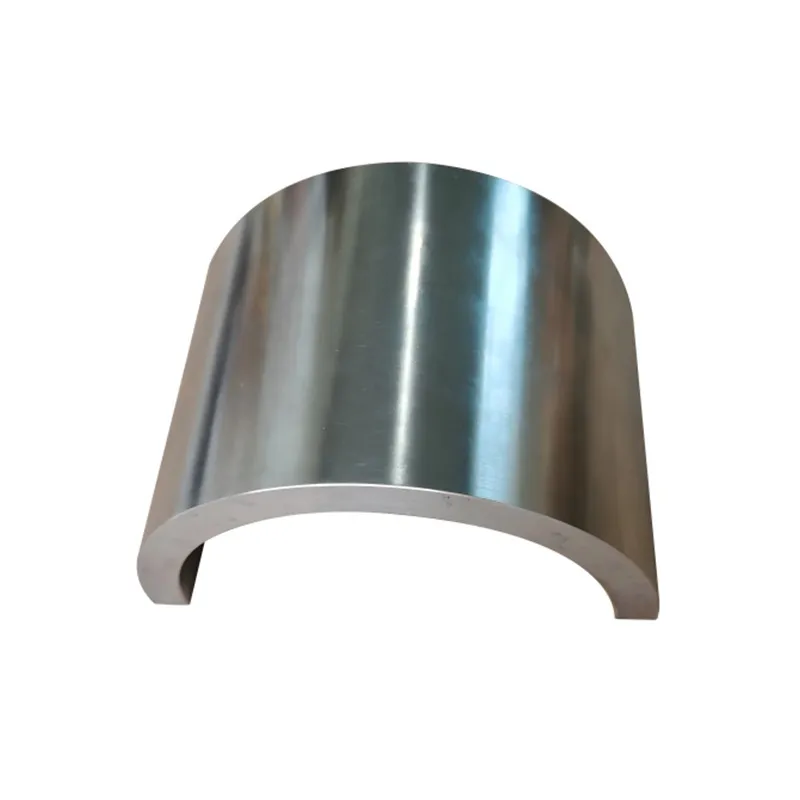
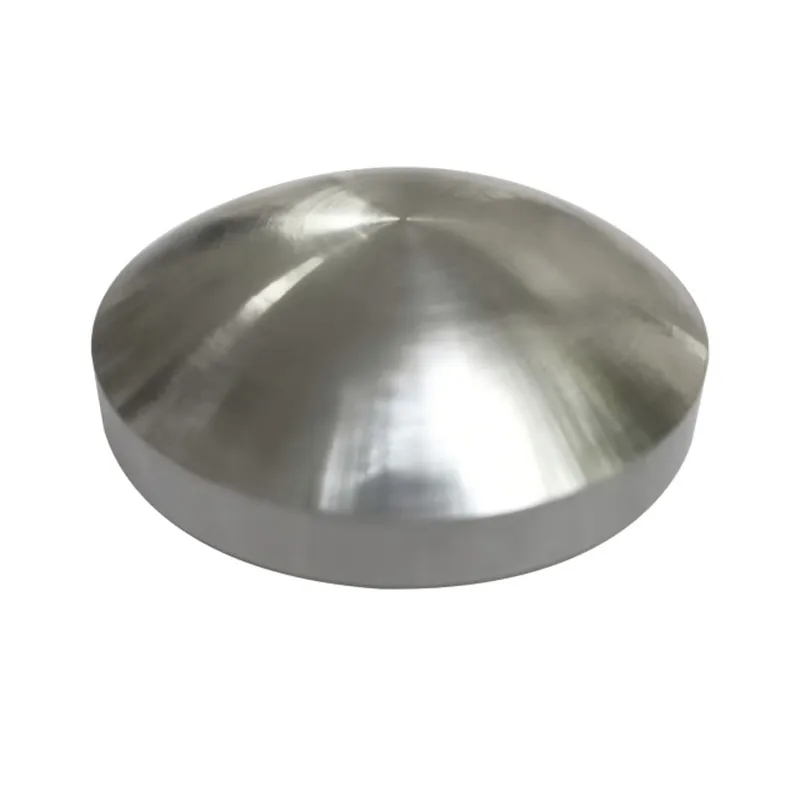
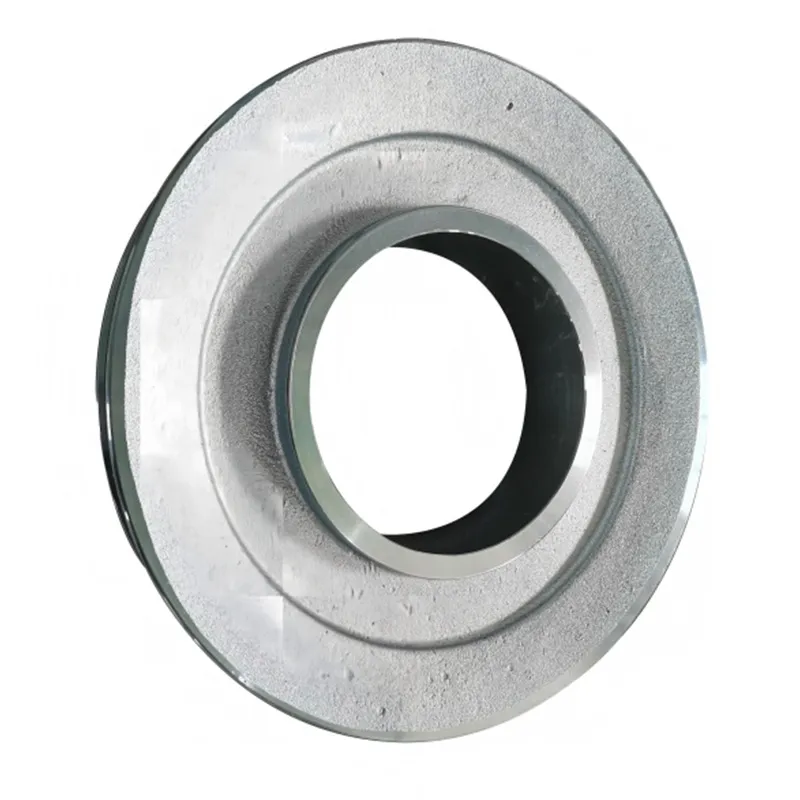
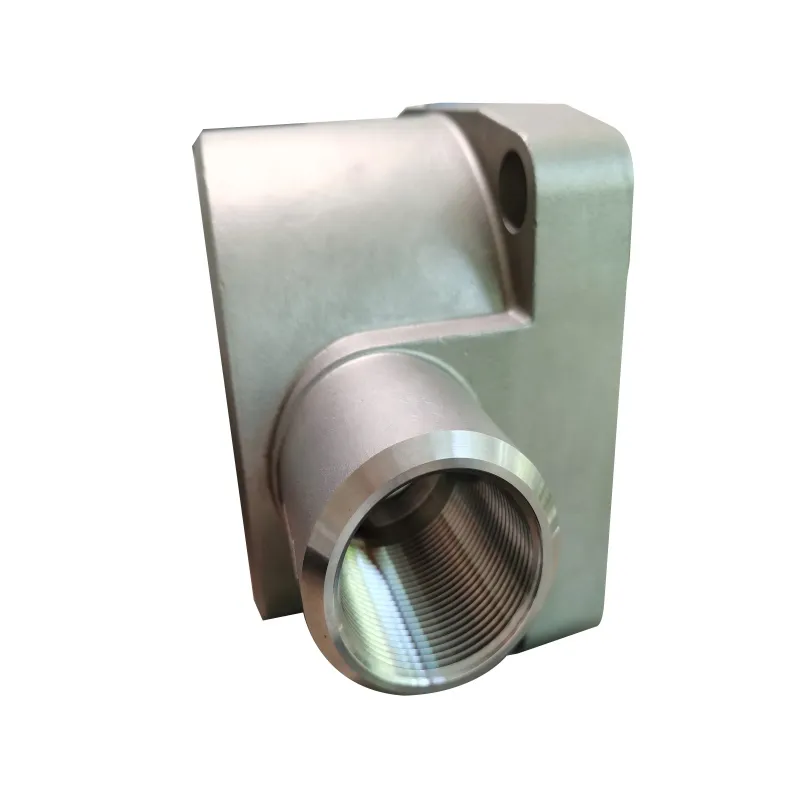
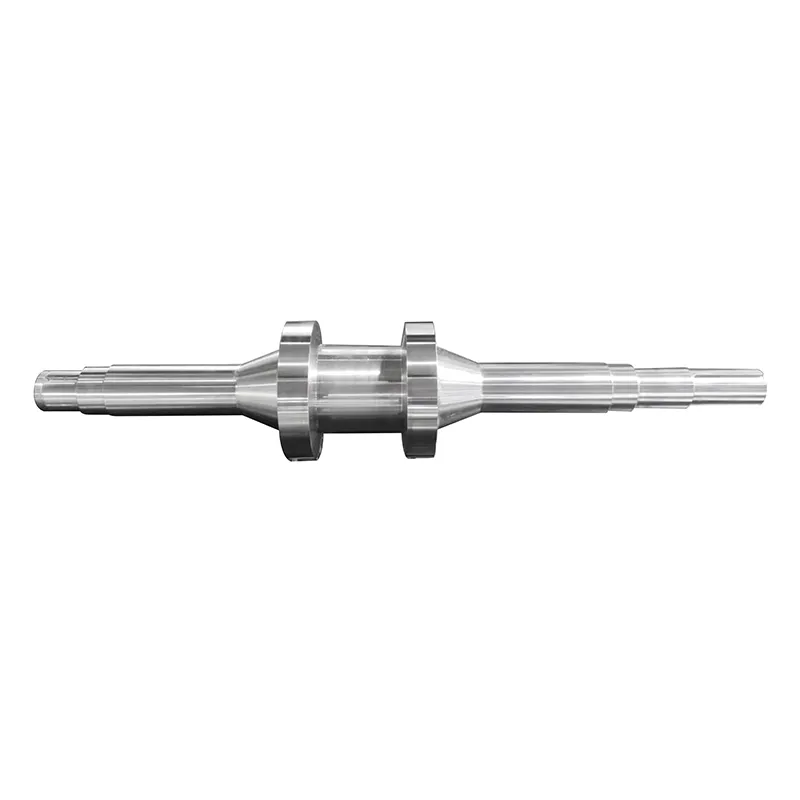
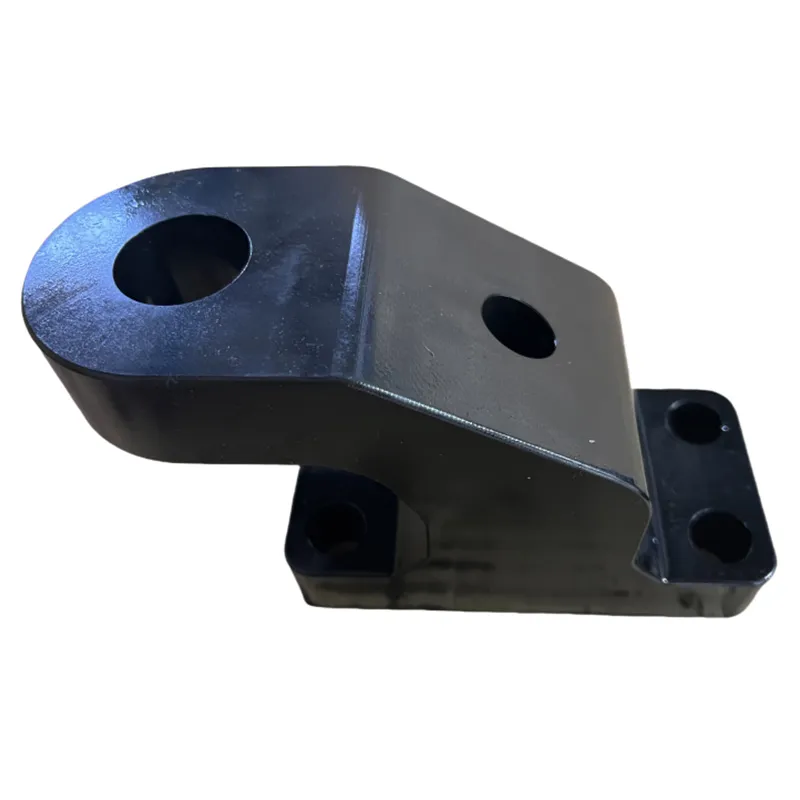
When most people hear 'stainless steel part,' they picture something shiny, rust-proof, and frankly, a bit generic. That's the first misconception. In our shop, it's the starting point for a hundred questions. Which grade? For what environment? What's the real cost of that 'free-machining' tag? I've seen too many drawings just spec 'stainless' and leave us to guess, which almost always leads to headaches—either in machining or in the field. It's never just a material; it's a commitment to a specific set of properties, and getting that wrong is expensive.
The Grade is the Blueprint
You can't talk about a stainless steel part without diving into grades immediately. 304 versus 316 is the classic battle, but it's oversimplified. We machined a batch of sensor housings from 304 once for a coastal application. The spec said 'corrosion resistant.' It was, for about eight months. Then pitting started. The client was furious, but the spec was vague. We should have pushed back, suggested 316L for the chloride exposure. Now we ask for the environment sheet upfront. It’s not being difficult; it’s about making the part survive its job.
Then there's the machinability myth. 303 is called 'free-machining' for a reason, but it comes with trade-offs. Its corrosion resistance isn't as good as 304, and for parts needing welding, it's a poor choice. We use it for high-volume, complex stainless steel part runs where every second on the CNC counts, but only after confirming no welding or severe chemical exposure is needed. It's a balancing act between shop efficiency and part performance.
For high-stress or high-temperature roles, we move into the 400 series or precipitation-hardening grades like 17-4PH. That's a whole different game. The heat treatment cycle is critical. We once had a batch of 17-4PH actuator arms come out with inconsistent hardness because the heat treat vendor's oven had a cold spot. The parts passed a casual inspection but failed in fatigue testing. The lesson? Controlling the entire process chain, or working with partners who do, is non-negotiable for critical components.
Where Casting Meets Machining
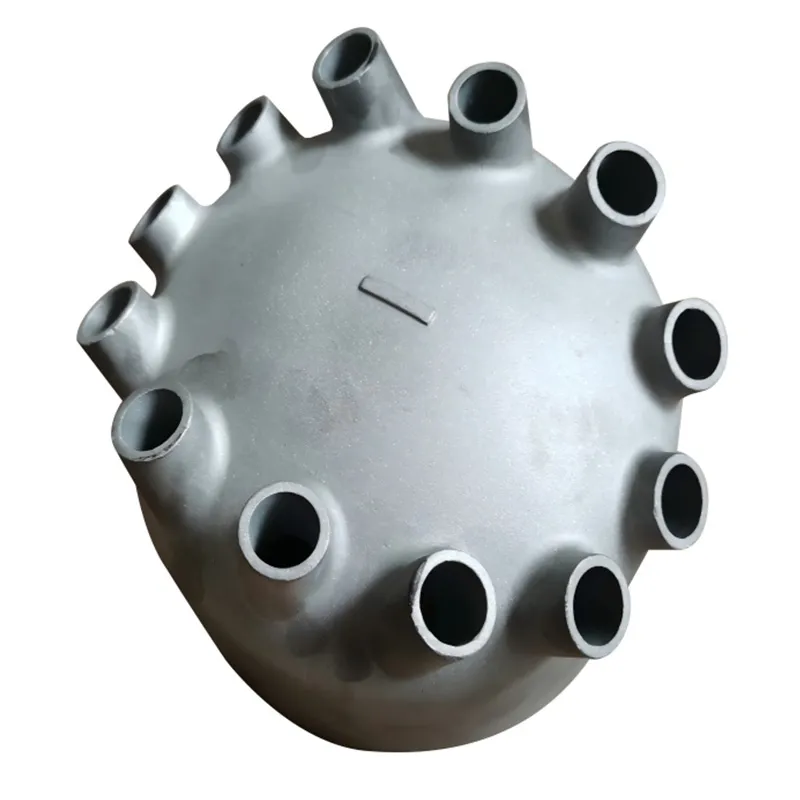
This is where companies with deep foundry experience, like Qingdao Qiangsenyuan Technology (QSY), have a distinct edge. Not every stainless steel part starts as a solid block on a CNC bed. For complex geometries, especially those with internal passages or organic shapes, shell mold or investment casting is often smarter. You get near-net-shape, which means less material waste and far less machining time. Their three decades in casting mean they understand how to design the mold to minimize shrinkage porosity in stainless—a common defect that only shows up during final machining or pressure testing.
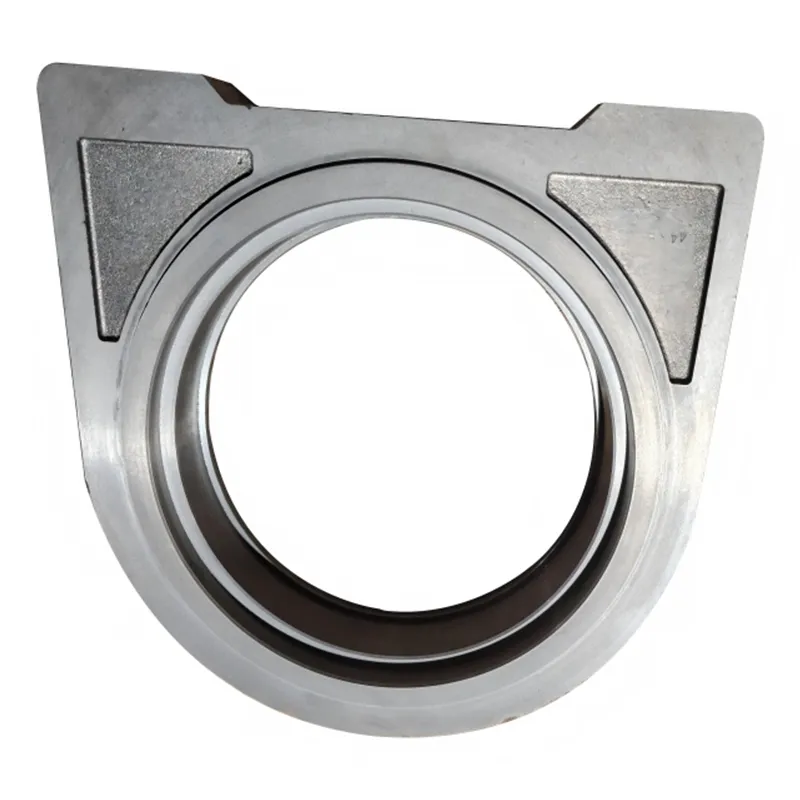
The handoff from casting to machining is the make-or-break moment. The casting provides the rough form, but the CNC machining delivers the precision. Think of valve bodies or pump impellers. The cast part has the basic flow path; the CNC work creates the sealing surfaces, bolt holes, and tight-tolerance interfaces. If the two processes are under one roof, like at QSY, the machinists can feedback to the foundry team instantly. This batch is running harder on the tools, can we adjust the annealing? That integration prevents a lot of wasted material and time.
I recall a project for a food processing manifold. The client wanted a one-piece 316L part with multiple integrated ports. Milling it from solid would have been 80% waste. We worked with their team on an investment casting approach. The initial prototype had slight warpage, throwing off the port alignment. Because the machining team was in the same loop, they modified the fixture design to account for the warpage in the casting, saving the batch. It was a solution that only comes from vertical integration.
The Devil in the Machining Details
Machining stainless isn't like machining mild steel. It work-hardens. Go too slow with a dull tool, and you're essentially creating a case-hardened surface that will destroy your next tool pass. Feed and speed charts are a guide, not a bible. Coolant choice matters immensely. We lean towards high-lubricity synthetic coolants for stainless. The goal is to keep the cut cool and evacuate chips quickly to prevent re-welding to the workpiece.
Tool geometry is critical. A positive rake, sharp edge, and coated carbide are standard for us. But for deep cavities or interrupted cuts in a stainless steel part, you might need a more robust tool with a tougher substrate. It's a constant experiment. We have a drawer of tried and failed tooling for specific stainless jobs. That drawer is more valuable than any textbook.
Then there's stress. Heavy machining can induce residual stress, leading to distortion later, especially in thin-walled sections. We sequence operations to try and balance these stresses. Sometimes, a roughing pass, a stress-relief anneal, then finishing is the only way to hold tolerance. It's slower, but it's correct. Skipping that step for a quick turn guarantee means you'll be remaking the part when it warps on the customer's assembly line.
Failure is a Data Point
Everyone has war stories. One of ours involved a series of flanges for a chemical skid. They were beautifully machined from 316L bar stock, passed all our inspections. A month after installation, we got a call: hairline cracks near the bolt holes. The failure analysis pointed to chloride stress corrosion cracking. The environment had trace chlorides at high temperature, a perfect storm. The material was technically correct, but the part design had high localized stress concentrations. The fix was a redesign to reduce stress risers and a shift to a higher-grade duplex stainless for that batch. It was a brutal lesson in system thinking—the material, the design, and the service environment are one system.
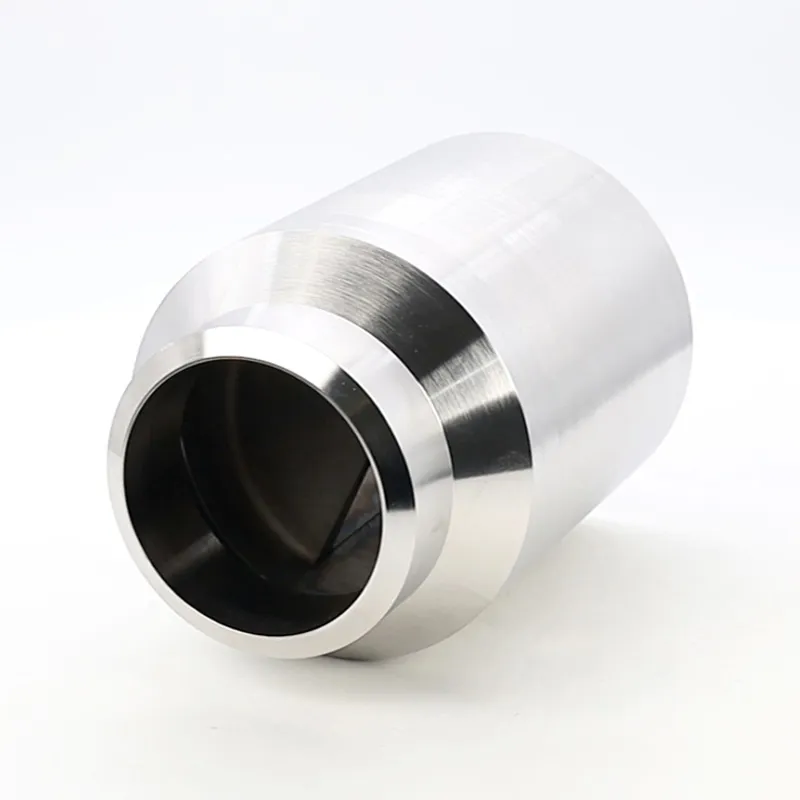
Another learning experience was with surface finish. A client needed ultra-smooth internal diameters for a hygienic application. We achieved a great Ra finish, but the electropolishing sub-contractor didn't fully remove the microscopic peaks from the machining toolpath, leaving potential bacterial harborage points. Now we specify not just a Ra number, but the polishing method and even the abrasive sequence when the application is that sensitive. The part isn't done until it works in its intended world.
These failures force you to look beyond the print. They make you ask the annoying questions early. What's it really touching? What's the temperature cycle? Is there vibration, flexing, galvanic contact? This mindset is what separates a part supplier from a manufacturing partner. It's what you develop over 30 years, as the team at QSY would attest. Their work with special alloys like nickel-based ones for extreme environments only reinforces this—every material has its hidden rules.
The Realistic Finish Line
So, what makes a successful stainless steel part? It's not just hitting dimensions on a drawing. It's a part that is made from the most appropriate grade, via the most efficient process (whether that's casting, machining from solid, or a hybrid), machined with an understanding of the material's quirks, and validated for its specific mission. The shiny surface is the last step, not the goal.
The value of a long-term supplier lies in this holistic view. When you work with a fabricator that also masters casting, like the integrated shell mold, investment casting, and CNC machining services offered, you're not just buying machine time. You're buying their accumulated database of what works and what doesn't—their drawer of failed tools, their log of heat treat results, their memory of which flange design cracked.
In the end, the part on the shelf is just an object. The knowledge of how to reliably and economically produce it, again and again, under real-world conditions, is the actual product. That's what we're all really selling. The stainless is just the canvas.