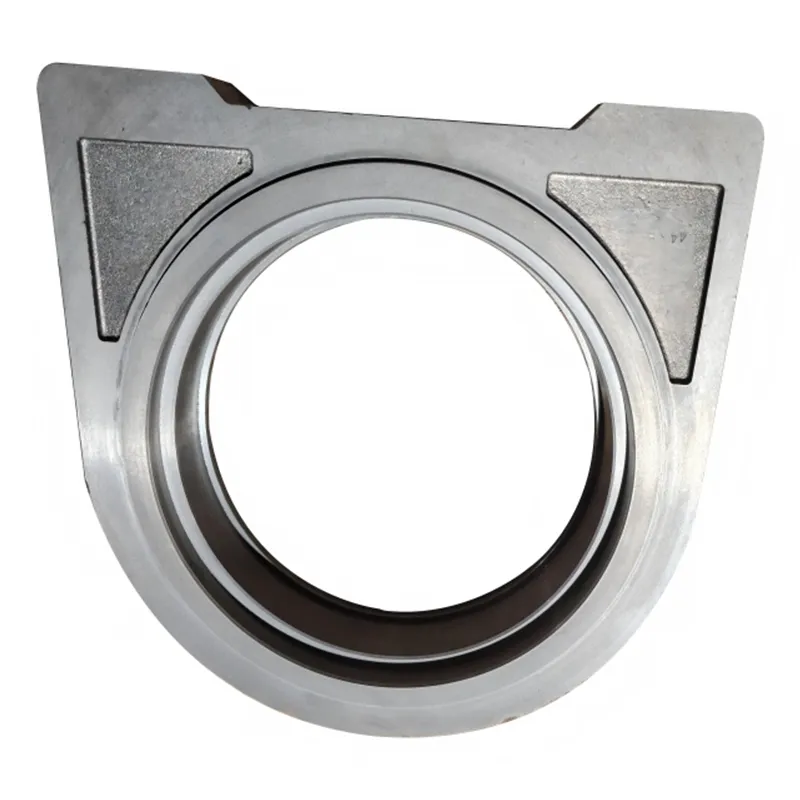
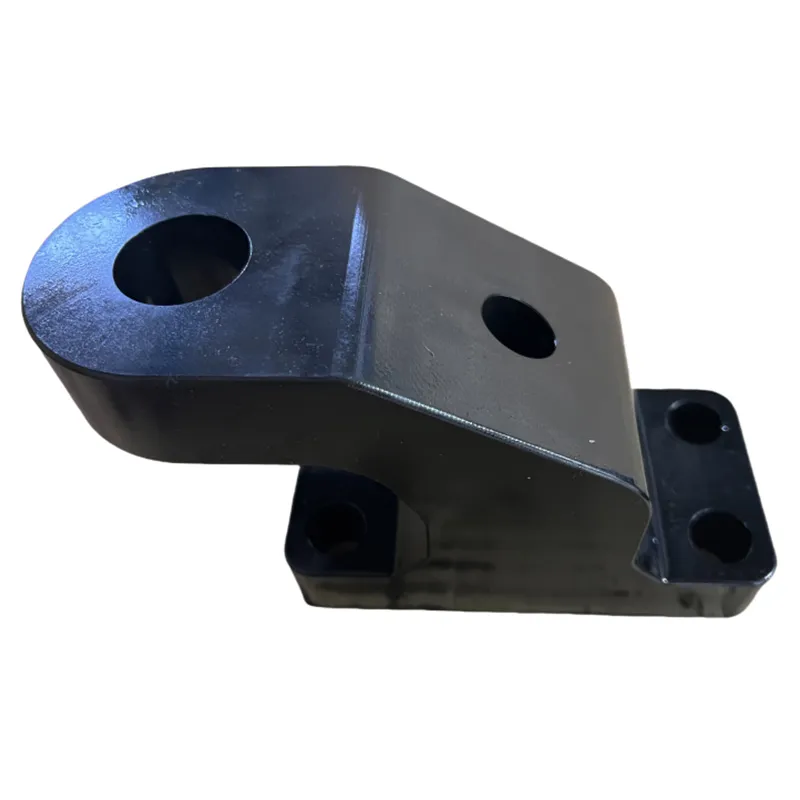
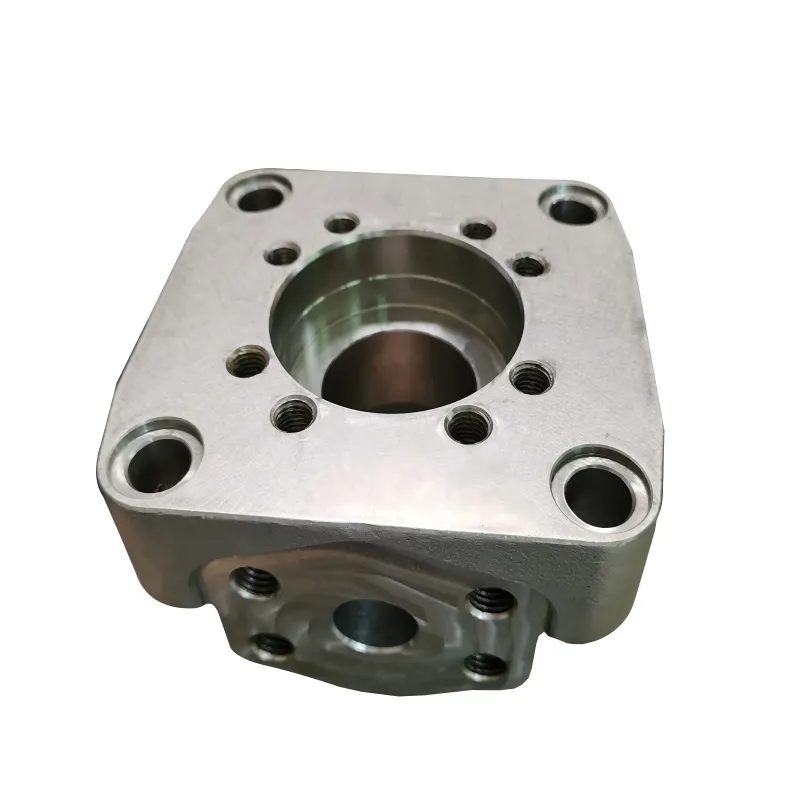
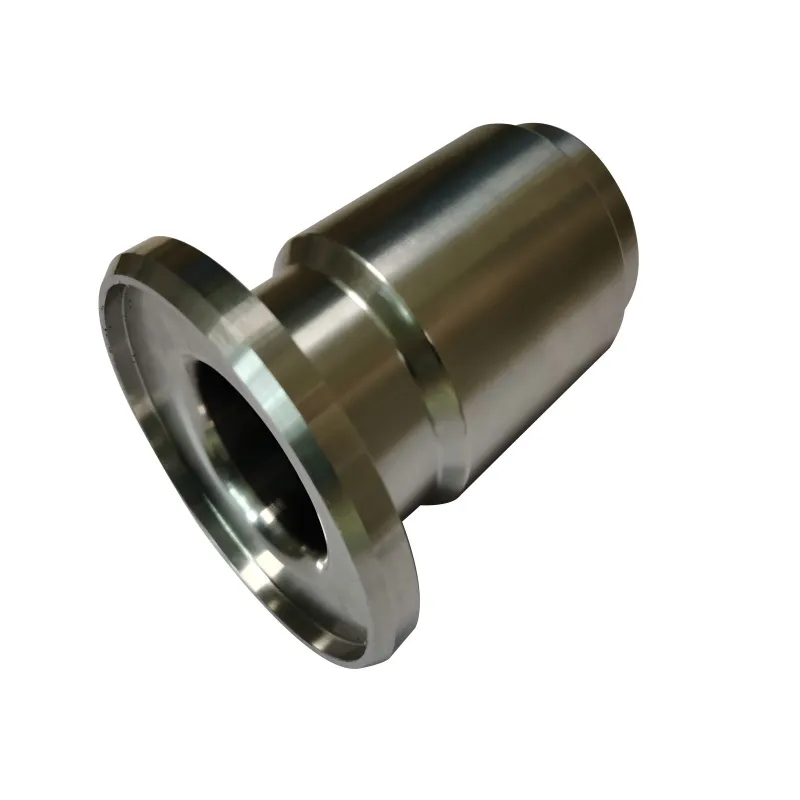
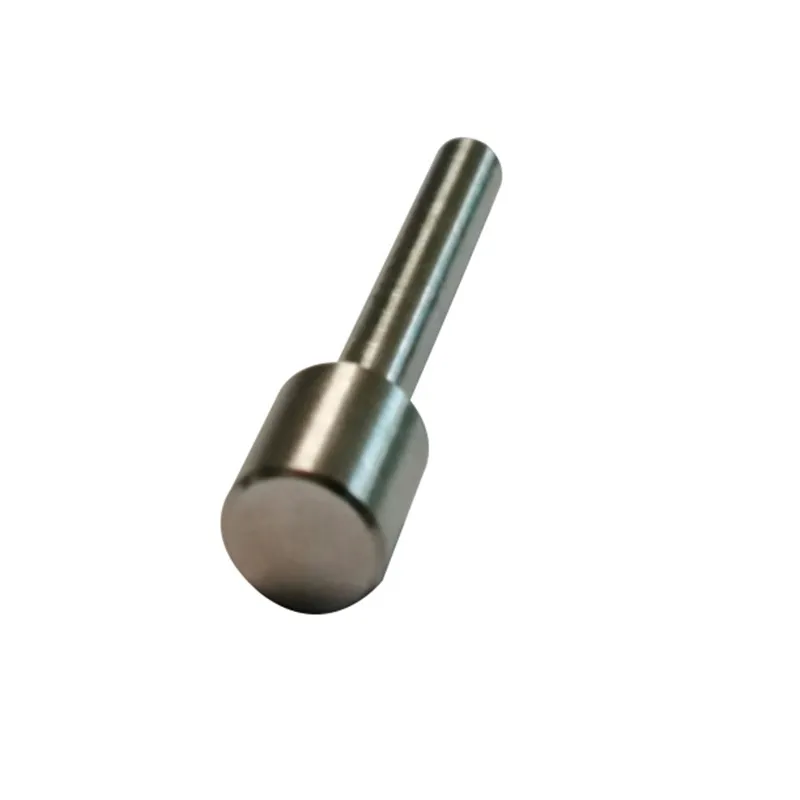
When you hear 'steel casting part', most minds jump straight to the final shape—the geometry on the drawing. That's the first misconception. The real part isn't just the shape; it's the entire history of the molten metal, the mold's behavior, the cooling stresses locked inside, and the often-overlooked handwork that comes after shakeout. It's a material transformation with a memory, not a simple copy-paste from CAD.
The Shell Game: More Than Just Sand
Take shell mold casting, one of our core methods at QSY. People think it's just about better surface finish, and it is—we're talking about Ra 6.3 to 12.5 μm straight out of the mold. But the real nuance is in the resin-bonded sand's collapsibility. For a complex steel casting part with internal channels or thin-walled sections, if that shell doesn't yield just right during cooling, you get hot tears. Not cracks you see immediately, but fine, hairline weaknesses that show up only under pressure testing or machining. We learned this the hard way years back on a pump housing series. Perfect dimensions, beautiful finish, but a 30% failure rate in hydro-test. The culprit? The shell formulation was too robust for that specific low-carbon steel's solidification shrinkage. We had to dial back the resin content for that particular job, sacrificing a bit of initial mold strength for better collapsibility. It's never one setting fits all.
And the gating system for shell molds is a different beast. Because the mold is thin and precise, the metal flows faster, cools quicker. You can't use the same riser calculations as you would for a bulky green sand mold. We often use smaller, more numerous risers placed closer to the thick sections. It looks less textbook, but it works. The goal is to feed the shrinkage without creating massive heat centers that become segregation zones. Sometimes, the most elegant solution on the simulation software needs a pragmatic, ugly tweak on the foundry floor.
Material choice here is critical too. Shell molding works beautifully with carbon and low-alloy steels. But when we get into some of the high-strength, quench-and-tempered grades, the rapid cooling inherent to the thin shell can lead to higher-than-desired hardness in thin areas, making subsequent machining a nightmare. You have to factor in the as-cast microstructure from the very beginning, sometimes even adjusting the steel's composition slightly with the mill to compensate for our specific thermal cycle. It's a conversation, not just an order.
Investment Casting: Precision at a Cost (of Complexity)
Investment casting, or lost-wax, is where you get those near-net-shape miracles. Tolerances within ±0.005 inches per inch are possible. But the phrase possible is doing a lot of work. The wax pattern injection process itself introduces variables—injection temperature, pressure, die temperature. A fluctuation of a few degrees can change the wax's shrinkage, which propagates directly into the ceramic shell, and finally into the metal. We once spent two weeks chasing a dimensional drift on a stainless steel valve component. Everything in the process was in spec. Finally, we looked at the weather. It was a humid summer week. The wax patterns were absorbing moisture from the air between injection and assembly, swelling ever so slightly. The fix? Climate-controlled staging for the wax trees. A tiny, non-technical detail with massive technical consequences.
The shell-building process in investment casting is an art of layers. Each slurry dip, each sand stucco application, affects the final shell's permeability and strength. Too permeable, and the metal might penetrate, causing a rough surface. Too dense, and you risk shell cracking during the high-temperature burn-out or pour. For a critical steel casting part like a turbine blade or a medical implant component, we might use a different refractory material for the primary (face) coat—maybe zirconia instead of silica—for better chemical inertness against the reactive steel alloy. This isn't in the standard brochure; it's built from years of trial and error, and a few expensive scrap piles.
Then there's the dewaxing. Steam autoclave is common, but for larger or more complex clusters, flash firing is used. Get this step wrong, and the shell cracks from trapped expanding wax. A cracked shell doesn't always mean a visible metal leak; sometimes it just causes fins or veining on the casting surface. You might not see it until after the ceramic is knocked off. That's why process control logs for every cluster are gold. You need to trace back. Was the autoclave pressure curve typical that day? Was the cluster temperature before dewaxing consistent? It's detective work.
CNC Machining: Where the Casting Truly Emerges
This is where the theoretical casting meets brutal reality. A steel casting part is not a uniform block of billet material. Your first cut tells you everything. The sound of the tool, the color of the chip, the way the cutting fluid flows. We run our own CNC machining division in-house precisely for this feedback loop. You can't separate casting from machining if you want consistency.
The first challenge is datum establishment. Where do you pick up your zeros on a rough, as-cast surface? We often cast on small, raised pads on non-critical surfaces specifically for machining datums. They get machined off in the final step. If you don't plan for this in the pattern design, you're forcing the machinist to find the part, which introduces variability. I've seen parts scrapped because the casting shifted slightly in the mold, and without a reliable datum pad, the machinist bored holes that were technically to print but rendered the part non-functional.
Hidden defects reveal themselves here. A small shrinkage porosity, invisible to X-ray if it's micro, will cause a tool to chatter or even break when it hits that spot. A hard spot from rapid cooling will wear down a carbide insert in seconds. Our machinists are the final quality inspectors. They log these encounters: Tool wear excessive on face B, suspect local hardness variation. That log goes back to the foundry metallurgist. Maybe we need to modify the pouring temperature or the riser placement for that zone. This integrated approach at QSY is what turns a good casting into a reliable, machinable component. It's not magic; it's communication, baked into a 30-year operation.
And fixturing. Machining a casting isn't like machining a weldment. You can't clamp down with reckless force. Castings have residual stress. Over-clamping can actually distort the part, so you machine it square only to have it spring out of tolerance once released. We use stress-relief annealing before machining for critical parts, and we design fixtures that hold firmly but allow for a bit of natural movement. Sometimes, you take a roughing pass, loosen the clamps, let it relax, re-torque, then go for the finish pass. It takes more time, but it saves the part.
The Material Maze: Steel Isn't Just Steel
Specifying steel is meaningless. Are we talking 1020 low carbon? 4340 alloy steel? 17-4 PH stainless? Or the exotic realms of duplex stainless or cobalt-based alloys like Stellite 6? Each behaves like a different animal in the foundry. The steel casting part for a slurry pump wearing plate in a cobalt-chromium alloy has almost nothing in common, process-wise, with a 1045 carbon steel gear blank.
Carbon steels are relatively forgiving, but they're prone to shrinkage and need robust feeding. Low-alloy steels like 4140 have better hardenability, which is great for final properties but can lead to cracking during cooling if the mold design is too rigid. Austenitic stainless steels (304, 316) have high shrinkage rates—about twice that of carbon steel—and are prone to hot tearing. Their gating systems need to be designed to minimize thermal constraints. Pouring temperature is tighter; too hot, and you get gross segregation and large grains; too cool, and mist runs or cold shuts.
Then you have the precipitation-hardening grades like 17-4 PH. Fantastic final properties, but the casting process must be meticulously clean to avoid inclusions that become stress concentrators. And the heat treatment after machining is non-negotiable; you're not getting the specs without it. We often do the solution treatment (Condition A) after rough machining, then final machine, then the aging treatment. It's a dance of thermal cycles and material removal. Getting it wrong means a part that measures right but will fail prematurely in the field. Our experience with special alloys over the decades means we have these protocols—often custom-developed for a specific client's application—down to a rhythm.
Failure as a Teacher: The Scrap Yard Chronicles
You don't learn from the perfect pours. You learn from the ones that go wrong. Early in my time here, we had an order for large, thick-section ductile iron brackets—similar principles apply to steel. They kept cracking in the web area after heat treatment. Beautiful castings, then ping – a crack. We blamed the heat treat cycle initially. After metallurgical analysis, the fault was in the casting itself: micro-shrinkage porosity that acted as a crack initiator. The risers were big enough, but they were placed wrong. They were feeding the top of the section, but the porosity was forming in a thermal hot spot at a junction the simulation missed. We had to add a small, external chill—a piece of copper inserted into the mold wall—to force that junction to solidify first. Problem solved. Now, for any thick, intersecting geometry, we think about chills as proactively as we think about risers.
Another classic: misruns on thin sections. The drawing calls for a 3mm wall in a certain area. You pour, and that section is incomplete. The easy answer is increase pouring temperature. But that can cause other issues like sand burn-on or larger grains. Sometimes the better answer is to increase the local mold temperature by placing the section closer to the gate or even using exothermic sleeves around certain parts of the gating system to keep the metal fluid longer in that specific path. It's about directing the heat, not just adding more globally.
These lessons aren't in most textbooks. They're written in the cost of scrap metal and delayed deliveries. They force you to look at the entire system—the pattern, the mold, the metal, the cooling rate, the shakeout, the cleaning, the machining—as one interconnected process. A change at step one ripples through to step ten. That's the real craft of making a steel casting part. It's not a series of discrete operations; it's a continuous transformation that you try to shepherd towards a successful conclusion. And some days, the metal has its own ideas. You just have to listen closer next time.