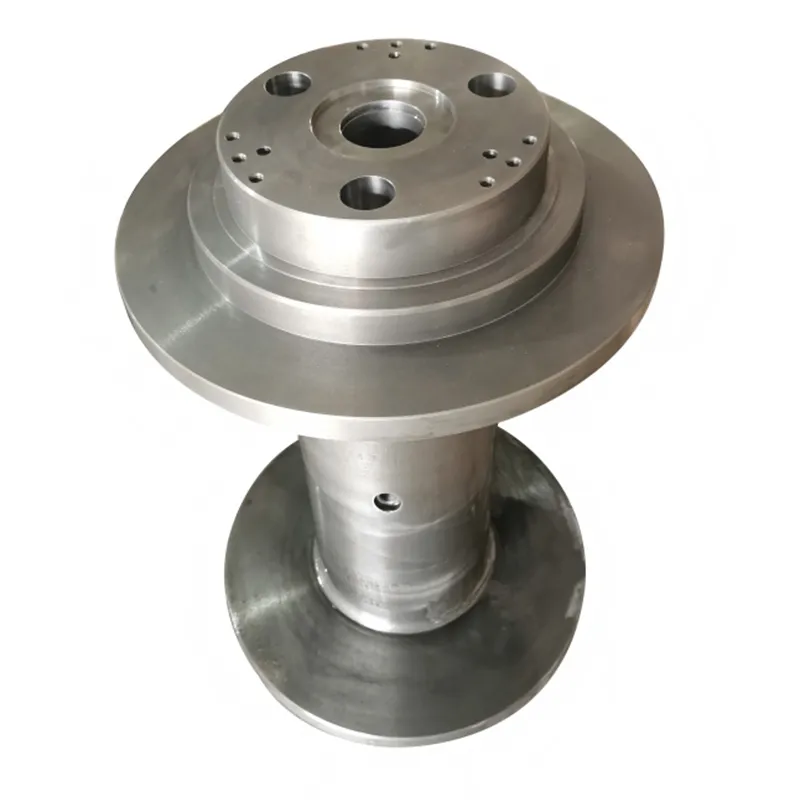
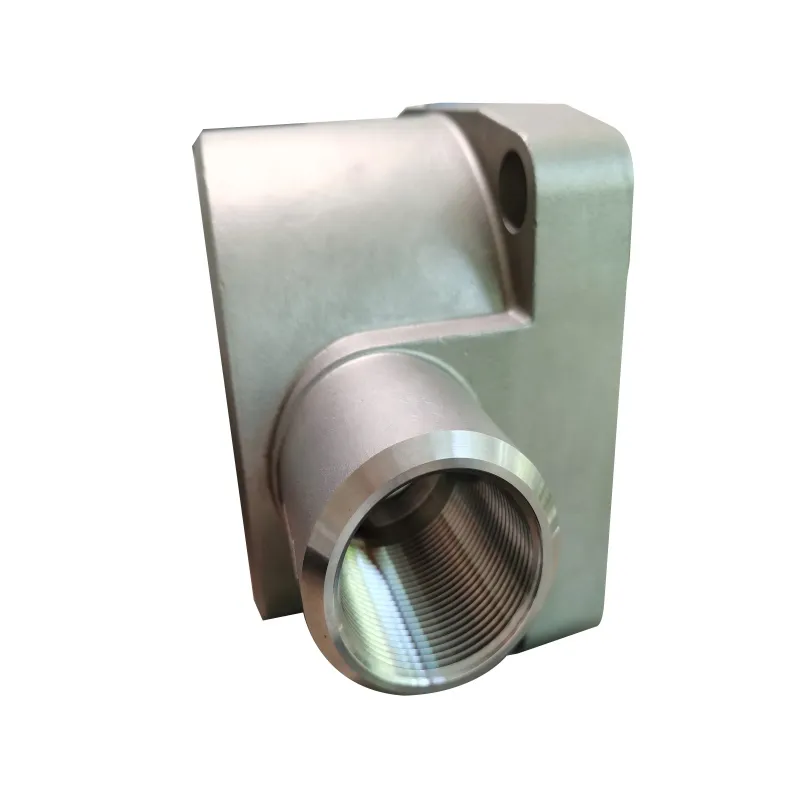
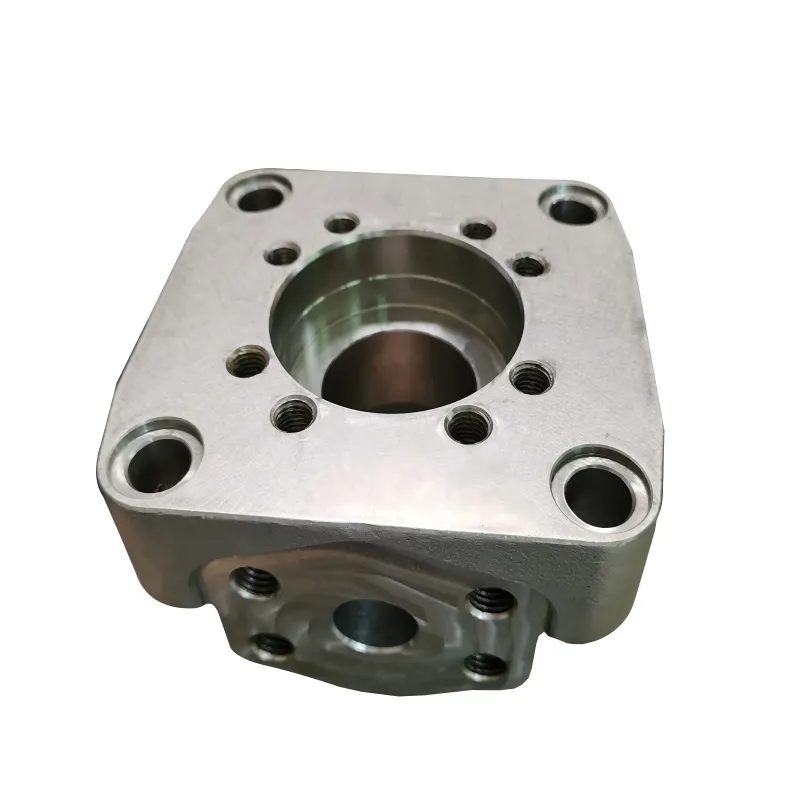
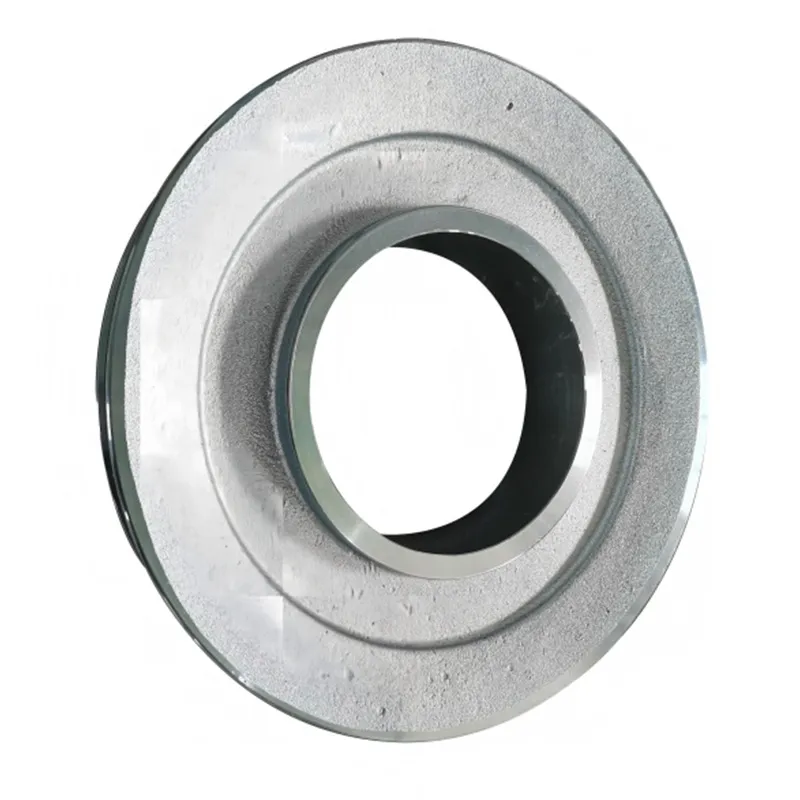
When most people hear 'steel investment casting', they picture a flawless, net-shape component popping out of a mold, ready to go. That's the brochure version. The reality, the one you learn after a few years and a few scrap bins, is that it's a dance of compromises. It's not just about melting metal and pouring it into a ceramic shell. It's about managing the gap between the theoretical density of your CAD model and the physical reality of solidifying steel—shrinkage, distortion, inclusions. A lot of newcomers, even some buyers, think it's a magic process for anything complex. It's not. It's a powerful tool, but only if you understand its language.
The Core Illusion: As-Cast Finish
Let's get this straight upfront. The term as-cast finish in steel investment casting is almost a misnomer if you're thinking of a machined surface. What you get is the best possible surface directly from the ceramic mold, which is excellent compared to sand casting, but it's still a cast surface. For a hydraulic valve body, it might be fine for non-sealing areas. For a turbine blade's aerofoil, it's critical. The Ra value might look good on paper, but the devil is in the local surface texture—micro-porosity, slight orange peel effect from the ceramic slurry. I've seen projects stall because the design team specified an as-cast Ra of 3.2μm across the entire part, not realizing that internal corners and undercuts naturally run rougher. You need to design with the process in mind, not force the process to conform to an ideal.
This is where the partnership with a foundry becomes engineering, not just procurement. A shop like Qingdao Qiangsenyuan Technology Co., Ltd. (QSY), with their three decades in shell and investment casting, will tell you this immediately. They've seen it all. Their value isn't just in making the shell; it's in reviewing your drawing and pointing out, See this thin wall adjacent to a massive lug? That's a hot spot. It will either draw porosity or cause a shrink cavity in the lug. Let's add a riser here, or better yet, can we slightly alter the geometry? That conversation saves weeks of failure analysis later.
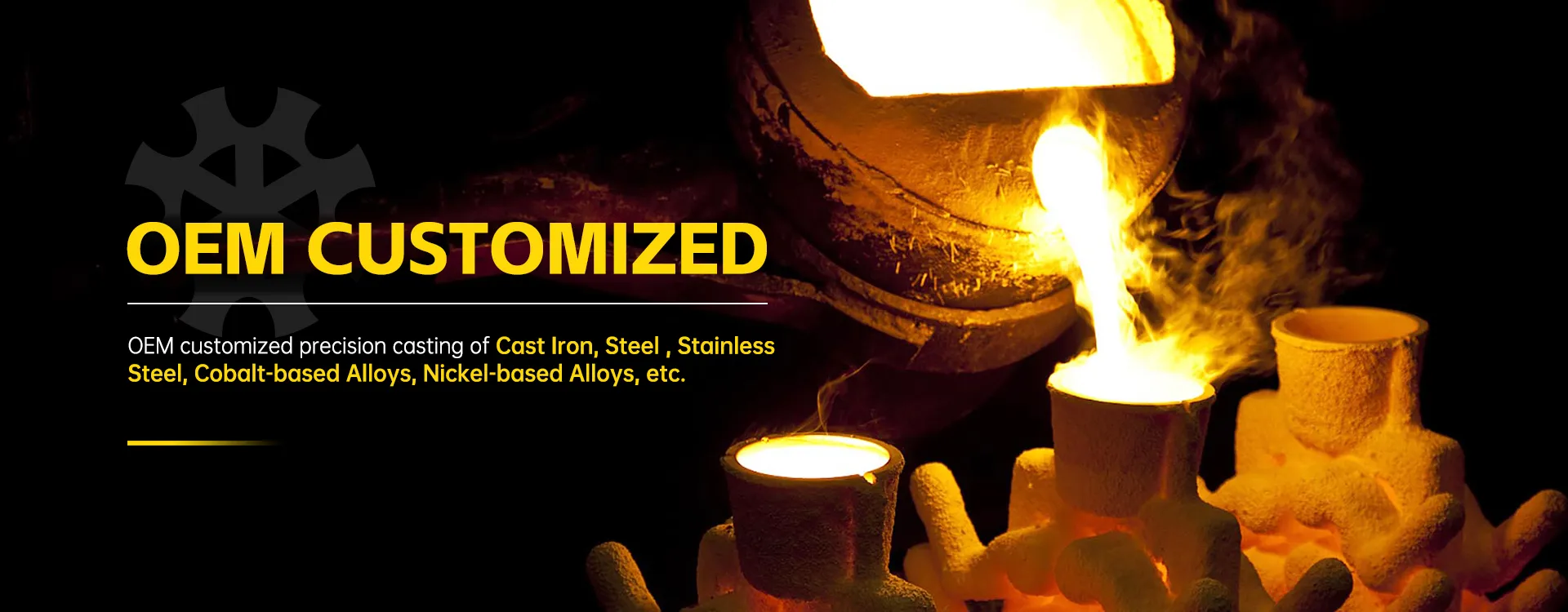
The shell building process itself is a handcraft. The primary slurry dip, the sand stucco, the drying cycles—each layer is a chance to introduce variation. A humid day in Qingdao can slow the drying, affecting the final shell strength. A good foundry controls this, but it's never a push-button operation. When you visit a facility and see rows of drying racks, each with clusters of white shells looking like strange eggs, you're looking at the heart of the process. The precision is built layer by literal layer.
Material Choices: It's Never Just Steel
Specifying carbon steel is like walking into a restaurant and asking for food. It's meaningless. Are we talking about a low-carbon 1020 for a simple bracket? Or a 4340 for a high-strength, heat-treated landing gear component? The alloy dictates everything: pouring temperature, fluidity, shrinkage factor, heat treatment response, and final mechanical properties.
This is another area where experience trumps theory. For corrosion-resistant parts, 304 or 316 stainless are common asks. But 316 has better casting fluidity than 304, which can mean finer detail reproduction. However, if the part requires significant machining post-casting, the work-hardening rate of 316 can be a nightmare for the machining shop. Sometimes, opting for a more machinable grade like 303, even with slightly less corrosion resistance, is the smarter system-level choice. QSY's experience with stainless and special alloys like nickel-based ones gives them a library of these practical insights. They're not just pouring metal; they're anticipating the entire manufacturing chain.
Then there are the truly demanding applications—high-temperature, high-wear. That's where cobalt and nickel superalloys come in. The investment casting process is almost the only way to form these intractable materials into complex shapes. But the cost isn't just in the raw material, which is astronomical. It's in the process control. These alloys are sensitive to thermal shock; the pre-heat temperature of the shell before pouring becomes a critical parameter, often measured and controlled to within a few tens of degrees. A misstep here doesn't just mean a defective part; it can mean a cracked shell and a costly spill of molten superalloy.
The Handoff: Casting to CNC Machining
This is the make-or-break zone that many standalone foundries struggle with. A perfect casting is useless if the machining shop can't hold it properly to mill the datum faces. The biggest friction point is often the as-cast stock allowance. Put too much, and you're wasting machining time and tool life on just hogging off excess material. Put too little, and one slightly out-of-tolerance casting wall means the cutter can't clean up the surface, resulting in a scrap part.
Integrated operations have a huge advantage here. This is why QSY's model, combining casting and their own CNC machining, is so effective. Their machining team works directly with their foundry. They establish a feedback loop. The machinists tell the foundry, We're consistently finding this flange 0.5mm thicker on one side, causing vibration in our fixture. The foundry can then adjust the wax pattern or the gating orientation to correct it. This internal collaboration eliminates the blame game between separate vendors and aligns incentives toward a good final part.
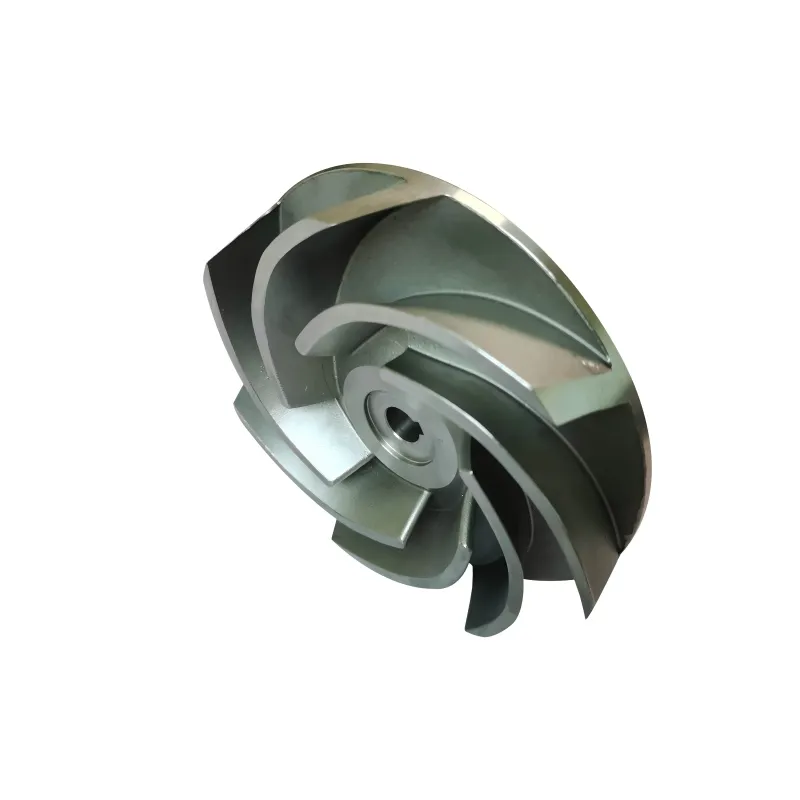
I recall a project for a pump impeller in duplex stainless steel. The casting was beautiful, but the critical bore for the shaft needed a perfect press-fit tolerance. The challenge was maintaining the bore's roundness after the stress relief from machining. Because QSY handled both stages, they developed a sequence: rough machine, stress relieve, then finish machine. The foundry side adjusted the cooling process after shakeout to reduce initial stress. This kind of co-engineering is impossible when casting and machining are split. The part isn't just cast; it's manufactured.
Gating and Feeding: The Unseen Geometry
If the final part is the sculpture, the gating and riser system is the scaffolding. And it's as important. A poorly designed gate can introduce turbulence, sucking air and oxides into the part. A misplaced riser that's too small will fail to feed liquid metal to a shrinking section, creating internal shrinkage porosity. This porosity might only be found during X-ray inspection or, worse, in-service failure.
Modern simulation software helps, but it's not a crystal ball. It gives you a probable thermal gradient map. You still need an engineer to interpret it and decide on the gating configuration. This is a blend of science and art. Sometimes, the optimal gating for soundness creates a nightmare for cut-off and grinding later. You have to balance metallurgical soundness with secondary operation cost. I've advocated for a more expensive, multi-gate design because it ensured quality in a safety-critical part. The cost was higher initial trimming labor, but it prevented a potential field recall. That's a judgment call.
For smaller, high-volume parts, like dental or jewelry components, they often use a tree configuration, with dozens of parts attached to a central sprue. For larger engineering components, like valve bodies or turbine housings, each part might have its own dedicated gating system. The choice impacts yield, furnace charge planning, and overall cost. A foundry's expertise is reflected in their gating design efficiency—maximizing yield of good parts per pound of metal poured.
Failure as a Teacher
You haven't really learned steel investment casting until you've had a major failure to dissect. Early in my time, we had a batch of low-alloy steel brackets that kept cracking during heat treatment. The castings passed visual and dimensional checks. The material certs were fine. The problem was non-metallic inclusions—tiny ceramic particles from the shell that got entrapped in the metal. These inclusions acted as stress concentrators. Under the thermal stress of heat treatment, they initiated cracks.
The root cause? It was a combination. The shell material's thermal expansion was a slight mismatch for that specific steel grade, causing minor spalling. And the pouring speed was a tad too high, creating turbulent flow that could detach particles. The fix wasn't one thing. We switched to a different refractory flour in the prime slurry for that alloy and trained the pour team on a slower, more laminar pour. It worked. You don't find that solution in a textbook; you find it on the floor, looking at a fractured surface under a microscope.
This is why longevity in this business matters. A company operating for over 30 years, like the one behind https://www.tsingtaocnc.com, has a deep, institutional memory of these failure modes. They've likely encountered and solved problems you haven't even imagined yet. That knowledge is embedded in their process sheets and their technicians' instincts. When they suggest a slight change to your design or their standard procedure, it's usually because they've been burned before. That advice is worth its weight in metal.
Looking Forward: Not Just a Legacy Process
Some see investment casting as an old-school, mature technology. It's not static. The integration with 3D printing is the obvious game-changer. Printed wax or resin patterns eliminate the need for hard tooling for prototypes or low-volume runs. This allows for design iterations at a speed that was unimaginable 20 years ago. But the real frontier is in materials and hybrid processes.
We're seeing more demand for functionally graded castings, where properties change across the part. This is still largely in R&D, but it points to the direction. Furthermore, the line between casting and additive manufacturing is blurring. Is a direct metal-printed part that's later hot-isostatically pressed (HIP'd) much different from a cast part? The metallurgy starts to converge.
For now, and for the foreseeable future, steel investment casting remains the most cost-effective way to produce medium-to-high volumes of complex, high-integrity metal components. Its strength isn't in being the flashiest technology, but in being a deeply understood, reliable, and adaptable one. The key is to engage with it not as a commodity service, but as a specialized engineering discipline. Find partners who speak that language, who see the part not just as a drawing to quote, but as a physical object that must perform in the real world. That's where the real value is cast.