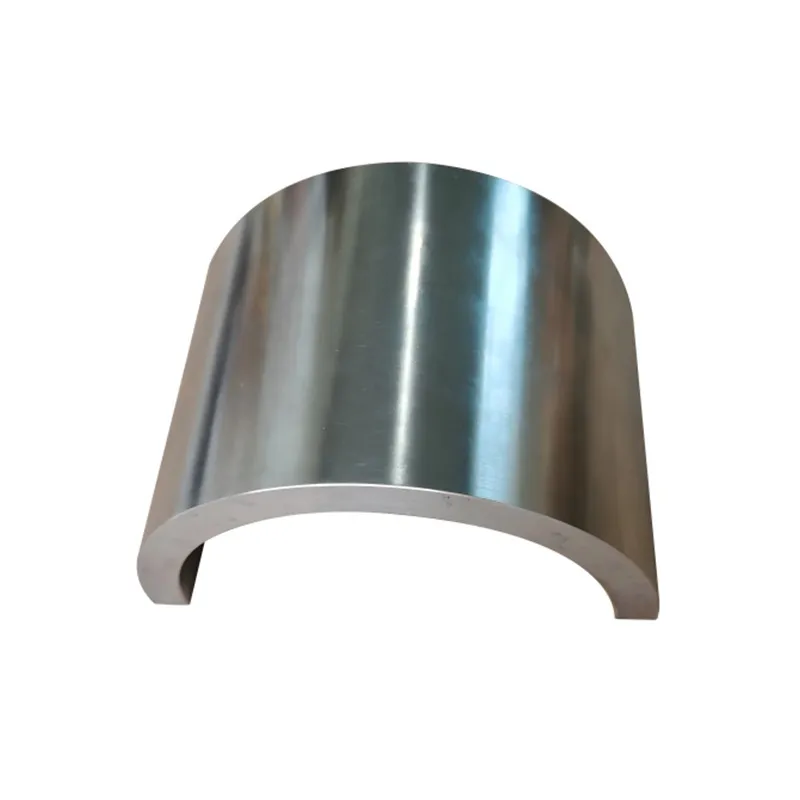
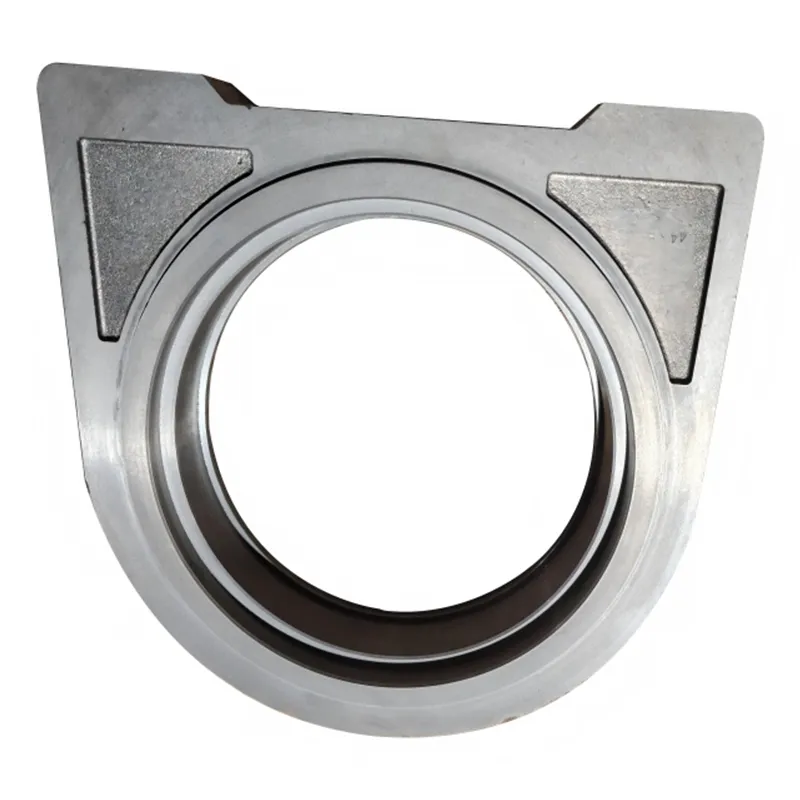
When someone mentions a Stellite bushing, the first thing that often comes to mind is just 'a really hard, wear-resistant part.' That's not wrong, but it's a simplification that can lead to costly mistakes in specification. I've seen projects where the design called for a generic Stellite 6 bushing because the spec sheet said 'excellent abrasion resistance,' only to have it gall severely in a high-load, low-speed rotary application. The reality is, Stellite isn't a single material; it's a family of cobalt-chromium alloys, and the choice between, say, Stellite 6, 12, or 21 for your bushing depends on whether you're fighting pure abrasion, abrasive erosion, metal-to-metal wear, or a combination with corrosion. Getting that wrong means premature failure, and I've pulled my share of seized bushings to prove it.
The Material Choice Isn't Just a Checkbox
Early in my time dealing with these components, I learned the hard way that ordering a Stellite bushing is like ordering a car—you need more details. We had a valve application for a client, handling a slurry with fine particulates. The initial run used bushings made from a standard cobalt-chromium-tungsten alloy. They wore, but not dramatically. The problem was the mating shaft, which was getting scored. The wear wasn't symmetric; it was creating a pattern that led to vibration. The failure wasn't the bushing catastrophically failing; it was the entire assembly's performance degrading over a few hundred hours. We had to go back and look at the alloy's carbide structure and hardness relative to the shaft material. It turned out we needed a grade with a higher volume of harder carbides for that particular abrasive medium, even though the generic grade was for abrasion.
This is where working with a foundry and machine shop that understands the nuance matters. A company like Qingdao Qiangsenyuan Technology Co., Ltd. (QSY) has the background to ask these questions. With over 30 years in casting and machining, they've likely seen similar scenarios. Their experience with shell mold and investment casting for special alloys means they're not just pouring metal; they're controlling the microstructure that defines whether that Stellite bushing will work. I recall a conversation with their engineering team once about the solidification rates for a complex thin-walled bushing and how it affected carbide distribution. That's the level where material selection truly happens.
Another point often missed is the interplay between casting method and final properties. For a thick-section, simple-shaped bushing, a static casting might be fine. But for a more complex geometry with varying wall thicknesses, like one with integral lubrication channels or flanges, the consistency from an investment casting process can be critical to avoid shrinkage porosity in high-stress areas. You can't just machine that flaw away. QSY's dual capability in both shell mold (good for medium series, better surface finish) and investment casting (complex shapes, all alloys) is a practical advantage here. It lets you match the process to the part's function and stress state, not just its drawing.
Machining: Where Good Castings Can Go Bad
This is the part that keeps machinists up at night. You get a perfectly cast Stellite bushing blank, and the job is half-done at best. Stellite work-hardens. Aggressively. If your tool path, speed, feed, or tool material is off, you'll burn through inserts, introduce micro-cracks at the surface, or leave behind tensile stresses that become initiation points for failure. I've scrapped parts by being too aggressive on the final pass, creating a beautiful finish that hid a work-hardened, compromised surface layer.
The goal is to cut the material, not smear it. We settled on using rigid setups, sharp carbide grades specifically for high-temperature alloys, and a rule of thumb: light depths of cut, moderate speeds, and consistent feed to get under the work-hardened layer from the previous pass. Cooling is another debate. Some swear by flood coolant to keep heat down. Others, myself included, often prefer air blast for Stellite, as it avoids the thermal shock of coolant that can promote cracking, and it clears chips effectively to prevent recutting. It's a balance, and you develop a feel for it. A shop's CNC machining experience, like what QSY highlights, is crucial here. It's not just about having the machines; it's about the accumulated tribal knowledge on how to run them for these stubborn alloys.
Post-machining, the fit and finish are everything. A bushing isn't a wear block; it's a precision interface. The ID tolerance, surface finish (Ra value), and any honing or polishing can make a huge difference in initial run-in and lubrication retention. We once had issues with bushings seizing during the initial commissioning of a pump. After ruling out alignment and lubrication, we looked at the bushings themselves. The ID finish was too smooth—it wasn't holding the oil film properly during the low-speed start-up phase. A light cross-hatch honing solved it. It's a tiny detail with massive consequences.
The Special Alloy Context and Real-World Trade-offs
Stellite sits in that special alloy category for a reason. It's expensive. The cobalt base, the strategic elements like tungsten or molybdenum, the precision casting and difficult machining—it all adds up. So, you don't specify a Stellite bushing for every application. The calculation is total cost of ownership: the part cost versus the cost of downtime, replacement labor, and collateral damage from a failure. In a critical injection pump on an offshore platform, a Stellite bushing is cheap insurance. In a less critical, easily accessible conveyor roller, a hardened steel or even a bronze bushing might be the more economical choice over its life.
This is where the full-service aspect of a partner becomes valuable. A company that offers both the casting of the alloy and the subsequent machining, like the services outlined by QSY, can provide a more integrated cost analysis. They can advise if a near-net-shape casting can reduce machining hours, or if a slightly different alloy within the family might be easier to machine with only a minor trade-off in wear properties for that specific use case. They're looking at the whole manufacturing chain, not just selling you a casting.
I remember a project where we were looking at a bushing for a high-temperature agitator shaft. The initial thought was Stellite 6. However, after discussing the operating environment—cyclic heating to around 750°C, presence of sulfur compounds—the recommendation shifted towards a nickel-based alloy they also worked with. It had better hot corrosion resistance for that specific atmosphere, even though its room-temperature wear resistance was lower. The bushing lived in a furnace, not a brochure. The right material came from understanding the application, not just the material brand name.
Failures and Lessons: The Unpolished Stories
Not every story has a clean ending. We tried to push the limits once with a monolithic Stellite bushing in an extremely high-load, impact-prone hinge point. The theory was its compressive strength and hardness would handle it. It did, for a while. Then it cracked. Not wore out—cracked. The lesson was that the inherent brittleness of the high-hardness alloy couldn't handle the shock loading. We solved it by redesigning the assembly to use a Stellite wear sleeve pressed into a tougher, ductile steel housing, letting each material do what it was best at. The bushing's role was redefined from a structural component to a pure wear surface.
Another common pitfall is ignoring the mating surface. Putting a super-hard Stellite bushing against a mild steel shaft is a recipe for destroying the shaft. You often need to upgrade the shaft material or its surface treatment (hard chrome, thermal spray) to create a compatible pair. It's a system. I've seen beautifully made bushings returned under warranty, only to find the failure was caused by a soft, scored shaft acting like a file against the bushing ID.
These experiences shape a more pragmatic view. You start looking at a bushing not as an off-the-shelf item, but as a designed interface within a system. The questions multiply: What's the PV (Pressure-Velocity) value? Is the lubrication boundary, mixed, or full-film? Are there edge-loading conditions? The answers guide the alloy selection, the casting process for integrity, the machining specs for finish and tolerance, and the final inspection criteria.
Wrapping It Up: Beyond the Spec Sheet
So, what's the takeaway on Stellite bushings? It's that the value isn't in the piece of alloy you receive. It's in the chain of decisions and expertise that creates a part fit for a specific, often punishing, purpose. It starts with an honest assessment of the failure mode, moves through a collaborative material and process selection with a knowledgeable supplier, requires meticulous machining, and demands a system-wide view of how it will function in place.
Suppliers that have been in the trenches, like QSY with their decades in casting and machining these very materials, become more than vendors. They become consultants. They've probably seen a hundred variations of your problem. Their role is to translate a functional requirement—we need this to last longer in this hot, abrasive, corrosive soup—into a manufacturable, reliable component. That translation is where the real engineering happens, long before the first mold is made.
In the end, specifying a Stellite bushing is a statement that downtime is unacceptable and performance is critical. Getting it right is a technical exercise in applied metallurgy, manufacturing science, and practical mechanics. Getting it wrong is an expensive lesson. The difference between the two often lies in the depth of the conversation you have with your workshop, before the purchase order is ever cut.