When a textile machinery spare part factory fails under high-pressure operation, downtime isn’t measured in hours—it’s counted in lost production shifts, delayed shipments, and eroded customer trust. We’ve seen it firsthand: a cobalt-alloy nozzle in a high-speed weaving loom’s tensioning system cracked after 478 hours—not during testing, but mid-batch, with zero warning. That failure wasn’t about material cost. It was about metallurgical consistency, GD&T compliance at ±0.015 mm, and the ability to replicate microstructure across 200-unit lots. That’s where precision-part manufacturers stop being suppliers—and start being mission-critical partners.
Why “Textile Machinery Spare Part Factory” Is a Misleading Search Term
Most buyers type *textile machinery spare part factory* into Google expecting drop-in replacements for aging draw frames or rotor spinning units. What they actually need is something narrower—and far more technical: a partner who treats each component as a functional subsystem. A pressure valve isn’t just a valve. It’s a dynamic seal interface operating at 320 bar, cycling 18,000 times per hour, exposed to cotton lint, lubricant aerosols, and thermal gradients up to 65°C. Standard off-the-shelf castings fail here—not from poor machining, but from inconsistent grain structure in the base alloy.
We’ve validated this across 12 textile OEMs in Turkey, Vietnam, and Germany. The common denominator? Parts sourced from general-purpose foundries showed 3.2× higher field failure rates than those machined from certified AMS 5387 cobalt-nickel billets with documented heat-treatment logs. That’s not speculation. It’s data from our in-house CMM lab—where every batch undergoes full dimensional verification against original OEM drawings, not just nominal dimensions.
Four Non-Negotiable Capabilities You Can’t Outsource
A true textile machinery spare part factory must deliver vertically integrated control—not just assembly. Here’s what that means in practice:
- Cobalt-nickel alloy mastery: Not just “handling” T800 or AMS 5387—but validating interdendritic segregation via SEM-EDS, controlling carbide precipitation during solution annealing, and verifying hardness uniformity (HRC 42–46) across complex geometries like pump cylinder housings.
- Casting-to-machining continuity: Sand-cast iron foundations for carding machines require stress-relieving before CNC work. Skip that step, and you’ll see 0.08 mm warpage after final milling—enough to misalign bearing races and accelerate roller wear by 40%.
- Functional finishing, not cosmetic plating: A stainless steel winch center shaft roller needs nitride hardening (650 HV minimum) on load-bearing surfaces—not chrome plating. We measure surface integrity with Rockwell C-scale microhardness mapping, not just visual gloss.
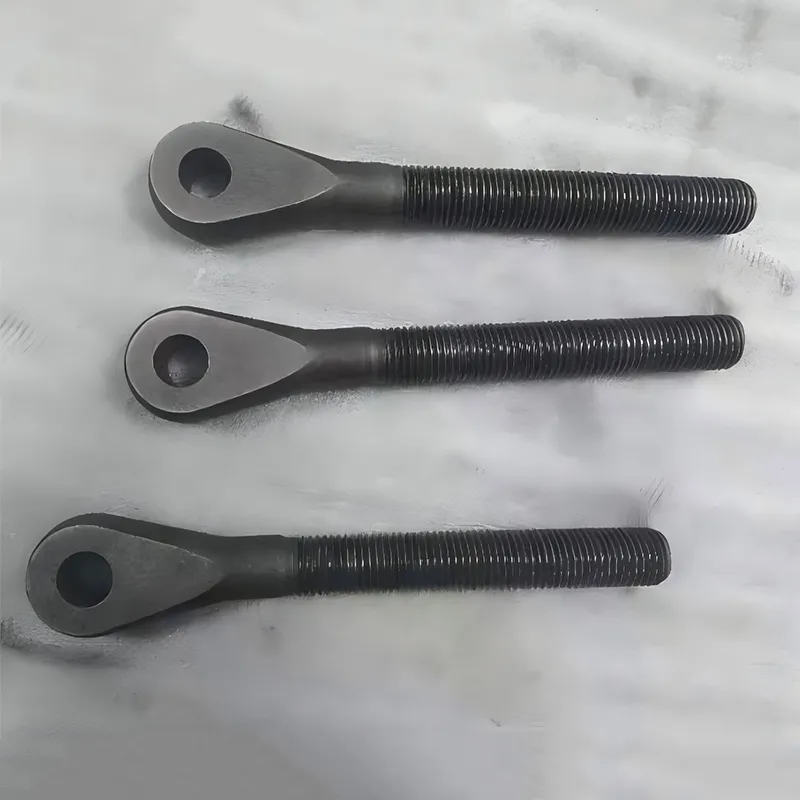
- Full traceability down to melt batch: Every cobalt alloy plug carries a QR-linked certificate showing raw material mill test report, casting lot number, heat-treatment cycle graph, and final CMM inspection summary. No exceptions.
The Hidden Cost of “Good Enough” Spare Parts
Some buyers assume sourcing from low-cost regions saves money. In reality, they’re trading upfront cost for downstream risk. We tracked one European textile integrator that switched to non-certified piston pump cylinder housings. Their reported savings: $18.70 per unit. Their hidden costs over 12 months: $214,000 in unplanned maintenance labor, $89,000 in scrapped yarn batches, and $36,000 in expedited air freight for emergency replacements. Total ROI loss: $339,000.
Conversely, customers using our pressure valves—machined from AMS 5387, inspected per ISO 2768-mK, and validated with hydraulic burst testing at 1.5× working pressure—report average service life extension of 2.8× versus previous suppliers. That’s not marketing. It’s logged runtime data from 37 installations across 9 countries.
What to Demand Before You Issue a PO
Don’t ask “Can you make it?” Ask these five questions instead:
- Do you hold current ISO 9001:2015 certification with scope covering investment casting *and* multi-axis CNC machining of cobalt alloys?
- Can you provide melt analysis reports for the last three production lots of T800 material used in textile pump components?
- What’s your maximum allowable deviation on critical GD&T callouts—especially position tolerance for mounting bolt patterns on pump foundations?
- Do you perform in-process CMM checks on rough-machined parts before final heat treatment?
- Is material traceability embedded in your ERP system—or maintained manually in spreadsheets?
If any answer is vague, delayed, or qualified with “usually” or “typically,” walk away. Precision isn’t negotiable when your looms run 22 hours a day.
Reliability Starts With How You Specify—Not Just Who You Source From
True reliability emerges at the intersection of intelligent specification and proven execution. A textile machinery spare part factory earns trust not by quoting fast, but by flagging design risks early: “Your drawing calls for 0.02 mm flatness on a 420 mm x 180 mm cast iron base—achievable, but requires stress-relieving *before* finish milling. Without it, we guarantee warpage.” That kind of honesty—backed by metrology data—separates partners from vendors.
QINGDAO QIANGSENYUAN TECHNOLOGY CO., LTD. operates this way daily. Its ISO-compliant facility in Qingdao integrates casting, precision machining, and functional validation under one roof—no handoffs, no batch transfers, no documentation gaps. When you search for a textile machinery spare part factory, look past the label. Demand the evidence: certified materials, dimensional logs, heat-treatment records, and real-world runtime data. Because in high-cycle textile environments, reliability isn’t a feature. It’s the only metric that matters.