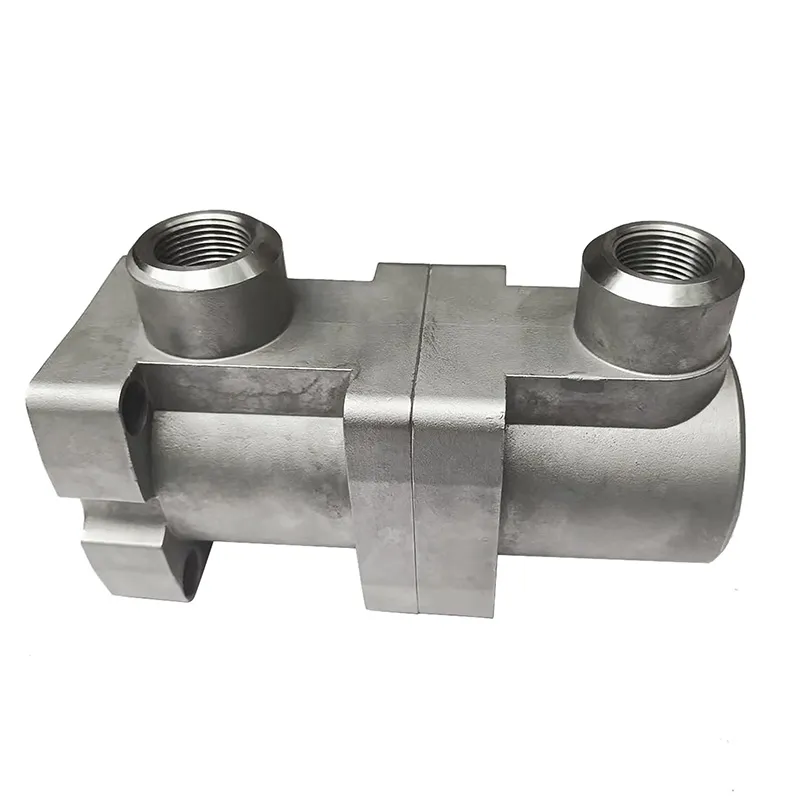
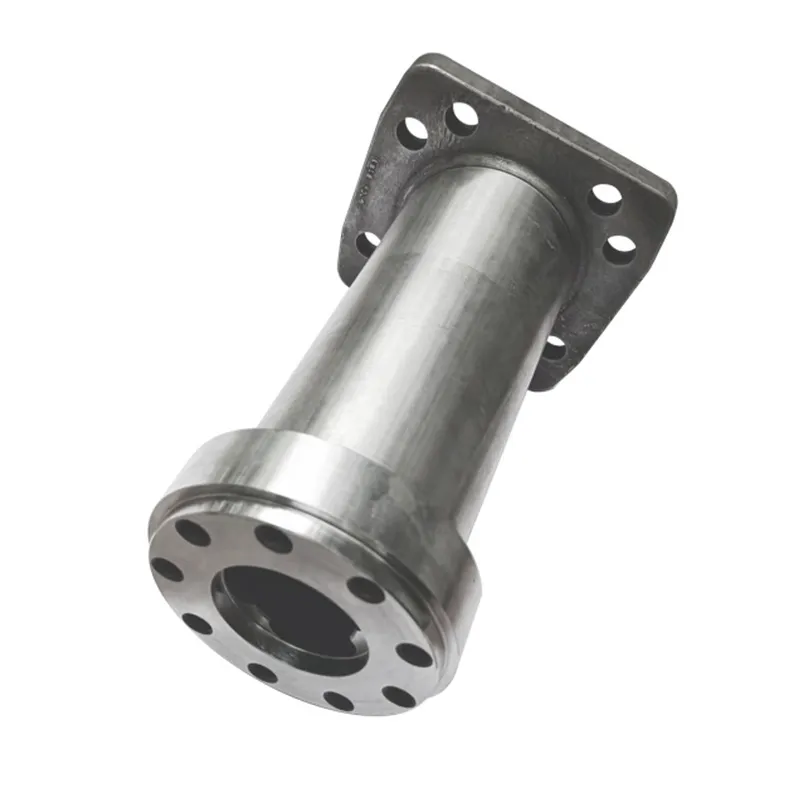
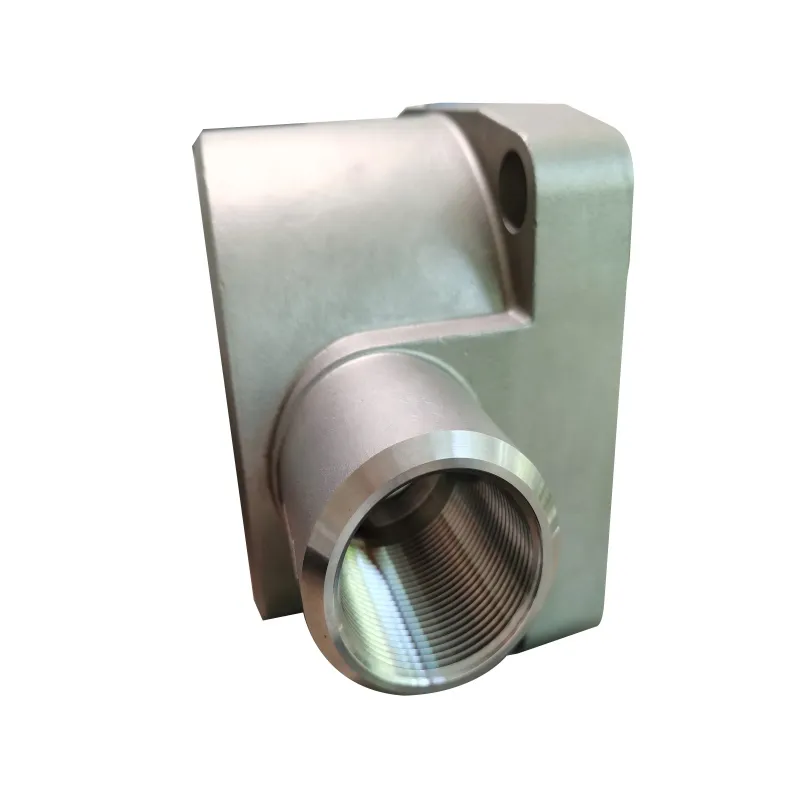
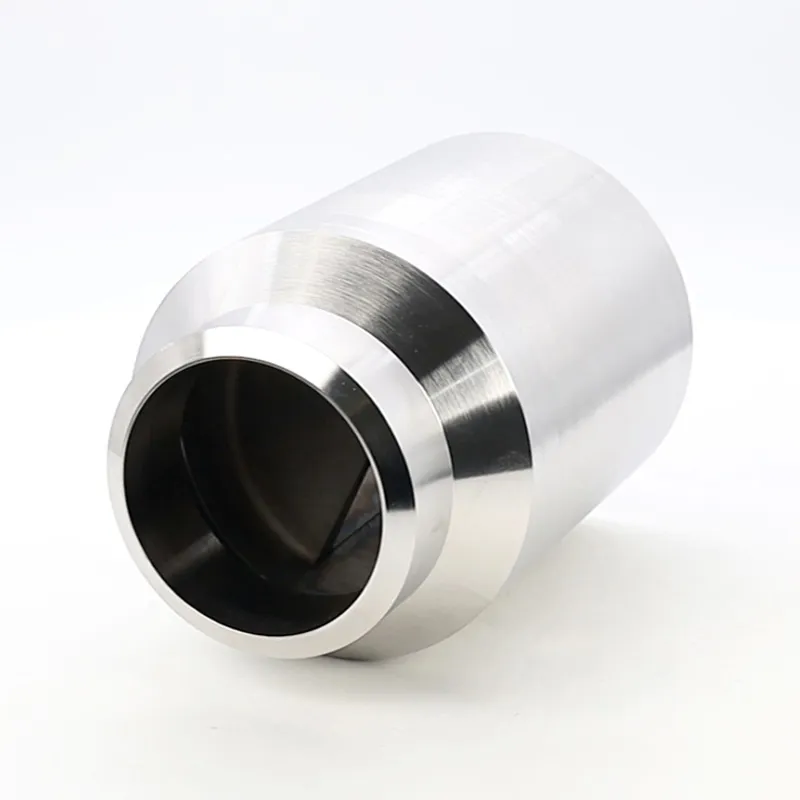
When you hear 'tilt gravity die casting', the first image that often pops up is this perfectly smooth, automated process pouring flawless metal. In reality, it's more of a controlled, deliberate tip. The core idea is simple: instead of dumping molten metal straight down, you tilt the mold so the metal fills it slowly, reducing turbulence. But here's where the theory meets the shop floor – getting that tilt speed and angle right for a complex part, especially with tricky alloys, is where decades of foundry dust earn their keep.
The Mechanics of the Tilt and Why It's Not Just a Gimmick
Let's break down the 'tilt'. It's not about a fancy machine, though those exist. It's about controlling the metal front. In a conventional gravity pour, you get a waterfall effect. For something like a thin-walled stainless steel valve housing, that's a recipe for oxide inclusions and mist runs. The tilt process lets the metal climb the wall of the cavity. Think of pouring a beer slowly versus sloshing it in. The former gives you a better head, the latter a mess. In metal terms, a better 'head' means fewer gas entrapments and a more consistent grain structure.
I remember a job we did years back for a pump impeller in duplex stainless. The client had issues with shrinkage porosity in the central hub using traditional methods. We argued for a tilt approach. The initial skepticism was about cycle time – it's undeniably slower on the pour. But the payoff was in the reduced scrap rate. By tilting, we directed the thermal center of the casting more predictably, which made placing the chills and risers almost a scientific exercise rather than a guessing game. The yield improved by about 15%, which for that material cost, justified the slower pour.
Where it really shines is with those special alloys QSY often handles, like nickel-based ones. These are viscous, they solidify fast, and they're expensive. You can't afford turbulence that leads to inclusions you'll only find during machining. The tilt becomes a necessity, not an option. It’s a practical solution for controlling fill in a way that a straight pour often can't match for intricate geometries.
Material Matters: It's Not One-Tilt-Fits-All
This is a common oversight. The tilt parameters for grey iron are a world apart from those for a cobalt-based alloy. With cast iron, you're dealing with good fluidity but a tendency for dross formation if the pour is too violent. A moderate tilt speed works. But switch to a high-nickel alloy, and the game changes. The metal is 'shorter', it doesn't flow as readily. You need a steeper initial tilt angle to get the metal moving, then a very slow, controlled finish to feed the sections solidifying last.
We learned this the hard way on an early project for a heat-resistant bracket. Using an iron-optimized tilt program on a nickel-chromium alloy resulted in cold shuts at the far end of the cavity. The metal was skinning over before the cavity was full. The fix wasn't just speeding up the tilt; it was about pre-heating the die differently and starting the tilt more aggressively to get a rushing front, then slowing it right down. It's this dance between temperature, tilt speed, and angle that you only get from screwing up a few times.
This is where a foundry's material experience, like the 30-odd years QSY mentions, becomes tangible. It's not just about having the equipment; it's about having the process memory for what works with Inconel 718 versus 304 stainless. The tilt process magnifies the importance of these subtleties. A generic approach will give you generic, often defective, results.
Tooling and Die Design: The Unsung Hero
The die design for tilt casting is fundamentally different. The gating and runner system is simpler in some ways because you're not relying on a complex system to control flow – the tilt does that. But you have to think in terms of the metal's path as the die rotates. The ingate needs to be positioned so it becomes the lowest point at the start of the tilt, and the venting has to work throughout the entire rotating motion, not just a static fill.
I've seen dies where the vents were perfectly placed for a vertical pour but became useless traps for air once tilted 45 degrees. You end up with gas pockets in the most inconvenient places. The solution often involves more, smaller vents along the parting line and sometimes even temporary ceramic vents at the high points of the initial die position. It's messy, practical problem-solving.
Die life is another factor. The slow, constant contact of hot metal climbing the die wall can lead to different thermal fatigue patterns compared to the shock of a full pour. We tend to see more fine, heat-check cracking in the early fill areas over time. It means your die maintenance schedule needs to account for this. It's not a set-it-and-forget-it process; it demands more attention to the tooling's condition cycle-to-cycle.
Integration with Secondary Processes: The Machining Link
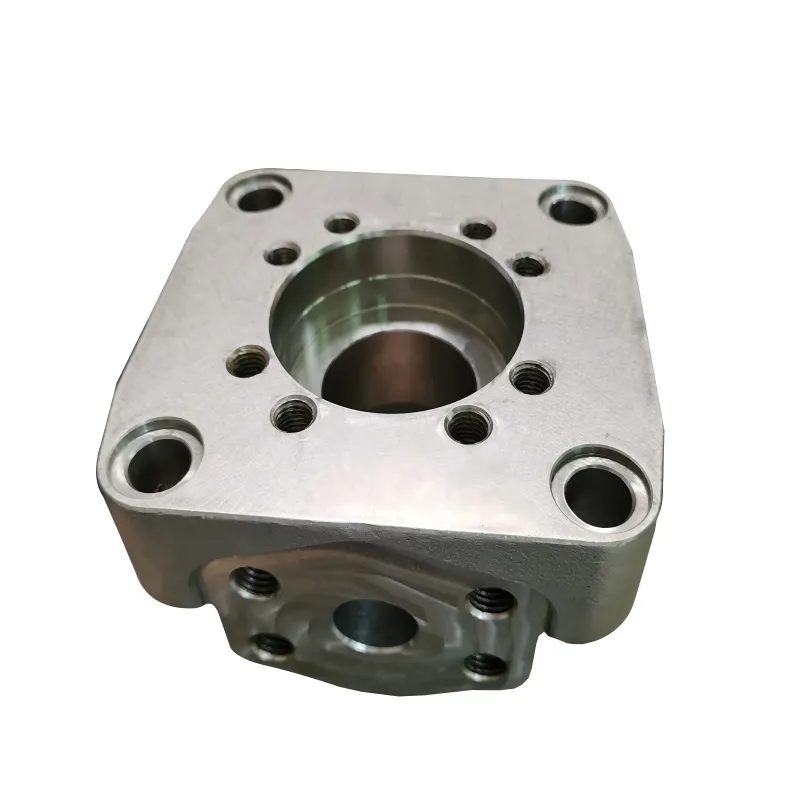
This is the critical payoff. A well-executed tilt gravity die casting isn't an end product; it's a near-net-shape preform for CNC machining. The consistency it brings is a machinist's dream. When the internal soundness and lack of hard inclusions are predictable, you can push the CNC feeds and speeds harder. You're not worrying about hitting a sand pocket or a cluster of oxides that will shatter a $200 end mill.
At a facility that handles both casting and machining in-house, like the integrated setup suggested by QSY's services, this synergy is huge. The casting team knows exactly what the machinists need in terms of datum surfaces, minimal stock allowance, and uniformity. When you control the fill with a tilt, you get more predictable shrinkage, which means you can place the part in the die to minimize subsequent machining distortion. It turns two separate operations into one continuous workflow.
The real test is on the coordinate measuring machine (CMM). Parts from a turbulent pour often show dimensional variation that doesn't correlate neatly to the die – it's the random stress from uneven cooling. Tilt-cast parts, in my experience, show patterns. If there's a deviation, it's repeatable and traceable back to the die deflection or thermal profile, which is something you can actually engineer a fix for.
Limitations and Real-World Compromises
It's not a magic bullet. The biggest limitation is part geometry. Deep, narrow cavities? Tough. The metal can lose too much heat before it reaches the bottom. Sometimes you have to combine tilt with a slight counter-gravity assist or use a heated die extension. It adds complexity. For very simple, chunky parts, the cost and time of a tilt system might not be justified. The sweet spot is medium-complexity parts where integrity is critical.
Cycle time, as mentioned, is longer. The pouring phase is slower, and sometimes the die needs to be held at certain angles during solidification to aid feeding, which ties up the machine. For high-volume, low-cost items, this is a deal-breaker. This process is for lower volumes, higher-value components. Think aerospace fittings, specialized valve bodies, high-performance automotive components – areas where QSY's material focus aligns.
Finally, there's the human factor. It's a more nuanced process to set up and monitor. An operator needs to understand what they're seeing in the fill and be empowered to make micro-adjustments. It's less automated than a robotic pour into a stationary die. You're trading some raw efficiency for control and quality. In today's market, for the right part, that's a trade more and more engineers are willing to make. The goal isn't just a casting; it's a reliable, machinable component that doesn't fail in the field. And often, that starts with a simple, careful tilt.