When you punch 'top metal injection molding companies' into a search bar, you're immediately hit with a wall of polished directories and seemingly interchangeable supplier lists. Having been in this game for a while, I can tell you that listicle is often the starting point of a misconception. The real 'top' isn't just about volume or a slick website; it's about who can consistently handle the gnarly stuff—complex geometries, tricky alloys like 17-4PH or 316L, and delivering from prototype to production without the wheels falling off. Many shops claim MIM expertise, but the depth of their process control, secondary operations integration, and material science know-how is what truly separates the contenders.
The Core of MIM: It's Not Just the Machine
Let's get this straight: owning a few sintering furnaces and injection presses doesn't make a top-tier MIM company. The magic, and the headache, happens in the feedstock formulation, debinding process, and the meticulous control of the sintering atmosphere. I've seen projects fail because a supplier treated the feedstock as a commodity, not understanding how binder composition affects final part density and dimensional stability. The real players have chemists or deep material partnerships. They'll talk your ear off about catalytic vs. thermal debinding for your specific part geometry, not just quote you a price per piece.
This is where you see a divergence. Some giants are fantastic for high-volume, relatively standard components. But for engineers pushing boundaries—say, a surgical instrument requiring a specific surface finish for biocompatibility or a drone component needing a high strength-to-weight ratio with thin walls—you need a different breed. You need a partner whose engineering team asks more questions than you do during the RFQ phase. They're probing about gate locations, potential sink marks, and how the part will be used in assembly. That back-and-forth is invaluable.
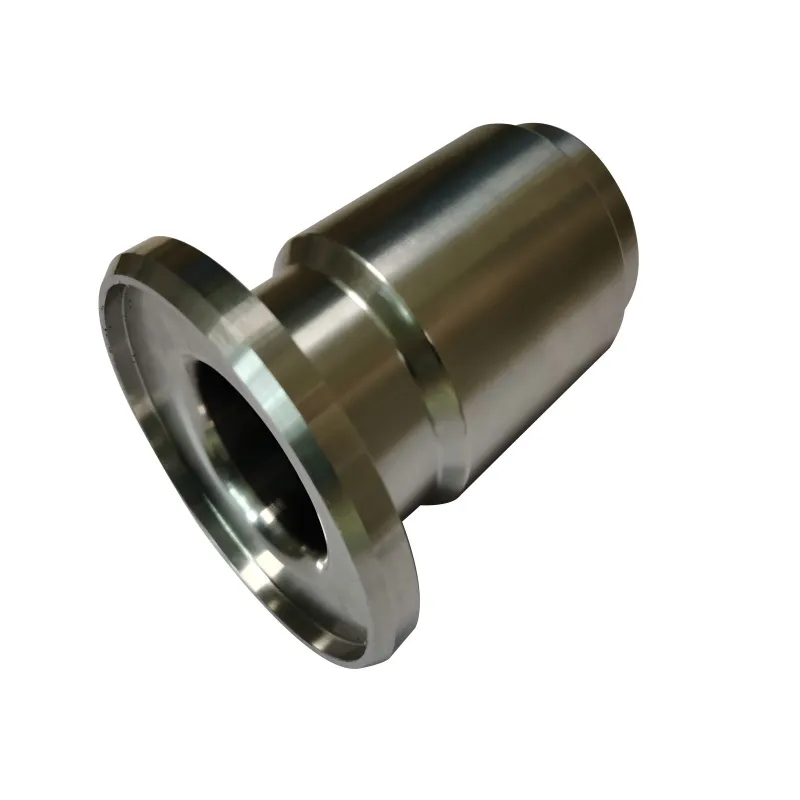
I recall a project for a fluidic connector where the initial samples from a 'top-listed' vendor had inconsistent porosity near the threads. Their solution was just to machine all the threads post-sinter, blowing the cost target. We shifted to a smaller, less SEO-visible specialist who redesigned the tool's feed system and tweaked the sintering profile. Problem solved, cost maintained. The lesson? The 'top' company for your project might not be the one with the biggest ad budget.
The Critical Role of Vertical Integration
Here's a practical filter I use: look for integrated secondary capabilities. A true leader in metal injection molding rarely just ships 'green' or 'brown' parts. The sintering process introduces inevitable, though predictable, shrinkage and minor distortion. Can they handle the CNC machining, grinding, or heat treatment in-house? This control is massive. Outsourcing these steps adds logistics, quality handoff risks, and timeline variables.
Consider a company like Qingdao Qiangsenyuan Technology Co., Ltd. (QSY). You find them at https://www.tsingtaocnc.com. Now, they've built their reputation on investment casting and CNC machining for over three decades. That's a crucial background. When such a firm adopts or partners deeply on MIM, they bring that ingrained metallurgical and precision machining DNA to the table. For a complex part requiring a cast-like shape but MIM's precision, their cross-process expertise becomes a serious advantage. They're not just molding; they're thinking about the entire manufacturing chain from alloy selection to the final machined feature.
This integration speaks to a broader trend. The most reliable top metal injection molding companies are often those that have mastered adjacent technologies. Their experience with special alloys—like nickel-based or cobalt-based ones common in investment casting—directly informs their MIM feedstock preparation and sintering for these very materials. They understand grain structure, carbide precipitation, and how to achieve desired mechanical properties post-sinter. It's a different level of conversation.
Material Mastery as a Differentiator
Anyone can order standard MIM-4605 feedstock. The test is with the exotics. I'm talking about managing the sintering of superalloys or creating custom feedstocks for unique applications. This is a realm of specialists. The process parameters for, say, a nickel-based alloy like Inconel 718 are worlds apart from those for standard stainless steel. Oxygen control, temperature ramp rates, and post-sinter heat treatments are critical.
A failure I witnessed early on involved a titanium MIM component. The vendor had great references for stainless parts. But titanium is a beast—highly reactive, sensitive to interstitial elements like carbon and oxygen. The parts came out brittle, failing stress tests. The vendor's furnace wasn't set up for the high-vacuum or ultra-pure argon environment titanium demands. It was a costly lesson in matching the material challenge to a company's proven infrastructure, not just their sales pitch.
This circles back to companies with a foundry background, like the aforementioned QSY. Their 30-year history in casting stainless steel and special alloys means they've already solved similar metallurgical puzzles. Transitioning that knowledge to MIM, while not trivial, gives them a foundational understanding of these materials' behavior under heat that a pure-play MIM startup might lack. They're likely to ask the right questions about service environment and performance needs upfront.
The Global Landscape and Practical Sourcing
The search for top metal injection molding companies is inherently global. North America and Europe have brilliant technology leaders, often excelling in high-mix, low-volume medical and aerospace work. Asia, particularly China, has developed profound expertise in high-volume, cost-optimized production, but with a growing tier of quality-focused, technically adept suppliers.
The key is nuance. It's a mistake to view regions monolithically. In China, for instance, the landscape ranges from massive commodity shops to sophisticated engineering partners. A company's longevity, like QSY's 30+ years, can be a proxy for stability and accumulated technical knowledge. Their specific focus on shell mold casting, investment casting, and CNC machining suggests a precision-oriented, vertically-integrated model. For an engineer, this is promising: it indicates they are accustomed to tight tolerances and complex part families, which aligns well with demanding MIM applications.
Sourcing is about fit. For a consumer electronics component in the millions, you might look to a high-volume Asian specialist. For a life-critical implantable device, a FDA-registered facility with impeccable validation protocols is non-negotiable, regardless of location. Sometimes, the 'top' choice is a hybrid: design and prototyping with a specialist in one region, and production ramp-up with a vertically-integrated manufacturer in another, leveraging their machining and finishing strengths.
Concluding Thoughts: Defining 'Top' for Your Project
So, after all this, how do you actually find the right metal injection molding partner? Ditch the static 'top 10' list. Start with your own project's non-negotiables: material, annual volume, geometric complexity, critical tolerances, and secondary operation needs. Use that as your filter.
Then, dig into technical dialogues. The best vendors will request your 3D model and immediately start a DFM (Design for Manufacturability) review. They'll highlight potential issues—wall thickness variations, ejection concerns, suggestions for simplifying assembly. They'll be transparent about their in-house capabilities versus outsourced steps. They'll have case studies, not just of shiny finished parts, but of problems they solved.
Look for the fingerprints of practical experience. It might be a company that evolved from investment casting and CNC machining, bringing that holistic view to MIM. It might be a specialist who lives and breathes superalloys. The 'top' company is the one whose expertise maps directly onto your project's toughest challenges. It's rarely the first result; it's the one you find after looking past the glossy surface and into the gritty details of process and material mastery.