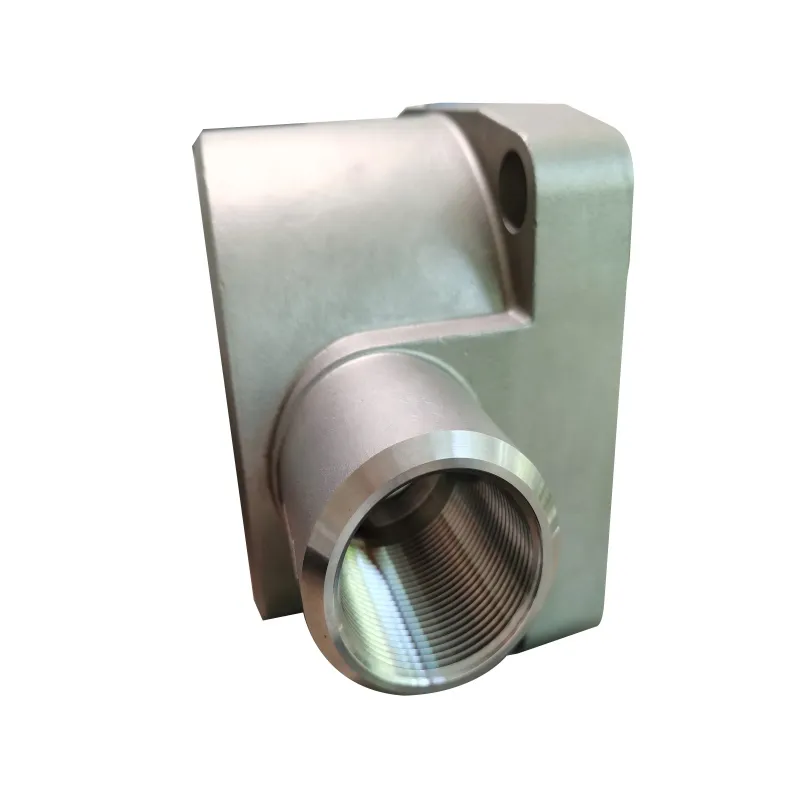
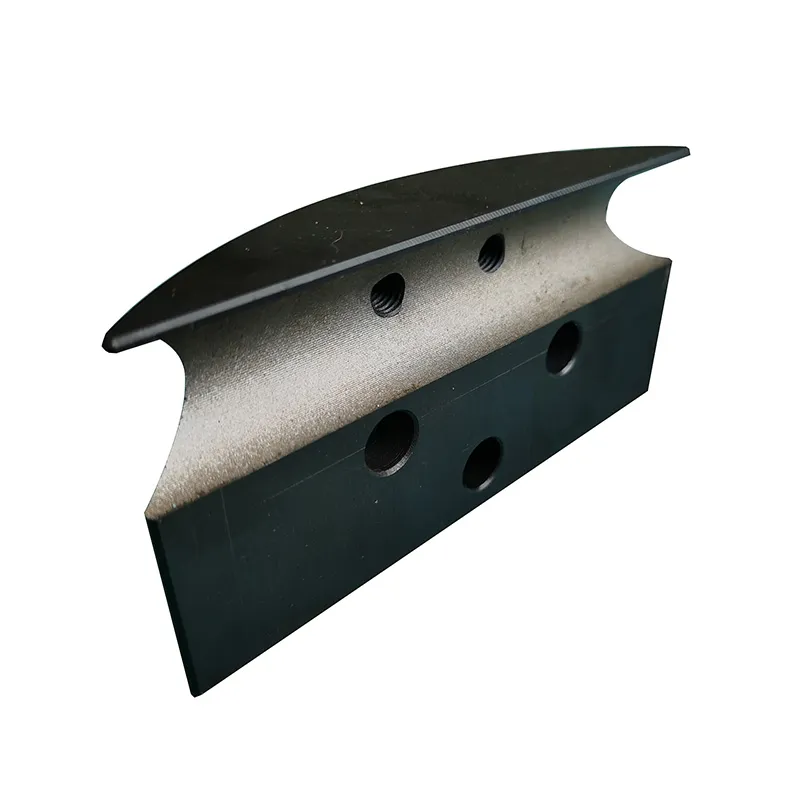
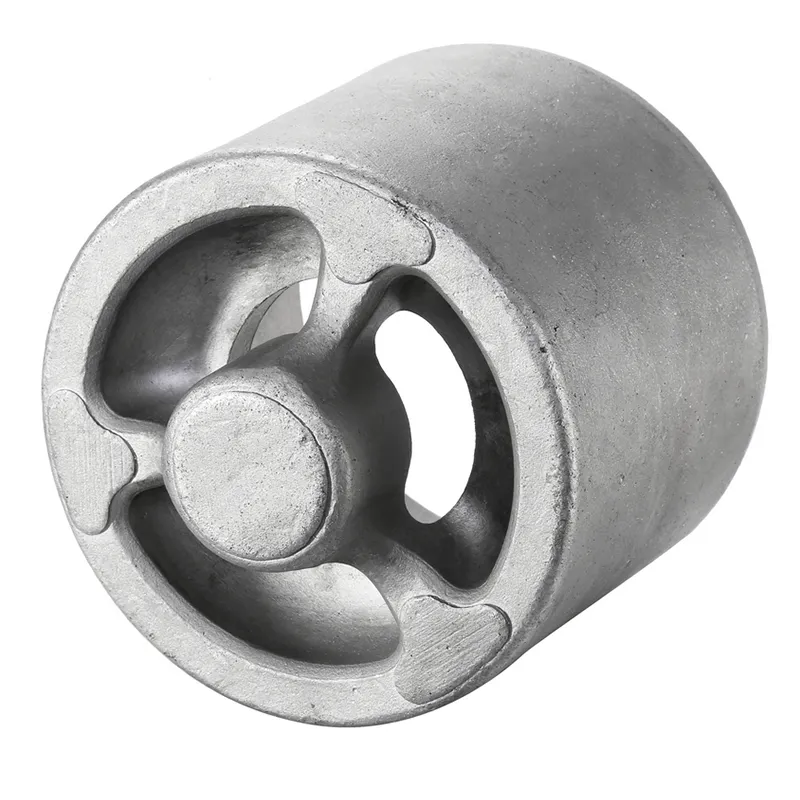
When someone says 'types of powder metallurgy,' most minds jump straight to the classic press-and-sinter. That's the workhorse, sure, but it's just the starting gate. The real conversation begins when you ask: what's the final job of the part? Is it a simple, low-stress bushing, or is it a turbine component seeing high heat and rotational forces? That distinction flips you from one branch of this technology to another entirely. I've seen too many designs come in where the engineer specified a material grade but hadn't fully wrestled with the manufacturing route's implications on fatigue life or dimensional stability. That gap between the CAD model and the sintered reality is where the real types of powder metallurgy live.
Press and Sinter: The Baseline and Its Invisible Limits
Let's start with the ubiquitous one. You take metal powder, usually an iron-based mix with some copper, nickel, and graphite pre-alloyed or blended in, compress it in a rigid die at room temperature, then heat it in a controlled atmosphere furnace. The bonds form through solid-state diffusion. It's fantastically efficient for high-volume, shape-making. Gears, sprockets, structural parts in appliances—countless examples.
But here's the catch everyone glosses over: density. Conventional press-and-sinter typically tops out around 92-95% of theoretical density. That leftover porosity is fine for many applications, but it kills dynamic properties. The fatigue strength curve flattens out disappointingly early. I recall a project for a hydraulic pump gear where the initial prototypes from a standard P/M shop failed much sooner than the wrought steel equivalent in endurance testing. The root cause wasn't the material chemistry; it was those microscopic pores acting as stress concentrators. We had to shift our thinking.
This is where the alloy systems and lubricants matter immensely. An FN-0205 (iron with 2% nickel and 0.5% graphite) will behave very differently from an FC-0208 (with 2% copper) during sintering, affecting dimensional change and final strength. And the dew point of your furnace atmosphere? Critical for oxide reduction, especially with elements like chromium or manganese. Get it wrong, and you have a brittle part. It's not just a process; it's a chemistry experiment under heat.
When Density is Non-Negotiable: Metal Injection Molding and Beyond
So, what if you need near-full density and a complex shape that machining from bar stock would waste 80% of the material? That's the realm of Metal Injection Molding (MIM). You mix very fine, spherical powder with a polymer binder, injection mold it like plastic, then carefully remove the binder (debinding) before sintering. The part shrinks a lot—around 15-20%—but uniformly if your feedstock is homogeneous. You achieve densities over 98%, often near 99%.
The beauty of MIM is in details like internal threads, undercuts, and thin walls. We used it for a surgical instrument component, a stainless steel 17-4 PH part with a complex latch mechanism. Machining it was a nightmare of fixtures and tool breakage. MIM made it a single, as-sintered piece. But the devil's in the debinding. If the binder isn't removed evenly, you get cracks or blisters. It's a slow, delicate thermal cycle, not a brute-force operation.
This connects to another branch: Hot Isostatic Pressing (HIP). Sometimes you use it on its own with powder in a can (container HIPing), but more often, it's a secondary process to close the residual porosity in a sintered part. We'd take critical valve bodies made via press-and-sinter and put them through a HIP cycle—high argon pressure at high temperature. It squeezes those internal pores shut, dramatically improving ductility and pressure integrity. It adds cost, but for oil & gas components, it's a ticket to qualification.
The Forging Route: Powder Forging and Its Niche
Then there's powder forging. You make a preform via conventional pressing, then take that sintered (or sometimes unsintered) preform and hot forge it in a closed die. This achieves full density and excellent mechanical properties, close to wrought forgings. The material yield is superb. It's been a go-to for high-stress automotive components like connecting rods.
But the tooling costs are significant, and you need volume to justify it. The thermal management is tricky—getting the preform to the right temperature uniformly for forging without scale or decarburization. I've seen trials where improper preform design led to forging folds (laps), a defect that's catastrophic in a dynamic part. It's a powerful type of powder metallurgy, but it demands respect for the forging craft as much as the powder science.
Additive Manufacturing: The New Frontier in the Family
You can't talk about types today without touching additive manufacturing, or Powder Bed Fusion. Selective Laser Melting (SLM), Electron Beam Melting (EBM). This is powder metallurgy in its most literal sense: building a part layer by layer by fully melting powder with a focused energy source. The density can be 99.9%+ if parameters are dialed in.
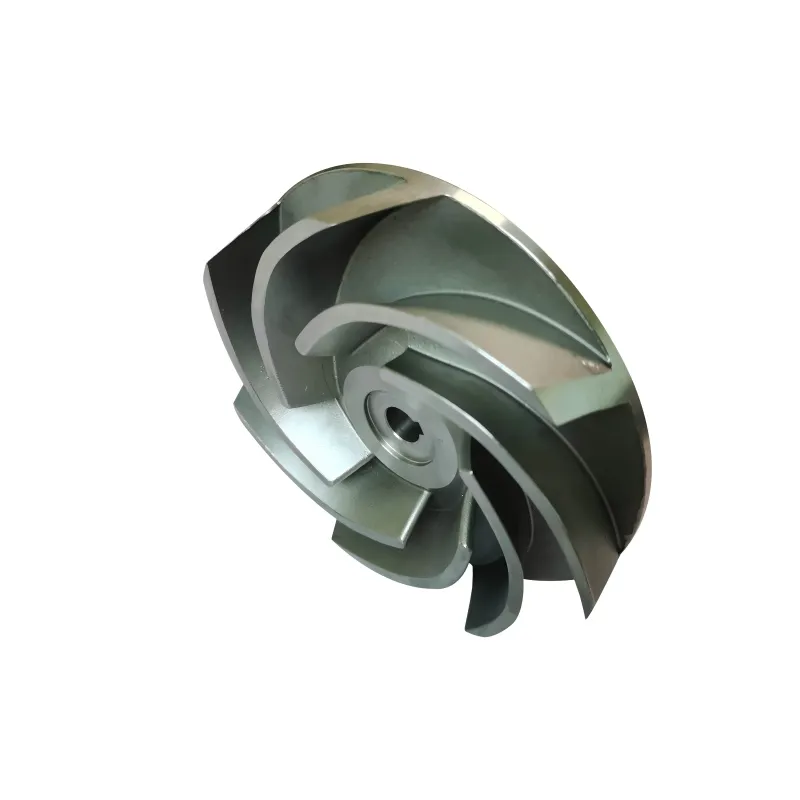
The freedom is revolutionary, but the surface finish and internal stress are the trade-offs. The as-printed surface has a characteristic roughness from partially melted powder particles, which is terrible for fatigue if left untreated. And the residual stress from rapid heating and cooling requires a stress relief or hot isostatic pressing cycle. We evaluated it for a custom, low-volume impeller design at Qingdao Qiangsenyuan. The geometry was perfect for it, but for the required surface integrity and cost per part at our volume, we ultimately went with investment casting for the prototype run. AM was the perfect tool, but for that specific job, it wasn't the right tool. That's a key distinction.
Where Casting and Powder Metallurgy Roads Cross
This brings me to a relevant tangent. At Qingdao Qiangsenyuan Technology Co., Ltd. (QSY), with their decades in shell and investment casting, the conversation often turns to material performance. When a client needs a part in a nickel-based superalloy for high-temperature service, the choice between investment casting and a powder metallurgy route like HIP becomes central. Casting can handle large, complex shapes beautifully, but grain structure and potential for micro-porosity are limits. Powder HIPing gives you a fine, uniform microstructure, essentially isotropic properties. The decision hinges on size, complexity, property requirements, and lot size. Sometimes, the best solution is hybrid: using a cast preform and then applying a powder-derived coating via thermal spray for wear resistance. It's not about one being better; it's about the right combination of processes.
The Overlooked Factor: The Powder Itself
All these types hinge on the starting material: the powder. Gas atomized, water atomized, plasma rotated electrode process (PREP)—the production method defines the particle shape, size distribution, and internal microstructure. For MIM, you need those fine, spherical particles for good flow and packing. For conventional pressing, irregular, water-atomized particles interlock better for green strength. If you're working with reactive alloys like titanium or the special alloys QSY lists (cobalt-based, nickel-based), powder handling under inert atmosphere is non-negotiable. Oxygen pickup is a silent killer of ductility.
I learned this the hard way early on. A batch of 316L stainless powder for MIM had a slightly higher moisture content than spec. It caused binder-powder separation during molding, leading to voids that only showed up after sintering. The entire batch was scrap. The powder is the foundation. A flaw there can't be fixed downstream.
So, when I think about 'types of powder metallurgy,' I'm really thinking about a decision tree. Start with the part's function, its property requirements, its geometry, and acceptable cost. That path leads you to the right powder and the right consolidation method. It's never just a list of options; it's a series of technical and economic trade-offs, with the ghost of porosity lurking behind every choice. The goal is to choose the process that makes that ghost disappear, or at least renders it harmless for the part's intended life.