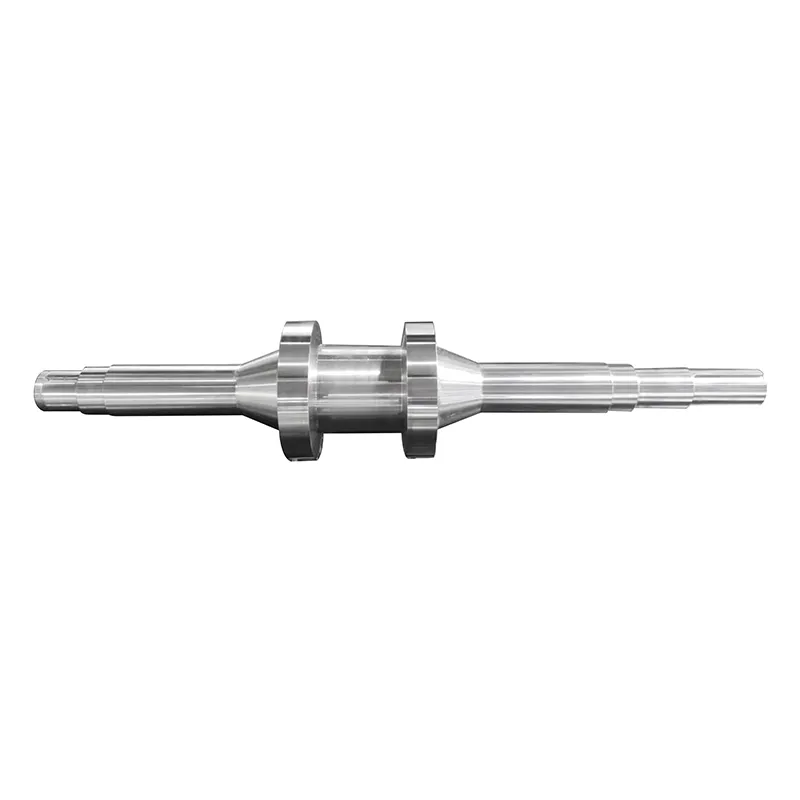
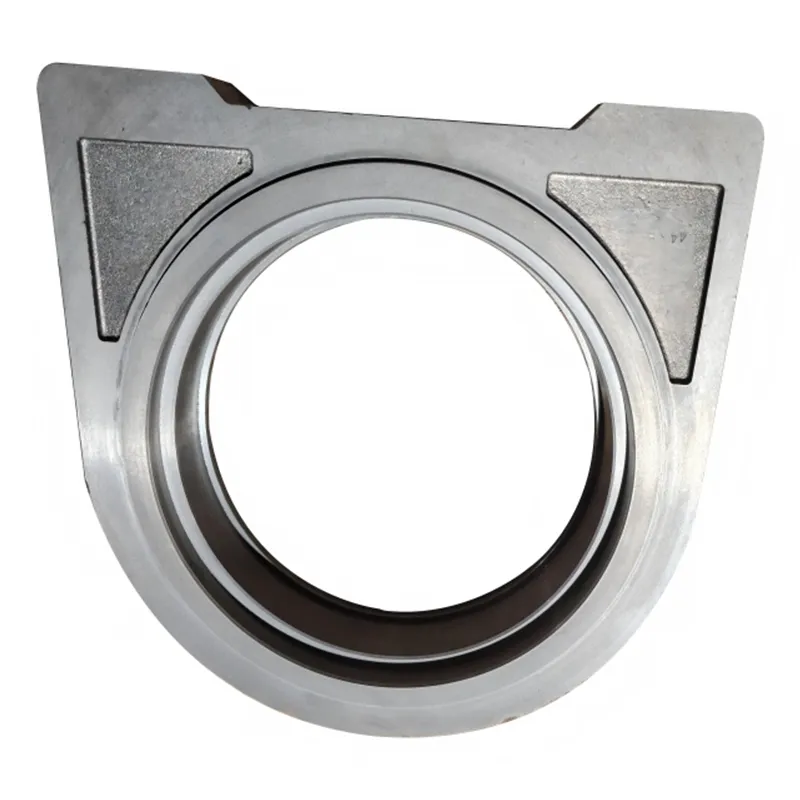
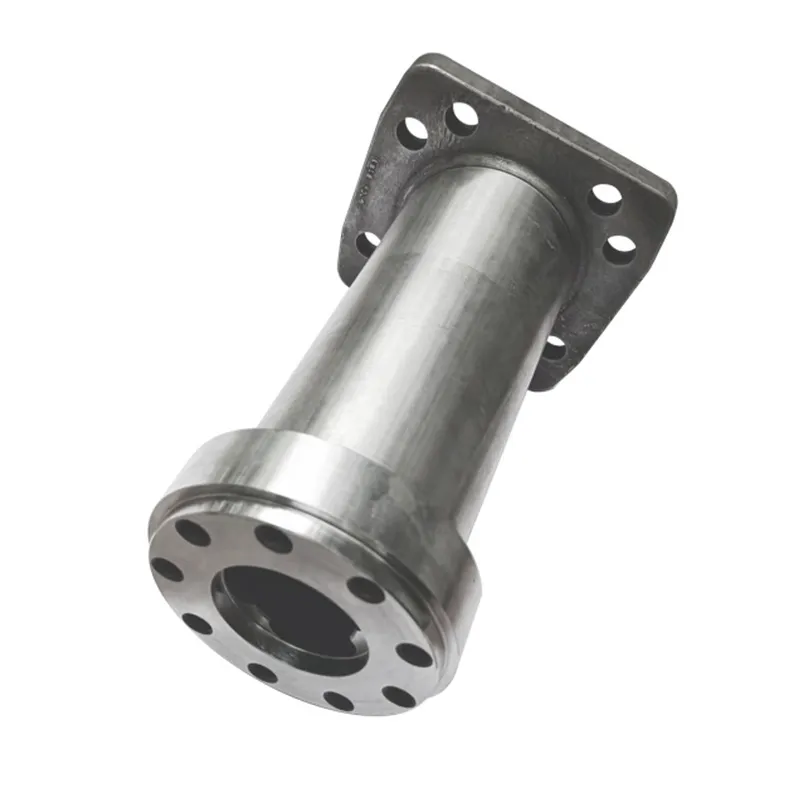
When you hear 'ultra high precision machining', most minds jump straight to micron-level tolerances and flawless surface finishes. That's part of it, sure, but it's the easy part to talk about. The real story starts when you realize that hitting those numbers on a perfect, stress-relieved billet in a climate-controlled lab is one thing. Achieving them consistently on a complex, as-cast component for a marine turbine or a surgical implant, day in and day out, is where the craft separates from the commodity. That's where thirty years of handling everything from gummy nickel alloys to brittle cast irons teaches you that precision isn't just a machine output; it's a process built on anticipation and controlled compromise.
The Foundation: It Starts Before the Spindle Turns
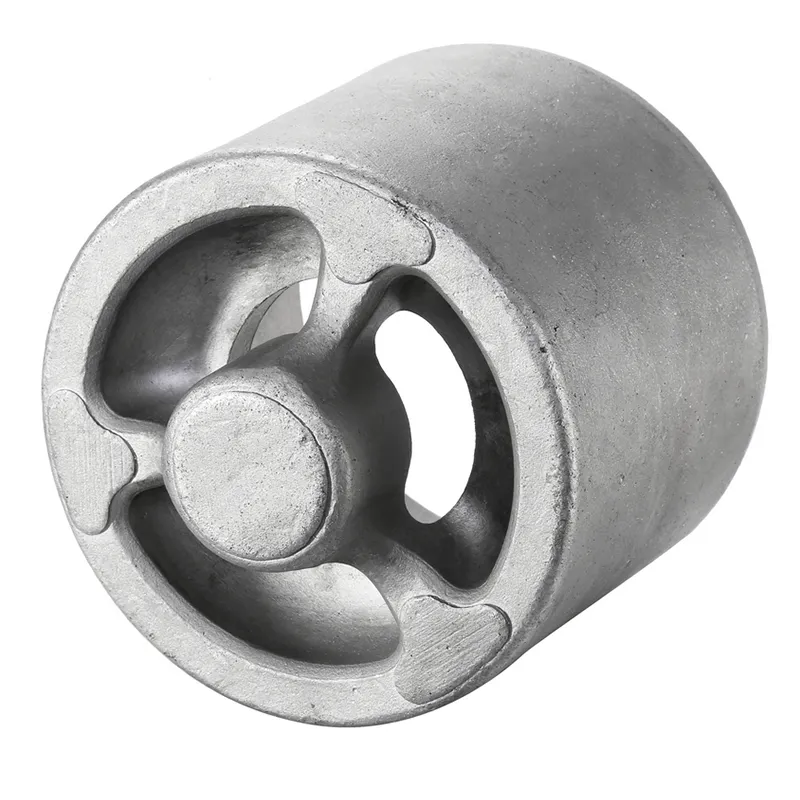
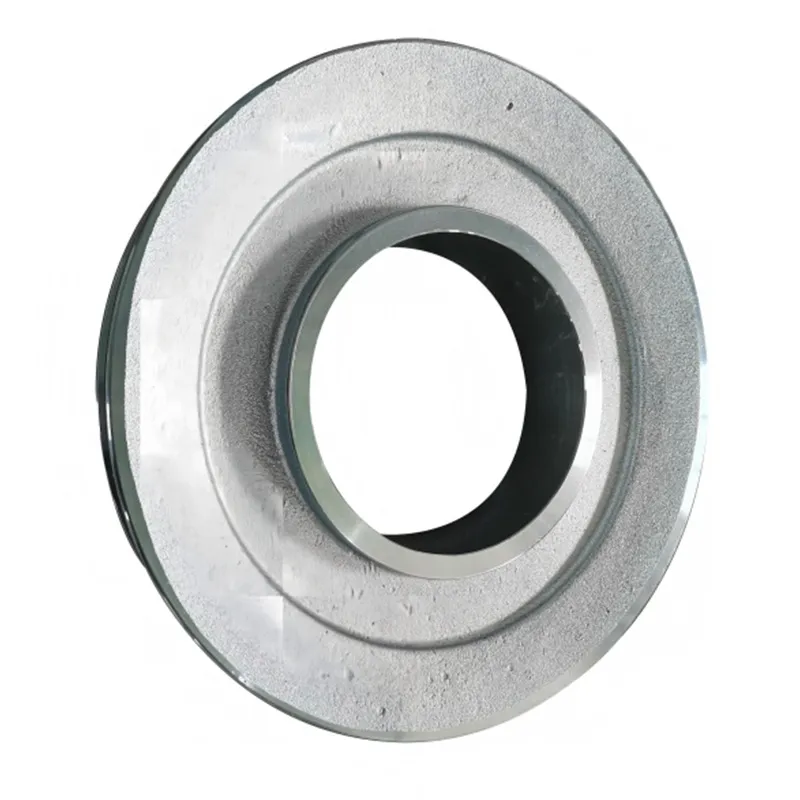
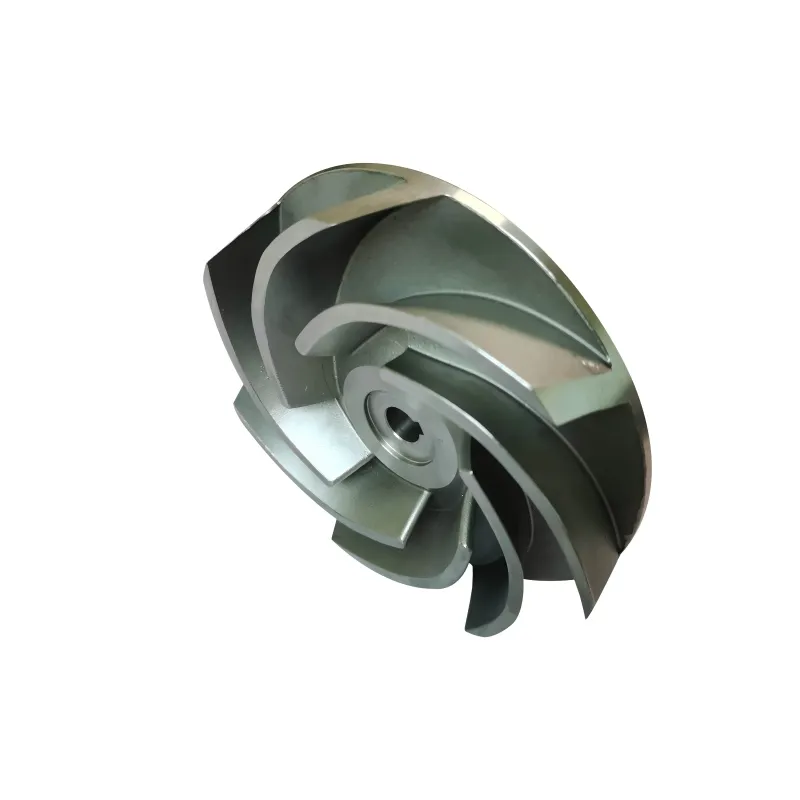
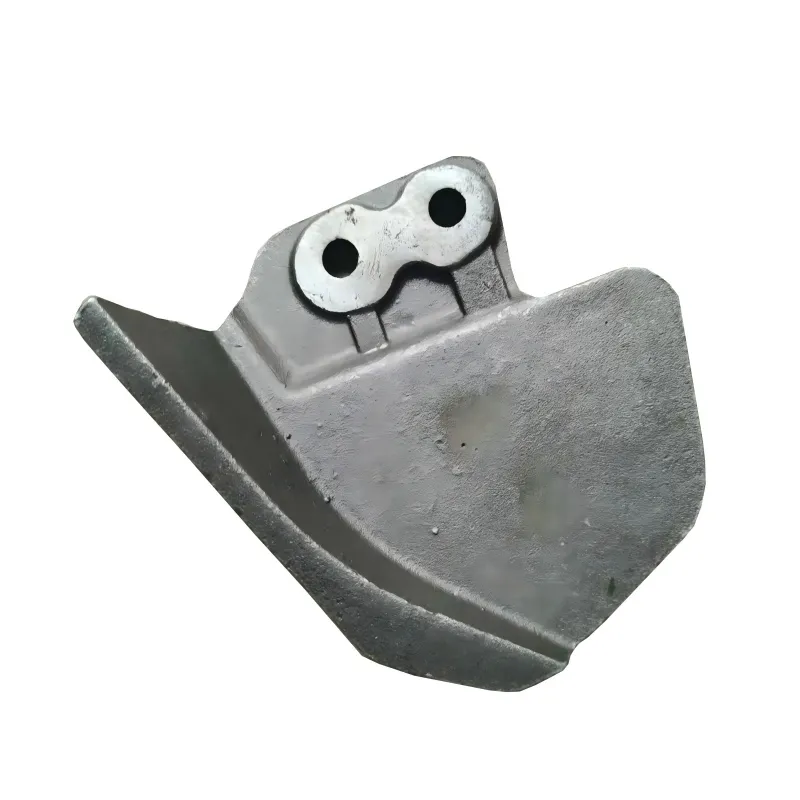
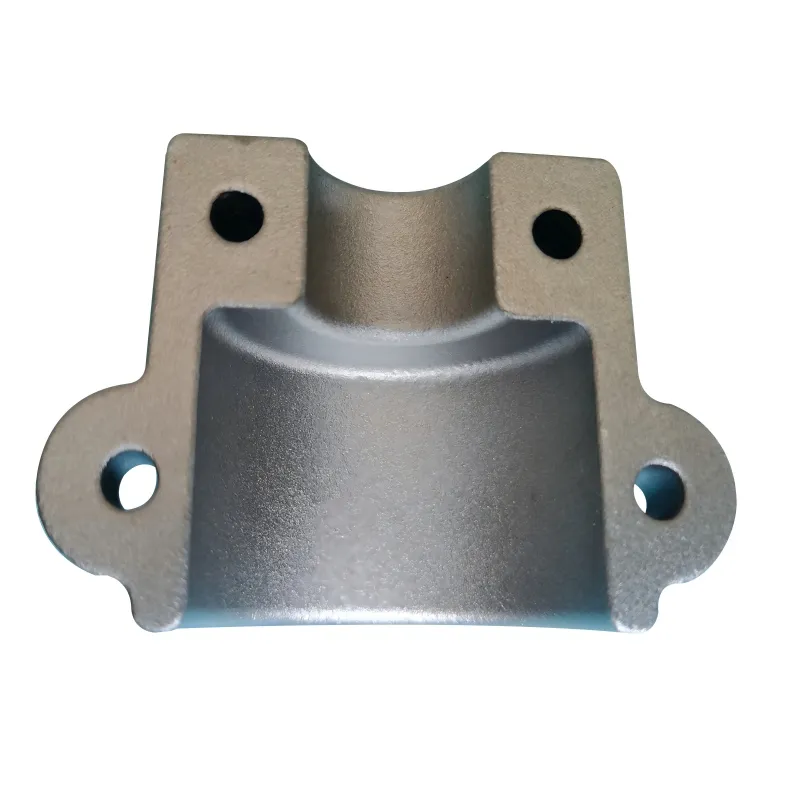
You can't machine what you can't measure reliably, and you can't hold precision on a part that's fighting you from the inside out. This is the first major pitfall I see: shops quoting on print dimensions alone, ignoring the material's history. With investment castings or shell mold castings, which is a core business for us at Qingdao Qiangsenyuan Technology Co., Ltd. (QSY), the part arrives with its own internal narrative—residual stress from cooling, slight variations in wall thickness, potential micro-porosity. Jumping straight to finishing passes is a recipe for distortion post-machining, no matter how good your CNC is.
The setup and fixturing strategy becomes a critical, often overlooked, part of ultra high precision machining. For a high-value cobalt-based alloy valve body, we might spend more time designing and machining the custom modular fixture than on the first article part itself. The goal is to support the part in a way that mimics its final installed state, so you're not locking in stresses. Sometimes, it involves a strategic sequence: a roughing op, a thermal soak to relieve what we've induced, then a return to the fixture for semi-finishing. It's inefficient on paper, but it's the only way to guarantee stability.
This foundational work ties directly back to the casting expertise. Because we handle the casting in-house, from the shell mold process for complex geometries to the solidification modeling for special alloys, we have a forensic-level understanding of where the challenges will likely be in the stock. That's an intangible advantage. A pure machining shop gets a black box; we've seen the part's entire life cycle. This allows for a more intelligent machining approach from the very first setup.
The Machine Tool as a Partner, Not a Magician
The obsession is always with the newest, fastest, most expensive 5-axis mill. Don't get me wrong, capability is key. But I've seen more precision lost to thermal drift on a neglected machine or to a worn spindle taper on a 'state-of-the-art' center than to the lack of a sixth axis. Environmental control is non-negotiable. We're talking about a dedicated hall where the temperature is held within a ±1°C band, not just for the machine, but for the metrology lab and the parts in queue. The part, the gauge, and the machine all need to be singing from the same hymn sheet thermally.
Tool management is another silent killer of precision. With materials like Inconel or Stellite, the cutting edge doesn't just wear; it can micro-chip or develop built-up edge in a matter of minutes, degrading surface finish and dimensional integrity long before the tool 'fails'. We run on a mix of scheduled changes and in-process monitoring, listening to the cut and watching power consumption curves. There's an art to knowing the difference between the sound of a healthy, aggressive cut in stainless steel and the beginning of chatter that will ruin a bore's roundness.
And then there's the software, the CAM programming. For ultra high precision work, you're often not using the aggressive, material-removal optimized toolpaths. You're using slower, more consistent engagement strategies—trochoidal milling, constant scallop-height finishing—that prioritize predictable tool load and heat dissipation over raw speed. The program for a titanium aerospace bracket might look conservative, even timid, to someone used to machining aluminum. But it's that control that allows you to hold a true position of ?0.025mm across multiple features.
The Metrology Feedback Loop
Precision is defined by measurement, full stop. Your machining capability is only as good as your ability to verify it. In-process probing is a great tool for compensating for fixture offsets or minor stock variation, but it's not the final word. For critical features, everything comes off the machine and goes into the climate-controlled metrology lab. This is where you face the music.
We rely heavily on a Zeiss Contura CMM, but also on specialized kit: high-resolution surface profilometers for Ra/Rz measurements on sealing faces, and optical comparators for complex 2D profiles. The data isn't just for a pass/fail stamp. It feeds directly back to the machinists and programmers. If we see a consistent deviation on the Z-axis of a certain feature, maybe there's a tiny amount of tool deflection we didn't account for. The next part's program gets a 2-micron adjustment. This loop is closed, fast, and informal—a scribbled note on a print, a quick huddle at the monitor. It's where the theoretical process meets the physical reality of that specific batch of material.
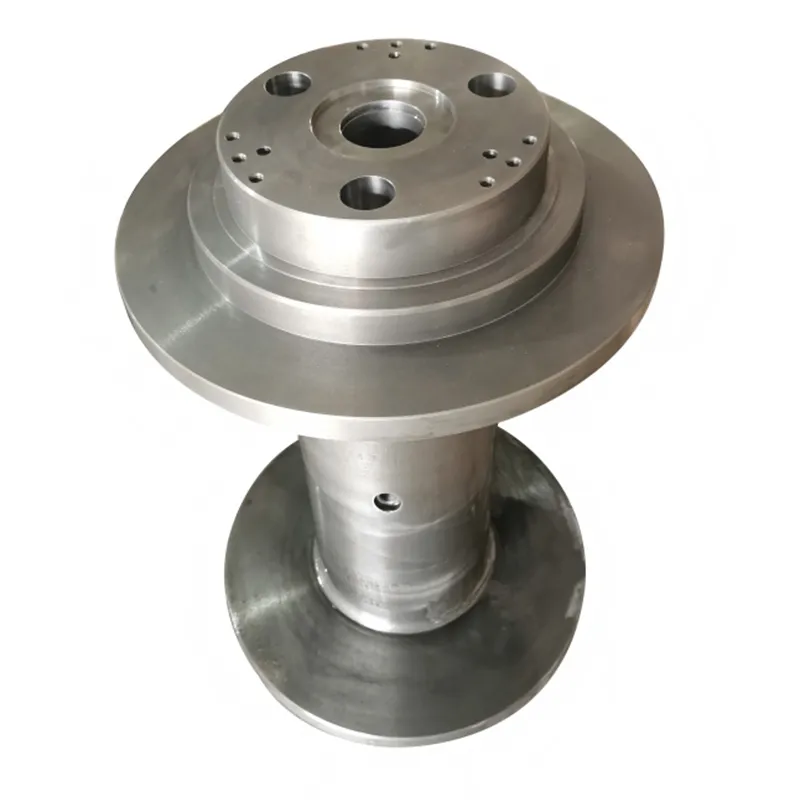
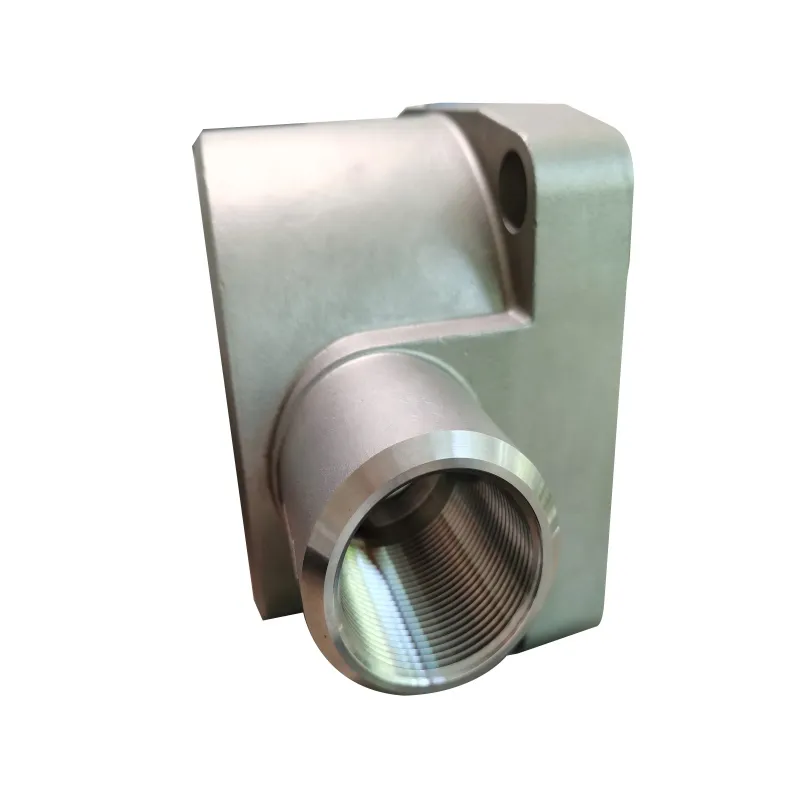
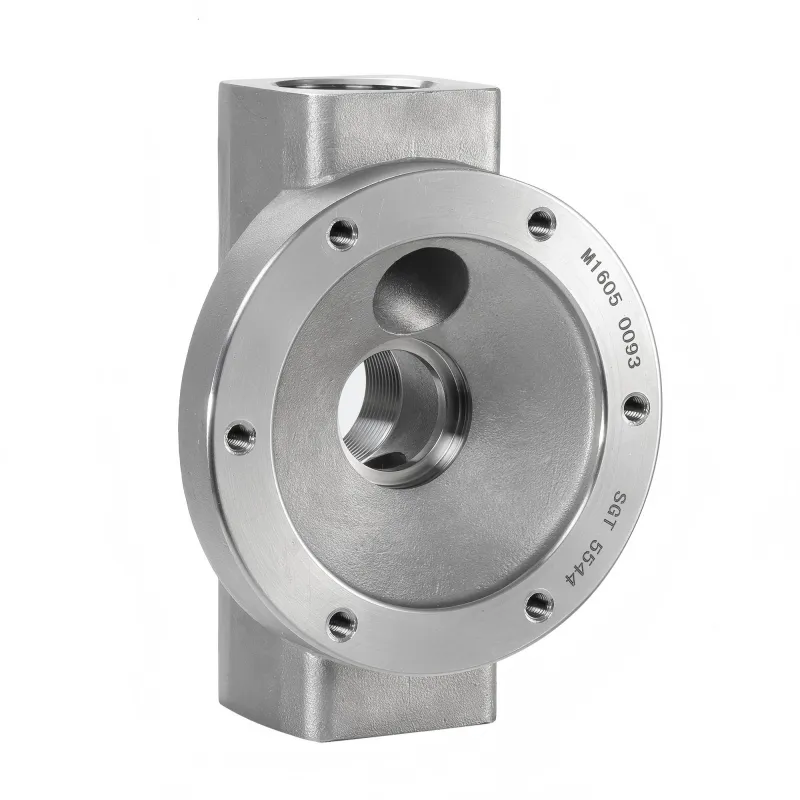
This becomes absolutely critical for parts destined for assembly, like the precision-machined investment cast housings we produce for hydraulic systems. A single component being off by a few microns might pass its individual inspection, but cause a binding or leak in the final assembly. The metrology data helps us shift the center of our tolerance band to the 'sweet spot' for fit, not just aim for the nominal dimension. It's a practical, application-driven interpretation of precision.
Material is the Wild Card
This is where generic machining talk falls apart. Ultra high precision machining of mild steel is a fundamentally different discipline than doing it on a precipitation-hardening stainless like 17-4PH, or a nickel-based superalloy. Each material fights back in its own way. Ductile cast iron machines beautifully but is abrasive, demanding careful tool material selection. Austenitic stainless steels work-harden, so if your feed rate is too low or your tool isn't sharp enough, you're essentially cold-working the surface, making the next pass harder and ruining tool life.
The special alloys—the cobalt and nickel-based ones we often work with at QSY—are in a league of their own. They retain strength at high temperatures, which is great for the end-use in turbines or chemical processing, but terrible for machining. The heat stays in the chip and the tool, not the part. This demands exotic tool geometries, high-pressure coolant directed exactly at the cutting edge, and a mental readiness for slower speeds. The 'precision' here is as much about managing thermal input to prevent part distortion and surface integrity damage as it is about hitting dimensions.
I remember a project on a Monel component where we achieved perfect dimensional results on the first run, but the residual tensile stress from machining caused it to crack during a secondary EDM operation weeks later. The part was technically 'in spec' until it wasn't. We learned that with some of these sensitive alloys, the machining strategy has to include stress management as a primary KPI, even if it means adding an intermediate annealing step. The print doesn't call that out, but experience does.
The Human Factor and the Feel
Automation is fantastic for repeatability. But for true ultra high precision work, especially on low-volume, high-complexity parts, the seasoned machinist's intuition is still the ultimate algorithm. It's the guy who notices a slightly different harmonic in the spindle sound during a finishing pass on a deep bore and decides to stop, check the tool, and maybe adjust the coolant flow. It's the experience to look at a first-article part fresh off the machine, before the CMM report, and point to a feature saying, That shoulder might be a couple of tenths high, based on nothing but the visual texture of the cut.
This feel is built on thousands of hours and, importantly, on failures. We've scrapped expensive parts. Everyone who's been in this game has. The key is building a culture where those failures are forensicized without blame. Was it a material inconsistency from the melt? A programming oversight in the toolpath transition? A collet that wasn't quite as clean as it looked? That post-mortem is more valuable than any textbook. It creates institutional knowledge that gets passed down, often in the form of simple shop floor rules or checklist items added to the traveler for that specific part number.
At the end of the day, the website, https://www.tsingtaocnc.com, can list our capabilities in CNC machining and material expertise. But what it can't fully convey is this accumulated, almost tactile understanding of how metal behaves under the cutter. It's the difference between operating a machine and orchestrating a process. The goal of ultra high precision machining isn't just to make a part that looks good on a CMM report; it's to deliver a component that performs flawlessly, predictably, in its intended application, whether that's on the sea floor or inside the human body. And that journey always starts long before the G-code runs.