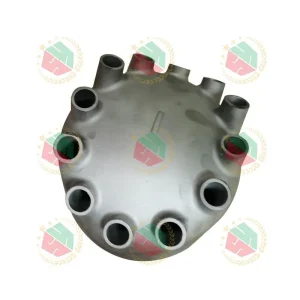
AISI 8620 investment casting is a specialized manufacturing option for producing complex steel components that require carefully controlled material properties, dimensional accuracy, and reliable performance in demanding industrial environments. For manufacturers developing custom mechanical parts, transmission components, machinery assemblies, and other engineered products, selecting the right steel grade and casting process is an important part of product development.
As a sourcing option, a China AISI 8620 investment casting manufacturer may support customers with custom component development, casting production, machining coordination, inspection, and OEM manufacturing services. The actual capabilities available depend on the foundry’s equipment, technical experience, material sourcing arrangements, and quality management procedures.
AISI 8620 is commonly recognized as a low-carbon nickel-chromium-molybdenum alloy steel associated with case-hardening applications. Its combination of alloying elements and relatively low carbon content makes it relevant to components that may require a hard, wear-resistant surface and a comparatively tough core after a suitable heat-treatment process. However, the performance of an AISI 8620 investment casting depends on the final component design, casting quality, heat treatment, and applicable engineering requirements.
For industrial buyers, finding the right AISI 8620 investment casting supplier involves more than comparing quotations. Material traceability, manufacturing feasibility, dimensional tolerances, machining requirements, inspection procedures, production consistency, and total delivered cost should all be evaluated before placing an order.
This guide explains the characteristics of AISI 8620 steel, the investment casting process, OEM customization options, manufacturing quality considerations, potential applications, and practical steps for sourcing custom cast components from China.
1. What Is AISI 8620 Investment Casting?
AISI 8620 investment casting combines a specified alloy steel material with an investment casting manufacturing process. It is intended for producing components whose geometry, mechanical requirements, and production conditions are compatible with this material and process combination.
Investment casting, also called lost-wax casting, is a process in which a pattern is used to create a ceramic mold. Molten metal is then poured into the prepared mold to form the required component. After solidification, the ceramic shell is removed, and the casting undergoes cleaning, inspection, and any required secondary operations.
The process can accommodate intricate geometries and features that may be difficult or expensive to manufacture entirely through machining. Nevertheless, whether investment casting is the most suitable method for a particular AISI 8620 component should be determined through engineering evaluation.
1.1 Understanding AISI 8620 Alloy Steel
AISI 8620 is a low-carbon alloy steel containing nickel, chromium, and molybdenum. These alloying elements contribute to its hardenability and make the grade widely associated with carburizing and case-hardening applications.
The main characteristics of AISI 8620 include:
- Relatively low carbon content compared with many through-hardening steel grades.
- Nickel, chromium, and molybdenum alloying additions.
- Suitability for certain components requiring a hardened surface and a tougher supporting core after appropriate processing.
- Potential use in mechanical systems exposed to contact stress, wear, or repeated loading.
- Compatibility with various machining and heat-treatment operations when the material condition and manufacturing route are properly controlled.
The precise chemical composition must be confirmed against the applicable material specification and purchase requirements. Buyers should not assume that every supplier’s material labeled AISI 8620 automatically meets the same chemical, cleanliness, or mechanical requirements.
It is also important to distinguish the properties of conventional wrought AISI 8620 from those of an AISI 8620 steel casting. Casting introduces a different solidification history and may produce different microstructural characteristics. Mechanical properties and heat-treatment results should therefore be verified for the actual product and manufacturing route.
1.2 What Is Investment Casting?
Investment casting is a precision casting process used to manufacture metal parts with relatively complex shapes and detailed features.
The general manufacturing sequence includes pattern production, assembly, ceramic shell formation, dewaxing, shell firing, metal pouring, solidification, shell removal, finishing, and inspection.
Compared with manufacturing a component entirely from a solid billet, investment casting may reduce the amount of material that must be removed during machining. It may also help produce integrated geometries that would otherwise require several separately manufactured pieces.
However, casting is not automatically the most economical option for every part. Simple geometries, very small production quantities, or components requiring extensive machining may be better suited to other manufacturing methods. A qualified manufacturer should compare the design, production volume, material requirements, and finishing costs before recommending a process.
1.3 Why Combine AISI 8620 Steel with Investment Casting?
The combination may be useful when a component requires a particular alloy steel and a geometry that can benefit from near-net-shape production.
Potential advantages include:
- The ability to create complex external profiles.
- Opportunities to integrate multiple geometric features into one component.
- Reduced machining requirements for certain designs.
- Flexibility for custom OEM component development.
- The possibility of producing repeatable components from an approved pattern and process.
- Options for subsequent machining and heat treatment, where technically appropriate.
These advantages depend on the actual design and production route. AISI 8620 investment casting should be selected only after confirming that the foundry can produce the required quality and that the final component can meet the engineering specification.
2. China AISI 8620 Investment Casting Manufacturer
Working with a China AISI 8620 investment casting manufacturer can be an option for industrial buyers seeking custom metal components, OEM production, and coordinated manufacturing services.
China has a broad manufacturing supply chain covering metal casting, machining, heat treatment, inspection, tooling, and industrial component production. However, individual foundries vary considerably in their technical capabilities. Buyers should evaluate the specific factory rather than assuming that all manufacturers provide the same level of service.
2.1 Manufacturing Capabilities to Evaluate
When comparing AISI 8620 investment casting manufacturers in China, begin by examining whether the supplier can support the complete production route required for the part.
Relevant capabilities may include:
- Investment casting pattern and tooling development.
- Ceramic shell preparation and casting operations.
- Alloy steel material control.
- Casting cleaning and surface finishing.
- Heat-treatment coordination or in-house heat treatment.
- CNC machining and secondary processing.
- Dimensional inspection and material testing.
- Production documentation and batch traceability.
- Export packaging and international order coordination.
Not every supplier performs every operation internally. Some factories use qualified external partners for heat treatment, machining, or specialized testing. This arrangement is not automatically unsuitable, but responsibilities, subcontractor controls, and inspection requirements should be clearly documented.
2.2 How to Assess a Chinese Casting Factory
A factory assessment should focus on evidence rather than promotional statements.
First, request a description of the manufacturing process for the specific component. The supplier should explain how the pattern will be created, which casting operations will be used, what machining is required, and how the finished part will be inspected.
Second, ask whether the proposed material specification can be met through the supplier’s actual production route. AISI 8620 is associated with carburizing applications, but not every casting facility can produce or qualify this grade for every intended use.
Third, review sample inspection records where available. Relevant documents may include chemical composition reports, dimensional inspection results, non-destructive testing reports, and heat-treatment records when these are required by the purchase specification.
Finally, evaluate communication and engineering support. A reliable manufacturer should be able to identify unclear drawing requirements, explain manufacturing limitations, and raise technical questions before production begins.
2.3 Direct Manufacturer or Trading Supplier?
An AISI 8620 investment casting manufacturer generally focuses on production, while a trading supplier may coordinate orders through one or more factories. Either type of business can be appropriate depending on the buyer’s requirements.
A direct manufacturer may provide closer access to production planning, tooling decisions, and quality control. A trading supplier may offer broader sourcing options or coordinate several manufacturing processes through a consolidated purchasing arrangement.
The key question is whether the supplier can provide transparent information about the actual production source, technical responsibility, inspection arrangements, and delivery commitments.
For OEM projects, buyers should also clarify who owns the tooling, who approves design changes, and who is responsible for corrective action if a part fails to meet the agreed specification.
3. OEM AISI 8620 Investment Casting Services
OEM AISI 8620 investment casting is relevant to businesses that need components manufactured according to their own drawings, specifications, and application requirements.
Instead of purchasing only standardized catalog products, OEM customers can work with a supplier to develop parts that fit a particular mechanical assembly, machine design, or industrial system.
3.1 Custom Manufacturing Based on Drawings
Most custom casting projects begin with a technical drawing or three-dimensional model. The manufacturer uses this information to evaluate geometry, material requirements, critical dimensions, machining allowances, and inspection needs.
A complete drawing package should ideally include:
- Component dimensions and tolerances.
- Material designation and applicable standard.
- Required surface finish.
- Machining requirements.
- Heat-treatment requirements, if applicable.
- Critical functional surfaces.
- Inspection and testing criteria.
- Special packaging or marking instructions.
If some details are not yet finalized, the buyer can provide a preliminary drawing and request a manufacturability review. The manufacturer should identify missing information before committing to a final quotation.
3.2 OEM Tooling and Pattern Development
Investment casting generally requires a pattern that represents the component geometry. Depending on the production arrangement, the pattern may be produced through dedicated tooling, wax injection, or another suitable pattern-making method.
Tooling design affects dimensional consistency, pattern quality, production efficiency, and the final cost of the component.
For a new OEM project, buyers should discuss tooling ownership, expected tooling life, maintenance responsibility, and the treatment of tooling costs in the quotation.
If the design may change during product development, it is useful to agree on a process for approving modifications. Changes to geometry can affect pattern design, shell preparation, casting feasibility, machining, and inspection procedures.
3.3 Prototype and Production Orders
Prototype production helps verify whether a component can be manufactured according to the intended design. It may reveal issues related to geometry, machining access, dimensional variation, or finishing requirements.
After prototype approval, production planning can be adjusted for repeat orders and larger quantities.
A typical OEM workflow includes:
- Review the drawing and application requirements.
- Confirm material and manufacturing feasibility.
- Prepare the quotation and proposed production route.
- Develop tooling or patterns.
- Produce trial components.
- Inspect and evaluate the samples.
- Obtain customer approval.
- Begin the agreed production run.
- Complete final inspection and shipment documentation.
The exact sequence may vary according to the complexity of the component and the buyer’s quality requirements.
3.4 OEM Branding and Product Identification
Depending on the design and customer requirements, OEM manufacturing may include part numbers, batch identifiers, approved markings, or customized packaging.
Marking methods should be selected carefully to avoid affecting critical surfaces or violating product specifications. Where components are used in safety-critical or regulated applications, marking and traceability requirements should be defined before production.
OEM manufacturing should be understood as a coordinated engineering and production service, not simply the addition of a customer’s name to an existing component.
4. AISI 8620 Investment Casting Manufacturing Process
Understanding the manufacturing process helps buyers evaluate cost, production feasibility, and quality risks.
The following stages describe a typical investment casting workflow. Actual process parameters depend on the foundry, component geometry, material specification, and approved manufacturing procedure.
4.1 Engineering Review and Design for Manufacturability
Before making a pattern, the supplier reviews the component design to determine whether investment casting is appropriate.
Important considerations include wall thickness, transitions between thick and thin sections, narrow passages, dimensional requirements, and the accessibility of surfaces that require machining.
The foundry may recommend adjustments to radii, draft-related features where relevant, or machining allowances. Such recommendations should be evaluated against the component’s functional requirements rather than accepted automatically.
For AISI 8620 components, the intended heat treatment and final mechanical performance should also be considered during the design review.
4.2 Pattern Production
The pattern reproduces the shape of the intended component and forms the basis of the ceramic mold.
Pattern accuracy is important because dimensional errors at this stage can affect the final casting. The pattern design must account for the specific production process and any expected dimensional changes during manufacturing.
For repeat OEM orders, pattern maintenance and controlled revisions help support consistency between production batches.
4.3 Wax Pattern Assembly
In a typical lost-wax process, wax patterns are assembled onto a runner system to form a casting tree.
The arrangement supports the later introduction of molten metal into the mold. Gating design influences metal flow, feeding, solidification, and the risk of casting defects.
The appropriate configuration depends on the part’s geometry, alloy, and production conditions. It should be established by the foundry through its engineering and process-control procedures.
4.4 Ceramic Shell Formation
The assembled pattern is repeatedly coated with refractory slurry and refractory materials to build a ceramic shell.
The shell must be sufficiently strong to withstand subsequent processing and the introduction of molten metal. Coating conditions, drying, shell thickness, and material selection all influence mold quality.
Insufficient shell integrity or inconsistent preparation may create production problems. For this reason, shell preparation should follow controlled procedures suitable for the intended alloy and component.
4.5 Dewaxing and Shell Firing
The wax is removed from the ceramic shell, leaving a cavity that reproduces the pattern’s geometry.
The shell is then prepared for pouring according to the foundry’s established procedure. Temperature control and shell condition are important because they affect mold performance and metal filling.
The shell must be suitable for the selected alloy and the specific casting configuration.
4.6 Metal Melting and Pouring
The alloy is melted and poured into the prepared ceramic mold.
For AISI 8620 investment casting, the material’s chemical composition and the applicable requirements must be controlled throughout production. The foundry should use an appropriate material identification and verification system to reduce the risk of mix-ups.
Pouring conditions, melt cleanliness, mold preparation, and process control influence the quality of the resulting casting.
Buyers with strict material requirements should specify the applicable chemical composition standard and any required verification documentation in the purchase order.
4.7 Solidification and Cooling
After pouring, the metal solidifies inside the mold.
Solidification behavior can influence internal structure, shrinkage, and the formation of defects. Casting design and process planning should account for the component’s geometry and the characteristics of the selected alloy.
The casting must cool under controlled conditions appropriate to the manufacturing procedure before the shell can be removed.
4.8 Shell Removal and Casting Cleaning
Once the casting has cooled sufficiently, the ceramic shell is removed. The individual components are separated from the runner system and undergo cleaning and finishing.
Depending on the product, these operations may include cutting, grinding, shot blasting, or other approved surface-preparation methods.
Cleaning should not damage critical dimensions or create unacceptable surface conditions. The required finishing method should be established according to the drawing and inspection criteria.
4.9 Heat Treatment
Heat treatment may be required to obtain the material condition specified for the component.
AISI 8620 is widely associated with carburizing and case-hardening applications. However, the correct treatment depends on the intended service conditions, casting characteristics, and engineering requirements.
If carburizing is specified, the process may be designed to produce a hardened surface while maintaining a tougher supporting core. The final case depth, surface hardness, core properties, and other acceptance criteria must be established by the engineering specification.
A supplier should not promise a particular hardness or mechanical property without confirming that it is achievable through the proposed process and can be verified through appropriate testing.
4.10 CNC Machining and Secondary Processing
Some investment castings can be used with limited finishing, while others require substantial machining.
CNC milling, turning, drilling, tapping, and other operations may be used to produce functional surfaces, holes, interfaces, and assembly features.
A machining plan should distinguish between as-cast surfaces and machined surfaces. Critical dimensions should be associated with appropriate datums and inspection methods.
By coordinating casting and machining, an OEM supplier may help reduce unnecessary material removal and simplify production planning. The actual cost benefit depends on the component design and the number of operations required.
4.11 Final Inspection and Release
Before shipment, the finished component should be checked against the agreed acceptance criteria.
Depending on the application, inspection may include visual examination, dimensional measurement, chemical composition verification, hardness testing, mechanical testing, and non-destructive testing.
Not every test is required for every component. The buyer and manufacturer should agree on the applicable inspection plan before production begins.
5. High Quality AISI 8620 Investment Casting
High quality AISI 8620 investment casting depends on a controlled manufacturing process and clearly defined acceptance criteria.
Quality should be demonstrated through measurable results rather than broad claims. A component may have an attractive surface while still failing a critical dimensional or material requirement. Conversely, a minor cosmetic feature may not affect performance if it falls within the approved specification.
A well-defined quality plan identifies the characteristics that matter most for the component’s intended use.
5.1 Chemical Composition Verification
Material verification helps confirm that the supplied alloy meets the required specification.
For AISI 8620 products, buyers should define the applicable standard and whether chemical composition reports are required for each heat, batch, or shipment.
Where material traceability is important, the supplier should explain how material records are linked to the corresponding castings and production lots.
Chemical composition verification alone does not prove that the finished part meets all mechanical or service requirements. It should be considered alongside the other required inspection activities.
5.2 Dimensional Accuracy
Dimensional accuracy is essential when cast components must fit into an assembly or interface with other parts.
A drawing should identify critical dimensions, tolerances, datum references, and any geometric requirements. These details help the manufacturer determine which features require machining and how the final component should be measured.
Depending on the design, inspection equipment may include calibrated measuring instruments, coordinate measuring machines, gauges, or other suitable systems.
Inspection results should be evaluated against the specified tolerances rather than against an assumed universal tolerance for investment castings.
5.3 Surface Quality
Surface quality affects appearance, finishing requirements, and, in some applications, functional performance.
Potential surface concerns include cracks, inclusions, excessive roughness, visible discontinuities, and defects that interfere with machining or assembly.
Acceptance criteria should identify which surface conditions are permitted and which require rejection or corrective action. If certain surfaces are critical, they should be clearly marked on the drawing.
5.4 Internal Integrity and Non-Destructive Testing
Internal defects may not be visible during a routine visual inspection.
Depending on the component’s risk level and specification, non-destructive testing may be required. Methods can include radiographic testing, ultrasonic testing where appropriate, magnetic particle testing, or liquid penetrant testing.
The choice of method depends on the material, geometry, defect type, and acceptance standard. For example, a method suitable for surface-breaking discontinuities may not provide the same information as a method used to investigate internal features.
Buyers should specify the required testing method, inspection coverage, acceptance criteria, and reporting format in advance.
5.5 Heat-Treatment Verification
Where the final component requires heat treatment, the inspection plan should identify the relevant acceptance characteristics.
These may include surface hardness, core hardness, case depth, microstructure, or mechanical properties, depending on the design and application.
The supplier should clarify whether the heat treatment is performed internally or by a subcontractor and how the resulting records are maintained.
Because the final condition depends on the complete material and processing route, testing should be performed on representative parts or specimens as required by the approved specification.
5.6 Batch Consistency and Traceability
Repeat orders should be produced under controlled conditions.
A supplier can support consistency through documented process parameters, material identification, tooling control, inspection records, and procedures for managing changes.
If a component design, material source, or heat-treatment process changes, the manufacturer should evaluate whether customer approval or requalification is necessary.
For industrial buyers, traceability is especially useful when investigating a nonconforming part, comparing production lots, or planning future orders.
6. AISI 8620 Investment Casting Factory Capabilities
An AISI 8620 investment casting factory should be evaluated according to the actual operations required by the project.
Some customers need only cast blanks. Others require complete components that include heat treatment, precision machining, surface finishing, and inspection documentation.
The right production arrangement depends on the part’s complexity, required tolerances, annual volume, and final use.
6.1 Casting Capability
The factory should demonstrate that its process is appropriate for the component’s size, geometry, alloy, and production quantity.
Buyers should ask about the foundry’s experience with comparable alloy steel components rather than relying solely on general statements about investment casting.
If the exact grade has not been produced previously, the supplier should explain how feasibility will be assessed and how the process will be qualified.
6.2 Machining Integration
Integrated machining can simplify project coordination when a component requires precise functional surfaces.
A factory that coordinates casting and machining may help reduce the number of separate suppliers involved in an order. However, buyers should verify the actual machining resources, inspection arrangements, and division of responsibilities.
When machining is subcontracted, the purchasing agreement should specify how dimensional quality and traceability will be maintained across operations.
6.3 Production Planning
Production planning should account for tooling, pattern preparation, shell production, casting, finishing, inspection, and packaging.
For new parts, tooling and sample approval can represent a significant portion of the initial project timeline. Repeat orders may follow a different schedule once the process has been established.
A reliable quotation should distinguish estimated lead times for initial samples and regular production where those timelines differ.
6.4 Sample Approval and Process Control
Before moving to volume production, the buyer may request sample components for dimensional and functional evaluation.
The approval process should establish which characteristics will be checked and what constitutes acceptance.
For more demanding applications, a first-article inspection report or another documented qualification process may be appropriate.
After approval, changes to material, tooling, production route, or critical processing parameters should be managed through an agreed change-control procedure.
7. Cost-Effective AISI 8620 Investment Casting Solutions
Cost-effective AISI 8620 investment casting does not necessarily mean selecting the supplier with the lowest unit price.
For industrial components, the total cost includes tooling, casting, machining, heat treatment, inspection, packaging, transportation, and the consequences of quality failures or production delays.
A supplier offering a lower initial quotation may not provide the best overall value if the component requires extensive rework or does not consistently meet the required specification.
7.1 Factors Affecting Casting Cost
Several factors influence the price of an AISI 8620 investment casting.
Component weight and dimensions: Larger components generally require more material and may involve additional handling or processing.
Geometric complexity: Intricate shapes, thin sections, internal features, and demanding dimensional requirements can increase engineering and production difficulty.
Tooling requirements: Custom tooling creates an initial cost that may be distributed across the expected production volume.
Material specification: Alloy requirements, material verification, and special purchasing conditions can affect the final quotation.
Machining operations: The number of machined surfaces, tolerances, and finishing requirements can substantially influence unit cost.
Heat treatment: Specialized treatment and additional testing may add processing time and expense.
Inspection requirements: Extensive dimensional inspection or specified non-destructive testing can increase the cost of production and documentation.
Order quantity: Larger production runs may distribute fixed costs across more components, provided the design and manufacturing route remain stable.
7.2 How OEM Buyers Can Control Costs
Buyers can improve cost efficiency by providing complete and consistent technical information at the quotation stage.
A clear drawing reduces the need for repeated clarification and helps the supplier identify unnecessary manufacturing operations.
Design-for-manufacturability reviews can also identify opportunities to simplify noncritical features without compromising function.
Other practical measures include:
- Separating critical dimensions from noncritical dimensions.
- Specifying the actual required surface finish rather than overengineering every surface.
- Confirming which features need machining.
- Establishing realistic acceptance criteria.
- Planning repeat orders where demand is predictable.
- Reviewing packaging and shipment requirements before production.
- Evaluating total delivered cost instead of unit price alone.
Any proposed cost reduction should be reviewed against functional requirements and product safety. Reducing inspection or changing the material specification without proper engineering approval may create larger downstream costs.
7.3 Comparing Supplier Quotations
When comparing quotations from different AISI 8620 investment casting suppliers, make sure that the offers describe equivalent products and services.
A useful comparison includes:
| Quotation item | What to confirm |
| Material | Exact grade and applicable specification |
| Manufacturing process | Proposed casting and finishing route |
| Tooling | Initial cost, ownership, and maintenance |
| Machining | Included operations and dimensional requirements |
| Heat treatment | Required process and verification |
| Inspection | Test methods, acceptance criteria, and reports |
| Packaging | Protection, labeling, and export requirements |
| Delivery | Lead time, shipment terms, and destination |
| Quality responsibility | Handling of nonconforming products |
This approach helps buyers identify the actual differences between offers and choose a supplier based on value, technical fit, and delivery reliability.
8. Applications of AISI 8620 Investment Casting
AISI 8620 is associated with components that may benefit from case hardening. Whether investment casting is appropriate for a particular application depends on the design, loading conditions, material requirements, and qualification results.
Potential component categories should be evaluated individually rather than assuming that the grade is suitable for every high-load or wear-resistant application.
8.1 Mechanical Transmission Components
Some transmission-related components require a hardened contact surface and a supporting core with appropriate toughness.
AISI 8620 is commonly considered for certain carburized transmission parts. However, many conventional gears and shafts are produced from wrought stock, and a cast version must be independently evaluated for the intended duty.
For a custom casting, buyers should define contact conditions, loading, dimensional accuracy, heat treatment, and the required inspection plan.
8.2 Industrial Machinery Components
Industrial machinery can include custom brackets, housings, connectors, supports, and other mechanical components.
Investment casting may be useful where a complex external profile or integrated geometry is advantageous. The use of AISI 8620 should be justified by the component’s actual material and performance requirements.
For parts exposed primarily to static loading or requiring a different corrosion or wear profile, another material may be more appropriate.
8.3 Automotive and Transportation Equipment
Automotive and transportation equipment may use alloy steel components in various mechanical assemblies.
For these applications, material selection and manufacturing qualification are particularly important. A casting should not be substituted for an established wrought or forged component without appropriate engineering review.
Where the component is safety-critical, buyers may need to define additional testing, documentation, process approval, and traceability requirements.
8.4 Agricultural and Construction Machinery
Agricultural and construction equipment may contain custom mechanical parts exposed to repeated loading, impact, dirt, and wear.
AISI 8620 may be considered for selected components when its heat-treatment characteristics match the application. Investment casting may help create the required geometry, but component design and validation remain essential.
The manufacturer should understand the service environment and confirm that the proposed material and manufacturing process are suitable.
8.5 Custom Industrial Assemblies
Custom industrial assemblies frequently combine components made through several manufacturing methods.
An OEM supplier may coordinate investment casting, machining, heat treatment, and finishing to provide a component ready for assembly.
Before selecting this route, the buyer should compare it with machining from billet, forging, fabrication, or other casting processes. The preferred option is the one that meets the technical requirements at an acceptable total cost.
9. AISI 8620 Investment Casting vs. Other Manufacturing Methods
Selecting the right manufacturing process can have a greater impact on cost and performance than choosing a supplier based on price alone.
Investment casting is one of several possible production routes for custom metal components. Its advantages are most relevant when the geometry, material, volume, and finishing requirements align with the process.
9.1 Investment Casting vs. Machining from Solid Stock
Machining from solid stock can be suitable for prototypes, small quantities, and components with straightforward geometry.
Investment casting may reduce material removal for complex components and can offer greater freedom in certain shapes. However, casting requires pattern development and process control, which may make it less attractive for a very small order.
A cost comparison should include tooling, material waste, machining time, inspection, and the expected production volume.
9.2 Investment Casting vs. Forging
Forging forms metal through controlled deformation and is often selected where the material’s resulting structure and mechanical properties are important.
Investment casting forms the component by solidification inside a mold. It may offer greater geometric flexibility for certain designs, while forging may be preferable for components that require specific wrought-material characteristics.
Neither process is universally superior. The choice depends on the load conditions, geometry, material requirements, production volume, and applicable qualification standards.
9.3 Investment Casting vs. Sand Casting
Sand casting can accommodate a broad range of component sizes and may be economical for certain larger parts or production conditions.
Investment casting is often considered when more intricate geometry, finer detail, or particular surface requirements are important.
Actual tolerances and surface quality depend on the foundry, alloy, component dimensions, and finishing process. Buyers should request capability information for the specific part rather than rely on general comparisons.
9.4 Investment Casting vs. Other Precision Casting Processes
Other precision casting methods may be available depending on the alloy and component geometry.
The correct choice should be established through a technical review that considers the required dimensions, surface quality, production quantity, mechanical performance, and total manufacturing cost.
For AISI 8620, it is particularly important to confirm that the proposed process can deliver the required material condition and that the finished casting can be properly qualified.
10. Customization Options for AISI 8620 Investment Casting Products
A custom AISI 8620 investment casting product should be developed around the buyer’s actual application requirements.
The scope of customization may extend beyond the casting geometry to include machining, finishing, inspection, identification, and packaging.
10.1 Custom Dimensions and Geometry
Components can be designed around specific installation spaces, assembly interfaces, and functional requirements.
The buyer should provide a controlled drawing or three-dimensional model whenever possible. If dimensions are still under development, the supplier can review the preliminary design and identify areas requiring clarification.
Changes to wall thickness, internal features, and transitions may influence casting feasibility and should be evaluated before tooling is finalized.
10.2 Custom Machining
Machining requirements should identify the surfaces that need to meet tighter tolerances or specific finishes.
The drawing should clearly distinguish critical functional features from surfaces that can remain in the as-cast condition.
Where several machined features must maintain a precise relationship, datum references and inspection methods should be established before production.
10.3 Surface Finishing
The appropriate surface finish depends on the component’s use and any subsequent coating or assembly process.
Possible finishing operations may include grinding, blasting, machining, or other specified treatments. The availability of each operation should be confirmed with the supplier.
If a surface treatment is required, its compatibility with the material and any heat treatment should be reviewed.
10.4 Packaging and Identification
Packaging should protect components from damage, contamination, and corrosion during storage and transportation.
The packaging plan may specify separators, protective materials, labeling, quantity per package, and batch identification.
For export orders, the buyer should confirm that the packaging meets the shipment method and destination requirements.
11. How to Choose an AISI 8620 Investment Casting Supplier
Selecting an AISI 8620 investment casting supplier requires a balance of technical capability, quality assurance, communication, and commercial reliability.
A supplier should be able to explain how it will manufacture the part and how it will demonstrate compliance with the agreed requirements.
11.1 Confirm Material and Process Experience
Ask whether the supplier has experience with comparable alloy steel castings and whether it can support the required material verification and heat-treatment route.
If the project requires a particular combination of casting geometry, carburizing, machining, and inspection, each element should be reviewed as part of the complete manufacturing plan.
A general claim of investment casting experience is not sufficient evidence that the supplier can meet every specialized requirement.
11.2 Review Quality Documentation
Depending on the application, useful documents may include:
- Material certificates.
- Chemical composition reports.
- Dimensional inspection reports.
- Heat-treatment records.
- Hardness or mechanical test results.
- Non-destructive testing reports.
- Batch identification and traceability records.
- Applicable quality management certificates.
The required documents should be agreed upon before production. Buyers should verify certificates and test reports according to their purchasing procedures.
11.3 Evaluate Engineering Communication
A capable OEM supplier should be able to explain manufacturing limitations and ask relevant technical questions.
The supplier should clarify ambiguous drawing requirements, identify possible production risks, and communicate changes that could affect cost, quality, or delivery.
Clear communication during quotation and sample approval often helps prevent misunderstandings later in the project.
11.4 Understand Lead Times
The production schedule may include drawing review, tooling, pattern production, casting, heat treatment, machining, inspection, and shipping.
For a new component, the first production cycle may differ considerably from repeat-order lead times.
Ask for a schedule that separates the major stages and identifies which activities depend on customer approval. This helps the buyer coordinate internal testing and production planning.
11.5 Assess Long-Term Supply Reliability
For recurring OEM requirements, buyers should evaluate whether the supplier can maintain controlled production and support future orders.
Important considerations include material sourcing, production planning, tooling maintenance, inspection records, corrective action procedures, and change control.
The best supplier is not necessarily the one offering the lowest first-order price. It is the supplier whose verified capabilities and commercial terms align with the project’s long-term requirements.
12. Information Required for an AISI 8620 Investment Casting Quotation
Providing complete information at the quotation stage helps an AISI 8620 investment casting manufacturer evaluate the project more accurately.
A quotation request should ideally include the following information.
12.1 Technical Drawings
Provide a two-dimensional drawing, a three-dimensional model, or both. Identify critical dimensions, tolerances, datum references, and any special geometric requirements.
If the drawing is preliminary, indicate which dimensions may still change.
12.2 Material Specification
State the required AISI 8620 designation and the applicable material standard. Include any requirements for chemical composition verification, material certification, or traceability.
If the component requires carburizing or another heat-treatment process, describe the required final condition as clearly as possible.
12.3 Quantity and Order Frequency
Specify the quantity needed for the initial sample, the first production order, and expected repeat orders where known.
Production volume can affect tooling allocation, process planning, and the unit-cost structure.
12.4 Machining and Inspection Requirements
Identify the surfaces that require machining and any special finishing operations.
List the required inspection methods and acceptance criteria. If a particular test report or inspection record is mandatory, include it in the request for quotation.
12.5 Delivery and Packaging
Provide the destination country or region, preferred shipping arrangements, packaging requirements, and target delivery schedule.
These details help the supplier prepare a more complete commercial offer.
12.6 Sample Approval Requirements
If the component must pass a fit test, assembly trial, or independent inspection before volume production, include that requirement from the beginning.
A clear sample approval process helps both parties understand when the product is considered ready for regular manufacturing.
13. Common Challenges in AISI 8620 Investment Casting Projects
Custom casting projects can encounter technical and commercial challenges. Identifying these issues early can help buyers reduce avoidable delays and improve product consistency.
13.1 Incomplete Drawings
Missing dimensions, unclear tolerances, or unspecified material requirements can lead to inconsistent quotations and manufacturing assumptions.
The solution is to establish a controlled drawing and clarify any unresolved details before tooling begins.
13.2 Unclear Heat-Treatment Requirements
A request for a hard or wear-resistant component may not define the required surface hardness, core properties, case depth, or test method.
The buyer should translate functional needs into measurable requirements with assistance from the responsible engineering team.
13.3 Overly Tight Tolerances
Applying very tight tolerances to every feature can increase machining and inspection costs without improving product performance.
Critical dimensions should be identified according to the component’s function. Any tolerance relaxation should be approved by the responsible designer.
13.4 Differences Between Sample and Production Parts
A sample may be produced under conditions that do not fully represent regular production.
A defined qualification process should establish the production method, acceptance criteria, and change-control requirements before the supplier begins larger runs.
13.5 Comparing Non-Equivalent Quotations
Different quotations may include different amounts of machining, inspection, heat treatment, packaging, or documentation.
Before selecting a supplier, confirm that the offers cover the same material specification, finished dimensions, quality requirements, and delivery scope.
14. Frequently Asked Questions About AISI 8620 Investment Casting
What is AISI 8620 investment casting?
AISI 8620 investment casting is a manufacturing route that combines AISI 8620 alloy steel with the investment casting process. It may be considered for custom components requiring specific geometry and a material associated with case-hardening applications, provided the manufacturing process can meet the engineering requirements.
Is AISI 8620 suitable for investment casting?
Suitability depends on the alloy specification, foundry capability, component design, required mechanical properties, and heat-treatment route. Buyers should request a feasibility review and confirmation that the supplier can produce and qualify the component as specified.
What does an AISI 8620 investment casting manufacturer do?
A manufacturer may provide engineering review, pattern and tooling development, casting production, finishing, heat-treatment coordination, machining, inspection, and documentation. The exact service scope varies by factory and should be confirmed before ordering.
How do I find an AISI 8620 investment casting supplier in China?
Evaluate suppliers based on relevant manufacturing experience, material verification, process capability, inspection arrangements, engineering communication, and delivery performance. Request a quotation based on a complete drawing and material specification rather than relying on a general product description.
Can an AISI 8620 investment casting factory provide OEM services?
Some factories provide OEM services for custom components based on customer drawings and specifications. Confirm whether the supplier can support tooling, samples, machining, heat treatment, quality documentation, and repeat production for the specific project.
Can AISI 8620 investment castings be heat treated?
Heat treatment may be part of the production route, depending on the required material condition. AISI 8620 is commonly associated with carburizing and case hardening. The exact treatment and acceptance criteria should be established according to the component’s intended application and verified by suitable testing.
What affects the price of AISI 8620 investment casting?
Price can depend on component weight, geometry, tooling, material requirements, order quantity, machining, heat treatment, inspection, packaging, and shipping. A detailed quotation should identify the operations included in the unit price and any separate tooling or testing costs.
Is investment casting more economical than CNC machining?
It depends on the component and production volume. Investment casting may reduce material removal for complex shapes, while machining from solid stock may be preferable for prototypes, low-volume orders, or relatively simple geometries. A total-cost comparison should include tooling, machining, inspection, and finishing.
What information should I send when requesting a quotation?
Provide the component drawing or three-dimensional model, material specification, quantity, required tolerances, machining details, heat-treatment requirements, inspection criteria, and delivery destination. If some information is not available, identify the outstanding items so the supplier can clarify them during the engineering review.
What quality documents can be requested?
Depending on the project, buyers may request material certificates, chemical analysis reports, dimensional inspection reports, heat-treatment records, hardness results, mechanical test reports, or non-destructive testing reports. The required documents should be specified in the purchase agreement.
Can an investment casting supplier manufacture complex components?
Investment casting can accommodate many complex geometries, but feasibility depends on dimensions, wall thickness, internal features, alloy characteristics, and the foundry’s process capabilities. A technical review is necessary before confirming manufacturability.
How can I compare AISI 8620 investment casting suppliers?
Compare material compliance, relevant production experience, tooling arrangements, machining capability, inspection procedures, traceability, delivery schedules, communication, and total cost. Make sure that all suppliers are quoting against the same technical and commercial requirements.
15. Why Consider a China AISI 8620 Investment Casting Manufacturer for Your OEM Project?
For businesses sourcing custom alloy steel components, a China AISI 8620 investment casting manufacturer may offer access to an established industrial supply chain and coordinated manufacturing services.
The value of a supplier depends on its actual production capabilities, quality controls, engineering support, and ability to meet the buyer’s requirements. A well-managed project begins with clear technical specifications and continues through sample approval, production control, inspection, and delivery.
For OEM buyers, the most important considerations include:
- Confirming that the specified material and casting process are compatible with the application.
- Reviewing the complete manufacturing route before approving a quotation.
- Defining machining, heat treatment, and inspection requirements.
- Establishing clear tooling ownership and design-change procedures.
- Verifying the final component against agreed acceptance criteria.
- Comparing suppliers on total delivered cost and long-term reliability.
AISI 8620 investment casting should not be selected solely because a supplier lists the material in its catalog. The proposed component must be evaluated against the engineering requirements, and its final properties must be demonstrated through an appropriate qualification and inspection process.
By working with a technically capable OEM partner and providing complete product information, buyers can make more informed decisions about manufacturing feasibility, product quality, and production economics.
Request a Custom AISI 8620 Investment Casting Quotation
Are you sourcing custom AISI 8620 investment casting components for an industrial or OEM project?
Prepare your drawings, material requirements, estimated order quantity, and inspection specifications for a manufacturing feasibility review.
A detailed request allows the supplier to evaluate the proposed component, identify any technical questions, and prepare a quotation that reflects the required manufacturing and quality scope.
Whether your project involves a prototype, a customized mechanical component, or recurring production orders, the next step is to confirm the appropriate casting route, machining requirements, material condition, and acceptance criteria.
Contact an AISI 8620 investment casting supplier to discuss your component design and determine whether investment casting is the right manufacturing solution for your application.