Sand casting is one of the most versatile metal casting processes for producing custom industrial components in a wide range of sizes, shapes, and materials. From aluminum housings and stainless steel components to cast iron machinery parts and ductile iron fittings, sand casting offers manufacturers a flexible way to produce metal parts for demanding applications.
For businesses looking for a reliable sand casting manufacturer, the selection process involves more than comparing quotations. Material selection, casting design, mold preparation, production volume, dimensional requirements, surface finish, machining, inspection, and delivery arrangements all influence the final result.
Custom sand casting is suitable for prototype development, small-batch production, and larger industrial orders. Depending on the part design and production requirements, a foundry may use resin sand casting, sodium silicate sand casting, air-set sand casting, automated sand casting, or other molding methods.
This guide explains how sand casting works, compares major casting processes and materials, discusses the factors that influence sand casting cost, and outlines how to evaluate a sand casting foundry, supplier, or factory for an OEM manufacturing project.
Whether you need aluminum sand casting, stainless steel sand casting, steel sand casting, iron sand casting, or custom sand casting solutions, understanding these factors can help you select a process that meets your technical and commercial requirements.
1. What Is Sand Casting?
Sand casting is a metal manufacturing process in which molten metal is poured into a cavity formed in a prepared sand mold. After the metal solidifies, the mold is broken or removed, and the casting is extracted for further processing.
The process is widely used because sand molds can accommodate many different geometries and metal alloys. Unlike permanent metal molds, expendable sand molds can be produced for individual castings or production batches without requiring a reusable metal cavity for every part.
A typical sand casting process includes pattern preparation, mold making, core production when required, mold assembly, metal melting, pouring, cooling, shakeout, cleaning, inspection, and optional machining.
The exact process depends on the selected metal, part geometry, required tolerances, production quantity, and intended application.
1.1 How Does Sand Casting Work?
Although individual foundries use different equipment and operating procedures, the basic sand casting workflow generally follows these steps.
Step 1: Review the part design
The manufacturer reviews the engineering drawing or three-dimensional model. Important considerations include wall thickness, internal cavities, draft angles, dimensional tolerances, machining allowances, and potential shrinkage during solidification.
Design review at this stage can help identify features that may complicate mold production or increase the risk of casting defects.
Step 2: Prepare the pattern
A pattern represents the external shape of the required casting. It may be manufactured from wood, plastic, metal, or another suitable material depending on the design and expected production volume.
Pattern dimensions account for relevant manufacturing allowances, including metal shrinkage and subsequent machining where necessary.
Step 3: Prepare the sand mold
Foundry personnel prepare molding sand and form the mold cavity around the pattern. The molding system may use clay-bonded sand, resin-bonded sand, sodium silicate-bonded sand, or another suitable mixture.
The mold must maintain its shape during handling and pouring while allowing gases to escape through an appropriate venting system.
Step 4: Make cores when needed
Cores create internal passages, holes, hollow sections, and other features that cannot be formed directly by the main mold cavity.
Core design and positioning are particularly important when producing complex industrial castings with internal channels or intersecting cavities.
Step 5: Assemble the mold
The mold sections and any required cores are assembled. The gating system, which directs molten metal into the cavity, is prepared according to the casting design.
Risers or feeders may be incorporated to supply additional molten metal as the casting solidifies and contracts.
Step 6: Melt and pour the metal
The selected alloy is melted under controlled conditions. Before pouring, the foundry may verify relevant chemical composition and melt quality according to the project’s requirements.
Molten metal is then introduced into the mold through the gating system.
Step 7: Allow the casting to solidify
The metal cools and solidifies inside the mold. Cooling time depends on the material, casting size, wall thickness, mold properties, and production conditions.
The casting must remain undisturbed for the appropriate period before extraction.
Step 8: Remove the casting from the mold
After sufficient cooling, the mold is broken apart or removed. This stage is commonly called shakeout.
The casting is separated from the gating system, risers, and other temporary features.
Step 9: Clean and finish the casting
Cleaning may include removing adhered sand, cutting off gates and risers, grinding excess material, and shot blasting or other surface treatments where required.
Heat treatment and machining may follow if the drawing or application specifies them.
Step 10: Inspect and prepare for delivery
The completed casting is checked against the agreed specifications. Inspection may include dimensional measurement, visual examination, material verification, and additional testing when required.
After acceptance, the parts are protected and packaged for shipment.
1.2 What Are the Main Advantages of Sand Casting?
Sand casting remains an important manufacturing option because it combines design flexibility with broad material compatibility.
Its principal advantages include:
- Wide material selection: Depending on the foundry’s capabilities, sand casting can accommodate aluminum alloys, cast iron, ductile iron, carbon steel, stainless steel, and other suitable alloys.
- Flexible part geometry: The process can produce external shapes and, with appropriate cores, complex internal passages.
- Adaptability to different order quantities: Sand casting can be considered for prototypes, small batches, and larger production programs.
- Large component capability: Appropriately designed molds and suitable foundry equipment can accommodate castings that would be difficult to produce using smaller permanent-mold systems.
- Custom manufacturing: Patterns and mold designs can be developed around customer-specific drawings and functional requirements.
- Material and process flexibility: Different molding systems can be evaluated according to alloy, surface requirements, dimensional needs, and production economics.
Sand casting also has limitations. Surface finish and dimensional consistency may require additional processing compared with some alternative casting methods. Mold preparation, pattern costs, scrap rates, and machining requirements can influence total manufacturing cost.
The best process is therefore the one that meets the part’s actual technical and commercial requirements, rather than the one that appears cheapest at the initial quotation stage.
2. Types of Sand Casting Processes
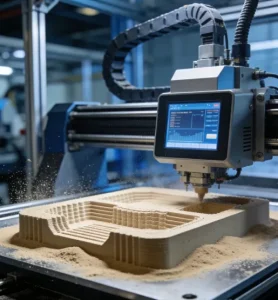
Different molding methods offer different combinations of mold strength, surface quality, dimensional control, production speed, and cost.
A qualified sand casting manufacturer should select the molding process according to the casting material, geometry, quantity, and inspection requirements.
2.1 Resin Sand Casting
Resin sand casting uses sand mixed with a chemical binder that hardens through a curing reaction. Depending on the system, the binder may cure through a chemical reaction, a catalyst, or another controlled process.
Resin-bonded sand can provide good mold strength and dimensional stability. It is frequently considered for intricate castings, cores, and applications requiring relatively consistent cavity geometry.
Potential applications include machinery components, pump bodies, valve components, industrial housings, and complex metal castings.
The specific resin system affects curing behavior, gas generation, sand reclamation, and the final mold properties.
When evaluating a resin sand casting foundry, buyers should ask about the molding system used, core-making capability, applicable material grades, and how the foundry controls defects associated with gas evolution and mold preparation.
2.2 Sodium Silicate Sand Casting
Sodium silicate sand casting uses sodium silicate as a binder. The sand mixture is hardened through an appropriate curing method, which may involve a gas-hardening process or another system suited to the foundry’s production requirements.
This process is used for selected ferrous and nonferrous casting applications. It can be useful when the mold or core design benefits from the characteristics of sodium silicate bonding.
However, mold breakdown and used-sand reclamation can present challenges, depending on the binder system and reclamation equipment.
A sodium silicate sand casting project should be assessed according to mold strength, collapsibility, dimensional requirements, casting geometry, and the foundry’s experience with the relevant alloy.
2.3 Air Set Sand Casting
Air set sand casting generally refers to a chemically bonded molding process in which the sand mixture hardens without requiring a conventional baking oven.
The exact binder and curing system vary. Resin-bonded and other chemically bonded systems may be used to produce molds and cores with the required properties.
Air-set molding can be considered for complex parts, custom tooling arrangements, and production programs where the process is appropriate for the desired casting dimensions and quantity.
It is important to confirm the exact molding technology with the supplier because terminology can vary between foundries.
2.4 Automated Sand Casting
Automated sand casting uses mechanized or automated equipment for selected stages of mold preparation, mold handling, pouring, or other production operations.
Automation may improve production consistency, repeatability, and throughput when the process and production volume justify the investment.
However, automation does not automatically make a casting more precise or less expensive. Its value depends on the stability of the production process, the part design, the tooling arrangement, and the expected order quantity.
For a high-volume project, buyers can ask whether automated molding or pouring is available and how process controls are maintained across production batches.
For low-volume custom components, a less automated approach may offer greater flexibility.
2.5 Gravity Sand Casting
Gravity sand casting relies on gravity to move molten metal from the pouring system into the mold cavity.
The metal enters through a designed gating system, and the mold geometry helps control how the cavity fills. Risers and feeders may be used to compensate for solidification shrinkage.
Gravity sand casting is commonly considered for a wide range of aluminum, iron, and steel components, subject to the selected alloy and foundry capabilities.
It should not be confused with gravity die casting, which uses a permanent mold rather than an expendable sand mold.
The choice between sand casting and permanent-mold gravity casting depends on factors such as part geometry, tooling economics, required surface finish, dimensional tolerances, and production volume.
2.6 Low Pressure Sand Casting
The term low pressure sand casting can describe a specialized arrangement in which a relatively low gas pressure is used to move molten metal into a mold. The precise configuration varies by equipment and process.
This terminology should be clarified with the supplier because low-pressure casting is often associated with dedicated systems and permanent molds, particularly in aluminum casting.
A project specification should identify the actual mold type, metal-filling method, pressure arrangement, and process standard instead of relying on a broad process label.
If the primary requirement is conventional sand molding, gravity sand casting may be the more appropriate description.
2.7 Choosing the Right Sand Casting Process
The following comparison provides a starting point for evaluating molding options. Actual results depend on the equipment, alloy, part design, and process controls.
| Process | Main consideration | Suitable project considerations |
| Resin sand casting | Chemically bonded mold strength and geometry | Complex shapes, cores, custom components |
| Sodium silicate sand casting | Binder characteristics and mold breakdown | Applications suited to the specific binder system |
| Air set sand casting | Chemically hardened molds without conventional baking | Custom molds and selected complex parts |
| Automated sand casting | Repeatability and production throughput | Stable, repeatable production programs |
| Gravity sand casting | Gravity-driven mold filling | General-purpose ferrous and nonferrous castings |
| Low-pressure casting systems | Controlled filling under pressure | Projects requiring a specifically engineered pressure-assisted process |
No single method is ideal for every casting. The foundry should explain why its proposed process is appropriate for the alloy, geometry, quantity, and acceptance criteria.
3. Sand Casting Materials: Aluminum, Steel and Iron
Material selection affects weight, strength, corrosion behavior, temperature capability, machinability, and overall manufacturing cost.
A sand casting supplier should evaluate the intended service conditions before recommending an alloy. The material name alone is not enough to establish whether a component will perform as required.
3.1 Aluminum Sand Casting
Aluminum sand casting is used to manufacture lightweight metal components for industrial equipment, transportation systems, electrical enclosures, agricultural machinery, and many other applications.
Aluminum alloys offer a relatively low density compared with steel and iron. Depending on the selected grade and processing conditions, they can provide useful combinations of castability, corrosion resistance, thermal conductivity, and mechanical properties.
Common applications include:
- Equipment housings and covers
- Pump and valve bodies
- Motor and transmission components
- Machine frames and brackets
- Industrial enclosures
- Custom structural components
- Housings for thermal management equipment
The best aluminum alloy depends on the operating environment, mechanical loads, wall thickness, pressure requirements, and finishing needs.
For example, a component intended for a corrosive outdoor environment may require a different material assessment from a housing designed primarily to reduce equipment weight.
Aluminum sand casting also requires careful consideration of mold design, metal cleanliness, filling behavior, and solidification. Porosity, incomplete filling, and shrinkage can affect performance if they are not adequately controlled.
A manufacturer should be able to discuss the proposed alloy, applicable specifications, inspection plan, and any machining or finishing requirements.
Aluminum Sand Casting Manufacturer and Supplier Selection
When comparing aluminum sand casting manufacturers, ask for information about:
- Available aluminum alloy grades
- Minimum and maximum casting dimensions
- Typical wall thickness capabilities for the intended design
- Pattern and core-making arrangements
- Machining and surface-finishing options
- Dimensional inspection methods
- Material documentation and traceability, when required
- Experience with similar component geometries
A capable supplier should evaluate the actual drawing rather than promise a universal tolerance or wall thickness for all aluminum castings.
3.2 Steel Sand Casting
Steel sand casting is suitable for components that require specific combinations of strength, toughness, wear resistance, or service-temperature performance.
Carbon steel and alloy steel grades can be selected according to the component’s intended loading conditions and applicable engineering standards.
Potential applications include heavy machinery components, industrial equipment parts, structural components, energy-sector equipment, and selected valve and pump components.
Steel castings can involve demanding requirements because the material’s melting temperature, solidification behavior, and shrinkage characteristics influence mold design and production control.
The casting design must account for feeding, cooling, and potential hot spots. Heat treatment may be required to achieve specified mechanical properties.
For demanding applications, buyers should identify the material grade, relevant standard, required mechanical properties, inspection requirements, and any pressure-containing or safety-critical service conditions.
Carbon Steel and Alloy Steel Sand Casting
Carbon steel is commonly selected according to its specified composition and mechanical requirements. Alloy steels may contain additional alloying elements to obtain particular performance characteristics.
The final choice should reflect the application rather than an assumption that a more highly alloyed material is always better.
Steel sand casting can also require machining to achieve final dimensions or surface conditions. The machining allowance should be agreed during drawing review so that the casting provides sufficient material for the required finishing operations.
3.3 Stainless Steel Sand Casting
Stainless steel sand casting is used where corrosion resistance, heat resistance, or other material characteristics justify the selection of a stainless steel alloy.
Applications may include chemical processing equipment, food-processing machinery, water-handling systems, pump components, valve bodies, and industrial equipment exposed to demanding environments.
Different stainless steel grades have different corrosion resistance, mechanical properties, and operating limitations. Selecting a grade requires consideration of the actual chemical environment, temperature, stress, and applicable standards.
A stainless steel sand casting foundry should clarify the proposed grade and explain how it relates to the service conditions.
Important considerations may include:
- Chemical composition
- Mechanical properties
- Corrosion environment
- Casting soundness
- Heat treatment requirements
- Machining requirements
- Surface finishing
- Required material verification and inspection
Stainless steel should not be selected solely because it is described as corrosion-resistant. The appropriate grade depends on the specific environment, including the presence of chlorides, acids, moisture, and elevated temperatures.
Stainless Steel Sand Casting Foundry Requirements
When evaluating a stainless steel sand casting foundry, buyers should ask whether the foundry can produce the specified grade and provide the necessary documentation.
For critical components, additional requirements may include chemical analysis, mechanical testing, nondestructive examination, or other verification specified in the purchase order.
These requirements should be agreed before production begins because they can influence manufacturing procedures, lead time, and total cost.
3.4 Iron Sand Casting
Iron sand casting is widely used for machinery, industrial equipment, agricultural equipment, pump housings, brackets, and other components requiring suitable strength, stiffness, wear characteristics, or vibration-damping properties.
The term iron sand casting can refer to different iron-based materials. Two important categories are gray cast iron and ductile iron.
Gray cast iron contains graphite primarily in flake form. Depending on the grade, it can provide good machinability, vibration damping, and useful compressive properties.
Ductile iron contains graphite primarily in nodular form, which can provide a different combination of strength, ductility, and toughness.
The two materials are not interchangeable in every application.
Cast Iron Sand Casting
Cast iron sand casting is commonly used for machine bases, housings, covers, pump bodies, and other industrial parts.
The selected grade should match the design requirements, including mechanical properties, wall thickness, operating loads, and machining needs.
The foundry should confirm whether the component requires gray iron or another cast iron grade, rather than treating all cast iron materials as equivalent.
Ductile Iron Sand Casting
Ductile iron sand casting may be appropriate for parts that require a combination of strength and ductility.
Applications can include selected pipe fittings, industrial housings, machinery components, and other parts designed around specific ductile iron grades.
The actual suitability depends on the specified grade, casting geometry, heat treatment requirements, and applicable testing standards.
When requesting a quotation, specify the intended grade and any required mechanical properties. If the grade has not yet been selected, provide the expected loads and operating conditions so the manufacturer can help assess suitable options.
3.5 Comparing Aluminum, Steel and Iron Castings
| Factor | Aluminum casting | Steel casting | Iron casting |
| Density | Generally lower | Generally higher | Generally higher than aluminum |
| Material selection | Multiple cast aluminum alloys | Carbon, alloy, and stainless steels | Gray iron, ductile iron, and other grades |
| Common considerations | Weight, corrosion behavior, thermal properties | Strength, toughness, temperature, service conditions | Stiffness, damping, wear behavior, mechanical requirements |
| Typical applications | Housings, brackets, enclosures | Heavy-duty components, industrial equipment | Machine bases, housings, machinery parts |
| Main cost drivers | Alloy, casting size, tooling, finishing | Alloy, melting and processing, heat treatment, inspection | Grade, casting weight, mold design, machining |
| Selection priority | Weight and required alloy properties | Required mechanical and service properties | Required grade, rigidity, damping, strength |
This table is a general guide rather than a substitute for material specifications. Each project should be evaluated using its drawing, service environment, and acceptance criteria.
4. Custom Sand Casting for OEM Manufacturing
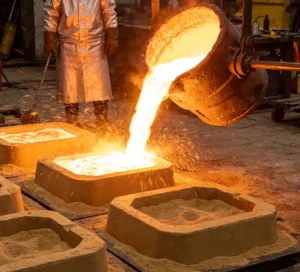
Custom sand casting allows manufacturers to produce metal components according to customer drawings, models, samples, and technical specifications.
OEM sand casting is particularly relevant when an equipment manufacturer needs a casting that fits a proprietary assembly or production design.
Instead of selecting a standard off-the-shelf part, the buyer works with a foundry to define the required geometry, material, production method, and inspection conditions.
4.1 Custom Sand Casting from Drawings
For drawing-based projects, the customer typically provides a two-dimensional engineering drawing, a three-dimensional CAD model, or both.
The documentation should include as much relevant information as possible:
- Overall dimensions
- Critical dimensions and tolerances
- Material grade or required properties
- Wall thicknesses
- Machining surfaces
- Surface finish requirements
- Hole and thread specifications
- Heat treatment requirements
- Inspection and testing criteria
- Annual or batch production quantity
A complete drawing helps the manufacturer evaluate manufacturability and identify potential issues before pattern production.
If a specification is unclear, the foundry should raise questions during the quotation or design-review stage.
4.2 Custom Sand Casting from Samples
Some buyers have a physical sample but do not have a complete engineering drawing.
In such cases, the supplier may need to measure the sample, create a digital model, and confirm the material and functional requirements.
Reverse engineering can help recreate geometry, but the external shape alone may not reveal the original alloy, internal structure, heat treatment, or manufacturing tolerances.
For critical components, the buyer should provide any available documentation about service conditions and performance requirements.
The proposed replacement should be reviewed before production to confirm that the design and material are appropriate for the intended application.
4.3 Prototype Sand Casting
Prototype sand casting is used to evaluate a new design before committing to larger production quantities.
A prototype can help verify fit, assembly, geometry, machining allowances, and selected functional requirements.
Prototype production may also reveal issues related to mold filling, feeding, shrinkage, or the practical manufacturability of the design.
The first casting should not automatically be treated as proof that every production requirement has been met. Inspection and, where necessary, design changes may be needed before the part is approved.
When Is Prototype Sand Casting Appropriate?
Prototype sand casting may be suitable when:
- A new industrial component is under development
- The customer needs to evaluate a casting before series production
- The part geometry is too complex for simple fabrication
- Material behavior needs to be assessed in a representative casting
- The buyer wants to confirm machining and assembly requirements
The choice between sand casting, machining from solid stock, additive manufacturing, and other prototype methods depends on the part’s complexity, material, required properties, and expected development quantity.
4.4 Rapid Sand Casting
Rapid sand casting aims to shorten the development cycle through faster design review, pattern production, mold preparation, and coordination between engineering and manufacturing teams.
Depending on the project, digital pattern production, rapid prototyping, or optimized tooling methods may reduce certain development steps.
However, rapid sand casting does not mean that every casting can be produced immediately. Material preparation, cooling, heat treatment, machining, inspection, and transportation still require appropriate time.
When requesting rapid sand casting, buyers should define the required delivery date, the status of the drawing, the material, the quantity, and any testing requirements.
A realistic schedule should distinguish between prototype lead time and repeat-production lead time.
4.5 OEM Sand Casting Manufacturer Capabilities
An OEM sand casting manufacturer should be able to review customer requirements and explain the proposed production route.
Depending on the foundry’s actual capabilities, services may include:
- Engineering and design-for-manufacturing review
- Pattern and core production
- Sand mold preparation
- Metal melting and pouring
- Heat treatment coordination or in-house heat treatment
- Gate and riser removal
- Shot blasting and surface cleaning
- CNC machining
- Dimensional inspection
- Material testing and documentation
- Packaging and shipment coordination
Not every foundry offers all of these services in-house. Buyers should confirm which processes are performed internally and which are handled by approved external partners.
For OEM programs, it is also useful to discuss revision control, sample approval, production consistency, traceability, packaging standards, and the handling of engineering changes.
4.6 Custom Sand Casting for Small and Large Orders
The most suitable supplier depends partly on the expected production volume.
For prototype and small-batch projects, flexibility, communication, pattern arrangements, and the ability to manage engineering changes may be particularly important.
For recurring production, buyers may place greater emphasis on process repeatability, production capacity, quality documentation, inventory arrangements, and long-term supply stability.
Large production quantities can spread certain tooling and setup costs across more parts, but they also increase the importance of process consistency and production planning.
A manufacturer should therefore evaluate the expected annual demand and order schedule before recommending a production arrangement.
5. Industrial Sand Casting Applications
Industrial sand casting is used across many sectors because it can produce components with varied dimensions, materials, and geometries.
The exact applications depend on the foundry’s equipment and material capabilities.
5.1 Industrial Machinery
Industrial machinery often includes housings, support structures, machine bases, brackets, covers, and other components.
Sand casting can be considered when the required shape is difficult or uneconomical to manufacture from solid material.
For these components, important factors may include dimensional stability, rigidity, mounting interfaces, machining allowances, and compatibility with the surrounding assembly.
5.2 Pumps and Valves
Pump and valve components may require complex external geometry and internal flow passages.
Depending on the application, castings may be manufactured from gray iron, ductile iron, carbon steel, stainless steel, aluminum, or other suitable alloys.
Pressure-containing components may have additional requirements for material verification, casting soundness, machining, testing, and traceability.
The buyer should specify the applicable design standard and inspection requirements rather than relying on a general description such as industrial-grade casting.
5.3 Agricultural Equipment
Agricultural machinery can contain brackets, housings, supports, and other cast components exposed to vibration, mechanical loading, dust, moisture, and changing temperatures.
The correct material and design depend on the equipment’s duty cycle and operating environment.
A sand casting supplier should understand the component’s mounting requirements and any critical dimensions needed for assembly.
5.4 Construction and Heavy Equipment
Selected construction and heavy-equipment parts may benefit from the geometric flexibility of sand casting.
Depending on the component, the engineering assessment may focus on strength, impact loading, fatigue, wear, and environmental exposure.
Not all heavily loaded components are suitable for the same casting material or process. The required properties should be established before the material and production method are selected.
5.5 Energy and Process Equipment
Energy and process industries use a variety of cast components in equipment that may operate under elevated temperatures, corrosive conditions, or mechanical loads.
Material selection and inspection requirements can be especially important for critical applications.
The foundry should review the relevant service conditions, material specifications, and acceptance criteria before confirming whether it can manufacture the component.
5.6 Automotive and Transportation Components
Sand casting can be used for selected components in transportation equipment, subject to design and performance requirements.
Potential considerations include weight, vibration, thermal behavior, dimensional interfaces, and production consistency.
For safety-critical or highly regulated applications, additional validation and documentation may be necessary. Buyers should verify that the supplier has the required process capability and can meet the relevant industry and customer standards.
6. Precision Sand Casting: Accuracy, Surface Finish and Quality
Precision sand casting refers to sand casting projects where dimensional control, surface quality, and casting integrity are important.
The term does not identify one universal process or guarantee a particular tolerance. Achievable results depend on the material, casting dimensions, mold system, geometry, process control, and subsequent machining.
A reliable quotation should identify the dimensions and features that require special control.
6.1 Dimensional Accuracy
Casting dimensions can be influenced by pattern accuracy, mold deformation, metal shrinkage, cooling behavior, and handling.
Complex geometry may also produce dimensional variation because different sections cool at different rates.
The drawing should distinguish between as-cast dimensions and dimensions that will be machined to final size.
For critical features, the buyer and manufacturer should agree on measurement methods and acceptance criteria before production.
6.2 Surface Finish
Sand casting surface finish depends on the molding sand, binder system, pattern surface, metal characteristics, and cleaning process.
A rougher surface may be acceptable for some structural components, while other parts may require grinding, blasting, coating, or machining.
If a component requires a particular surface finish, specify the requirement on the drawing and identify the relevant surfaces.
Do not assume that every sand casting will have the same surface quality merely because the same process name is used.
6.3 Casting Defects and Process Control
Potential casting defects include gas porosity, shrinkage cavities, inclusions, misruns, cold shuts, surface defects, and dimensional deviations.
Different defects have different causes, and not every defect can be prevented through the same corrective action.
Process control may involve melt preparation, mold condition, gating and feeding design, pouring practice, cooling control, and inspection.
For critical components, the inspection plan should reflect the risk associated with the intended application.
6.4 Inspection and Testing
Inspection requirements should be agreed before production.
Depending on the part, the inspection plan may include:
- Visual inspection
- Dimensional measurement
- Chemical composition verification
- Mechanical property testing
- Hardness testing
- Pressure or leak testing
- Radiographic testing
- Ultrasonic testing
- Magnetic particle testing
- Liquid penetrant testing
These methods are not universally necessary for every casting. The appropriate selection depends on the material, geometry, service conditions, applicable standards, and customer requirements.
Some tests are suitable only for particular materials or defect types. The supplier should confirm the method, acceptance criteria, and documentation that can be provided.
6.5 Quality Documentation and Traceability
For industrial procurement, quality documentation helps buyers verify that the supplied parts meet the agreed requirements.
Depending on the project, documentation may include material certificates, inspection reports, dimensional records, test reports, and batch identification.
If traceability is required, the customer should explain the necessary level of identification before production begins.
Buyers should also confirm whether any requested quality-management certifications or industry approvals are current and applicable to the specific manufacturing site and process.
7. Sand Casting Cost: What Affects the Price?
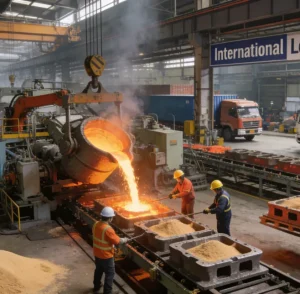
Sand casting cost depends on several variables. Two parts with similar external dimensions may have different prices because they use different alloys, require different cores, have different tolerances, or involve different inspection procedures.
A useful quotation separates the main cost drivers rather than comparing only the final unit price.
7.1 Material Cost
The selected alloy influences raw material cost, melting requirements, process control, and potentially heat treatment.
Aluminum, gray iron, ductile iron, carbon steel, alloy steel, and stainless steel have different material and production characteristics.
The final material cost also depends on the casting weight, expected process yield, machining allowance, and the amount of metal required for the gating and feeding systems.
For this reason, the net weight of the finished component is not always equal to the amount of metal consumed during manufacturing.
7.2 Pattern and Tooling Cost
Pattern cost depends on part geometry, dimensions, pattern material, required accuracy, and tooling complexity.
A simple casting may require relatively straightforward pattern tooling, while a complex part with multiple cores and intricate geometry may require more engineering and preparation.
For a prototype or small order, tooling can represent a significant portion of the total project cost.
For recurring orders, tooling costs may be distributed across a larger quantity of parts, although tooling maintenance, storage, and replacement can also be relevant.
When requesting a quotation, ask whether pattern and tooling costs are charged separately and who owns the tooling after production.
7.3 Mold and Core Complexity
Parts with internal passages, undercuts, or complex cavities may require additional cores and more complicated mold assembly.
These features can increase labor, material consumption, setup time, and the need for process control.
Simplifying the geometry, where functionally possible, can sometimes reduce manufacturing complexity.
A design-for-manufacturing review may identify opportunities to reduce unnecessary cores, improve feeding, or simplify machining.
7.4 Production Quantity
Order quantity influences setup costs, tooling allocation, production planning, and unit economics.
Small orders may carry a higher unit cost because certain costs are spread across fewer pieces.
Larger orders may allow more efficient production scheduling, but the final benefit depends on process stability, capacity, and the complexity of the casting.
A buyer should compare quotations at realistic order quantities, including expected annual demand and likely repeat-order frequency.
7.5 Machining and Finishing
A casting may require additional machining to meet dimensional or functional requirements.
Common operations include milling, turning, drilling, boring, threading, grinding, and surface finishing.
The amount of machining depends on the number of finished surfaces, tolerances, accessibility, material machinability, and the required production volume.
If machining is needed, the drawing should identify the critical surfaces and final dimensions.
7.6 Heat Treatment
Some castings require heat treatment to achieve specified mechanical properties or material conditions.
The process depends on the alloy and applicable material specification.
Heat treatment may affect cost, lead time, dimensional stability, and the required inspection plan.
The quotation should clarify whether heat treatment is included and whether testing is required after treatment.
7.7 Inspection and Certification
Inspection cost depends on the number and type of checks required.
Routine visual inspection and basic dimensional measurements are different from extensive nondestructive examination, mechanical testing, material certification, or specialized third-party inspection.
Buyers should define the acceptance criteria and documentation requirements in advance so that quotations can be compared on a consistent basis.
7.8 Packaging, Freight and Delivery
The delivered cost may include packaging, inland transport, international freight, insurance, customs-related expenses, and other logistics charges, depending on the agreed commercial terms.
Large or heavy castings may require specialized packaging or handling.
When comparing international suppliers, confirm whether the quotation is ex-works, FOB, CIF, DAP, or based on another agreed Incoterm. These terms allocate different responsibilities and costs.
7.9 How to Request an Accurate Sand Casting Quote
To help a sand casting manufacturer prepare a meaningful quotation, provide:
- A two-dimensional drawing or three-dimensional CAD file.
- The required material grade or performance specifications.
- Finished dimensions and critical tolerances.
- Casting weight or estimated component weight, if available.
- Required machining and surface finish.
- Heat treatment and inspection requirements.
- Prototype quantity, initial order quantity, and expected annual demand.
- Packaging and delivery destination.
- Required delivery schedule.
- Any relevant industry standards or customer-specific quality requirements.
If the design is not finalized, provide the available information and identify the unresolved requirements.
A clear quotation should explain what is included, what is excluded, the expected lead time, tooling ownership, inspection scope, and any assumptions that affect the price.
8. How to Choose a Sand Casting Manufacturer, Supplier or Factory
Selecting a sand casting supplier is a technical and commercial decision. A low quotation may not represent the best value if it excludes necessary machining, testing, packaging, or other project requirements.
The evaluation should focus on whether the manufacturer can consistently produce the required component and support the expected supply relationship.
8.1 Confirm Material and Process Capability
Start by confirming whether the supplier can manufacture the specified material and geometry.
Ask which alloys are available, which molding methods are used, what component dimensions can be accommodated, and whether machining or heat treatment is available.
If the supplier proposes an alternative process or material, ask for a technical explanation and obtain approval before changing the specification.
8.2 Review Similar Manufacturing Experience
Experience with comparable parts can help identify whether a foundry understands the relevant production challenges.
Rather than relying only on general claims about experience, ask for examples of similar component types, materials, dimensions, or applications where disclosure is permitted.
Useful evidence may include anonymized case studies, sample inspection records, process descriptions, or photographs of relevant production work.
Any claimed project history should be accurate and verifiable.
8.3 Evaluate Quality Control
Ask how the supplier controls material identification, mold preparation, production parameters, inspection, nonconforming parts, and corrective actions.
For repeat orders, discuss how the supplier maintains consistency between batches and communicates engineering changes.
If the project requires specific certifications, verify their scope and validity rather than assuming that every factory has the same approvals.
8.4 Understand the Quotation
A quotation should provide enough detail to make comparison possible.
Confirm whether the quoted price includes tooling, casting, machining, heat treatment, inspection, packaging, and freight.
Also review minimum order quantities, payment terms, sample costs, production lead time, and the validity period of the quotation.
If two quotations differ substantially, ask what explains the difference before making a decision.
8.5 Assess Communication and Engineering Support
Clear communication is important when drawings are incomplete, requirements change, or manufacturing problems arise.
A responsive supplier should identify missing information, raise technical questions, and explain the impact of proposed changes.
For OEM projects, confirm who is responsible for drawing revisions, sample approval, inspection records, and production scheduling.
8.6 Consider Long-Term Supply Stability
For recurring production, the supplier’s ability to support repeat orders may be as important as the initial sample.
Discuss expected capacity, production planning, tooling maintenance, raw material sourcing, change management, and contingency arrangements.
The appropriate supplier is one whose actual capabilities match the project’s requirements and whose commercial terms support the intended supply relationship.
International buyers may consider a China sand casting manufacturer when evaluating production options for custom industrial components.
However, country of origin alone does not establish quality, price competitiveness, or manufacturing capability. These factors depend on the individual foundry, alloy, design, production method, and commercial arrangement.
9.1 Evaluate the Complete Manufacturing Cost
A high-quality casting at a competitive price should be evaluated using the total cost of producing and delivering an acceptable component.
Relevant factors include:
- Material and casting costs
- Pattern and tooling investment
- Machining and finishing
- Inspection and documentation
- Packaging and transportation
- Import duties and applicable taxes
- Potential rework or nonconformance costs
- Inventory and delivery requirements
A lower ex-works price may not result in the lowest total delivered cost.
The buyer should compare quotations using the same drawing, material specification, inspection criteria, order quantity, and delivery terms.
9.2 Confirm Technical Communication
For overseas OEM projects, technical communication can influence the success of the manufacturing process.
Drawings, units, material grades, tolerances, revision numbers, and inspection criteria should be clearly documented.
When discussing changes, both parties should confirm which drawing revision controls production and whether approval is required before implementation.
9.3 Verify Quality and Compliance Requirements
The required quality documentation depends on the end application and destination market.
Some projects require only agreed dimensional and material checks. Others may require specific certifications, traceability, or third-party inspection.
The buyer should identify applicable legal, industry, and customer requirements before placing the order.
A supplier should not claim compliance with a standard or certification unless the claim is supported by appropriate documentation.
9.4 Review Shipping and Packaging
Castings may be heavy, bulky, or vulnerable to corrosion and surface damage during storage and transportation.
Packaging should reflect the material, geometry, shipping distance, storage conditions, and delivery method.
For international shipments, clarify labeling, packing lists, shipment schedules, insurance, and the allocation of freight and customs responsibilities.
9.5 What Does High Cost Performance Mean in Sand Casting?
For a custom casting project, cost performance means balancing price with the component’s required performance and the total cost of ownership.
A low-cost casting may create additional expense if it requires excessive machining, fails inspection, or does not meet the intended service conditions.
A more expensive proposal may be justified if it includes a better-suited alloy, more appropriate process control, necessary inspection, or a more efficient production arrangement.
The right comparison is therefore not simply which sand casting factory offers the lowest unit price. It is which qualified supplier can meet the specified requirements at an acceptable total cost.
10. Sand Casting Manufacturer vs. Supplier vs. Foundry vs. Factory
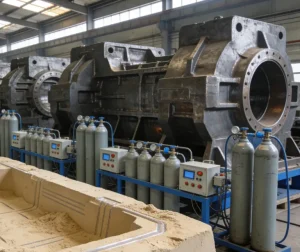
These terms overlap in everyday purchasing language, but they can emphasize different aspects of a business.
A sand casting manufacturer generally emphasizes the production of cast components.
A sand casting supplier may manufacture castings directly or coordinate production through other facilities.
A sand casting foundry specifically refers to a facility involved in metal casting operations.
A sand casting factory is a broad term for a manufacturing facility and does not by itself establish which production processes are performed on-site.
When evaluating a potential supplier, ask which activities are carried out at the stated facility and which are outsourced.
This distinction matters when a project requires specific process controls, traceability, confidentiality, or direct access to production records.
10.1 What to Verify Before Placing an Order
Before selecting a manufacturer, confirm:
- The legal business entity and manufacturing location
- The actual casting processes available
- The specified alloy and relevant material documentation
- The ability to meet the part’s dimensional requirements
- The availability of machining and finishing
- The inspection plan and acceptance criteria
- The quotation scope and payment terms
- The delivery schedule and packaging arrangements
- The process for handling defects and engineering changes
These checks help buyers make an informed decision without relying solely on marketing descriptions.
11. Sand Casting Products and Custom Component Development
Sand casting products cover a wide range of metal components. Their design and manufacturing requirements depend on their function rather than on the casting process alone.
Common product categories may include:
- Aluminum housings and enclosures
- Industrial pump bodies
- Valve bodies and covers
- Cast iron machine bases
- Ductile iron components
- Steel brackets and supports
- Stainless steel process components
- Custom machinery parts
- Industrial equipment frames
- Prototype castings for product development
The availability of each category depends on the manufacturer’s actual material and dimensional capabilities.
11.1 How to Prepare a Casting Product Specification
A useful product specification identifies the part’s intended function, material, geometry, and acceptance requirements.
The following information can help the foundry evaluate the project:
Product name and application: Describe the equipment or assembly in which the part will be used.
Material: Specify the required alloy or the performance characteristics that the material must meet.
Drawing or model: Provide the latest approved revision and identify any critical dimensions.
Production quantity: State the initial quantity and anticipated repeat-order requirements.
Machining: Identify surfaces, holes, threads, and interfaces requiring finished dimensions.
Inspection: Specify required material verification, dimensional checks, testing, and documentation.
Delivery: Provide the destination, required schedule, and packaging conditions.
The more complete the specification, the easier it is to compare supplier quotations and reduce misunderstandings during production.
11.2 Design for Manufacturability
Design for manufacturability, or DFM, evaluates whether a component can be produced efficiently while meeting its functional requirements.
For sand casting, DFM may address wall thickness transitions, core complexity, draft, fillets, feeding requirements, machining allowances, and the location of critical features.
A design that is easy to manufacture may reduce mold complexity and improve production consistency.
However, design changes should not compromise structural integrity or required performance. Any proposed modification must be reviewed and approved by the responsible engineering team.
12. Common Sand Casting Challenges and Their Solutions
Understanding potential manufacturing problems helps buyers and suppliers establish realistic requirements and reduce avoidable rework.
12.1 Porosity
Porosity refers to voids within or on the surface of a casting. Different forms of porosity may be associated with gas, solidification shrinkage, or other process conditions.
Prevention depends on identifying the cause. Possible corrective measures may involve melt preparation, mold permeability, venting, gating design, feeding, and process parameters.
The appropriate response should be based on inspection evidence and process analysis rather than assumptions.
12.2 Shrinkage Defects
Metal contracts as it solidifies and cools. If the casting design and feeding system do not adequately compensate for solidification shrinkage, cavities or other defects may occur.
Foundry engineers evaluate section thickness, hot spots, riser placement, and solidification behavior to manage these risks.
For complex parts, simulation may help evaluate alternative gating or feeding arrangements when appropriate tools and expertise are available.
12.3 Dimensional Variation
Dimensional variation can result from pattern accuracy, mold movement, cooling behavior, handling, or machining setup.
The control plan should identify the critical dimensions and establish how they will be measured.
For dimensions that require tighter control than the selected casting process can reliably achieve, machining may be necessary.
12.4 Surface Defects
Surface defects may include rough areas, adhered sand, fins, or other irregularities.
The corrective approach depends on the defect type and whether it originates in the mold, metal, or finishing operation.
Clear surface requirements and appropriate inspection criteria help distinguish acceptable as-cast conditions from defects requiring correction.
12.5 Misruns and Incomplete Filling
A misrun occurs when molten metal does not completely fill the mold cavity.
Potential causes include unsuitable pouring conditions, inadequate gating, poor venting, and design-related filling difficulties.
The foundry should review the filling path and process conditions before deciding on corrective measures.
12.6 How Buyers Can Reduce Casting Risks
Buyers can help reduce manufacturing risk by providing accurate drawings, identifying critical dimensions, specifying the material, defining acceptance criteria, and approving samples when appropriate.
Early communication about service conditions and inspection needs allows the manufacturer to select a more suitable production route.
Changes to material, geometry, or acceptance criteria should be documented so that both parties work to the same specification.
13. Sand Casting Compared with Other Manufacturing Processes
Sand casting is not the only way to manufacture a metal component. Depending on the design and order quantity, other processes may provide a better combination of cost, accuracy, material properties, or lead time.
13.1 Sand Casting vs. Investment Casting
Investment casting uses a disposable pattern, commonly formed from wax or another suitable material, to create a ceramic mold.
Compared with conventional sand casting, investment casting can be advantageous for certain complex geometries and finer surface details. However, the economics depend on part size, material, tooling, and production quantity.
Sand casting may be more practical for larger components or designs that do not require the particular surface and geometric capabilities of investment casting.
13.2 Sand Casting vs. Die Casting
Die casting typically forces molten metal into a reusable metal die under pressure.
It is frequently considered for suitable nonferrous alloys and production programs where the tooling investment can be justified by production volume and cycle-time requirements.
Sand casting uses expendable molds and can accommodate a broader range of ferrous alloys, depending on the foundry.
The best choice depends on material, geometry, tolerance, surface finish, quantity, and tooling economics.
13.3 Sand Casting vs. CNC Machining
CNC machining removes material from a solid workpiece to produce the required geometry.
It can be suitable for prototypes, precise interfaces, and parts with demanding dimensional requirements. However, complex shapes may require substantial material removal and machining time.
Sand casting can produce a near-net-shape component that is subsequently machined where necessary.
For some designs, combining sand casting with CNC machining offers an effective balance between material use and dimensional accuracy.
13.4 Sand Casting vs. Forging
Forging shapes metal through compressive forces and can produce useful mechanical properties in appropriately designed components.
Sand casting offers greater flexibility for certain complex shapes and internal cavities, while forging may be preferred for components whose performance requirements favor a forged structure.
These processes are not interchangeable for every application. The decision should consider the material, geometry, loading conditions, applicable standards, and manufacturing economics.
13.5 How to Select the Right Process
The selection process should begin with the part’s functional requirements.
Consider the required material, mechanical properties, geometry, tolerances, surface finish, production volume, tooling budget, lead time, and inspection needs.
If several processes appear feasible, request a technical comparison from qualified manufacturers. A process recommendation should explain both the benefits and the limitations of the proposed option.
14. Frequently Asked Questions About Sand Casting
What is sand casting used for?
Sand casting is used to produce metal components for industrial machinery, pumps, valves, transportation equipment, agricultural machinery, construction equipment, and many other applications. Its suitability depends on the material, geometry, dimensions, and required performance.
What materials can be used in sand casting?
Depending on the foundry and molding system, materials may include aluminum alloys, gray cast iron, ductile iron, carbon steel, alloy steel, and stainless steel. The available grades and manufacturing capabilities should be confirmed with the supplier.
What is aluminum sand casting?
Aluminum sand casting is a process in which molten aluminum alloy is poured into a prepared sand mold. It is used for components that benefit from aluminum’s relatively low density and other alloy-specific properties.
What is steel sand casting?
Steel sand casting produces steel components using expendable sand molds. It can be used for industrial parts requiring specified strength, toughness, or other mechanical properties, depending on the selected steel grade and production process.
What is stainless steel sand casting?
Stainless steel sand casting is used to manufacture components from selected stainless steel grades. The correct grade depends on the service environment, corrosion exposure, temperature, mechanical loads, and applicable material standards.
What is iron sand casting?
Iron sand casting is a broad term for producing iron-based components in sand molds. It may include gray iron and ductile iron castings, which have different material characteristics and applications.
What is the difference between cast iron and ductile iron?
Gray cast iron generally contains graphite in flake form, while ductile iron contains graphite primarily in nodular form. These structures contribute to different mechanical properties. The appropriate material depends on the component’s design and service requirements.
What is resin sand casting?
Resin sand casting uses a resin binder to harden molding sand. The process can be used for selected complex castings and cores. Actual performance depends on the binder system, mold design, alloy, and production conditions.
What is sodium silicate sand casting?
Sodium silicate sand casting uses sodium silicate as a binder for molding sand. The sand is hardened through a suitable curing method. The process should be evaluated according to mold strength, breakdown characteristics, geometry, and the foundry’s capabilities.
What is precision sand casting?
Precision sand casting refers to sand casting projects that place particular emphasis on dimensional control, surface quality, and casting integrity. The term does not guarantee a universal tolerance. Requirements should be specified on the engineering drawing.
What is prototype sand casting?
Prototype sand casting produces sample components for design evaluation before larger production commitments. It can help verify geometry, assembly, and selected functional requirements, although testing and design revisions may still be necessary.
What is custom sand casting?
Custom sand casting produces parts according to customer-specific drawings, models, samples, or technical specifications. The process may include pattern production, mold making, casting, machining, finishing, and inspection.
What is OEM sand casting?
OEM sand casting is the manufacture of cast components for an original equipment manufacturer. The parts are designed to meet the customer’s product requirements and may require specific materials, dimensions, documentation, and production controls.
What is automated sand casting?
Automated sand casting uses mechanized or automated equipment for selected manufacturing operations. Automation may improve repeatability and throughput when the production volume and process are suitable.
What is air set sand casting?
Air set sand casting generally refers to a chemically bonded molding process that hardens without conventional baking. The precise binder and curing method should be confirmed because terminology can differ among foundries.
What is gravity sand casting?
Gravity sand casting fills a sand mold using gravity. It differs from gravity die casting, which uses a reusable metal mold.
Is low pressure sand casting the same as conventional sand casting?
Not necessarily. Low-pressure casting generally involves a pressure-assisted metal-filling arrangement, and the term is often associated with specialized casting equipment. Buyers should confirm the actual mold type and filling method with the manufacturer.
How much does sand casting cost?
Sand casting cost depends on the alloy, casting weight, geometry, tooling, order quantity, machining, heat treatment, inspection, and delivery requirements. A meaningful quotation requires a drawing or model, material specification, quantity, and agreed acceptance criteria.
Is sand casting suitable for small orders?
It can be. Sand casting may be suitable for prototypes and small batches, but tooling, setup, and inspection costs can have a larger effect on the unit price when the order quantity is low. The economics should be compared with alternative manufacturing methods.
Is sand casting suitable for mass production?
Sand casting can support larger production programs when the foundry has suitable equipment, capacity, and process controls. The most appropriate production arrangement depends on component design, material, volume, and consistency requirements.
How do I choose a sand casting manufacturer?
Evaluate the supplier’s material and process capabilities, experience with similar parts, inspection methods, documentation, quotation scope, lead time, and communication. Confirm that the supplier can meet the specified requirements before placing an order.
Should I choose a China sand casting manufacturer?
A China-based manufacturer may be one option for international procurement. The decision should be based on verified production capability, quality requirements, total delivered cost, communication, logistics, and applicable compliance obligations rather than country of origin alone.
Can a sand casting foundry provide machining?
Some foundries provide machining directly, while others work with external machining partners. Confirm the scope of machining, dimensional inspection, and responsibility for the final finished part before ordering.
What information is needed for a sand casting quotation?
Provide the engineering drawing or CAD model, material grade, quantity, critical dimensions, machining requirements, inspection criteria, delivery destination, and required schedule. If the design is incomplete, explain the remaining uncertainties so the supplier can identify the information needed for an accurate quote.
15. Request a Custom Sand Casting Quote
Choosing the right sand casting manufacturer starts with a clear understanding of your component’s material, geometry, operating conditions, production quantity, and quality requirements.
Whether your project involves aluminum sand casting, stainless steel sand casting, steel sand casting, cast iron sand casting, ductile iron sand casting, or a specialized molding process, a structured technical review can help identify an appropriate manufacturing route.
For custom and OEM sand casting projects, prepare the latest engineering drawing or CAD model and specify the required material, critical dimensions, machining operations, inspection criteria, and order quantity.
If you are still evaluating the design, provide the available information and explain the intended application. A manufacturing review can help identify missing specifications and potential production challenges before tooling and production commitments are made.
When comparing sand casting companies, consider the full scope of manufacturing and delivery rather than unit price alone. A suitable supplier should clearly explain the proposed process, quotation assumptions, inspection scope, tooling arrangements, and delivery schedule.
Contact our team to discuss your custom sand casting requirements. Share your drawings, material specifications, expected order quantity, and delivery needs so that the project can be evaluated against the appropriate manufacturing and quality requirements.











