Tilt gravity die casting is a specialized low-pressure casting process where molten metal is poured into a tilting mold, allowing gravity to fill the cavity smoothly. This method significantly reduces turbulence and gas entrapment compared to traditional high-pressure die casting, resulting in components with superior mechanical properties, denser microstructures, and enhanced fatigue resistance. For industrial applications requiring high integrity under pressure—such as hydraulic valve bodies, pump housings, and engineering vehicle parts—tilt gravity casting offers an optimal balance between cost-efficiency and performance reliability.
What Is Tilt Gravity Die Casting?
Tilt gravity die casting, often referred to as tilt pouring or counter-gravity casting in specific configurations, involves a unique filling mechanism. Unlike standard gravity casting where metal drops vertically from a height, or high-pressure die casting (HPDC) where metal is injected at high velocity, tilt casting controls the flow rate through the physical rotation of the mold.
The process begins with the mold positioned horizontally or at a slight angle. As the crucible containing molten aluminum or other alloys tilts, the metal flows gently into the mold cavity. This controlled laminar flow minimizes the formation of oxides and air bubbles, which are common defects in turbulent filling processes. The result is a casting with near-wrought mechanical properties, making it ideal for critical safety components in sectors like oil and gas, heavy machinery, and precision hydraulics.
How the Tilt Gravity Process Works
Understanding the operational mechanics is crucial for engineers specifying this manufacturing method. The process can be broken down into four distinct phases:
- Mold Preparation: The permanent mold, typically made from high-grade steel, is preheated to a specific temperature range to ensure proper fluidity and prevent thermal shock. A refractory coating is applied to facilitate part ejection and protect the mold surface.
- Tilting and Filling: The mold starts in a horizontal position. As it rotates (tilts) around a pivot axis, the molten metal enters the sprue system. The speed of tilting is precisely controlled to match the filling rate of the cavity, ensuring the metal front advances smoothly without splashing.
- Solidification: Once the mold reaches its vertical or final filling position, the metal solidifies under controlled cooling conditions. Directional solidification is often encouraged by designing the gating system to feed shrinkage effectively.
- Ejection and Finishing: After cooling, the mold opens, and the casting is ejected. Post-processing may include heat treatment, CNC machining, and surface finishing to meet strict dimensional tolerances.
Key Advantages Over Traditional Casting Methods
When selecting a manufacturing process for precision metal components, engineers must weigh the trade-offs between cost, speed, and quality. Tilt gravity die casting occupies a strategic niche between sand casting and high-pressure die casting, offering distinct benefits for medium-to-high volume production of complex parts.
Superior Mechanical Integrity
The primary advantage of tilt gravity casting is the reduction of porosity. In high-pressure die casting, the rapid injection of metal can trap air, leading to microscopic voids that compromise structural integrity. Tilt casting’s gentle, laminar flow allows gases to escape through vents before the metal solidifies. This results in higher density and better tensile strength, which is critical for parts subjected to high internal pressures, such as piston pump cylinder housings and pressure valves.
Enhanced Surface Finish and Dimensional Accuracy
Permanent molds used in tilt gravity casting provide excellent surface replication. Components emerge with a smoother finish than sand castings, reducing the need for extensive secondary machining. Furthermore, the stability of the metal mold ensures consistent dimensional accuracy across production batches, supporting tight Geometric Dimensioning and Tolerancing (GD&T) requirements.
Cost-Effectiveness for Medium Volumes
While HPDC is faster, the tooling costs are prohibitive for medium-volume runs. Sand casting has lower tooling costs but higher labor and finishing expenses. Tilt gravity casting offers a balanced solution: durable steel molds that last for thousands of cycles, combined with automated or semi-automated tilting mechanisms that reduce labor dependency. This makes it economically viable for orders ranging from prototypes to medium-volume production.
Comparison: Tilt Gravity vs. Other Casting Processes
To help procurement managers and design engineers make informed decisions, the following table compares tilt gravity die casting with other common manufacturing methods.
| Feature | Tilt Gravity Die Casting | High-Pressure Die Casting (HPDC) | Sand Casting | Investment Casting |
| Filling Method | Controlled tilting, laminar flow | High-velocity injection | Gravity pour into sand mold | Gravity pour into ceramic shell |
| Porosity Level | Low (High Density) | Moderate to High (Air traps) | Moderate | Low |
| Mechanical Strength | High | Moderate | Lower | High |
| Surface Finish | Excellent (Ra 1.6–3.2 μm) | Good | Rough | Very Good |
| Tooling Cost | Medium | High | Low | Medium-High |
| Production Volume | Medium to High | Very High | Low to Medium | Low to Medium |
| Material Waste | Low (Recyclable runners) | Low | High (Sand disposal) | Moderate |
Applications in Critical Industrial Sectors
Due to its ability to produce dense, high-strength components, tilt gravity die casting is extensively used in industries where failure is not an option. QINGDAO QIANGSENYUAN TECHNOLOGY CO., LTD. leverages this process to deliver mission-critical parts for demanding environments.
Hydraulic Systems and Pump Assemblies
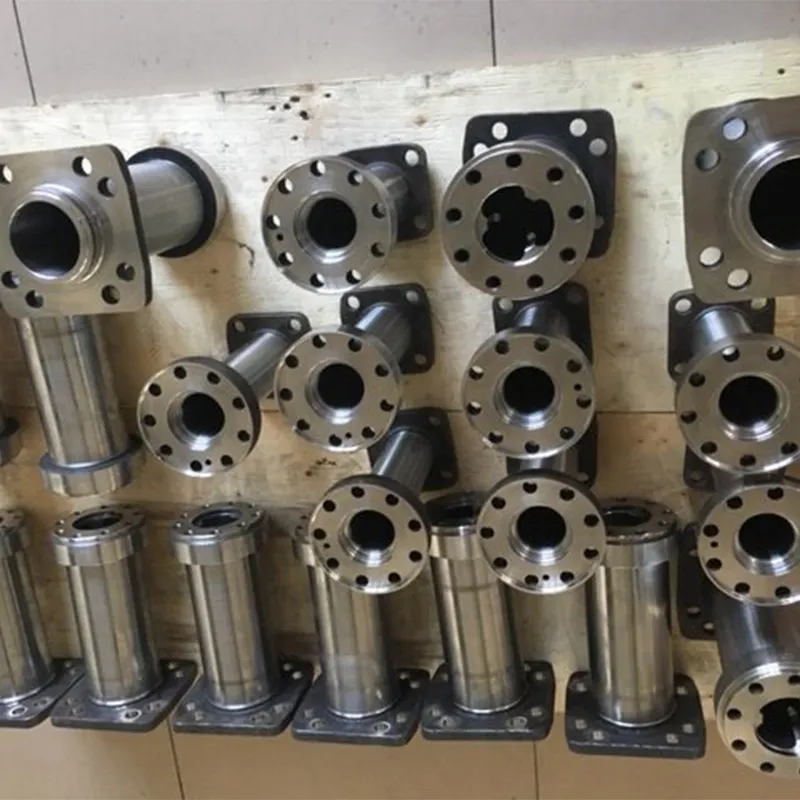
Hydraulic components operate under extreme pressure cycles. Any internal void or defect can lead to catastrophic failure. Tilt gravity casting is ideal for manufacturing piston pump cylinder housings, pressure valves, and pump foundations. The dense microstructure ensures these parts can withstand high burst pressures without leaking or cracking. Additionally, the process supports the integration of complex internal channels required for fluid dynamics optimization.
Engineering Vehicles and Heavy Machinery
In the construction and mining sectors, equipment faces constant vibration and impact loads. Components such as onboard winch center shaft rollers and structural brackets benefit from the improved fatigue resistance of tilt-cast aluminum or iron alloys. The reduced weight of aluminum castings, compared to steel, also contributes to fuel efficiency and payload capacity in mobile machinery.
Oil and Gas Equipment
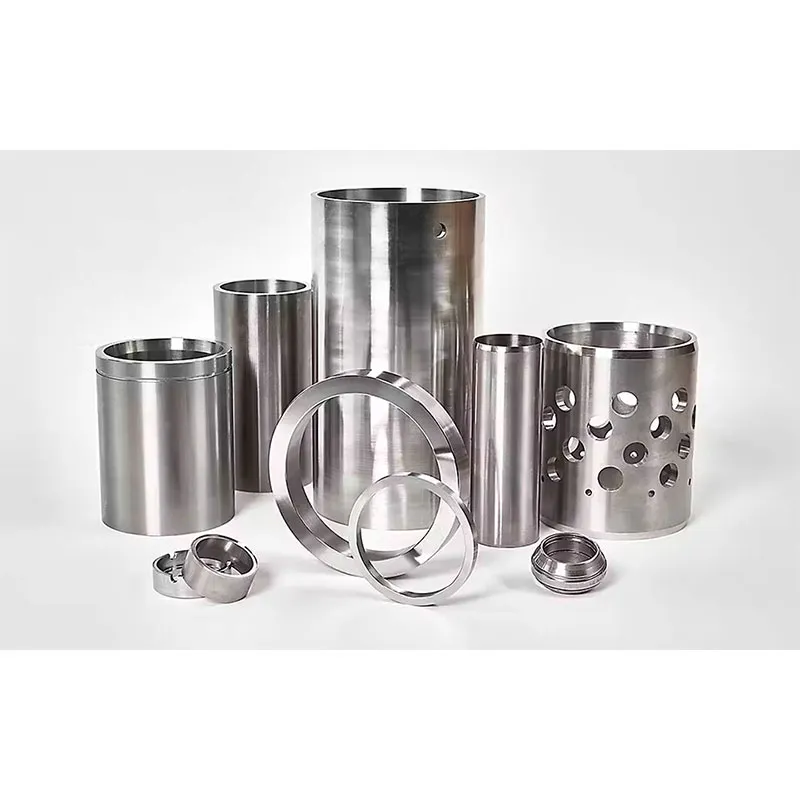
The oil and gas industry requires materials that resist corrosion and maintain integrity in harsh environments. Tilt gravity casting allows for the use of specialized alloys, including stainless steels and cobalt-nickel superalloys. These materials are essential for cobalt alloy nozzles and plugs that face abrasive fluids and high temperatures. The process ensures uniform metallurgical properties, which is vital for compliance with stringent industry standards like API and NACE.
Material Expertise: Handling Superalloys and Custom Geometries
Not all manufacturers possess the technical capability to handle difficult-to-machine materials. QINGDAO QIANGSENYUAN TECHNOLOGY distinguishes itself through deep expertise in processing high-performance alloys, particularly AMS 5387 cobalt alloy 6 and T800 cobalt-based materials.
Challenges with Cobalt-Nickel Alloys
Cobalt-nickel alloys are known for their exceptional wear resistance and high-temperature strength. However, they are notoriously difficult to cast and machine due to their hardness and tendency to work-harden. Successful tilt gravity casting of these materials requires precise temperature control, specialized mold coatings, and optimized cooling rates to prevent hot tearing and ensure proper grain structure.
Our facility integrates advanced melting technologies with real-time temperature monitoring to manage these challenges. By maintaining strict control over the metallurgical process, we deliver components that meet the exacting specifications of AMS 5387 standards, ensuring consistent performance in critical pump and valve applications.
Custom Geometries and Non-Standard Components
Many industrial applications require non-standard components that do not fit off-the-shelf categories. Our engineering team supports customers from the design phase, offering feedback on manufacturability (DFM). We utilize 3D modeling and simulation software to predict filling patterns and identify potential defect areas before tooling is cut. This proactive approach minimizes risk and accelerates time-to-market for custom geometries fabricated from T800 and other specialized alloys.
Quality Assurance and Manufacturing Capabilities
Trustworthiness in B2B manufacturing is built on transparent, documented quality processes. QINGDAO QIANGSENYUAN TECHNOLOGY CO., LTD. operates an ISO-compliant production facility that embeds quality control at every stage of the manufacturing lifecycle.
Integrated Vertical Manufacturing
Our operational model integrates casting, precision CNC machining, and surface finishing under one roof. This vertical integration offers several advantages:
- Dimensional Stability: By controlling both the casting and machining processes, we ensure that residual stresses from casting do not affect final machined dimensions.
- Traceability: Every batch of raw material is verified upon arrival. We maintain full traceability from the ingot source to the finished component, providing material certificates and inspection reports with every shipment.
- Efficiency: Lean workflow practices and structured production planning allow us to meet stable delivery timelines for both prototype runs and medium-volume orders.
Advanced Inspection Protocols
Quality is not just a final check; it is a continuous process. Our facility is equipped with state-of-the-art inspection instruments, including:
- Coordinate Measuring Machines (CMM): For precise verification of complex contours and GD&T compliance.
- Optical Measuring Instruments: For non-contact measurement of delicate features and surface profiles.
- X-Ray and Ultrasonic Testing: To detect internal porosity or inclusions that are not visible on the surface, ensuring the structural integrity of critical parts.
These capabilities enable us to adhere to documented inspection protocols and deliver components that meet international dimensional and material standards. Our technical collaboration with material suppliers further ensures consistent metallurgical properties across batches, a key factor for long-term reliability in industrial applications.
Common Defects in Tilt Gravity Casting and How to Avoid Them
Even with advanced processes, defects can occur if parameters are not optimized. Understanding these potential issues helps engineers specify requirements more accurately.
Cold Shuts
Cold shuts occur when two streams of molten metal meet but fail to fuse properly, often due to low pouring temperatures or slow filling rates. Solution: Optimize the tilting speed and mold preheat temperature to ensure the metal remains fluid throughout the filling process.
Shrinkage Porosity
This defect arises when the metal contracts during solidification without adequate feeding. Solution: Design effective gating and riser systems that promote directional solidification towards the feeders. Use chills in thick sections to accelerate cooling and reduce shrinkage zones.
Oxide Inclusions
Turbulence during pouring can create oxides that get trapped in the casting. Solution: Maintain a smooth, laminar flow by controlling the tilt angle progression. Use filters in the gating system to catch any existing oxides before they enter the cavity.
FAQ: Frequently Asked Questions About Tilt Gravity Die Casting
What is the difference between tilt gravity casting and low-pressure die casting (LPDC)?
While both methods aim to reduce turbulence, LPDC uses pressurized gas to push metal up into the mold, whereas tilt gravity casting relies on the mechanical rotation of the mold to guide the metal flow. Tilt casting is often preferred for complex shapes where multiple gates are needed, while LPDC is excellent for simple, symmetrical parts like wheels.
Can tilt gravity casting be used for stainless steel?
Yes, although it is more commonly associated with aluminum and magnesium, tilt gravity principles can be applied to stainless steel and iron castings. However, the higher melting points require specialized mold materials and heating systems. QINGDAO QIANGSENYUAN TECHNOLOGY has extensive experience in casting steel and stainless steel components using adapted gravity and investment processes.
What is the typical lead time for tilt gravity casted parts?
Lead times depend on complexity and volume. Prototype tooling can be completed in 4-6 weeks, while production tooling may take 8-12 weeks. Once tooling is ready, production runs are efficient, with medium-volume orders typically fulfilled within 4-8 weeks, depending on machining and finishing requirements.
Why choose Qingdao Qiangsenyuan Technology for my casting needs?
We combine deep technical competence in high-alloy processing with vertically integrated manufacturing. Our expertise in cobalt-nickel alloys, rigorous quality control, and responsive engineering support make us a reliable partner for complex, mission-critical parts. We serve global markets including North America, Europe, and Southeast Asia, ensuring your supply chain is robust and responsive.
Selecting the Right Manufacturing Partner
Choosing a manufacturer for tilt gravity die casting involves more than just comparing prices. It requires evaluating technical capability, quality systems, and communication responsiveness.
- Technical Consultation: Look for partners who offer DFM feedback early in the design phase to mitigate risks.
- Material Expertise: Ensure the supplier has proven experience with the specific alloys required for your application, especially for superalloys.
- Quality Transparency: Request detailed inspection reports and verify their traceability systems.
- Global Service Philosophy: Choose a partner committed to transparent communication and adherence to delivery commitments.
QINGDAO QIANGSENYUAN TECHNOLOGY CO., LTD. embodies these principles. With a focused product portfolio centered on functional industrial components and a disciplined approach to quality management, we enable early risk mitigation and cost-effective design realization for our clients.
Conclusion
Tilt gravity die casting represents a sophisticated solution for producing high-integrity metal components. Its ability to minimize defects and enhance mechanical properties makes it indispensable for hydraulic systems, engineering vehicles, and oil and gas equipment. By leveraging the expertise of a specialized manufacturer like QINGDAO QIANGSENYUAN TECHNOLOGY, companies can secure a competitive advantage through superior part performance and reliable supply chain execution.
Whether you require standard aluminum castings or complex cobalt-nickel alloy components, our vertically integrated facility ensures precision, quality, and timely delivery. We invite engineers and procurement specialists to discuss their specific project requirements with our technical team.
Ready to optimize your component manufacturing? Contact us today for a technical consultation, request a quote for your next project, or explore our related product solutions and technical capabilities to see how we can support your engineering goals.