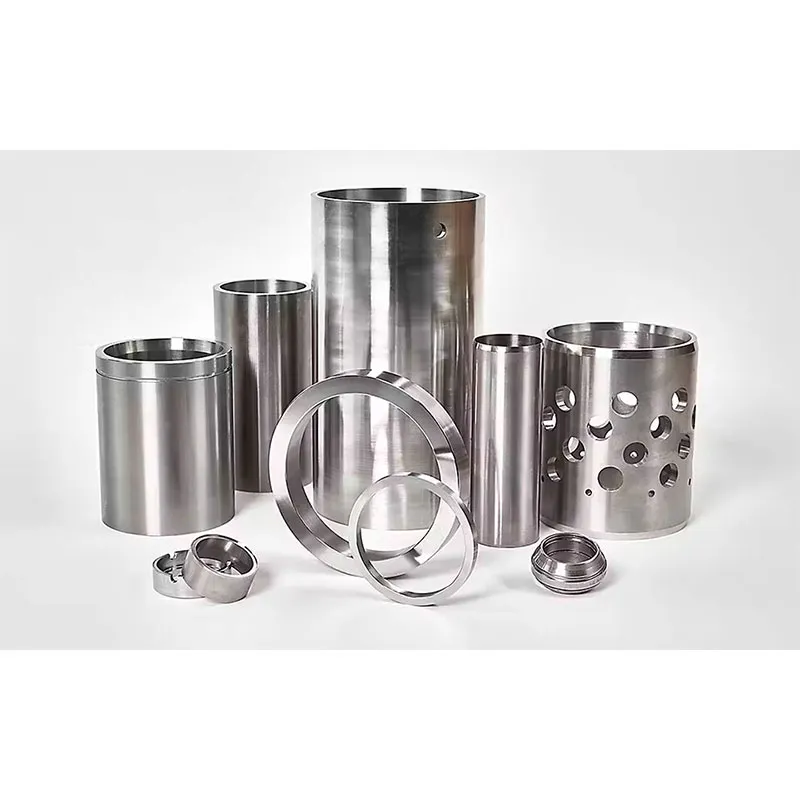
Complex metal casting is a specialized manufacturing process designed to produce intricate, high-precision metal components that cannot be easily created through standard machining or simple molding. This guide explores the primary types, including investment and sand casting, their critical applications in aerospace and medical industries, and expert insights on selecting the right methodology for demanding engineering projects.
What Is Complex Metal Casting?
Complex metal casting refers to the formation of molten metal into sophisticated geometries with tight tolerances, internal cavities, and fine surface details. Unlike basic casting methods used for simple blocks or bars, this discipline addresses challenges like undercuts, thin walls, and varying wall thicknesses within a single part.
The process relies on advanced pattern-making and mold technologies to ensure the final component meets rigorous structural and dimensional standards. Industries requiring high-performance parts often turn to these techniques because they reduce the need for secondary machining and assembly.
Key characteristics of these processes include the ability to work with superalloys, stainless steels, and aluminum alloys while maintaining metallurgical integrity. The result is a net-shape or near-net-shape part that saves material and reduces overall production time.
Why Standard Casting Fails for Intricate Designs
Traditional gravity casting often struggles with complex internal channels or extremely thin sections. Molten metal may cool too quickly before filling the entire cavity, leading to incomplete parts or cold shuts.
Furthermore, extracting a pattern from a standard sand mold without damaging delicate features is frequently impossible. Complex metal casting solves this by using sacrificial patterns or flexible molding materials that accommodate difficult geometries.
- Geometric Freedom: Allows for organic shapes and internal lattices.
- Material Efficiency: Minimizes waste compared to subtractive manufacturing.
- Structural Continuity: Eliminates weak points caused by welding multiple pieces together.
Primary Types of Complex Metal Casting Processes
Selecting the correct casting method is critical for project success. Each technique offers distinct advantages regarding surface finish, dimensional accuracy, and cost-effectiveness depending on the part’s complexity.
Investment Casting (Lost Wax Process)
Investment casting is widely regarded as the premier solution for highly complex components. It involves creating a wax pattern, coating it with a ceramic shell, and then melting the wax away to leave a precise cavity.
This method excels in producing parts with exceptional surface finishes and tight tolerances. It is particularly effective for components made from hard-to-machine materials like titanium or Inconel.
Typical applications include turbine blades, surgical instruments, and jewelry. The process supports intricate details that would be prohibitively expensive to machine from solid stock.
Precision Sand Casting
While traditional sand casting is known for rougher finishes, modern precision sand casting utilizes advanced binders and 3D-printed sand molds to achieve higher complexity. This approach bridges the gap between cost and detail.
It allows for larger part sizes than investment casting while still maintaining reasonable tolerances. The use of cold box or no-bake systems enhances the mold’s stability during pouring.
- Scalability: Suitable for both low-volume prototypes and medium-volume production.
- Size Range: Capable of producing very large, complex engine blocks or housing units.
- Cost Balance: Lower tooling costs compared to permanent mold options.
Die Casting for Complex Geometries
High-pressure die casting forces molten metal into steel molds at extreme speeds. While historically limited to simpler shapes, modern vacuum-assisted die casting enables more complex thin-walled structures.
This method is dominant in the automotive sector for mass-producing lightweight components. It offers excellent repeatability and high production rates once the initial tooling is established.
Limitations include high upfront tooling costs and restrictions on part size. However, for high-volume runs of complex aluminum or zinc parts, it remains unbeatable in efficiency.
Comparative Analysis of Casting Methods
Understanding the trade-offs between different complex metal casting techniques helps engineers make informed decisions. The following table highlights key differences based on industry standards.
| Feature |
Investment Casting |
Precision Sand Casting |
High-Pressure Die Casting |
| Dimensional Accuracy |
Very High |
Moderate to High |
High |
| Surface Finish |
Excellent (Smooth) |
Good (Textured) |
Excellent (Smooth) |
| Part Complexity |
Extremely High |
High |
Moderate to High |
| Material Flexibility |
Very Wide (Including Superalloys) |
Wide (Most Ferrous/Non-Ferrous) |
Limited (Mostly Non-Ferrous) |
| Production Volume |
Low to Medium |
Low to High |
Very High |
| Tooling Cost |
Moderate |
Low to Moderate |
Very High |
This comparison illustrates that no single method fits every scenario. Investment casting leads in complexity and material range, while die casting dominates in speed for non-ferrous metals. Precision sand casting offers a versatile middle ground for larger ferrous components.
Step-by-Step Guide to the Investment Casting Process
To understand how complex metal casting achieves such high precision, it is helpful to examine the workflow of the investment casting process. This sequence ensures that even the most intricate designs are replicated faithfully.
Step 1: Pattern Creation
The process begins with injecting wax or a similar thermoplastic material into an aluminum mold to create a pattern. For highly complex parts, multiple wax pieces may be assembled together to form the final geometry.
Critical factor: The pattern must account for metal shrinkage during cooling. Experienced pattern makers adjust dimensions precisely to ensure the final cast part meets specifications.
Step 2: Assembly and Gating
Individual wax patterns are attached to a central wax sprue to form a “tree.” This assembly includes gates and runners that will guide the molten metal into the cavities during pouring.
The design of the gating system is vital for complex parts. It must allow air to escape and metal to flow smoothly without causing turbulence, which could lead to defects.
Step 3: Ceramic Shell Building
The wax tree is dipped repeatedly into a ceramic slurry and stuccoed with fine sand. This builds up a thick, heat-resistant shell around the pattern. Multiple layers are required to withstand the thermal shock of molten metal.
- Primary Coat: Uses fine grain for surface detail replication.
- Backup Coats: Use coarser grains for structural strength.
- Drying: Each layer must dry completely before the next application.
Step 4: Dewaxing and Firing
The completed shell is placed in an autoclave or flash furnace to melt out the wax, leaving a hollow cavity. The shell is then fired at high temperatures to cure the ceramic and prepare it for pouring.
This step removes all organic material, ensuring no contaminants remain. The pre-heated shell also prevents the molten metal from cooling too rapidly upon entry.
Step 5: Pouring and Cooling
Molten metal is poured into the hot ceramic shell, often under vacuum or pressure to assist filling complex sections. The metal fills the void left by the wax and takes the exact shape of the original pattern.
Controlled cooling rates are essential to prevent cracking or warping. Once solidified, the ceramic shell is broken away via vibration or water blasting to reveal the metal tree.
Step 6: Cut-Off and Finishing
Individual castings are cut from the sprue using saws or abrasive wheels. The parts then undergo grinding, polishing, and heat treatment to achieve final mechanical properties and surface requirements.
Quality Control: Final inspection often includes X-ray analysis and coordinate measuring machine (CMM) checks to verify internal integrity and dimensional accuracy.
Applications Across Critical Industries
The capability to produce complex metal casting parts drives innovation in several high-stakes sectors. These industries rely on the unique benefits of casting to solve engineering challenges that other methods cannot address.
Aerospace and Defense
In aerospace, weight reduction and thermal resistance are paramount. Complex metal casting allows for the creation of hollow turbine blades with internal cooling channels, essential for jet engine efficiency.
Superalloys processed through investment casting can withstand extreme temperatures and stresses. This makes them indispensable for exhaust systems, structural brackets, and missile components where failure is not an option.
Medical and Surgical Devices
The medical field demands biocompatible materials and intricate geometries for implants and surgical tools. Complex casting produces orthopedic implants with porous surfaces that encourage bone ingrowth.
Surgical instruments often feature complex handles and jaws that are difficult to machine. Casting provides a cost-effective way to manufacture these tools in stainless steel or titanium with high precision.
- Implants: Hip joints, knee replacements, and spinal cages.
- Tools: Forceps, retractors, and robotic surgery components.
- Dental: Crowns, bridges, and partial denture frameworks.
Automotive and Transportation
Modern vehicles require lightweight yet strong components to improve fuel efficiency and safety. Complex metal casting is used for engine manifolds, transmission cases, and suspension parts.
Electric vehicles (EVs) increasingly utilize large, complex aluminum castings to integrate battery housings and structural elements. This reduces part count and assembly time while enhancing vehicle rigidity.
Advantages and Challenges of Complex Metal Casting
While complex metal casting offers unparalleled design freedom, it is important to recognize both its strengths and limitations. A balanced view helps in setting realistic project expectations.
Key Advantages
The primary benefit is the ability to create near-net-shape parts. This significantly reduces the amount of raw material wasted and minimizes the need for extensive post-casting machining.
Additionally, casting allows for the consolidation of multiple parts into a single component. By eliminating welds and fasteners, the final assembly gains structural integrity and reduced weight.
Material versatility is another major strength. Almost any metal alloy can be cast, allowing engineers to select the optimal material for specific environmental conditions, such as corrosion resistance or high-temperature stability.
Common Challenges
Despite its benefits, the process requires significant expertise. Defects like porosity, shrinkage, or misruns can occur if process parameters are not tightly controlled. These issues often require sophisticated simulation software to predict and prevent.
Lead times can be longer compared to simple machining, especially during the tooling and pattern-making phases. For urgent prototypes, this timeline must be factored into the project schedule.
Cost considerations vary by volume. While unit costs drop significantly at scale, low-volume runs may have higher per-part costs due to the amortization of pattern and tooling expenses.
Partnering with Industry Experts
Navigating the complexities of casting methodologies and material selection often requires the support of an experienced manufacturing partner. Qingdao Qiangsenyuan Technology Co., Ltd. (QSY) exemplifies this level of expertise, bringing over 30 years of dedicated experience in the casting and machining industry.
With a massive production facility spanning over 50,000 square meters, QSY operates comprehensive production lines for both shell mold casting and lost wax (investment) casting, complemented by a full-scale CNC machining workshop. Their integrated approach ensures seamless transitions from casting to final finishing, supported by dedicated quality inspection and packaging departments.
QSY specializes in handling a diverse range of materials, from standard cast iron and steel to high-performance stainless steels and special alloys, including cobalt-based and nickel-based superalloys. This material flexibility aligns perfectly with the demands of complex metal casting discussed earlier, enabling the production of durable components for challenging environments.
Serving clients in more than 20 countries, QSY provides one-stop customized processing services across various sectors, including agricultural machinery, medical and food processing equipment, industrial machinery, mining operations, and petrochemicals. Whether the requirement is for intricate medical devices or robust mining components, their proven track record demonstrates the capability to deliver high-quality solutions that meet global standards.
Expert Insights: Optimizing Design for Castability
Designing for complex metal casting requires a shift in mindset from machining. Engineers must consider how molten metal flows and solidifies to avoid defects and ensure quality.
Uniform Wall Thickness
Maintaining consistent wall thickness is crucial to prevent shrinkage porosity. Sudden changes in thickness cause uneven cooling, leading to internal voids or cracks.
If varying thicknesses are unavoidable, gradual transitions should be used. Ribbing can also be added to strengthen thin sections without increasing overall mass.
Draft Angles and Radii
Even in processes using sacrificial patterns, incorporating draft angles facilitates easier removal from molds or improves slurry drainage in shell building. Generous radii at corners reduce stress concentrations and improve metal flow.
Sharp corners act as stress risers and can initiate cracks during cooling or service. Rounding internal and external corners enhances the durability of the final component.
- Avoid Undercuts: Where possible, design parts without undercuts to simplify mold making.
- Machining Allowances: Specify where machining is needed and leave adequate stock for removal.
- Tolerance Specification: Apply tight tolerances only where functionally necessary to reduce cost.
Leveraging Simulation Technology
Modern foundries utilize computational fluid dynamics (CFD) and solidification modeling to simulate the casting process before a single pound of metal is poured. This predicts potential defect locations and optimizes gating systems.
Using these tools early in the design phase saves time and money by reducing trial-and-error iterations. It ensures that the complex geometry is feasible before committing to hard tooling.
Frequently Asked Questions (FAQ)
Below are answers to common questions regarding complex metal casting, addressing concerns about cost, materials, and suitability.
What is the minimum wall thickness achievable?
The minimum wall thickness depends on the material and the specific casting process. For investment casting in steel, walls as thin as 0.5 mm are possible, while aluminum die casting can achieve similar thinness. Sand casting typically requires thicker walls, usually starting around 3 mm, to ensure proper filling.
Can complex metal casting handle exotic alloys?
Yes, one of the strongest advantages of casting, particularly investment casting, is its ability to process exotic and superalloys. Materials like Inconel, Hastelloy, and Titanium are routinely cast for high-performance applications where machining would be too difficult or wasteful.
How does the cost compare to CNC machining?
For simple parts or very low volumes, CNC machining is often cheaper due to lower setup costs. However, as part complexity increases or production volumes rise, complex metal casting becomes more cost-effective. It eliminates extensive machine time and reduces material waste significantly.
What is the typical lead time for a project?
Lead times vary based on complexity and volume. Prototype runs using soft tooling or 3D printed patterns can be completed in a few weeks. Full production with hard tooling may take several months for initial setup, followed by faster cycle times for subsequent batches.
Are there size limitations for complex castings?
Size limits depend on the method. Investment casting is generally limited to smaller, intricate parts (usually under 50 lbs), while sand casting can produce massive components weighing several tons. Die casting falls in between, suitable for medium-sized parts produced in high volumes.
Conclusion and Strategic Recommendations
Complex metal casting stands as a cornerstone of modern manufacturing, enabling the production of high-performance components that define advancements in aerospace, medicine, and transportation. By mastering techniques like investment and precision sand casting, engineers can unlock design possibilities that subtractive methods simply cannot match.
The choice of casting method should align with your specific project requirements. If you need extreme precision and exotic materials for low-to-medium volumes, investment casting is the ideal path. For larger ferrous parts or cost-sensitive medium runs, precision sand casting offers a robust solution. High-volume non-ferrous needs are best met with die casting.
Who should use this approach? Product designers seeking to consolidate assemblies, reduce weight, or utilize high-temperature alloys will find the most value. Teams willing to invest in upfront design optimization and simulation will reap the greatest rewards in quality and long-term cost savings.
To move forward, evaluate your component’s geometric complexity and material needs against the capabilities outlined in this guide. Engaging with experienced foundry partners early in the design phase ensures that your complex metal casting project achieves optimal results from the first pour.