Monel 400 (UNS N04400) is the workhorse nickel-copper alloy for seawater, neutral salts, and reducing-acid service. But a monel 400 part is only as reliable as the supplier’s control over machining work-hardening, heat treatment, and documentation. This guide is written for procurement engineers and product designers in petrochemical, offshore, and pump/valve industries who need to confirm material suitability and supplier capability before issuing a purchase order. It covers the alloy’s composition and corrosion boundaries, the part types it commonly becomes, five questions to ask every supplier, and how to draw the selection line between Monel 400 and Monel K-500.
What Is a Monel 400 Part?
A monel 400 part is a component fabricated from the solid-solution nickel-copper alloy known commercially as Monel 400, designated UNS N04400. The alloy is roughly 63% nickel minimum and 28–34% copper, with small additions of iron, manganese, carbon, and silicon. Because nickel and copper are mutually soluble in all proportions, the alloy is single-phase and can be hardened only by cold working, not by heat treatment.
In procurement documents, the same material appears under several names: monel alloy 400 part, nickel 400 alloy part, Monel 400, and UNS N04400. These terms are interchangeable in sourcing contexts, though “Monel” is a trademark name. When a drawing specifies N04400, it is calling out the same nickel-copper grade.
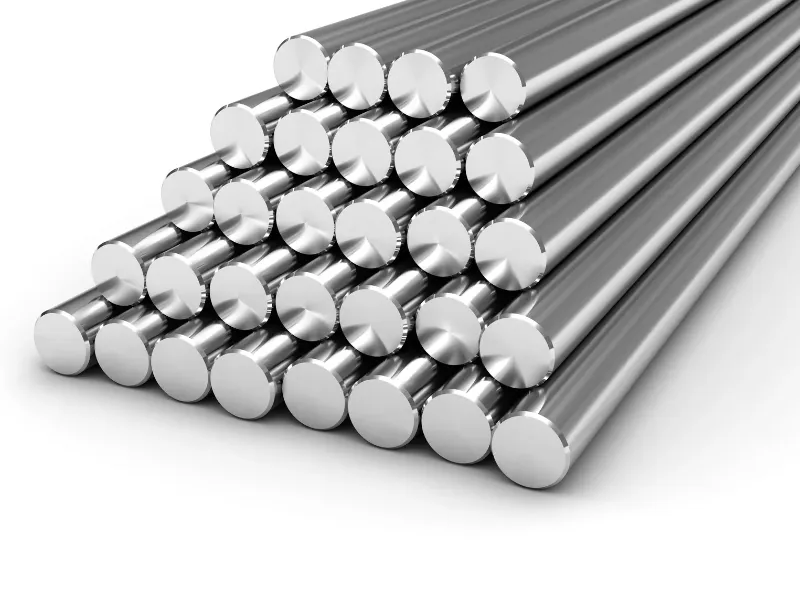
The alloy is supplied in multiple product forms relevant to component manufacturing:
| Form |
Relevant ASTM Specification |
| Plate, sheet, strip |
ASTM B127 |
| Bar, rod, forging stock |
ASTM B164 |
| Forgings (flanges, fittings) |
ASTM B564 |
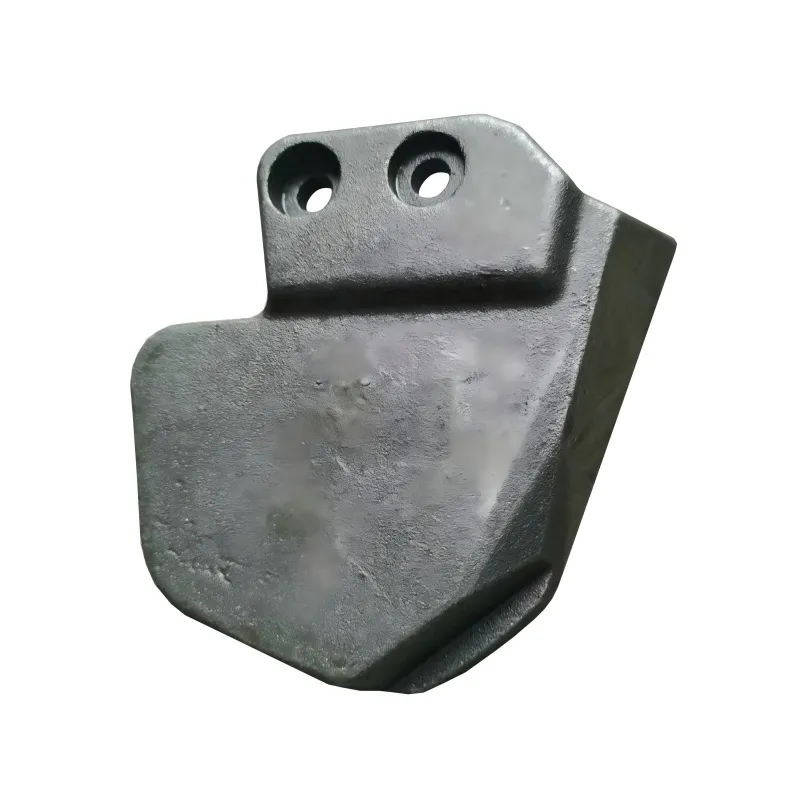
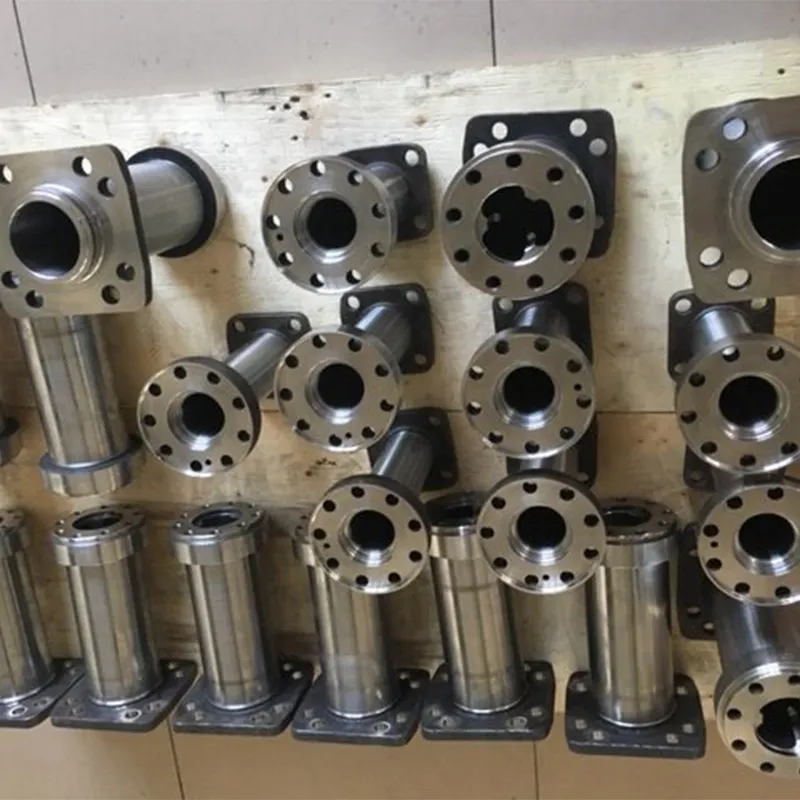
A finished part may originate as a casting, a forging, or a machined item cut from bar or plate. The procurement question is not only “is this N04400?” but “was the material processed and documented to maintain the properties N04400 is selected for?”
Why Choose Monel 400: The Boundaries of Its Corrosion Resistance
Monel 400 is often described as broadly corrosion-resistant, but that framing is too loose for selection work. The alloy performs exceptionally well inside a defined window and should be excluded outside it.
Where It Works: Seawater, Neutral Salts, and De-aerated Acids
Monel 400’s strongest case is in seawater corrosion resistance and chloride-bearing environments. The alloy resists rapidly flowing brackish water and seawater, and it is highly resistant to chloride ion stress corrosion cracking—a failure mode that limits many stainless steels in marine service. This is why pump bodies, valve trim, and marine fixtures are common Monel 400 applications.
The alloy also performs well in neutral and alkaline salt solutions, and in reducing acids under specific conditions. It is particularly resistant to hydrochloric and hydrofluoric acids when they are de-aerated. In chemical processing, this translates to use in hydrofluoric acid alkylation and certain sulfuric acid services where aeration is controlled.
A general pH range of roughly 2 to 12 is sometimes cited for Monel 400 service. This range should be treated as a screening guideline, not a guarantee. Actual performance depends on temperature, aeration, concentration, and the presence of oxidizing species. A pH value alone does not define corrosivity.
Where It Should Not Be Used: Oxidizing Conditions and Hot Concentrated Acid
Two boundaries matter most for procurement screening.
First, oxidizing conditions degrade Monel 400. Aeration increases corrosion rates in sulfuric and hydrochloric acid service. Oxidizing acid salts such as ferric chloride cause poor resistance. Published corrosion data for boiling sulfuric acid show a sharp escalation: at 5–10% concentration, corrosion rates are low (2.4–3.4 mpy), but at 50% concentration the rate jumps to approximately 650 mpy, and at higher concentrations it rises further. The exact threshold for a given service depends on temperature, concentration, and aeration, but the pattern is clear: hot, concentrated, aerated sulfuric acid is outside the alloy’s reliable window.
Second, sustained high tensile stress combined with certain corrosive media warrants caution. While Monel 400 has excellent resistance to chloride stress corrosion cracking, no alloy is immune under every combination of stress and environment. Parts that will operate under continuous high tensile load in a corrosive stream should have the stress state reviewed alongside the corrosion data, not treated as two separate questions.
A practical rule for the buyer: if the service involves hot concentrated acid, active aeration, or oxidizing salts, pause and request a corrosion assessment before accepting a Monel 400 quotation.
Typical Part Types and Industry Applications
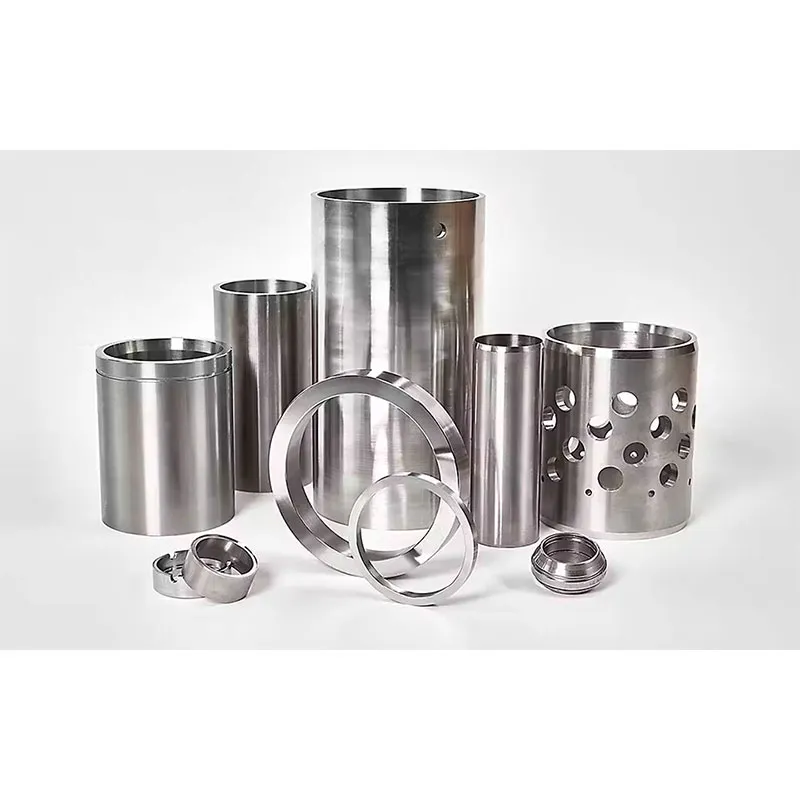
Monel 400 is specified where corrosion resistance is the primary driver and the required strength can be achieved through cold working or section design. The alloy appears across several part categories:
| Part Type |
Industry |
Material Driver |
| Pump casings, impellers, shafts |
Marine, chemical processing |
Seawater and chloride resistance; resistance to flowing brine |
| Valve bodies, trim, stems (low-pressure) |
Petrochemical, marine |
Corrosion resistance in reducing and neutral media |
| Heat exchanger tubing and shells |
Chemical, refinery |
Resistance to steam, seawater, and process chemicals |
| Fasteners and marine fixtures |
Offshore, shipbuilding |
Chloride stress corrosion cracking resistance |
| Flanges and fittings |
Chemical processing |
Consolidated corrosion performance in piping systems |
Alloy datasheets from multiple suppliers list valves and pumps, pump and propeller shafts, marine fixtures and fasteners, chemical processing equipment, heat exchangers, and crude petroleum stills as established applications. These are mature, well-documented uses—not emerging or speculative ones. A supplier quoting Monel 400 for these part types is working within the alloy’s established application space.
Five Questions to Confirm When Sourcing Monel 400 Parts
The material grade on a certificate does not guarantee a functional part. These five questions separate suppliers who understand Monel 400 from those who simply stock the alloy.
1. How Do You Control Machining Work-Hardening?
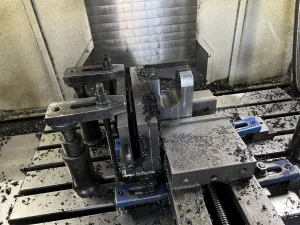
monel 400 machining is not like machining stainless steel. The alloy work-hardens very quickly, which means the surface layer hardens as the tool cuts, increasing tool wear and making deeper passes progressively more difficult. Suppliers who machine Monel 400 regularly use slow speeds, low feed rates, sharp tooling, and generous coolant. Suppliers who treat it like 316 stainless will burn through tools and may leave a hardened, stressed surface that affects part performance.
Ask for their approach: Do they use carbide or high-speed steel tooling? What cutting parameters do they standardize? Have they machined N04400 before, or is this a first attempt? A supplier who cannot describe their work-hardening control in concrete terms is a risk.
2. What Surface Finish Will the Part Have, and How Is It Verified?
Surface finish matters for sealing faces, bearing surfaces, and any feature where corrosion initiates. Specify the required Ra value on the drawing and confirm how the supplier measures it. For critical sealing surfaces, a profilometer reading should be part of the inspection record. “Good finish” is not a specification.
3. Is Solid Solution Annealing Required, and Can You Document It?
Monel 400 is hardened only by cold working, so any cold-forming or aggressive machining that leaves residual stress can reduce corrosion resistance and dimensional stability. solid solution annealing restores the alloy’s soft, corrosion-resistant condition. Annealing temperatures are typically reported in the range of 870–980°C (1600–1800°F), with rapid cooling to achieve optimal corrosion performance. The specific cycle should be matched to the part’s prior processing and required grain size.
For a machined part from annealed bar, annealing may not be necessary. For a cold-formed or heavily machined component, it may be. The supplier should be able to state whether the delivered part is in the annealed condition and provide the heat treatment record if annealing was performed.
4. What Material Certificates Will Accompany the Parts?
At minimum, request an EN 10204 3.1 certificate that ties the finished parts to the heat number of the raw material. The certificate should state UNS N04400 and the applicable product form specification (for example, ASTM B127 for plate, B164 for bar, or B564 for forgings). If the part was machined from bar, the bar certification should be traceable to the finished component. A certificate that lists “Monel 400” without a UNS number or heat trace is not sufficient for critical service.
5. How Is Traceability Maintained from Raw Material to Finished Part?
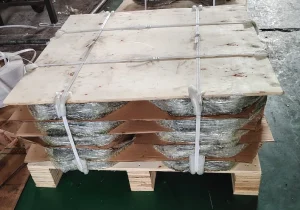
Traceability means you can follow a finished part back to the mill heat that produced the raw material, and forward from that heat to all parts made from it. Ask how the supplier marks or records heat numbers, how they segregate material during production, and whether inspection records are retained and retrievable. For petrochemical and offshore projects, this is often an audit requirement, not a nice-to-have.
Monel 400 vs Monel K-500: How to Draw the Selection Line
Monel K-500 (UNS N05500) is the age-hardenable version of the same nickel-copper family. It adds aluminum and titanium, which form gamma-prime precipitates during aging and raise strength and hardness substantially. The two alloys share a base composition but serve different selection purposes.
| Property |
Monel 400 (N04400) |
Monel K-500 (N05500) |
| Strengthening mechanism |
Cold work only |
Precipitation hardening (aging) |
| Typical tensile strength (annealed/aged) |
~480–585 MPa (annealed) |
~1034 MPa typical (aged) |
| Typical yield strength |
~195–210 MPa (annealed) |
~724 MPa typical (aged) |
| Relative corrosion resistance |
Baseline |
Similar base corrosion resistance; age-hardening precipitates do not significantly alter electrochemical behavior |
| Best fit for |
Corrosion resistance with moderate strength; piping, valve bodies, heat exchangers, pump casings |
High strength plus corrosion resistance; pump shafts, valve stems, impellers, high-strength fasteners, springs |
The selection line is straightforward: choose Monel 400 when corrosion resistance and fabricability are the primary requirements and the design can accommodate moderate strength. Choose K-500 when the part must carry high mechanical load—pump shafts, valve stems, subsea fasteners—and the corrosion environment is within the nickel-copper family’s capability. K-500 achieves its strength through aging, so the supplier must have aging capability and documentation; it is not a drop-in substitute for 400 without re-evaluating the entire part design and procurement chain.
One procurement caution: do not use K-500 property data to qualify a 400 part, or vice versa. The numbers are not interchangeable, and a certificate for one does not cover the other.
FAQ
Is Monel 400 the same as Nickel 400 alloy?
Yes. Monel 400, Nickel 400 alloy, and UNS N04400 all refer to the same nickel-copper alloy composition. “Monel” is a trademark name, but the UNS number is the most reliable identifier in purchase specifications.
Can Monel 400 parts be used for continuous seawater immersion?
Monel 400 has excellent resistance to flowing seawater and is commonly used in marine pump and valve components. However, performance depends on velocity, aeration, temperature, and the presence of deposits or crevices. It is not a universal seawater answer—confirm the specific service conditions.
Why is Monel 400 difficult to machine?
The alloy work-hardens rapidly under cutting forces. The surface layer hardens as the tool passes, increasing wear and making subsequent passes harder. Slow speeds, low feeds, sharp tooling, and adequate cooling are essential. A supplier without nickel-alloy machining experience will likely struggle.
Does Monel 400 always need solid solution annealing after machining?
No. Parts machined from annealed bar with light cuts may not require post-machining annealing. Parts that are cold-formed, heavily machined, or intended for critical corrosion service may need it. The requirement should be decided per part, based on processing history and service demands.
What certificate should I request for Monel 400 parts?
An EN 10204 3.1 material certificate that states UNS N04400, the raw material heat number, and the applicable product form specification (such as ASTM B127, B164, or B564). The certificate should be traceable to the finished parts.
Request Material Certificates or Samples
If you are evaluating Monel 400 for a pump, valve, marine, or chemical processing component, the next step is to confirm supplier capability against the five questions above. You can review the Monel alloy 400 part product page at Monel alloy 400 part product page for available part types and submit your drawing or service conditions for a material certificate review or sample request. Include the corrosive media, operating temperature, and any certificate or traceability requirements in your inquiry so the response is specific to your application.