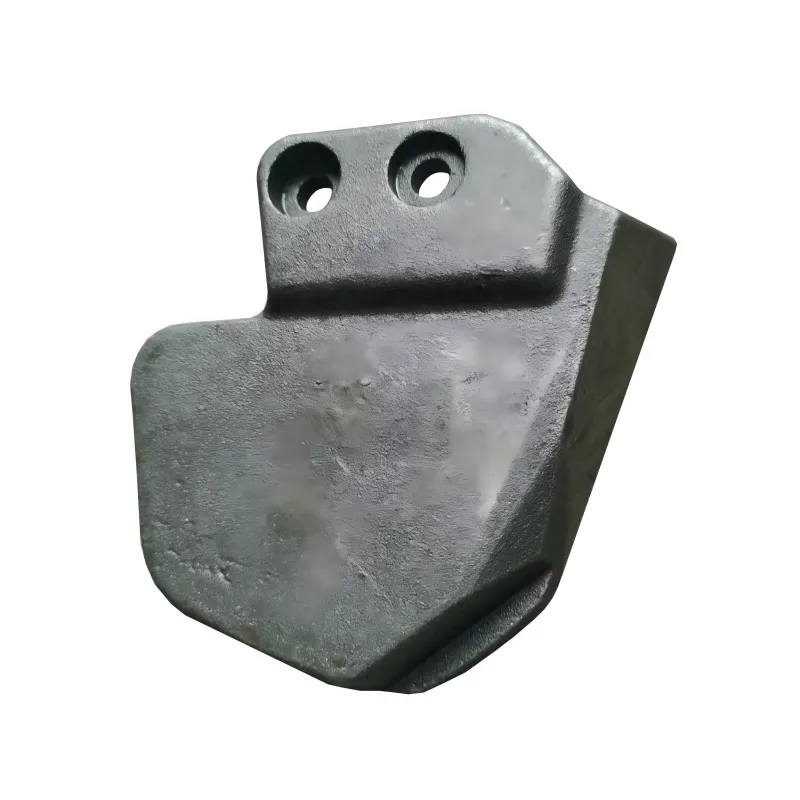
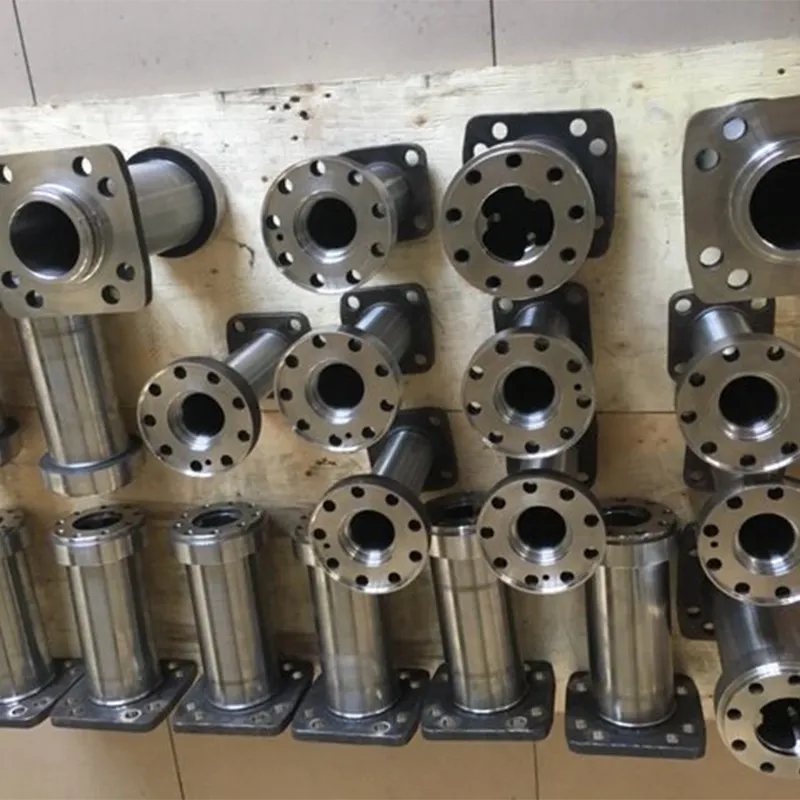
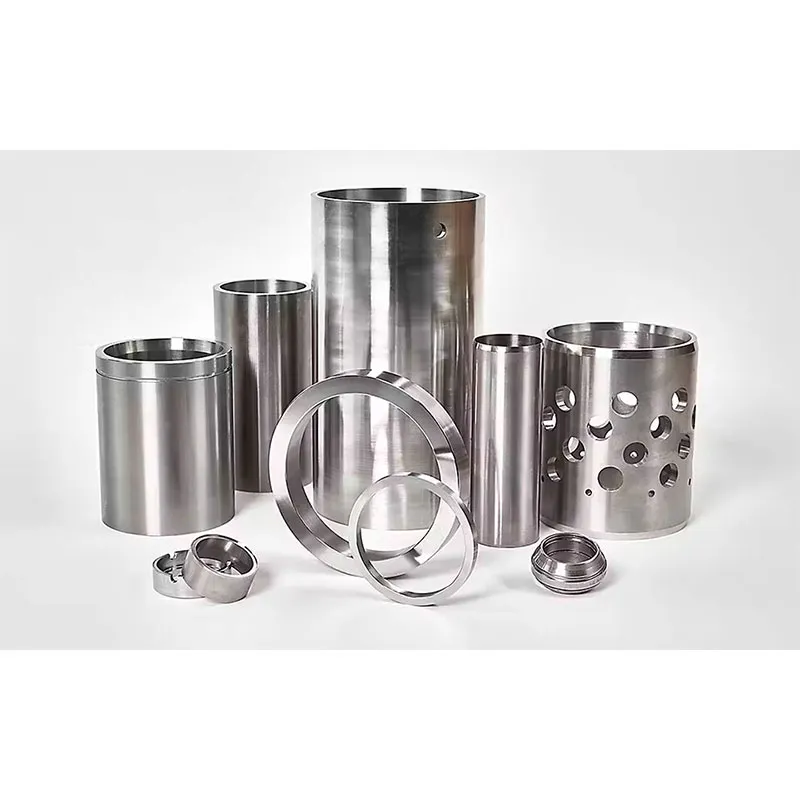
Cast iron parts are essential structural and functional components manufactured through the casting process, where molten iron is poured into molds to create complex geometries. As a specialized OEM manufacturer, we deliver custom precision casting solutions that meet rigorous industrial standards for durability, heat resistance, and mechanical strength. Our expertise spans gray iron, ductile iron, and malleable iron variants, serving sectors from automotive to heavy machinery. By integrating advanced simulation software with traditional foundry craftsmanship, we ensure dimensional accuracy and superior material integrity for every cast iron part produced.
Understanding Cast Iron Parts: Material Science and Manufacturing Excellence
Cast iron is not a single material but a family of ferrous alloys characterized by a carbon content greater than 2%. This high carbon level, combined with silicon, gives cast iron its distinctive properties: excellent castability, good machinability, and superior vibration damping. For engineers and procurement specialists, understanding the microstructural differences between iron types is critical for selecting the right component for specific load-bearing and environmental conditions.
The Metallurgical Advantage of Cast Iron
Unlike steel, which requires forging or extensive machining to achieve complex shapes, cast iron flows easily into intricate mold cavities. This fluidity allows for the production of parts with thin walls and detailed features that would be cost-prohibitive to machine from solid blocks. The graphite structure within the iron matrix plays a pivotal role in performance. In gray iron, graphite flakes act as natural lubricants during machining and provide exceptional damping capacity, reducing noise and vibration in dynamic applications. In ductile iron, spheroidal graphite nodules enhance tensile strength and elongation, making it suitable for high-stress environments.
Our manufacturing process leverages these metallurgical traits. We control cooling rates and alloy compositions to tailor the grain structure, ensuring that each cast iron part meets the precise hardness and toughness requirements defined by international standards such as ASTM, ISO, and DIN. This control minimizes internal stresses and prevents premature failure under operational loads.
Why Choose Custom Precision Casting?
Standard off-the-shelf components often fail to meet the unique spatial or functional demands of modern machinery. Custom precision casting bridges this gap by allowing designers to optimize part geometry for weight reduction, fluid dynamics, or assembly efficiency. By working directly with an OEM partner, businesses can eliminate secondary operations, reduce assembly time, and lower total lifecycle costs. Precision casting ensures tight tolerances, often within ±0.5mm, reducing the need for extensive post-casting machining.
Types of Cast Iron Used in Industrial Manufacturing
Selecting the correct grade of cast iron is fundamental to product reliability. Each type offers a distinct balance of strength, ductility, and wear resistance. Our facility specializes in producing four primary categories of cast iron parts, each engineered for specific application profiles.
Gray Cast Iron (Grey Iron)
Gray cast iron is the most widely used cast iron type, identifiable by the gray fracture surface caused by the presence of graphite flakes. It offers excellent compressive strength and thermal conductivity. Key characteristics include:
- Vibration Damping: Ideal for machine tool bases, engine blocks, and pump housings where stability is crucial.
- Machinability: The graphite flakes break up chips during cutting, extending tool life and reducing processing time.
- Wear Resistance: Suitable for sliding surfaces such as cylinder liners and brake discs.
Common grades include GJL-150 to GJL-350 (EN 1561) and Class 20 to Class 40 (ASTM A48). We optimize the carbon equivalent value to prevent chilling in thin sections while maintaining structural integrity.
Ductile Cast Iron (Nodular Iron)
Ductile iron, also known as spheroidal graphite iron, contains spherical graphite nodules rather than flakes. This microstructure provides significant improvements in tensile strength and impact resistance compared to gray iron. It is often used as a cost-effective alternative to forged steel.
- High Strength-to-Weight Ratio: Allows for thinner wall designs without compromising load-bearing capacity.
- Ductility: Can withstand deformation without fracturing, making it suitable for pipe fittings, automotive suspension components, and wind turbine hubs.
- Fatigue Resistance: Superior performance in cyclic loading applications.
Standard grades range from GJS-400 to GJS-700 (EN 1563) and 60-40-18 to 120-90-02 (ASTM A536). Our metallurgists carefully control magnesium or cerium addition during the inoculation process to ensure proper nodule formation.
Malleable Cast Iron
Malleable iron is produced by heat-treating white cast iron, converting brittle cementite into temper carbon nodules. This process results in a material with good ductility and toughness, particularly in thinner sections. It is commonly used for small complex parts like hand tools, electrical fittings, and automotive components requiring moderate strength and shock resistance.
Austenitic Ductile Iron (Ni-Resist)
For extreme environments involving high temperatures or corrosive media, we produce austenitic ductile iron. Alloyed with nickel and chromium, this material retains its strength and oxidation resistance at elevated temperatures. Applications include exhaust manifolds, turbocharger housings, and chemical processing equipment.
Our OEM Manufacturing Process: From Design to Delivery
At Qingdao Qiangsenyuan Technology Co., Ltd. (QSY), we bring over 30 years of experience in the casting and machining industry to every project. As a comprehensive OEM cast iron parts manufacturer, we manage the entire production lifecycle. Our workflow integrates digital engineering with robust foundry practices to ensure consistency and quality. Below is our standard operational procedure for custom projects.
Step 1: Design Analysis and Feasibility Study
The process begins with a thorough review of customer drawings or CAD models. Our engineering team evaluates manufacturability, identifying potential issues such as undercuts, uneven wall thicknesses, or shrinkage risks. We utilize Computer-Aided Engineering (CAE) software to simulate mold filling and solidification. This step allows us to predict and mitigate defects like porosity or hot spots before physical tooling is created.
Step 2: Pattern and Mold Making
Based on the approved design, we fabricate high-precision patterns. For low-volume runs, we may use 3D-printed sand molds or rapid prototyping techniques. For high-volume production, we create durable metal or resin patterns. Our molding lines employ either green sand molding for flexibility or no-bake resin sand molding for larger, more complex parts requiring higher dimensional stability. Additionally, leveraging our specialization in shell mold casting and lost wax casting, we offer versatile molding solutions tailored to specific geometric complexities and surface finish requirements.
Step 3: Melting and Pouring
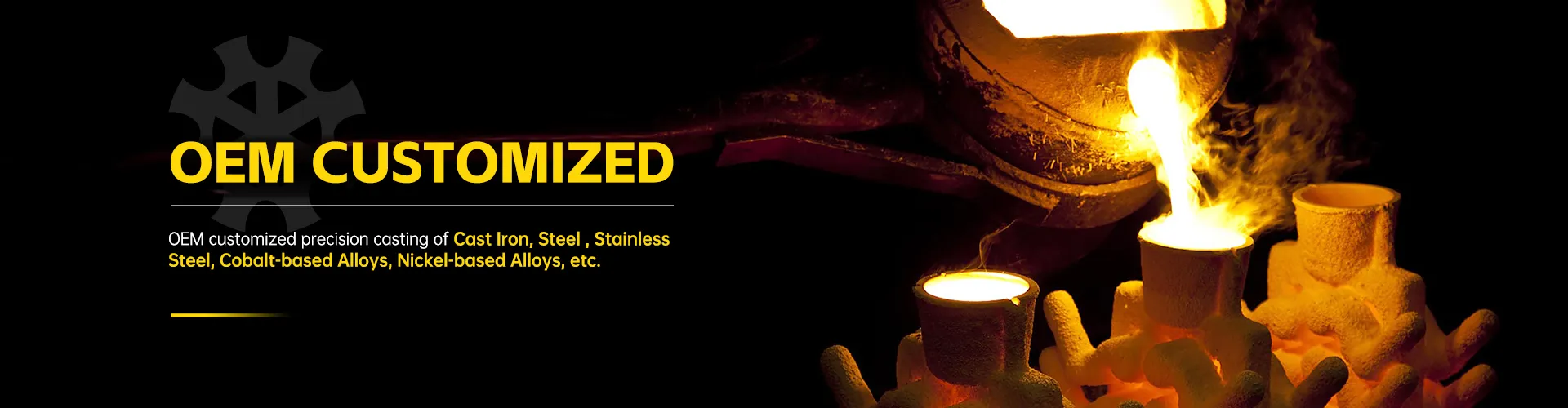
Raw materials, including pig iron, scrap steel, and ferroalloys, are melted in induction furnaces or cupolas. Strict chemical composition control is maintained using spectrometry. Once the melt reaches the target temperature and composition, it is tapped and poured into prepared molds. Temperature monitoring ensures optimal fluidity and minimizes thermal shock to the mold.
Step 4: Cooling and Shakeout
After pouring, the castings are allowed to cool at controlled rates to prevent residual stress and cracking. Once solidified, the sand molds are broken away (shakeout), and the raw castings are retrieved. At this stage, visual inspections are conducted to identify major surface defects.
Step 5: Fettling and Heat Treatment
Fettling involves removing gating systems, risers, and flash from the casting. Surfaces are cleaned via shot blasting to remove scale and improve surface finish. Depending on the material specification, parts may undergo heat treatment processes such as annealing, normalizing, or quenching and tempering to achieve desired mechanical properties.
Step 6: Machining and Quality Assurance
Precision CNC machining is performed to achieve final dimensions and surface finishes for mating surfaces. Our quality control lab conducts rigorous testing, including:
- Dimensional Inspection: Using CMM (Coordinate Measuring Machines) and laser scanning.
- Material Testing: Tensile strength, hardness, and impact tests.
- Non-Destructive Testing (NDT): Magnetic particle inspection and ultrasonic testing to detect internal flaws.
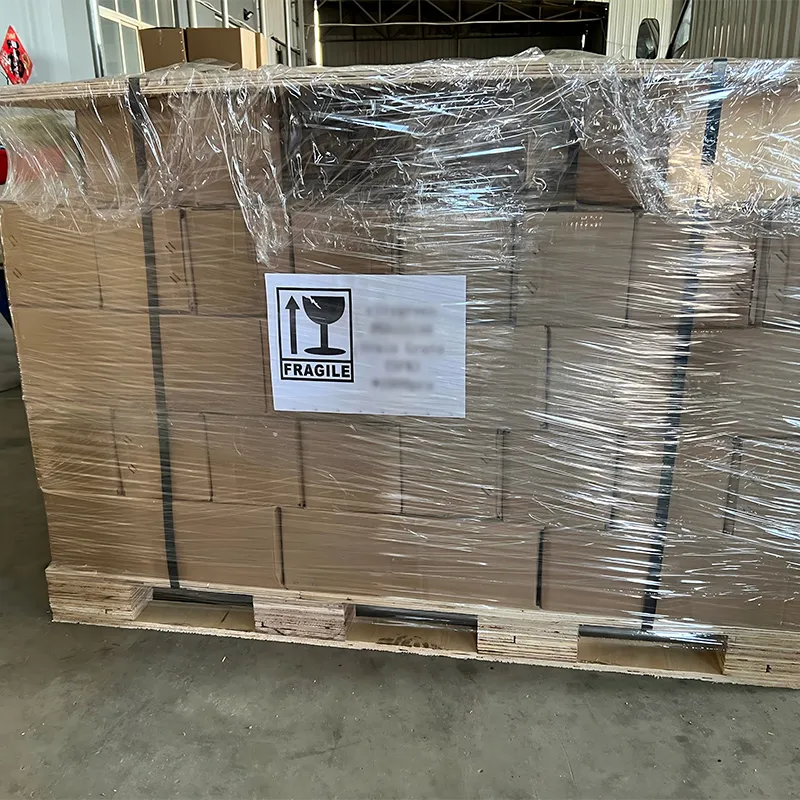
Only parts passing all quality gates are packaged and shipped. This end-to-end control ensures that every cast iron part meets the exact specifications required by our clients.
Key Industries and Applications for Cast Iron Components
The versatility of cast iron makes it indispensable across a wide range of industries. Our custom solutions support critical infrastructure and consumer products alike. Understanding these applications helps engineers specify the most appropriate material and design features.
Automotive and Transportation
The automotive sector remains the largest consumer of cast iron parts due to the material’s ability to withstand high pressures and temperatures. Common components include:
- Engine Blocks and Cylinder Heads: Gray iron provides the necessary damping and wear resistance for pistons and rings.
- Brake Discs and Drums: High thermal conductivity and friction stability are essential for safety.
- Suspension Components: Ductile iron control arms and knuckles offer the strength needed for road loads while reducing weight compared to steel forgings.
- Gearbox Housings: Precision casting ensures accurate alignment of gears and bearings.
Heavy Machinery and Construction Equipment
Construction machinery operates in harsh environments with heavy loads and vibrations. Cast iron components provide the durability required for excavators, loaders, and cranes. Applications include:
- Hydraulic Pump Housings: Must withstand high internal pressures without leakage.
- Track Shoes and Rollers: Require high abrasion resistance.
- Counterweights: Gray iron’s high density makes it ideal for balancing heavy lifting equipment.
Energy and Power Generation
In the energy sector, reliability is paramount. Cast iron parts are used in wind turbines, hydroelectric plants, and oil and gas infrastructure. Ductile iron is preferred for wind turbine hubs and main frames due to its fatigue resistance. In oil and gas, valve bodies and pump casings made from corrosion-resistant iron alloys ensure safe operation in aggressive media.
Industrial Pumps and Valves
Fluid handling systems rely heavily on cast iron for pump volutes, impellers, and valve bodies. The material’s corrosion resistance (especially when coated or alloyed) and ease of casting complex internal passages make it the standard choice for water, wastewater, and chemical processing industries. Our precision casting capabilities allow for smooth internal surfaces that reduce turbulence and improve flow efficiency.
Agricultural, Medical, and Food Processing Machinery
Beyond heavy industry, QSY serves diverse sectors including agricultural machinery, medical devices, and food processing equipment. In these fields, hygiene, precision, and reliability are critical. We utilize stainless steel and special alloys alongside cast iron to produce components that meet strict sanitary standards and operational demands. Whether it is durable gearboxes for tractors or precise structural parts for medical imaging equipment, our one-stop customized casting and machining services ensure high performance across all applications.
Comparative Analysis: Cast Iron vs. Steel Casting
Choosing between cast iron and steel casting is a common dilemma for design engineers. While both are ferrous alloys, their properties and manufacturing implications differ significantly. The following table highlights key differences to aid in material selection.
| Feature |
Cast Iron |
Steel Casting |
| Carbon Content |
> 2% |
< 2% |
| Castability |
Excellent; flows easily into complex molds |
Good; higher melting point requires more energy |
| Machinability |
Superior; graphite acts as lubricant |
Moderate to Poor; tougher material wears tools faster |
| Vibration Damping |
High; ideal for precision machinery bases |
Low; transmits vibration more readily |
| Tensile Strength |
Moderate (Gray); High (Ductile) |
Very High |
| Impact Resistance |
Low (Gray); Good (Ductile) |
Excellent |
| Cost Efficiency |
Lower material and machining costs |
Higher material and processing costs |
| Typical Applications |
Engine blocks, pump housings, machine bases |
High-stress structural parts, mining equipment |
For applications where vibration damping, machinability, and cost-effectiveness are priorities, cast iron parts are the superior choice. However, for extreme impact loads or very high tensile requirements, steel casting may be more appropriate. Our engineering team can assist in evaluating these trade-offs to optimize your design.
Design Guidelines for Optimizing Cast Iron Parts
To maximize the benefits of cast iron and minimize manufacturing costs, designers should adhere to specific guidelines. These principles help prevent defects and ensure consistent quality.
Maintain Uniform Wall Thickness
Varying wall thicknesses lead to uneven cooling rates, causing internal stresses, warping, or shrinkage cavities. Designers should aim for uniform walls wherever possible. Where thickness changes are necessary, gradual transitions using fillets and radii should be employed to distribute stress and facilitate metal flow.
Use Draft Angles
Draft angles are tapered surfaces added to vertical walls to facilitate pattern removal from the sand mold. Without adequate draft, the pattern can damage the mold cavity, leading to dimensional inaccuracies. Typical draft angles range from 1° to 3°, depending on the depth of the feature and the molding process used.
Incorporate Fillets and Radii
Sharp corners act as stress concentrators and can initiate cracks during cooling or service. Adding fillets to internal corners and radii to external corners improves structural integrity and promotes smoother metal flow during pouring. This simple design change significantly enhances the fatigue life of the component.
Consider Shrinkage Allowance
Cast iron shrinks as it cools from liquid to solid state. Patterns must be oversized to compensate for this shrinkage. The amount of shrinkage varies by iron type (gray iron shrinks less than ductile iron). Our engineering team accounts for these factors during pattern design to ensure final dimensions meet specifications.
Quality Standards and Certifications
Trustworthiness in manufacturing is built on adherence to recognized standards. Operating from a production workshop covering over 50,000 square meters, QSY maintains strict quality management systems to ensure every cast iron part meets global requirements. We are compliant with ISO 9001 standards for quality management, ensuring consistent processes and continuous improvement.
Material certifications are provided with every batch, detailing chemical composition and mechanical properties. We follow international standards such as:
- ASTM (American Society for Testing and Materials): A48 for Gray Iron, A536 for Ductile Iron.
- ISO (International Organization for Standardization): 185 for Gray Iron, 1083 for Ductile Iron.
- DIN (Deutsches Institut für Normung): EN 1561 and EN 1563 series.
- JIS (Japanese Industrial Standards): G5501 for Gray Iron, G5502 for Ductile Iron.
Regular audits and third-party inspections are conducted to maintain compliance and validate our testing procedures. This commitment to transparency and quality assurance builds long-term trust with our global partners in more than 20 countries.
Frequently Asked Questions (FAQ)
What is the minimum wall thickness for cast iron parts?
The minimum wall thickness depends on the size of the casting and the type of iron used. For small gray iron castings, walls as thin as 3mm are possible. For larger ductile iron parts, a minimum of 5-6mm is recommended to ensure proper filling and avoid chilling. Our engineers can evaluate specific designs to determine feasible limits.
How does cast iron compare to aluminum in terms of weight and strength?
Cast iron is approximately three times denser than aluminum, making it heavier. However, it offers higher compressive strength and better vibration damping. Aluminum is preferred for weight-sensitive applications, while cast iron is chosen for durability, heat resistance, and cost-effectiveness in high-volume production.
Can cast iron parts be welded?
Welding cast iron is challenging due to its high carbon content and brittleness. Gray iron, in particular, is prone to cracking during welding. Specialized techniques, such as pre-heating, using nickel-based filler metals, and controlled cooling, are required. Ductile iron is more weldable than gray iron. In many cases, mechanical fastening or brazing is preferred over welding.
What is the typical lead time for custom cast iron orders?
Lead times vary based on complexity, volume, and tooling requirements. Prototype samples can be produced in 2-4 weeks using rapid tooling. Full production runs typically require 6-8 weeks, including pattern making and machining. We offer expedited services for urgent projects, subject to capacity availability.
Do you provide surface treatment options?
Yes, we offer various surface treatments to enhance appearance and corrosion resistance. These include painting, powder coating, electroplating, galvanizing, and black oxide finishing. Shot blasting is standard for cleaning and preparing surfaces for further treatment.
Common Defects in Cast Iron Casting and How We Prevent Them
Understanding potential defects is crucial for maintaining quality. Here are common issues and our preventive measures:
- Porosity: Caused by trapped gas or shrinkage. We prevent this by optimizing gating systems, using venting channels, and controlling melt purity.
- Cold Shuts: Occur when molten metal cools too quickly before filling the mold. We address this by adjusting pouring temperature and improving mold insulation.
- Inclusions: Foreign particles in the metal. Strict slag removal practices and filtered pouring systems minimize this risk.
- Warpage: Distortion due to uneven cooling. Uniform wall design and controlled cooling rates mitigate this issue.
Our proactive approach to defect prevention ensures high yield rates and consistent product quality, reducing waste and cost for our clients.
Sustainability in Cast Iron Manufacturing
In 2026, sustainability is a core concern for industrial manufacturers. Cast iron is inherently recyclable, with nearly 100% of scrap material capable of being remelted and reused. Our facility prioritizes energy-efficient melting technologies and waste sand reclamation systems. By choosing cast iron, companies contribute to a circular economy, reducing the environmental footprint of their supply chain. We are committed to continuous improvement in energy consumption and emissions control, aligning with global environmental standards.
Conclusion: Partnering for Precision and Performance
Selecting the right manufacturing partner for cast iron parts is a strategic decision that impacts product performance, cost, and time-to-market. With over three decades of expertise, Qingdao Qiangsenyuan Technology Co., Ltd. (QSY) combines metallurgical knowledge, advanced precision casting technology (including shell mold and lost wax casting), and rigorous CNC machining capabilities to ensure your components meet the highest standards of reliability and efficiency. Whether you need high-volume automotive components, specialized industrial machinery parts, or intricate medical device components, we provide tailored one-stop solutions that drive value.
We serve engineers, procurement managers, and business owners who prioritize quality, consistency, and technical support. By leveraging our OEM capabilities and extensive production facilities, you gain access to a streamlined production process that minimizes risk and maximizes output.
Ready to optimize your next project?
Contact our engineering team today to discuss your design requirements, request a quote, or learn more about our custom casting capabilities. Let us help you achieve precision, durability, and cost-efficiency in your manufacturing supply chain.
Explore Our Cast Iron Solutions and Request a Quote