Precision casting for medical devices is one of the most reliable manufacturing processes for producing complex, high-integrity medical equipment parts that cannot be easily achieved by conventional machining or stamping. Unlike general industrial precision mechanical parts, medical castings must balance mechanical performance, long-term safety and strict regulatory compliance. For design engineers, procurement teams and quality auditors, selecting the wrong material or overlooking a tolerance deviation can lead to product recalls, clinical safety risks and failed regulatory audits. This guide systematically covers approved casting materials, biocompatibility rules, tolerance standards, surface finish requirements and sterilization compatibility, to help you make technically sound and compliant decisions in custom medical equipment casting projects.
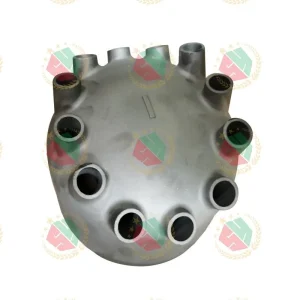
1. Introduction to Precision Casting for Medical Devices
Medical device components often feature thin walls, irregular inner cavities, fine connection structures and smooth transition surfaces that are difficult to machine in one piece. Precision casting for medical devices allows near-net-shape forming under controlled process conditions, which significantly reduces subsequent machining volume, material waste and the risk of introducing secondary contamination.
Unlike standard industrial stainless steel casting parts, medical precision castings are developed around clinical safety, long-term biocompatibility and repeatable batch consistency. They are widely used in surgical instruments, diagnostic equipment structural parts, minimally invasive surgical functional components and permanent or temporary implant accessories. This process is especially valuable for small-batch, high-mix custom medical projects, where opening a full forging die would lead to unnecessary cost and long lead times.
2. Approved Casting Materials for Medical Device Components
Material selection is the foundation of medical casting compliance. Not all common industrial alloys are suitable for medical scenarios, and all selected materials must have clear traceability records and meet recognized medical industry specifications. The three most widely verified and accepted material categories are as follows.
| Alloy Type |
Core Advantage |
Typical Medical Application |
| 316L / 316LVM Stainless Steel |
Excellent sterilization cycle resistance, mature clinical data, high cost efficiency |
Surgical instrument frames, non-implant device structures, temporary implant accessories |
| Titanium / Titanium Alloy |
Low density, biological inertness, low elastic modulus close to human bone |
Long-term implant components, lightweight rehabilitation device parts |
| Cobalt-Chromium Alloy |
Extreme wear resistance, high hardness under repeated friction |
Articulating joint parts, high-load surgical power tool components |
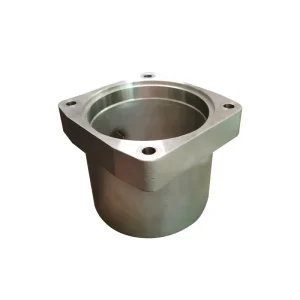
2.1 316L and 316LVM Stainless Steel Casting Parts for Medical Use
316L is the most commonly used material for non-implant and short-term contact medical equipment parts, fully compliant with ASTM F138, the globally recognized standard for surgical implant stainless steel materials. Its low carbon content reduces intergranular corrosion risk after repeated sterilization cycles, making it suitable for surgical tool bases, instrument frames and general diagnostic device structural components.
316LVM (Vacuum Melting) further improves material purity through vacuum remelting, reducing non-metallic inclusions and magnetic susceptibility. This grade is preferred for components that require higher stability and lower residual magnetism in MRI-compatible environments. Typical applications include precision mechanical parts that need to withstand thousands of autoclave cycles without obvious performance degradation.
2.2 Titanium and Titanium Alloy Precision Mechanical Parts
Titanium and titanium alloys offer excellent strength-to-weight ratio, natural biological inertness and very low density, which makes them ideal for components that require long-term body contact or lightweight design. High-load implant-grade titanium castings produced by precision casting for medical devices usually go through hot isostatic pressing (HIP) treatment to eliminate internal micro porosity, ensuring consistent fatigue performance under repeated loading. Non-implant titanium medical parts do not require mandatory HIP processing, which helps reduce unnecessary manufacturing cost for non-critical components.
Common application scenarios include orthopedic auxiliary structures, rehabilitation device frames and parts that require long-term corrosion resistance in body fluid environments. Compared with stainless steel casting parts, titanium castings have lower elastic modulus closer to human bone tissue, which reduces the stress shielding effect in load-bearing scenarios.
2.3 Cobalt-Chromium Alloy for High-Wear Medical Components
Cobalt-chromium alloy is selected for medical equipment parts that face extreme friction, repeated movement and high contact pressure. Its high hardness and excellent wear resistance make it irreplaceable in scenarios where other metals would show rapid wear after millions of motion cycles.
Typical uses include joint articulating components, dental framework parts and high-load transmission structures inside surgical power tools. Even under continuous lubricated or semi-dry friction conditions, properly cast cobalt-chromium parts can maintain stable dimensional accuracy far beyond the service life of ordinary stainless steel alternatives.
3. Biocompatibility and Forbidden Materials in Medical Casting
Even if a material shows good mechanical performance, it cannot be used in medical scenarios without passing systematic biocompatibility evaluation. Most global medical regulatory systems reference the ISO 10993 series of standards, which cover cytotoxicity, skin sensitization, irritation, systemic toxicity and long-term implantation risk assessment.
The core difference between medical-grade and industrial-grade versions of the same alloy lies in far stricter control over material purity, non-metallic inclusions and trace harmful element precipitation, not just basic chemical composition ranges. All raw materials used in precision casting for medical devices must come from certified medical-grade suppliers, with complete heat number traceability and material certificates. Industrial grade stainless steel that does not control heavy metal precipitation, unapproved low-cost alloy substitutes and recycled materials without full component verification are strictly forbidden for medical casting production. Using non-compliant materials may lead to unexpected ion release, local tissue reaction and serious post-market safety events.
4. Tolerance and Dimensional Accuracy Standards
Tolerance control directly affects the assembly performance, interchangeability and functional safety of medical equipment parts. For general precision casting for medical devices, the as-cast tolerance usually reaches CT4 to CT5 level defined in ISO 8062 standard for precision castings, which can meet most non-mating structural part requirements without additional machining.
For high-precision precision mechanical parts such as minimally invasive instrument joint surfaces, locking mechanisms and fine positioning structures, the tolerance of key features can be controlled within ±0.02mm after process optimization. For ultra-fine features below 1mm in wall thickness, the actual achievable tolerance should be confirmed through process simulation and prototype testing, rather than simply referring to general industrial casting standards. It is important to reserve appropriate machining allowance for critical mating surfaces, to ensure final assembly accuracy and part interchangeability in batch production.
5. Surface Finish and Sterilization Compatibility
Surface quality of medical castings is not only an appearance requirement, but also a key factor related to cleaning effectiveness and biological safety. Medical grade silica sol precision casting can normally achieve surface roughness between Ra 1.6μm and Ra 3.2μm in as-cast condition. After subsequent mechanical polishing or electrolytic polishing, the surface roughness of key functional areas can reach Ra 0.4μm or lower.
Different roughness levels match different application scenarios: Ra 3.2μm as-cast surface is acceptable for non-contact internal structural parts; Ra 0.8μm to Ra 1.6μm polished surface is suitable for general surgical instrument outer surfaces; Ra ≤0.4μm electrolytic polished surface is required for articulating joint parts and direct body contact components. A dense, non-porous and smooth surface avoids residue trapping after clinical use, making the parts easier to clean and fully compatible with mainstream sterilization methods including ethylene oxide (EO), gamma irradiation and autoclaving. Poor surface quality with hidden cracks or residual casting sand may accumulate organic contaminants, which cannot be completely removed even through standard cleaning procedures and increases the risk of cross infection in clinical environments.
6. General Industry Specifications and Supplier Selection Reference
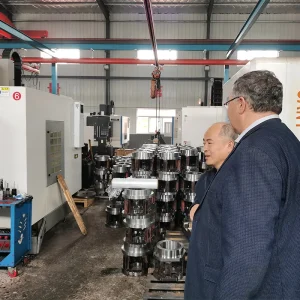
When evaluating suppliers for custom medical equipment casting, the most fundamental requirement is a documented ISO 13485 quality management system specifically adapted for medical device production. This system ensures that every production step from raw material incoming inspection, wax pattern making, shell baking, pouring, heat treatment to final dimensional inspection follows controlled and traceable procedures.
Other important assessment points include the dedicated production area separation between medical and general industrial castings, the cleanliness level of the finishing workshop, complete non-destructive testing capabilities and the ability to provide full batch documentation. A qualified medical casting supplier should not only be able to produce stainless steel casting parts that meet dimensional drawings, but also provide complete material certificates, process records and inspection reports required for medical device registration.
7. Frequently Asked Questions
- Q1: Can precision casting for medical devices produce fully implantable components?
A: Yes, but the final application must match the selected material grade, and all processes and test records must comply with corresponding implant grade regulatory requirements. Not all precision cast parts are automatically suitable for permanent implantation.
- Q2: What is the minimum wall thickness that medical precision casting can achieve?
A: For most common medical alloys, the stable minimum wall thickness is around 1.5mm. For small size parts, wall thickness down to 0.8mm can be achieved after targeted process optimization, but this requires early process confirmation in the design stage.
- Q3: Do medical castings always need electrolytic polishing?
A: No. Electrolytic polishing is recommended for parts that require very smooth surfaces, high corrosion resistance and easy cleaning. General structural medical equipment parts can also meet compliance requirements through fine mechanical polishing.
8. Final Summary
Precision casting for medical devices is a process that integrates material science, dimensional control, surface engineering and medical regulatory compliance. The core of reliable medical castings does not lie in pursuing the highest possible parameters, but in selecting the correct biocompatible material, defining reasonable and verifiable tolerance specifications, ensuring surface finish suitable for the intended sterilization method, and cooperating with suppliers who can provide complete process traceability.
By systematically checking material approval, biocompatibility documentation, tolerance feasibility and sterilization compatibility at the early design stage, you can avoid most common quality risks and compliance problems in subsequent medical device development and mass production.











