Heat exchanger parts operate under long-term alternating temperature, variable pressure and continuous medium contact conditions, where a single design flaw, improper material choice or casting defect can lead to unexpected shutdown, medium leakage and costly system downtime. Unlike general pressure vessel components, cast heat exchanger parts must balance structural strength, flow path rationality and long-term corrosion resistance at the same time. For process engineers, equipment engineers and procurement technical evaluators in chemical, petrochemical, pharmaceutical and food industries, unreasonable casting design decisions often generate hidden risks that cannot be fully identified even after standard pressure tests. This guide systematically covers typical casting structure rules, corrosion-resistant alloy selection by medium, gating system optimization, heat treatment requirements, tightness inspection and practical corrosion control tips, to help you avoid common failures in custom heat exchanger part manufacturing.
1. Why Casting Design Matters for Industrial Heat Exchanger Parts
Many design teams initially treat heat exchanger components as simple mechanical components and copy standard pressure part design logic directly, which often leads to serious problems in later operation. Cast heat exchanger parts such as tube sheets, inlet/outlet nozzles and split shells are not just structural supports; they are also the pressure boundary that directly contacts process medium. Improper casting design may introduce hidden shrinkage porosity, uneven wall thickness and unremovable residual stress, which cannot be completely eliminated even by subsequent full machining.
Compared with fully machined parts cut from solid forgings, properly designed casting heat exchanger components can form complex near-net-shape flow distribution structures in one pouring step, significantly reducing machining volume, material waste and overall manufacturing cost. But this advantage only works when the casting design itself fully considers the specific requirements of heat exchange equipment. Common failure scenarios such as local stress corrosion cracking at the nozzle junction, flow path blockage caused by residual casting sand, and leakage at the tube sheet sealing groove, are mostly rooted in unreasonable casting design decisions made in the early stage, rather than later machining errors.
2. Typical Cast Structures and Design Rules for Heat Exchanger Components
The most widely used cast heat exchanger components in industrial projects include tube sheet castings, nozzle flanges, heat exchanger end covers, split flow shells and transition connection blocks. Each of these typical structures has its own casting design priorities that directly affect final part reliability.
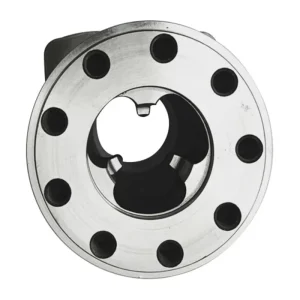
For tube sheet castings, the most critical rule is to maintain wall thickness uniformity across the entire plate area. Abrupt thick sections at the bolt boss positions will easily create isolated hot spots during solidification, leading to internal shrinkage porosity that cannot be detected even by standard UT inspection in some cases. All sharp corners at the joint between the tube sheet and the peripheral flange must be designed with sufficient transition radius, to avoid stress concentration points that become initiation sources of fatigue cracking under repeated temperature cycling.
For flow distribution shells and end cover castings, the inner flow path must be designed to avoid deep dead corners that cannot be cleaned after casting. Unremovable residual casting sand and ceramic shell fragments left inside the flow path will be carried into the heat exchange tube bundle during operation, causing flow blockage and accelerated localized erosion corrosion. The general recommended minimum wall thickness for heat exchanger structural castings is no less than 6mm for stainless steel parts, and no less than 8mm for large-section carbon steel pressure parts. All critical sealing surfaces must reserve enough machining allowance, to ensure that the final finished surface does not expose any casting porosity defects.
3. Corrosion-Resistant Alloy Selection by Process Medium
Material selection for heat exchanger parts cannot rely solely on general material handbooks; it must match the actual operating medium, temperature, concentration and impurity level of the specific project. Choosing the wrong alloy will either cause premature corrosion failure in a very short service period, or lead to unnecessary over-investment that brings no actual benefit.
3.1 Stainless Steel Casting Parts for general water and mild corrosive media
Stainless steel casting parts are the most widely used material category for heat exchanger components in clean water, steam, organic solvent and mild corrosive industrial water scenarios. 304 stainless steel castings are suitable for normal temperature clean water and non-corrosive general heat exchange systems, but are not recommended for service conditions where chloride ion concentration exceeds 50ppm for long-term continuous operation.
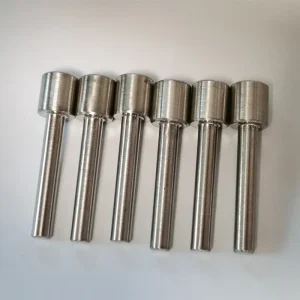
316L and 316LVM low-carbon stainless steel castings further improve pitting resistance and intergranular corrosion resistance, making them the mainstream choice for most conventional industrial heat exchangers that contact slightly corrosive process media. Under general mild corrosive conditions, 316L stainless steel parts can maintain stable long-term performance at continuous operating temperatures up to around 300°C. Even for 316L, long-term exposure to high chloride concentration above 200ppm at elevated temperature will still significantly increase the risk of pitting corrosion and stress corrosion cracking. This clear application boundary must be clearly defined in the design stage, instead of simply extending stainless steel to all corrosive scenarios.
3.2 Nickel-based and high-alloy options for severe corrosion conditions
When the process medium contains strong acid, high concentration chloride, high temperature salt solution or other severe corrosive components that ordinary stainless steel cannot withstand, nickel-based alloys, duplex stainless steels and other high-alloy corrosion-resistant parts become the necessary solution. These materials maintain stable corrosion resistance in harsh environments where ordinary austenitic stainless steel will fail rapidly.
Typical application scenarios include heat exchangers in concentrated sulfuric acid dilution systems, high-temperature brine recovery systems and chemical process heat exchange units that handle corrosive organic media. Although the initial material and casting cost of high-alloy heat exchanger components is much higher than ordinary stainless steel, their much longer service life often reduces the total life cycle cost significantly, compared with frequent replacement of failed stainless steel components.
4. Gating System Design, Heat Treatment and Tightness Inspection
Even with correct material selection and reasonable structural design, poor casting process execution can still turn a qualified drawing into a defective heat exchanger part. The gating system design for heat exchanger castings must ensure that the critical pressure-bearing area solidifies sequentially from the far end to the riser, to avoid creating isolated liquid pools that form hidden shrinkage porosity inside the part. For thick-section tube sheet castings, proper riser size and chilling measures are usually necessary to guarantee internal soundness.
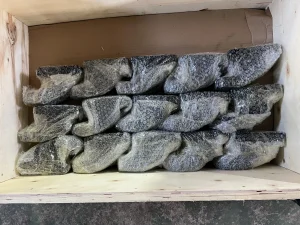
Heat treatment is another non-negotiable step for cast heat exchanger parts. Stainless steel castings must go through full solution treatment after pouring, to eliminate chromium carbide precipitation at grain boundaries and restore full intergranular corrosion resistance. For large complex heat exchanger shell castings, dedicated stress relief heat treatment after rough machining is strongly recommended, to remove the huge residual stress accumulated during casting and cooling. Without proper stress relief, the part may deform significantly after finish machining, or even develop unexpected cracking after being put into service.
Tightness inspection is the final critical barrier before the heat exchanger part leaves the factory. General industrial heat exchanger castings are usually required to carry out hydraulic test at 1.5 times the design pressure, and then conduct air tightness test under design pressure with qualified leak detection method. For heat exchanger components used in toxic, flammable or highly permeable medium, additional helium leak test is often required to ensure that there is no micro leakage path that cannot be detected by conventional hydraulic test.
5. Stainless Steel vs Nickel Alloy Heat Exchanger Parts: Practical Comparison
Many engineering teams face a common decision point: whether to select stainless steel casting parts or upgrade to nickel alloy heat exchanger parts for a specific project. This decision should not be made only by looking at initial purchase price, but also consider four core dimensions: material cost, manufacturing difficulty, expected corrosion life and total maintenance cycle.
| Comparison Dimension |
Stainless Steel Heat Exchanger Parts |
Nickel Alloy Heat Exchanger Parts |
| Initial Material Cost |
Low to medium, widely available |
Significantly higher, raw material supply cycle longer |
| Casting & Machining Difficulty |
Mature process, easy to control |
Higher melting point, strict process control required |
| Corrosion Resistance in Mild Medium |
Fully sufficient |
Far beyond actual requirement in most cases |
| Corrosion Resistance in Severe Medium |
High failure risk, short service life |
Stable long-term performance |
| Typical Recommended Scenario |
Clean water, steam, mild organic medium |
Strong acid, high chloride, high temperature corrosive medium |
For projects with limited budget and mild medium conditions, qualified stainless steel casting parts with proper post-processing can already achieve very reliable performance. But for severe corrosion scenarios where stainless steel cannot meet the required design life, blindly choosing stainless steel to save initial cost will usually lead to much higher total cost caused by unplanned shutdown, leakage accident and frequent part replacement. In these cases, upgrading to nickel alloy corrosion-resistant parts is the more technically and economically reasonable choice.
6. Common Corrosion Control Tips in Manufacturing Phase
Many avoidable corrosion problems of heat exchanger parts are not caused by wrong material grade selection, but by improper handling in the manufacturing phase. The first practical tip is to completely remove all residual casting sand, ceramic shell material and oxide scale from both inner and outer surfaces after casting demolding. Any remaining silicate residue on the metal surface will break the passive film locally and become the starting point of accelerated pitting corrosion in operation.
The second important tip is to remove all sharp edges, tool marks and stress concentration traces left after machining. Even a tiny sharp scratch on the sealing surface or flow path wall can become a stress corrosion initiation point under combined action of tensile stress and corrosive medium. The third tip is to perform proper passivation treatment on stainless steel heat exchanger parts after final machining. Improper passivation with wrong concentration, insufficient contact time or incomplete post-treatment rinsing will not improve corrosion resistance, and may even leave residual corrosive chemicals on the surface that accelerate later corrosion failure.
7. Frequently Asked Questions
- Q1: What is the minimum wall thickness that can be stably achieved for cast heat exchanger flow path structures?
A: For stainless steel casting parts, the stable minimum wall thickness for complex heat exchanger flow path structures is generally around 6mm. For very small custom heat exchanger components, wall thickness down to 4mm can be achieved after targeted process optimization, but this must be confirmed at the early design stage to avoid unrealistic requirements.
- Q2: Do all cast heat exchanger parts need 100% full radiographic inspection?
A: Not all. The scope and proportion of non-destructive testing should be determined according to the pressure level, medium hazard and relevant project specification. For general non-toxic, non-flammable medium at low to medium pressure, sampling inspection based on critical sections is usually acceptable. But for heat exchanger components that handle highly hazardous medium, full volumetric inspection of all pressure-bearing welds and casting critical areas is necessary.
- Q3: Can heat exchanger castings be repaired by welding after discovering small surface porosity defects?
A: Yes, but the welding repair procedure must be approved according to corresponding pressure equipment specification, and full post-weld heat treatment and repeated tightness inspection must be completed after repair. Uncontrolled random welding repair without proper procedure will introduce new residual stress and hidden defects that are more dangerous than the original small porosity.
8. Final Summary
Heat exchanger parts reliability is not determined by a single step, but the combined result of reasonable casting structure design, medium-matched corrosion-resistant alloy selection, optimized gating system design, proper heat treatment and strict tightness inspection. Stainless steel casting parts are the most practical and cost-effective choice for most mild to medium corrosion industrial scenarios, while nickel-based high alloy heat exchanger components provide the necessary long-term safety for severe corrosive working conditions that ordinary stainless steel cannot handle.
By paying attention to wall thickness uniformity, avoiding unremovable residual casting sand, eliminating sharp stress concentration points and performing proper post-casting passivation treatment in the manufacturing phase, you can effectively avoid most common premature corrosion failures. For custom heat exchanger casting projects, making decisions based on full life cycle reliability rather than only initial purchase price is the most effective way to reduce unexpected downtime and maintenance cost in long-term industrial operation.











