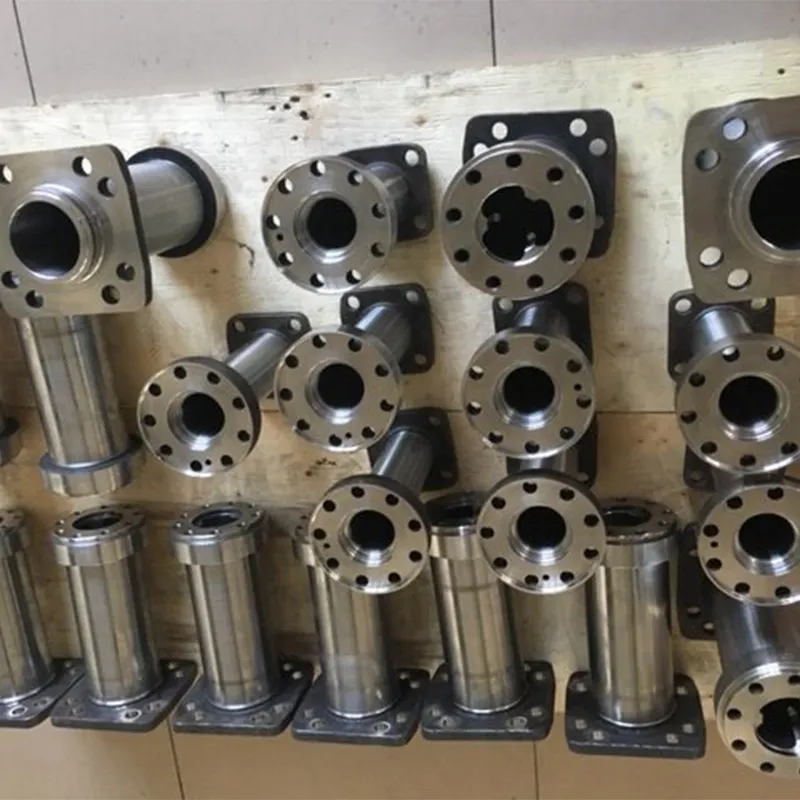
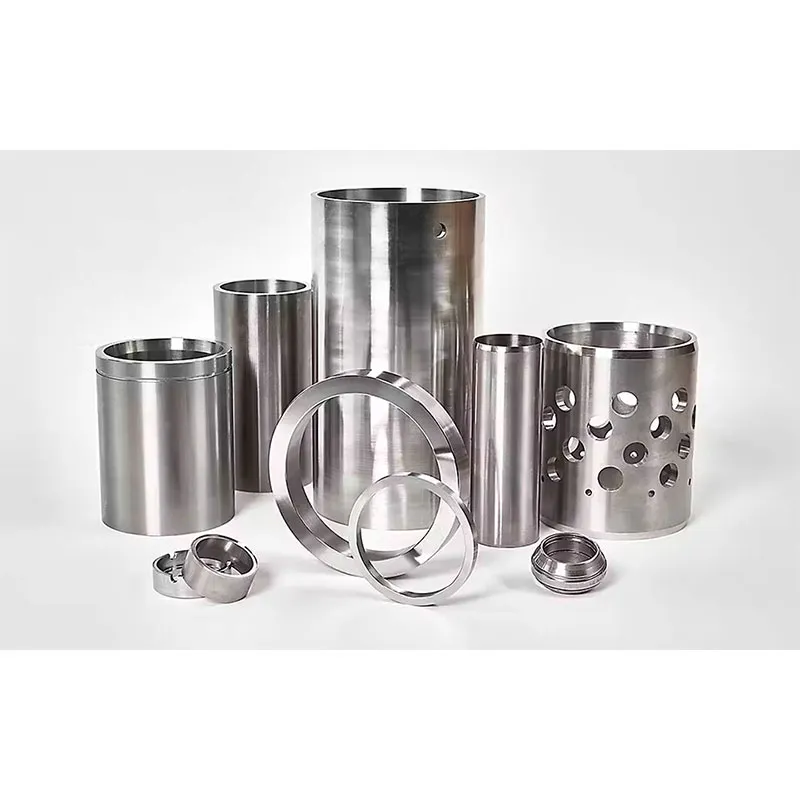
In high-wear industrial applications, the wrong bushing material rarely fails quietly. It shows up as unexpected downtime, frequent part replacement, rising maintenance costs, and even cascading damage to adjacent components. Many design engineers and procurement teams still approach this decision with a simple rule of thumb: pick the hardest material available. This often leads to a costly mistake. An alloy bushing with extremely high surface hardness can still fracture under mild impact, soften at sustained high temperatures, or seize completely when lubrication breaks down.
This article will walk you through the real performance boundaries of cobalt and nickel alloy bushings, show you how to avoid the “harder is always better” trap, and give you a practical step-by-step method to select the right material based on your actual failure modes.
Wear performance is never a single-dimensional property. A successful selection balances abrasion resistance, high-temperature stability, corrosion tolerance, impact toughness, and machinability. This guide breaks down the real-world differences between cobalt and nickel alloy bushings, explains where each material delivers the most reliable service life, and provides a practical decision path rooted in actual failure modes rather than isolated hardness numbers.
The Core Variables in Bushing Selection: Hardness Alone Is Not Enough
For most engineers, the first specification they check on a datasheet is HRC hardness. While hardness matters, it is only one piece of a much larger puzzle. Many alloy components and alloy parts that perform well in controlled laboratory tests fail prematurely in the field because the selection process ignored the full set of operating conditions.
Five variables determine the actual service life of any alloy bushing:
- Wear type: Abrasive wear from fine particles in the system, adhesive wear between sliding metal surfaces, or fretting wear under small oscillating motion
- Operating temperature range: Room temperature, continuous 300°C service, or intermittent spikes above 600°C
- Corrosive environment: Clean dry air, water, seawater, dilute acids, or aggressive chemical media
- Impact loading: Steady static load, repeated light impact, or heavy cyclic shock
- Lubrication conditions: Full continuous oil film, intermittent grease top-up, near-dry running, or complete loss of lubrication at peak temperature
A material with 60 HRC hardness will perform excellently in a clean, well-lubricated, low-impact abrasive scenario. But that same high-hardness part can shatter after a single unexpected mechanical shock, or gall instantly when lubrication fails at 500°C. The goal of good bushing selection is not to maximize every possible property. It is to match the material’s strongest performance characteristics to the most likely failure mode in your exact application.
Cobalt Alloy Bushings (Stellite / T800): Properties and Application Boundaries
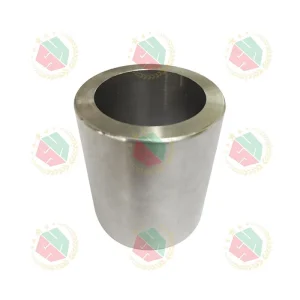
Cobalt-based Stellite bushing and T800 bushing sleeve are among the most trusted special alloy bushing solutions built for extreme wear and temperature. They are not general-purpose low-cost parts. They are engineered for scenarios where standard steels, bronzes, and even many stainless steel bushings cannot deliver acceptable service life.
High Hardness and Abrasive Wear Resistance
The outstanding wear resistance of cobalt alloy bushings comes from their carefully designed microstructure. Hard carbide particles and stable Laves phases — intermetallic phases that form naturally in cobalt-rich formulations — are distributed evenly across a tough cobalt matrix, creating a surface that resists penetration by hard abrasive particles. Instead of digging deep grooves into the material, contaminants slide over the surface without removing large volumes of base metal.
This microstructure makes them far more forgiving than surface-hardened steels in systems that cannot be perfectly sealed. Even when fine sand, carbon particles, or process debris enter the sliding interface, the alloy bushing maintains its dimensional stability far longer than many competing materials.
Red Hardness at Elevated Temperatures
One of the most underrated advantages of cobalt-based materials is their ability to retain consistent hardness at temperatures where most steels and even many tool steels begin to soften. A typical cobalt alloy bushing can hold its structural hardness well above 500°C, and in some grades even at 800°C.
This property directly translates to exceptional resistance to galling. When two uncoated metal surfaces slide against each other without sufficient lubrication, local frictional heat can instantly soften conventional materials and cause catastrophic metal-to-metal seizure. Cobalt alloy bushings resist that localized softening, making them extremely reliable in turbocharger waste gates, EGR systems, high-temperature valve stems, and other locations where lubricants can carbonize or disappear during transient operating conditions.
Brittleness and the Trade-off with Impact Resistance
Cobalt alloys deliver outstanding wear and temperature performance, but that performance comes with a clear trade-off. Their high hardness and hard-phase microstructure make them less ductile than many engineering steels. A cobalt alloy bushing will not absorb heavy repeated impact the way a tempered or carburized steel bushing can.
If your application involves heavy cyclic shock, high dynamic loading, or repeated mechanical hammering, a full cobalt alloy part may crack or chip long before it wears out. In these scenarios, the better solution is often a steel bushing body with a cobalt alloy facing, or a hybrid design that separates the impact load from the wear surface.
Note: Tsingtao CNC supplies T800 cobalt-based alloy bushings and custom non-standard alloy parts. Stellite grade bushings are available upon request for specific project requirements.
Nickel Alloy Bushings (Monel / Inconel Family): Corrosion First, Wear Secondary
Nickel-based alloy bushings are often compared directly to cobalt options, but they occupy a very different design space. Materials like Monel 400 and Inconel 718 are not primarily engineered for maximum abrasive wear resistance. Their core strength is excellent chemical stability in aggressive corrosive environments.
A nickel alloy bushing will resist chloride-induced stress corrosion cracking in seawater service, perform reliably in dilute sulfuric or phosphoric acid environments, and maintain structural integrity in many oxidizing media where even stainless steel would degrade quickly. Its hardness and wear performance are acceptable for moderate sliding loads, but they are not designed to outperform a dedicated cobalt alloy bushing in a pure abrasive wear scenario.
This makes nickel alloy bushings the logical choice for applications where corrosion is the dominant failure mechanism and wear is only a secondary concern. Typical use cases include marine pump components, offshore valve internals, and process equipment handling aggressive fluids.
Important note: Nickel alloy bushings are not our main product line. The performance information provided in this section is for selection reference only. If your project requires nickel-based bushing solutions, we can discuss customized feasibility on a case-by-case basis.
Comparative Table: Hardness, Corrosion Resistance, Temperature Resistance, Machinability
The table below summarizes the key practical property differences between typical cobalt and nickel alloy bushing grades. All values represent industry standard typical ranges and are not absolute guaranteed minimum or maximum figures for any specific product.
| Performance Dimension |
Typical Cobalt Alloy Bushing (Stellite / T800) |
Typical Nickel Alloy Bushing (Monel / Inconel) |
| Typical HRC Hardness |
38 – 62 |
15 – 45 (grade dependent) |
| Abrasive Wear Resistance |
Excellent |
Fair to Good |
| Anti-Galling Performance |
Outstanding |
Good |
| Chloride Corrosion Resistance |
Good |
Excellent |
| Dilute Acid Corrosion Resistance |
Good |
Excellent |
| Maximum Continuous Service Temperature |
Approximately up to ~800°C |
Approximately up to ~650°C (grade dependent) |
| Machinability |
Moderate to difficult |
Moderate |
| Relative Material Cost |
High |
High to Very High |
Selection Path: Select Material by Reversing from Failure Mode
Instead of starting your selection with a list of material properties, start with the failure mode you are most likely to encounter. This approach eliminates most of the common mistakes that come from chasing maximum hardness.
- Identify the dominant failure mode first
Ask which problem will stop your part first: will it wear away dimensionally, gall and seize, corrode away, or fracture under impact? That answer defines your primary material requirement.
- Map temperature and lubrication conditions
If the operating temperature regularly exceeds 400°C and lubrication cannot be guaranteed, prioritize materials with proven red hardness and anti-galling performance.
- Evaluate the corrosion environment
If the part will be submerged in seawater or process chemicals, corrosion resistance becomes a non-negotiable baseline requirement.
- Balance performance and total cost of ownership
A slightly more expensive alloy bushing that lasts 3–5 times longer than a lower-cost alternative will almost always reduce total operating cost through fewer shutdowns and less maintenance labor.
For practical reference:
- High-temperature dry-running exhaust valve applications: select cobalt alloy bushing
- Seawater pump with moderate sliding load: reference nickel alloy solution
- Heavy impact crusher pin scenario: prioritize surface hardened steel with optional cobalt facing
FAQ
- 1. What is the difference between a Stellite bushing and a standard cemented carbide bushing in anti-galling performance?
- Cemented carbide can achieve very high hardness, but it is far more brittle. Stellite bushing maintains better surface compatibility with steel mating parts under partial lubrication loss, and it is much less likely to cause catastrophic seizure even when sliding contact conditions become severe.
- 2. Do cobalt alloy bushings require full oil lubrication to work properly?
- No. One of their biggest advantages is reliable performance in marginal lubrication or near-dry running conditions. Many cobalt alloy bushings operate successfully in high-temperature locations where liquid lubricants cannot survive.
- 3. Can nickel alloy bushings completely replace cobalt alloy bushings for high-temperature wear applications?
- No. Nickel alloys offer excellent corrosion resistance, but most standard nickel grades do not match the red hardness and abrasive wear performance of dedicated cobalt grades at sustained temperatures above 500°C.
- 4. Is it possible to repair a worn alloy bushing on site instead of replacing it completely?
- In many cases, small local wear marks can be re-machined and the mating shaft re-mated. This only works if the bushing wall thickness is still sufficient and the base material has not suffered cracking or structural damage.
- 5. Why do cobalt alloy bushings from different suppliers show very different service life even with the same nominal grade?
- The difference usually comes from casting or forging process control, heat treatment consistency, chemical composition tolerance, and the uniformity of hard phase distribution. Poorly processed material can have segregated microstructures that wear unevenly and fail much earlier.
- 6. Do you support custom non-standard special alloy bushing sizes for unique operating conditions?
- Yes. We specialize in custom non-standard alloy parts. If you have unique dimensional requirements or a challenging working condition, we can work with you to develop a suitable solution.
Final Guidance
Selecting the right alloy bushing is never about picking the hardest material on the datasheet. It is about understanding which failure mode will define your real service life, and then matching the material properties to that exact priority. Cobalt alloy bushings excel at high-temperature anti-galling and abrasive wear. Nickel alloy bushings are built to solve severe corrosion problems first.
If you are working through a difficult wear application and still not sure which material is the best fit for your design, share your operating temperature, media, load, lubrication conditions, and current failure mode with our engineering team. We can help you evaluate the options and recommend a reliable alloy bushing solution optimized for your specific application.