For industrial procurement specialists, mechanical engineers, and manufacturers of valves, pumps and energy equipment, selecting reliable cobalt alloy machining parts is one of the most critical decisions for components operating under extreme conditions. Many teams have faced unexpected failures: a seemingly qualified machined cobalt alloy component cracks after only hundreds of hours of operation, or the surface wears far faster than expected, leading to unplanned downtime and costly production losses. Unlike standard stainless steel or carbon steel components, cobalt alloy parts are designed to maintain structural stability, surface hardness and corrosion resistance at elevated temperatures, making them irreplaceable in many high-demand working scenarios. This article systematically explains the core characteristics, manufacturing difficulties, process selection logic and quality control standards of cobalt alloy machining parts, to help you make more accurate evaluations during supplier selection and custom part ordering.
What Are Cobalt Alloy Machining Parts
Cobalt alloy machining parts refer to industrial components manufactured with cobalt-based alloy as the base material, which are formed through a combination of casting, CNC machining or other precision processing processes. Different from ordinary metal machined parts, the core performance advantage of these components comes from the inherent material properties of cobalt alloys, rather than simple surface coating treatment.
Most cobalt alloy machining parts are developed for working conditions that require both high-temperature resistance and strong wear resistance. They can maintain stable mechanical performance even under continuous friction, thermal shock and corrosive medium erosion, which is difficult to achieve with ordinary steel parts.
Common Cobalt Alloy Materials and Their Machining Characteristics
Not all cobalt alloys share the same machining performance. Different material grades show obvious differences in hardness, work hardening tendency and tool adaptability, which directly determine the difficulty and final quality of subsequent processing.
Stellite Series Machining Materials
As the most widely used category of Stellite alloy parts, the Stellite series covers multiple grades with distinct processing characteristics.
- Stellite 6 parts (also known as Alloy 6 parts) have moderate hardness and excellent wear resistance, which is one of the most common base materials for general-purpose wear components. Its machining process requires strict control of cutting speed to avoid premature tool wear.
- AMS 5387 material parts correspond to a standardized cobalt alloy grade with strict chemical composition limits, which has higher requirements for process stability during machining, and is usually used in aerospace and high-end energy equipment scenarios.
It is important to note that Stellite 6, Stellite 21 and Cobalt 6B are not interchangeable materials. Each grade has its own unique machining parameter window, and mixing their processing rules will easily lead to surface cracks or performance degradation of finished parts.
Other Representative Cobalt-Based Alloy Mechanical Parts Materials
In addition to the Stellite series, there are other cobalt-based alloy mechanical parts materials widely used in the industry. These materials usually add different alloying elements to obtain special properties such as higher high-temperature strength or better cavitation resistance.
Each material has its own suitable component types. For example, some low-carbon cobalt alloys are more suitable for complex structural parts that require subsequent welding or secondary deformation, while high-carbon high-chromium cobalt alloys are only used for parts that pursue extreme wear resistance.
Typical Structures and Application Forms of Cobalt Alloy Machining Parts
In industrial practice, cobalt alloy machining parts are designed into various structural forms according to functional requirements, and each structure has its own corresponding processing focus.
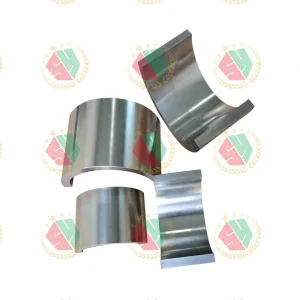
- Stellite bushing and Stellite bearing: These typical rotating support components require extremely high roundness and surface finish, to reduce friction and wear during long-term high-speed operation.
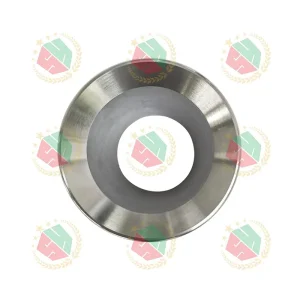
- Stellite plug and Stellite sleeve: These valve and flow control components usually have complex sealing surface profiles, which require high positioning accuracy during machining to ensure zero leakage under high pressure.
- Other common forms include high-temperature resistant parts used in furnace systems and wear-resistant parts applied in mining and slurry transportation equipment.
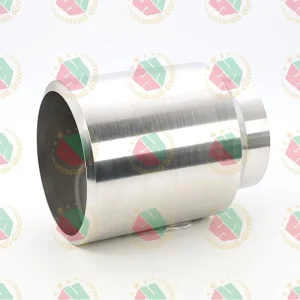
Different structural forms will directly affect the selection of processing technology. Thin-walled cobalt alloy sleeves and solid cobalt alloy plugs face completely different challenges in clamping and deformation control during machining.
Core Manufacturing Challenges in Cobalt Alloy Machining
Compared with ordinary steel, cobalt alloy machining process faces a series of inherent technical difficulties, which are the core reasons why many ordinary machining workshops cannot stably produce qualified cobalt alloy components.
- High cutting force requirement: The high-temperature strength of cobalt alloys remains at a high level even in the cutting state, which means the cutting force required is much higher than that of processing ordinary stainless steel.
- Serious tool wear: The hard phase particles in the cobalt alloy matrix will cause continuous abrasive wear on the tool edge. If the tool material is not selected properly, the tool will wear rapidly even at a very low cutting distance.
- Poor thermal conductivity: Most of the cutting heat generated during processing will be concentrated on the tool tip, which is easy to cause overheating and softening of the tool edge, and further aggravate tool wear.
- Strong work hardening tendency: Under improper cutting conditions, the plastic deformation of the workpiece surface during cutting will form a hardening layer several times harder than the base material. If the subsequent cutting tool cannot penetrate this hardening layer, it will cause more serious wear and processing vibration.
- Serious chip adhesion: The chemical affinity between cobalt alloy and tool material will lead to chip sticking on the cutting edge, which will scratch the machined surface and reduce the surface quality.
These challenges are not isolated. They often interact with each other in the actual machining process, which puts forward very high requirements for the technical experience of the processing team.
Machining Process Selection and Control Points
Reasonable process selection and parameter control are the core prerequisites for stable production of qualified machined cobalt alloy components. Blindly applying the processing parameters of ordinary steel will almost certainly lead to unqualified products.
Tool Material and Geometric Parameter Selection
For cobalt alloy component manufacturing, the first principle of tool selection is to prioritize fine-grained cemented carbide or coated cemented carbide tools with high red hardness. Ordinary high-speed steel tools are usually not suitable for continuous processing of cobalt alloys, because their red hardness is far from meeting the processing requirements.
In terms of tool geometric parameters, properly increasing the tool wedge angle can improve the heat dissipation capacity and strength of the cutting edge. It is not suitable to use a too sharp rake angle to pursue sharpness, otherwise the cutting edge is easy to collapse under high cutting force. It is also not recommended to use high-speed steel tools containing cobalt to process cobalt alloys, which will increase the risk of chip adhesion.
Cutting Condition and Machining Method Optimization
For cobalt alloy CNC machining, the general principle of cutting condition setting is low cutting speed, medium feed rate and appropriately large depth of cut. This setting can avoid the sharp temperature rise of the tool tip, and at the same time make the cutting edge cut into the workpiece below the work hardening layer, avoiding repeated friction on the hardened surface.
For some complex structural features that are difficult to process by conventional turning and milling, such as deep narrow grooves and tiny deep holes, non-traditional processing methods such as EDM and wire cutting can be used for pre-forming, which can effectively reduce the subsequent heavy-load cutting workload and avoid excessive work hardening.
It should be noted that all cutting parameters need to be adjusted and optimized according to the specific material grade, machine tool rigidity and clamping state. There is no universal fixed parameter suitable for all processing scenarios.
Applicable Scenarios for Cobalt Alloy CNC Machining and Post-Casting Processing
Many custom cobalt alloy parts can be produced through two different process paths: direct CNC machining from solid forging blanks, or post-processing of cobalt alloy casting parts after precision casting.
- Direct CNC machining of forging blanks is suitable for small parts with simple structure and high comprehensive mechanical performance requirements. The internal structure of the forging blank is uniform and dense, and there is no casting defect risk.
- Precision casting followed by finishing is more suitable for parts with complex profiles and large volume, which can significantly reduce material waste and processing cost, and is more suitable for medium and large batch production scenarios.
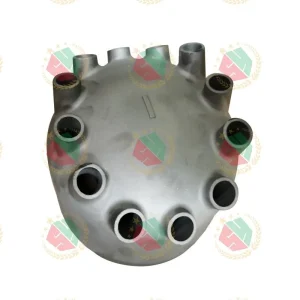
For components with extremely complex internal flow channels, the process route of near-net-shape casting plus local precision machining is usually the most cost-effective solution.
Dimensional Accuracy, Surface Quality and Complete Quality Inspection System
For precision cobalt alloy machining parts, qualified dimensional accuracy and surface quality are the core indicators to verify whether the processing quality meets the standard, and a complete quality inspection system is essential.
- Dimensional accuracy and tolerance control: For key matching surfaces and sealing surfaces, it is necessary to formulate a reasonable tolerance distribution scheme according to the functional requirements. After rough machining, it is usually necessary to arrange a stress relief process before finishing, to avoid dimensional deviation caused by subsequent deformation.
- Surface quality control: The machined surface of cobalt alloy parts should not only meet the requirements of surface roughness, but also ensure that there is no excessive residual stress, microcracks and over-thick work hardening layer on the surface. These hidden surface damages will become the inducement of early failure of parts under extreme working conditions.
- Material confirmation and full inspection: For key parts, it is necessary to carry out material component spectrum analysis before processing, to confirm that the incoming material meets the specified grade requirements. After processing, dimensional inspection, surface nondestructive testing and hardness testing should be carried out according to the drawing requirements.
A complete quality control system can effectively avoid the situation that the parts look qualified on the surface but fail in actual use.
Typical Industrial Applications of Custom Cobalt Alloy Machining Parts
Due to their unique performance advantages, cobalt alloy machining parts have been widely used in many high-demand industrial fields.
- Valve manufacturing: Cobalt alloy sealing surfaces, Stellite plugs and Stellite sleeves are the core components of high-temperature and high-pressure valves, which can maintain excellent sealing performance after millions of opening and closing cycles.
- Pump and fluid equipment: Stellite bushing and Stellite bearing are used in slurry pumps and chemical pumps, which can resist the combined erosion of abrasive particles and corrosive media.
- Energy equipment: High-temperature resistant parts made of cobalt alloys can operate stably for a long time in gas turbines, nuclear power equipment and high-temperature reaction vessels.
- Petrochemical and mining: Various wear-resistant parts are used in harsh working conditions with strong wear and strong corrosion, which can greatly extend the service life of equipment and reduce downtime.
In these application scenarios, the performance advantage of cobalt alloy parts can not be replaced by ordinary metal materials.
Key Information to Provide When Ordering Custom Cobalt Alloy Machining Parts
To ensure that the final delivered cobalt alloy machining parts fully meet your usage requirements, please provide the following key information to the processing supplier when placing an order:
- Clear 2D and 3D drawings, with complete dimension labels, tolerance requirements and surface finish standards
- Exact cobalt alloy grade specified, or detailed working condition description for supplier to assist material selection
- Special processing requirements, such as sharp edge removal, specific surface treatment, stress relief process, or non-standard surface coating or post-treatment requirements
- Required non-destructive testing standards, such as surface penetration testing or internal flaw detection requirements
- Quantity requirements and expected delivery cycle
Providing complete information at the initial stage of ordering can greatly reduce the communication deviation between the two parties and avoid rework caused by unclear requirements.
FAQ
- Q: What is the typical delivery cycle for custom cobalt alloy machining parts?
- A: For standard material grades and non-complex geometries, the typical delivery cycle is 2-4 weeks after the drawing is confirmed. For complex parts requiring special non-destructive testing or custom alloy formulation, the cycle will be appropriately extended.
- Q: Can small-batch prototype cobalt alloy parts be processed?
- A: Yes, many professional cobalt alloy processing workshops support small-batch custom services from single piece to dozens of pieces, which can meet the verification requirements of new product development stage.
- Q: Why is the price of cobalt alloy machining parts much higher than that of ordinary stainless steel parts?
- A: The high price comes from three aspects: the high raw material cost of cobalt-based alloys, the serious tool wear during processing leading to high processing cost, and the high scrap rate caused by strict quality control standards.
Final Summary
Cobalt alloy machining parts are high-value industrial components integrating material characteristics, processing technology and strict quality control. Their manufacturing process is far more complex than that of ordinary metal parts, and the selection of processing technology, tool configuration and quality inspection standards will directly determine the final performance of the parts. When you need to customize cobalt alloy components suitable for extreme working conditions, a professional processing team with rich cobalt alloy machining experience is the core guarantee to obtain stable and reliable parts.
If you have drawings or specific working condition requirements for custom cobalt alloy parts, you can send them to us for a professional process evaluation and quotation.











