Summary: This guide covers alloys, industry standards, NDT rules and supplier evaluation advice for aerospace investment casting components used in aircraft and propulsion systems.
What is Aerospace Investment Casting?
Aerospace investment casting is a high-precision lost-wax casting process tailored to meet the extreme reliability requirements of aircraft, spacecraft, and associated propulsion systems.
While it shares core working principles with general industrial investment casting, aerospace-grade casting follows far stricter controls over material purity, dimensional stability, traceability and defect limits.
Aerospace components often operate under high temperature, cyclic mechanical load, vibration and corrosive atmospheric conditions.
Traditional machining from solid billets becomes uneconomical or impractical for thin-walled, intricate geometries.
Investment casting allows manufacturers to create near-net-shape parts with internal passages, curved profiles and complex contours while reducing material waste and secondary machining workload.
The primary goal of aerospace investment casting is to eliminate critical defects that could lead to catastrophic failure during flight or engine operation.
Even tiny internal voids or surface inclusions acceptable for general machinery parts can disqualify flight-critical aerospace castings.
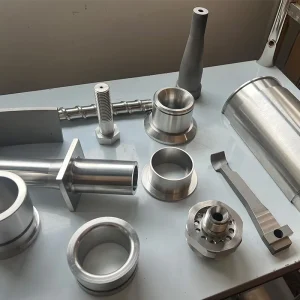
Common Alloys Used in Aerospace Investment Casting
Material selection is one of the most critical early decisions for aerospace casting projects.
Alloy choice depends on operating temperature, mechanical load, corrosion resistance, weight targets and budget constraints.
Nickel-based superalloys (Inconel series: 718,625)
Nickel-based superalloys dominate high-temperature aerospace applications, especially gas turbine hot-section parts.
Inconel 718 offers high tensile strength, creep resistance and good weldability at elevated temperatures.
It is widely used for turbine disks, blades, nozzles and structural components in jet engines.
Inconel 625 delivers outstanding corrosion and oxidation resistance alongside high strength.
It is preferred for exhaust assemblies, fluid delivery manifolds and components exposed to aggressive chemical environments.
These alloys are challenging to cast due to high melting temperatures and sensitivity to shrinkage defects.
Strict melting and solidification controls are required to maintain consistent metallurgical properties.
Many aerospace projects rely on nickel superalloy castings to withstand extreme thermal and mechanical loads.
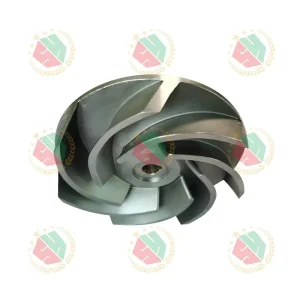
Precipitation hardening stainless steel (17-4PH)
17-4PH precipitation hardening stainless steel is a popular option for aerospace structural castings operating at moderate temperatures.
It balances high strength, hardness and corrosion resistance with relatively easier casting and heat treatment compared with superalloys.
Common applications include valve bodies, brackets, landing gear auxiliary components and pump housings.
Its mechanical properties can be tuned through different aging heat treatments to match specified design requirements.
Cobalt-based alloys (Stellite)
Cobalt-based Stellite alloys feature excellent wear resistance, hot hardness and resistance to thermal fatigue.
They maintain performance under repeated friction and high-temperature cycling.
Aerospace engineers select Stellite alloys for sealing surfaces, valve seats, nozzle components and wear liners inside engine and fluid control assemblies.
The alloy resists galling and surface degradation under high contact pressure.
Carbon & low alloy steels for aerospace castings
Carbon and low-alloy steels are used for aerospace components where high-temperature performance is not the primary requirement.
These materials provide good structural strength at lower cost, often applied to non-critical housings, support brackets and ground-test hardware.
They are rarely used in engine hot zones but remain common for auxiliary airframe and accessory system castings.
Mandatory Standards & Certifications for Aerospace Castings
Aerospace castings cannot rely only on visual inspection.
The entire manufacturing workflow must follow standardized specifications covering raw material chemistry, melting, casting, heat treatment, inspection and documentation.
ASTM specifications set baseline requirements for chemical composition, mechanical properties and acceptance criteria for metal castings used in aerospace.
In addition to ASTM, AMS (Aerospace Material Specifications) are widely adopted industry standards for flight-grade components, with tighter metallurgical and inspection rules.
Additional project-specific specifications are often defined by prime contractors or aerospace system integrators.
Non-destructive testing (NDT) is mandatory for most flight-critical cast parts. Common NDT methods include:
- Radiographic testing (X-ray) to detect internal shrinkage, porosity and inclusions
- Liquid penetrant inspection (LPI) for surface cracks and discontinuities
- Magnetic particle inspection (MPI) for surface and near-surface flaws on ferromagnetic alloys
- Ultrasonic testing for volumetric defect detection in thicker sections
Full material traceability is another non-negotiable requirement.
Every batch of raw material, heat treatment log and inspection report must be retained and linked to individual cast components.
Traceability allows root-cause analysis if defects are discovered after delivery.
Typical Aerospace Components Made by Investment Casting
Investment casting excels for aerospace parts with complex internal features and tight dimensional requirements.
Turbine and engine hot-section components
Turbine blades, vanes, nozzles and combustor components are classic aerospace investment castings.
These parts feature intricate cooling passages to manage extreme heat inside gas turbine engines.
Near-net-shape casting reduces the amount of expensive machining required on hard superalloy materials.
Aerospace valve bodies, housings and brackets
Fluid control valve bodies, hydraulic housings and lightweight structural brackets are widely produced via aerospace investment casting.
These components combine complex flow paths with strict pressure containment requirements.
Many require post-casting precision machining for sealing surfaces and mounting holes.
Auxiliary aircraft structural cast parts
Auxiliary airframe fittings, actuator housings and support castings for aircraft subsystems are also common use cases.
While not always in the hottest engine zones, these parts must still meet aerospace defect and traceability rules.
Our portfolio covers a wide range of aerospace investment casting components for engine and airframe applications.
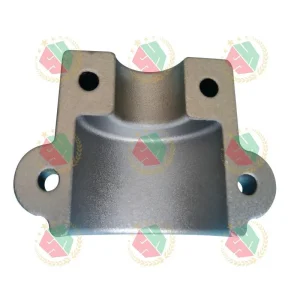
Key Defects & Quality Risks in Aerospace Investment Casting
Even with controlled production, several types of defects can appear in investment castings.
Aerospace foundries must implement process controls to limit or eliminate these risks.
Porosity or gas voids form when trapped gas does not escape the molten metal during solidification.
Internal porosity is often invisible visually and requires radiographic inspection to detect.
Shrinkage cavities arise from volume contraction as metal cools.
Proper gating and riser design are used to feed molten metal and compensate for shrinkage.
Surface inclusions and slag defects come from ceramic shell fragments or impurities entering the molten stream.
Strict shell material control and pouring discipline reduce inclusion risk.
For aerospace applications, defect acceptance limits are far tighter than for general industrial castings.
Some minor defects acceptable for non-flight hardware will result in full part rejection for flight-critical assemblies.
How to Evaluate an Aerospace Investment Casting Foundry
Selecting a qualified foundry is one of the highest-impact steps in aerospace component sourcing.
Buyers should evaluate these core capabilities before awarding prototype or production orders.
Manufacturing capability and alloy processing experience
Confirm whether the foundry regularly casts the specific alloy required for your project.
Superalloys and specialty stainless steels demand specialized melting and handling experience.
A foundry experienced with standard steel castings may lack the process controls for Inconel or Stellite aerospace work.
Review their past aerospace component portfolio to check for parts with similar geometry, wall thickness and size range.
NDT and metallurgical lab capacity
A competent aerospace casting supplier must have in-house or validated third-party NDT capacity.
Verify that inspectors hold required qualifications for radiographic, penetrant and magnetic particle testing.
Metallurgical lab capabilities allow material certification, microstructure analysis and mechanical sample testing to validate heat treatment results.
Traceability requirements for aerospace castings
Ask to review their material traceability workflow.
The supplier should track raw material heats, melting batches, heat treatment records and inspection reports linked to each casting serial number.
Missing traceability records can disqualify parts for aerospace use.
Batch production & prototype casting capacity
Many aerospace projects start with prototype castings for design verification before full-rate production.
Confirm the foundry can support both low-volume prototype runs and stable serial production, with consistent quality controls across both phases.
Check lead times for tooling, prototype casting and first article inspection (FAI) packages.
Prototype vs Mass Production for Aerospace Investment Cast Parts
Prototype aerospace castings focus on validating geometry, material performance and casting process feasibility.
Tooling for prototypes may use faster, lower-cost patterns, but the material chemistry and inspection standards still need to match final production requirements if test data will support flight qualification.
Mass production aerospace castings require locked, repeatable process parameters.
Tooling, shell production, melting schedules and heat treatment cycles are fully controlled and documented.
First Article Inspection (FAI) packages are normally required before serial production release.
The transition from prototype to production is a common risk point.
Changes to wax patterns, gating or shell materials can alter casting quality.
In aerospace manufacturing, all process modifications require formal engineering approval and revalidation.
Good suppliers document all process changes and revalidate part performance after any modification.
Most castings need secondary finishing, including precision CNC machining for castings, to achieve final drawing dimensions.
FAQ
What is the tolerance of aerospace investment casting?
Tolerances depend on alloy, part size, wall thickness and casting geometry.
Aerospace investment casting achieves tighter dimensional accuracy compared with sand casting, but these values apply to as-cast conditions.
Critical mating surfaces usually require secondary CNC machining to meet final drawing tolerances.
As-cast tolerances alone rarely satisfy precision assembly requirements for flight hardware.
Tolerance values should be defined and agreed during the design for casting review stage.
Can aerospace castings be CNC machined after casting?
Yes. Most aerospace investment castings require secondary precision machining on sealing surfaces, mounting holes and mating features.
Machining removes excess material and brings critical dimensions to print specifications.
Designers must account for machining stock allowance in the initial casting model.
What NDT tests are required for aerospace castings?
Required testing depends on the criticality level of the component.
Flight-critical castings commonly require X-ray radiography, liquid penetrant inspection and full material certification.
Additional ultrasonic testing or metallurgical sampling may be specified by project standards.











