Choosing a lost wax casting supplier is rarely a simple purchasing decision. For procurement managers and supply chain leaders, the real risk is not a slightly higher unit price — it is a supplier that looks competitive on paper but cannot hold dimensional consistency, cannot document material compliance, or cannot trace a defective batch back to its root cause. When an investment casting part fails in the field, the cost is measured in production line downtime, rework, expedited freight, and lost credibility with your own customers.
This guide provides a practical evaluation framework: six capability dimensions, a ready-to-use RFQ question list, a structured sample validation process, and the warning signs that separate a reliable supplier from one that will create problems six months into production.
6 Dimensions to Evaluate a Lost Wax Casting Supplier
Evaluating a lost wax casting supplier should not begin with price. It should begin with whether the supplier’s actual capability envelope matches your part requirements. The six dimensions below cover the areas where most sourcing failures originate.
Process Capability Range
The first question is not “can they cast this part?” but “can they cast this part repeatedly, within tolerance, at volume?”
Lost wax casting, also called investment casting, is capable of producing complex geometries with internal passages, thin walls, and fine surface detail that would otherwise require extensive machining. A capable supplier can typically hold general tolerances in the CT4–CT6 range and achieve surface roughness around Ra 3.2–6.3 μm on as-cast surfaces, which reduces downstream machining cost and lead time.
What matters during evaluation is whether the supplier can state these limits clearly and demonstrate them with historical inspection data — not whether they claim to “do precision casting.” Ask specifically:
- What is the smallest wall thickness you can cast reliably in stainless steel?
- Can you cast internal channels or cored passages, and what is the minimum channel diameter?
- What tolerance grade do you guarantee on as-cast dimensions, and on which features?
- Can you cast fine lettering, part numbers, or logos directly into the surface?
A supplier that answers these questions with specific numbers and sample inspection reports is operating with a defined process window. A supplier that answers vaguely is likely relying on trial and error.
Alloy Material Coverage
Material coverage is where many sourcing problems begin. A lost wax casting company may advertise “stainless steel casting” while actually having limited experience with the specific grade your drawing calls for.
Investment casting supports a wide range of alloys, including carbon steels, stainless steels, duplex and super duplex stainless steels, nickel-based alloys, cobalt-based alloys, and titanium. But the ability to melt an alloy is not the same as the ability to control its chemistry and casting behavior.
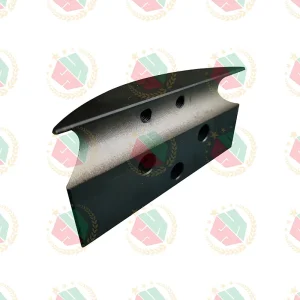
The critical capability here is in-house material verification. A supplier without its own spectrometer is dependent on mill certificates and cannot confirm that the metal actually poured into the mold matches the specification. For stainless steel lost wax casting parts, this matters especially in corrosive or high-temperature service, where a small deviation in chromium, molybdenum, or carbon content can change performance significantly.
During evaluation, confirm:
- Which alloy grades the supplier has produced in the last 12 months, with examples
- Whether the supplier performs in-house spectral analysis on each heat
- Whether material certificates are issued per batch or per heat number
- How the supplier handles alloy substitution requests and whether they require written approval
Tooling and Wax Pattern Control
The wax pattern is the foundation of the entire casting. If the wax pattern is out of tolerance, no amount of downstream process control will recover the part.
Tooling and wax pattern control covers several areas: mold design and fabrication, mold life management, wax injection parameters, pattern inspection, and pattern repair standards. A supplier that treats wax pattern inspection as a formality will produce castings with dimensional drift that only becomes visible after machining.
Key evaluation points:
- How is mold life tracked, and at what point is a mold replaced?
- Is every wax pattern dimensionally inspected, or only sampled?
- What is the acceptance criteria for wax pattern repair, and who performs it?
- How are wax injection temperature and pressure controlled and recorded?
A supplier with a clear mold replacement policy is signaling that it manages tooling as a controlled asset rather than a one-time transaction. Our policy is to charge tooling once per part and provide a replacement mold at no additional tooling cost when the original reaches end of life — a policy worth confirming explicitly during the RFQ stage.
Quality Inspection Equipment and Documented Records
Inspection capability determines whether defects are caught before shipment or discovered by your incoming inspection team.
A capable lost wax casting supplier should have, at minimum, dimensional inspection equipment (CMM or equivalent), surface roughness measurement, and access to mechanical testing and non-destructive testing. For critical applications, dye penetrant inspection, magnetic particle inspection, or radiographic inspection may be required.
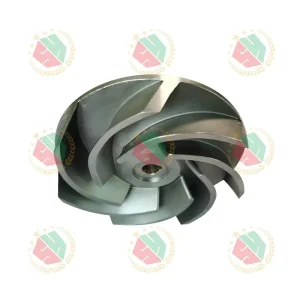
Equally important is documentation. First article inspection (FAI) reports should include actual measured values, not just pass/fail marks. Dimensional reports should reference the drawing revision. Mechanical test reports should identify the test standard used.
Ask to see a sample FAI report and a sample dimensional inspection report before placing an order. The format and completeness of these documents tell you more about a supplier’s quality system than any certification certificate.
Traceability System
Traceability is the ability to answer a specific question: if a batch of parts fails, can the supplier identify which heat of metal, which wax injection run, which shell build, and which pour were involved?
A complete traceability system links:
- Raw material heat number and mill certificate
- Wax pattern production batch
- Shell building and dewaxing records
- Pour date, furnace, and operator
- Heat treatment batch and parameters
- Final inspection results
For industries such as aerospace, energy, and medical, traceability is a contractual requirement. For general industrial applications, it is still the difference between a supplier that can help you solve a problem and one that can only offer a replacement batch.
Engineering Support and Communication Efficiency
The final dimension is often the most underestimated. A supplier’s engineering team determines how smoothly your project moves from drawing to production.
Strong engineering support means the supplier reviews your drawing before quoting, identifies features that may be difficult to cast, suggests design adjustments that reduce cost or improve yield, and provides a DFM (design for manufacturability) report with the quotation. It also means the supplier responds to technical questions with substance rather than sales language.
During evaluation, pay attention to:
- How quickly and specifically the supplier responds to technical questions
- Whether the quotation includes DFM feedback or is purely a price
- Who your technical contact will be after the order is placed
- How design changes are handled and documented
A supplier that provides detailed DFM feedback at the quotation stage is demonstrating the engineering depth you will rely on during production.
10 Questions You Must Ask at the RFQ Stage
The RFQ stage is your best opportunity to screen suppliers before investing time in samples. These ten questions are designed to surface capability gaps quickly.
- What is your tooling cost, and what is your mold replacement policy? A supplier that charges tooling once and replaces worn molds at no additional cost is managing tooling as a long-term asset. A supplier that charges for every mold replacement may be passing on poor mold maintenance costs.
- Can you provide a material certificate with each batch, and do you perform in-house spectral analysis? This confirms whether material verification is a controlled process or a paperwork exercise.
- What is your typical first article sample lead time, and what does the sample include? The answer should include a full dimensional report and material certification, not just a physical part.
- What does your first article inspection report contain? Look for actual measured values, drawing revision reference, and identification of critical dimensions.
- How do you handle non-conforming parts (NCR handling)? A structured NCR process includes root cause analysis, corrective action, and verification that the corrective action was effective.
- What is your minimum order quantity for custom parts? This affects your ability to run pilot batches before full production commitment.
- Do you offer downstream machining, heat treatment, and surface finishing, or are these outsourced? Outsourced processes add lead time and reduce traceability unless the supplier manages them as part of its own quality system.
- How are parts packaged for shipment, and what protection is provided for machined surfaces? Packaging quality is a reliable indicator of overall process discipline.
- What traceability documents are provided with each shipment? The answer should specify material certificates, inspection reports, and batch identification.
- How long does it take to receive DFM feedback on a new drawing? A supplier that can provide substantive manufacturability feedback within a few business days has an active engineering team.
Sample Validation Process
Once you have a sample in hand, validation should follow a structured sequence. Skipping steps here is the most common cause of production surprises.
Step 1: Visual and dimensional inspection. Check the sample against the drawing, focusing on critical dimensions, surface finish, and any visible defects such as porosity, cold shuts, or incomplete fill. Compare the actual measurements against the FAI report provided by the supplier.
Step 2: Material verification. Confirm that the material certificate matches the specified grade. For critical applications, consider independent third-party testing of chemical composition and mechanical properties.
Step 3: Non-destructive testing. Depending on the application, perform dye penetrant, magnetic particle, or radiographic inspection to detect internal defects that visual inspection cannot reveal. This step is often skipped in low-criticality applications, but it is essential for parts subject to pressure, fatigue, or safety requirements.
Step 4: Pilot batch production. Before committing to full production, run a small pilot batch — typically 50 to 200 pieces — and inspect a statistically meaningful sample. This validates that the process is stable, not just that a single sample can be produced.
Throughout this process, request the process documentation that supports the sample: wax pattern inspection records, shell permeability data, and pour records. These documents reveal whether the sample was produced under normal production conditions or was specially handled to pass inspection.
Common Supplier Red Flags
Certain signals during the evaluation process indicate elevated risk. None of these is conclusive on its own, but each warrants deeper investigation.
- Quotation significantly below market average. Lost wax casting has real material, labor, and energy costs. A price far below competing quotes usually means the supplier is reducing shell layers, using lower-grade raw material, or skipping inspection steps.
- Refusal to provide process inspection records. A supplier that will only share final inspection results, and not wax pattern or shell building records, is either not collecting this data or not willing to share it.
- No in-house material analysis capability. If the supplier relies entirely on mill certificates without verifying incoming material, there is no independent confirmation that the correct alloy was used.
- Vague or shifting sample delivery commitments. Repeated revisions to promised sample dates suggest either capacity problems or process problems that the supplier is not disclosing.
- No defined mold life policy. A supplier that cannot state how many shots a mold is expected to produce, or when it will be replaced, is not managing tooling as a controlled asset.
- Inconsistent communication during the quotation phase. If response quality and speed decline before the order is placed, they are unlikely to improve afterward.
How to Reasonably Evaluate Production Capacity and Delivery Lead Time
Capacity claims are easy to make and difficult to verify. A supplier may state a monthly capacity figure that reflects theoretical maximum output rather than sustainable output under current order load.
A more reliable approach is to evaluate capacity through observable indicators:
| Indicator | What to Look For | Why It Matters |
| Shell building lines and pouring stations | Number of stations, shift pattern | These are the throughput bottlenecks in investment casting |
| Current order backlog | Schedule fill rate for the next 1–2 months | A supplier at 95% capacity may not prioritize your order |
| In-house vs. outsourced processes | Which steps are performed internally | Outsourced steps add lead time and reduce direct control |
| Workforce stability | Tenure and turnover of production staff | Experienced teams produce more consistent results |
Regarding lead time, be cautious of suppliers that promise unusually short sample delivery. Investment casting involves wax injection, shell building (which requires multiple coating and drying cycles), dewaxing, pouring, cut-off, heat treatment, and inspection. If a quoted timeline appears shorter than the process sequence would normally allow, ask the supplier to explain which steps are being compressed and how quality is maintained at each stage.
A realistic sample lead time reflects the actual process sequence. The right question is not “how fast can you deliver?” but “how do you ensure each process step is completed correctly within your stated timeline?”
FAQ
1. What is the standard lead time for first article samples from a qualified lost wax casting supplier?
Sample lead time depends on part complexity, tooling requirements, and the supplier’s current schedule. The main variables are tooling fabrication time, the number of shell coating and drying cycles required, and inspection scope. A realistic quote should break down these stages rather than provide a single number. Suppliers that quote unusually short timelines should be asked to explain how each process step is completed within that period.
2. Can a new supplier adapt to our existing drawing and material specification standards without redeveloping the process?
Yes, in most cases. A capable supplier will review your drawing, confirm material availability, and provide DFM feedback before quoting. If the supplier requests significant drawing changes without technical justification, or cannot confirm experience with your specified alloy, that is a signal to evaluate further.
3. What documents should a supplier provide with the first batch of mass production parts?
At minimum: material certificates traceable to the heat number, dimensional inspection reports referencing the drawing revision, and batch identification. For critical applications, mechanical test reports and non-destructive testing results should also be included.
4. How do suppliers typically handle non-conforming parts found after delivery?
A structured process includes containment of the affected batch, root cause analysis, corrective action, and verification that the corrective action prevents recurrence. The supplier should provide a formal NCR report and, where applicable, replace or rework the non-conforming parts.
5. What is the minimum order quantity for OEM investment casting customized parts?
Minimum order quantities vary by supplier and part size. For custom tooling, the MOQ is often set to cover the tooling investment and setup cost. Discuss MOQ early in the RFQ process, especially if you plan to run pilot batches before full production.
6. Why do similar lost wax casting parts show huge price differences between different factories?
Price differences typically reflect differences in shell building process (number of layers, drying time), raw material grade and verification, inspection scope, tooling quality, and labor cost. A lower price is not automatically a problem, but it should be explainable. If a supplier cannot explain why its price is significantly lower, the difference is likely coming from a step that affects quality.
Next Step
Evaluating a lost wax casting supplier is a structured process, not a price comparison. The six dimensions covered here — process capability, alloy coverage, tooling and wax pattern control, inspection and documentation, traceability, and engineering support — provide a framework you can apply to any supplier, regardless of region or size.
If you are evaluating suppliers for a specific part, the most efficient next step is to request a capability questionnaire and submit your drawing for DFM feedback. A supplier that responds with specific technical input, documented process capabilities, and a clear sample validation plan is demonstrating exactly the discipline you need in production.











