One page arrives with the quotation. Under material it says: “Cobalt 6, per AMS 5387.” The buyer has to sign; the quality engineer has to file it. Neither can answer the three questions that decide whether the claim means anything: which revision, which product form, and which tests were run. A specification number is not evidence — it is a pointer to the document that defines evidence.
This breakdown takes an AMS 5387 alloy part apart clause by clause: what the specification governs, what it leaves to the drawing, how its requirements surface on a foundry floor and a machining floor, and how to tell whether the paperwork in front of you is valid or merely present.
What AMS 5387 Covers — and What It Does Not
AMS 5387 is an SAE material specification covering precision investment castings of a corrosion- and heat-resistant cobalt-base alloy with a nominal composition of 60Co-29Cr-4.5W, supplied as-cast, composition similar to UNS R30006. The current issue is Revision F, dated February 2022, superseding Revision E of December 2015.
Two words in that sentence carry most of the disputes. “Precision investment” names a process, not just an alloy. “As-cast” names the delivered condition, which means the acceptance rules are written around a casting that has not been thermally reworked afterward.
| Covered | Not covered — comes from the drawing or order |
| Investment-cast form of the alloy | Wrought bar, billet, forgings (cannot be certified to this document) |
| Composition and test method | Sand, shell, gravity or die cast versions of a similar alloy |
| Delivered condition (as-cast) | Machining tolerances, surface finish, geometric tolerances |
| Casting acceptance tests | Functional acceptance: sealing, flow, fatigue life |
| Ordering information the buyer states | Airworthiness, pressure rating, other application approval |
A drawing that cites this specification while calling for bar stock or a sand casting is a scope mismatch, not a compliance problem: the certificate has nothing to attach to. A supplier can issue a perfectly honest document for the wrong product form, and the gap only surfaces at first article. The practical test: a cobalt 6 part drawing citing AMS 5387 asks for a product form, not merely a chemistry — which is why buyers meet Stellite 6 parts and Cobalt 6 parts that are the same alloy under different names, and why the process note matters more than the label.
Core Requirements: A Clause-by-Clause Breakdown
The table maps what a buyer will actually be asked to verify. Clause references are indicative of where each requirement sits and should be checked against the purchased text before being quoted on a drawing, an order or an audit form.
| Requirement | Clause | Accountable | What the buyer verifies |
| Composition, sampling, method | 3.1 | Foundry, lab | Carbon reported, sample tied to heat |
| Delivered condition | Scope | Foundry | No unapproved thermal processing |
| Hardness and conversion | 3.6.1 | Foundry, lab | Measured value, conversion basis |
| Radiographic quality | 3.7.4.1 | Foundry, third party | Areas, basis, report reference |
| Procedure approval (optional) | 4.4.2 | Buyer, foundry | Signed before production |
| Unauthorized exceptions | 3.8 | Foundry | Whether any exception was taken |
| Prior revisions | 8.3 | Buyer | Same document on both sides |
| Country of origin | 4.5 | Supplier | Statement matches production site |
| Ordering information | 8.5 | Buyer | Revision, form, condition, scope |
The “accountable” column is not cosmetic: composition and process clauses are settled with the foundry, document clauses with whoever signs the certificate. And a figure quoted without a clause reference is a claim, not a finding — the difference between 5387 material parts that pass audit and those that fail is often that one side could name the clause while the other could only name the grade.
Where the specification is silent, silence is not permission. Whether carbide distribution is an acceptance item or good practice varies by supplier, so it should be settled in the order rather than discovered at incoming inspection. A buyer ordering an AMS 5387 Stellite part who asks “which clauses does your certificate cover” learns more than one who asks “do you comply”.
What It Means on the Shop Floor — Foundry and Machining
Clauses are written as acceptance criteria but land as constraints on two separate operations — which is why two quotes for the same AMS 5387 Stellite part can differ by a wide margin. Knowing which constraint belongs to whom explains most of that gap.
Carbide Distribution and Heat Treatment
Because delivery is as-cast, the structure is fixed at solidification and cannot be recovered afterward. Carbide size and continuity follow section thickness, gating and cooling, so the freedom a foundry has is the freedom it exercises before the pour. Any thermal processing beyond the specified condition is a deviation to be agreed in writing, not a routine service a shop adds for convenience.
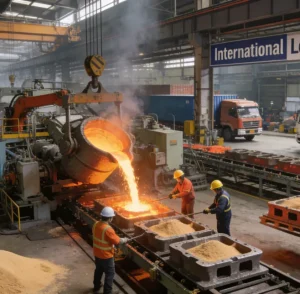
That reframes the supplier question. “Do you meet AMS 5387” invites a yes. “How do you control cooling in the heavy section, and what changed after the first article” invites something with content: a gating change, a chill, a pour temperature adjustment.
Work Hardening and Tool Selection
Cobalt-chromium-tungsten alloys work-harden under cutting, conduct heat poorly, and carry hard carbides that abrade the edge. The consequences repeat: the same surface cut repeatedly keeps getting harder, so a shop taking light finishing passes can watch a dimension drift out of tolerance without removing the error. Heat staying in the cutting zone accelerates wear and distorts thin sections.
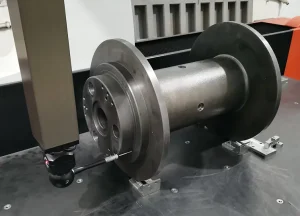
| Shop-floor constraint | What the buyer experiences |
| Repeated light passes on one surface | Dimensions that will not settle; rework, not repair |
| Insufficient heat control at the cut | Tool wear scatter, inconsistent finish between lots |
| Weak workholding | Chatter on sealing faces, rejected at assembly |
| Finish by turning instead of abrasion | Hardened skin left in place, later grinding slow and risky |
The purchasing consequence is not that one process is right and another wrong. It is that tooling strategy and setup rigidity belong in the capability conversation — a supplier without them will still quote, and will find the problem on your parts.
Surface Integrity
Nothing in a material specification of this kind sets a surface-integrity requirement for a machined face; that belongs to the drawing. Sealing faces fail for reasons that never appear on a dimensional report: grinding burn, microcracks, embedded abrasive, chipped edges. Three items belong in an acceptance criterion and none need new equipment: edge condition on critical faces, evidence of burn or discoloration after abrasive operations, and roughness measured the same way at both ends of the lot.
Keeping ownership clear matters. Writing “AMS 5387 requires” in front of these items would be inaccurate and would weaken the rest of the document; they are drawing and order requirements that a casting-plus-machining supplier meets as part of one deliverable.
The Document Package: What Makes a Certificate Valid
A package is not valid because it is complete. It is valid because every item ties to this lot, this revision and this order.
| Document | Must show | Invalid if |
| Certificate of conformance | Revision, order and lot, signature, date | “Conforms to AMS 5387”, no version |
| Material test report | Chemistry incl. carbon, hardness, heat ID, method | Results with no heat or lot identifier |
| First article inspection | All design characteristics, measured values | Ballooned drawing, no measurements |
| Procedure approval record | Buyer signature, dated before production | Approval dated after first castings |
| Radiographic report | Performer, clause, basis, image reference | Images with no traceable reference |
| Origin statement | Consistent with production location | Conflicts with order terms |
The pattern is simple: a document becomes evidence when it can be cross-checked against another. Chemistry ties to a heat, the heat to a lot, the lot to a certificate, the certificate to an order line that names the revision. Break one joint and the chain stops being auditable, however many pages remain.
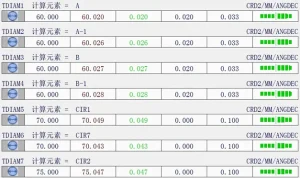
This is where an AMS 5387 alloy part often fails — not at the foundry, but in the handoff between a trading company and its customer, where a certificate arrives on a supplier letterhead with no path back to the melt.
Five Questions That Separate Understanding from Familiarity
When you qualify a supplier for an AMS 5387 alloy part, familiarity is knowing the number; understanding is knowing which clause applies and what it costs to satisfy.
- “Which revision will your certificate cite, and how do you handle a drawing citing an older one?” Useful: names Revision F and the written confirmation for prior revisions. Weak: “the latest version”.
- “Can the heat number on this report be traced to our casting lot?” Useful: describes the trace, often a lot register. Weak: offers a report from a similar job.
- “How do you control solidification in the heaviest section of this part?” Useful: gating, cooling, trial results. Weak: restates chemistry compliance.
- “Who performs radiography, under which clause, and how are images referenced?” Useful: distinguishes in-house from third party, gives a numbering rule. Weak: “only if the customer asks”.
- “What is your deviation route when the first article is out of tolerance?” Useful: a written concession process with buyer approval. Weak: “we can work it out”.
None of these require reciting the standard. They require knowing where the standard touches the supplier’s own process — the only form of understanding that survives an audit and shows up in a stable second lot.
FAQ
Does AMS 5387 cover sand castings?
The scope is precision investment castings. A sand-cast version of a similar alloy is a different product form and cannot be certified to this specification; the drawing has to change or the requirement be relaxed in writing.
Can a trader or stockist certify AMS 5387 without being the foundry?
A trader can supply the part, but conformity evidence has to originate with the producer: heat, test report, process records. A certificate issued several steps downstream, with no route back to the melt, is not evidence.
Is AMS 5387 the same as UNS R30006?
No. One is a specification containing acceptance rules; the other is a composition identifier. A report can cite UNS R30006 and still not say which revision was applied.
Does AMS 5387 require heat treatment?
The delivered condition is as-cast. Thermal processing beyond that is a deviation to be agreed in writing before production, not an assumed step.
How can I check a certificate of conformance quickly?
Three fields decide most of it: revision cited, lot or order reference, authorized signature with date. Missing one sends the document back.
Specifying an AMS 5387 Part
Send the drawing with the revision your order will cite, and we will map it against the clauses above: which requirements are casting-side, which need third-party inspection, and which documents the lot must carry. We produce investment cast cobalt-base parts and machine them to drawing, and the useful conversation is about the gaps rather than the grade name.











