A drawing lands on a buyer’s desk with one line of material text: “SEAT, Cobalt 6, per AMS 5387.” Three quotes come back. One is priced as a commodity stainless part, one is nearly double, and the third offers “Stellite 6, same thing” in four weeks instead of ten. The difference is rarely the machining. It is how much of AMS 5387 each shop actually intends to satisfy — which revision it is working to, whether casting procedure approval and radiography sit inside the price, and whether the material test report can be traced to a specific heat of a specific casting lot.
For a cobalt 6 part, those three questions decide whether the delivered seat fits and lasts, or whether it arrives with paperwork that satisfies nobody. This article separates the three languages that get mixed up on a purchase order — alloy name, material specification, and order terms — and turns each into something procurement and quality can check before the PO is signed.
What Cobalt 6 and AMS 5387 Actually Are — Alloy Name vs Material Specification
Cobalt 6 is an alloy name. AMS 5387 is a material specification covering precision investment castings of a cobalt-base alloy with a nominal composition of 60Co-29Cr-4.5W, supplied as-cast, composition similar to UNS R30006. The first answers “what material is this part made of.” The second answers “under what rules is this casting accepted.”
That distinction matters because AMS 5387 is not a premium grade you upgrade to. It is a set of acceptance rules: composition limits and how they are tested, the delivered condition, hardness and its conversion basis, non-destructive inspection, and the ordering information the buyer is expected to state. Compliance is therefore not a material property a supplier “has” — it is a claim about a specific lot, tested a specific way, to a specific revision.
| What the document says | What it actually establishes | What procurement should ask |
| Cobalt 6 / Stellite 6 | An alloy family and nominal composition | Which specification governs acceptance of the casting? |
| UNS R30006 | A composition cross-reference | Does the report cite both the UNS number and the specification? |
| AMS 5387 | Acceptance rules for as-cast investment castings | Which revision, and does the quote include its tests? |
| “Per AMS 5387”, no revision | Nothing precise | Put the revision on the drawing and the PO |
The revision point is the one most often lost. AMS 5387 is currently at Revision F, dated February 2022, superseding Revision E of December 2015; the document has existed since 1955. Revision F tightened the frame in several practical ways: unauthorized exceptions are prohibited, composition testing was updated, the cast bar requirement was removed as not applicable, hardness conversion requirements were revised, radiographic quality requirements were added, casting procedure approval became an option the buyer can require, a country-of-origin requirement was added (clause 4.5), and use of prior revisions is permitted under stated conditions.
The consequence is simple, and worth stating bluntly: two suppliers can both write “AMS 5387” on a quote and be working to different rule sets, with different inspection scope and different documentation. If the drawing you inherited cites an older revision, or cites none, settle it in writing before pricing — not at first article.
One Alloy, Three Names on a Drawing
The same material appears under several labels, and buyers sometimes read them as different materials. Cobalt 6 is the common designation in industrial purchasing; Stellite 6 is the trade name most engineers recognize; UNS R30006 is the numbering reference that lets a lab verify composition quickly. A supplier catalogue line reading “6 cobalt alloy part” and a drawing reading “AMS 5387” can describe exactly the same item — the label you are reading is not a second material option.
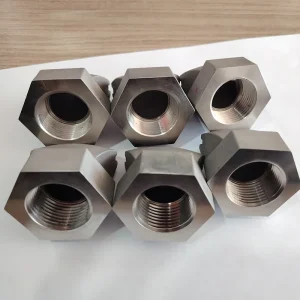
There is a fourth label to handle carefully: Cobalt 6B. It is a separate designation in the same family, generally associated with a different product form and a different carbon level, and it is not interchangeable with as-cast Cobalt 6 under AMS 5387. If your part number is a cobalt 6b part, the applicable specification and delivery form change, and drawing, PO, and test report all have to agree on which one you are buying.
One more boundary: AMS 5387 covers castings. A buyer sourcing bar stock or a wrought component is in a different document, even when the alloy name on the requisition looks the same. AMS 5387 material parts are, by definition, cast parts.
What AMS 5387 Requires of a Lost-Wax Investment Casting Order
The specification is a foundry document, but its requirements land on the buyer as cost, lead time, and paperwork. Three areas account for most of the gap between a low quote and a defensible one.
Composition Range and Carbide Control
Composition conformance is a laboratory question, not a phrase on a mill certificate. The specification sets ranges for the major elements and limits on residuals, and it defines how the sample is taken and tested. A report listing only “Co balance, Cr, W” — without the carbon value, the test method, and the heat identification — does not answer the question the standard is asking.
What matters for a wear part goes beyond the ranges. In this alloy family, wear resistance comes from chromium- and tungsten-rich carbides formed during solidification and distributed through a cobalt-rich matrix. Carbon content within the allowed band, together with chromium and tungsten, determines how much carbide forms; the cooling rate through the mold — a function of section thickness and gating — determines whether that carbide is fine and evenly dispersed or coarse and continuous.
That has a direct procurement consequence. A heavy-section casting cools slowly and can develop a coarse, near-continuous carbide network: compositionally correct, harder to machine, and locally less tolerant of impact. A thin section cools fast and yields a finer dispersion. Two castings from the same heat, both “AMS 5387”, can therefore behave differently at the sealing face. If your part depends on wear resistance at a specific surface, ask the foundry how it controls solidification in that section — not only how it controls chemistry.
Two items here need confirmation against the purchased text before any figure appears in your own documents: the exact composition limits, and whether microstructural or carbide-related characteristics are a mandatory acceptance item rather than good practice. Until confirmed, treat any specific number quoted by a supplier as a supplier claim.
Casting and Heat Treatment Requirements
AMS 5387’s delivered condition is as-cast, so a buyer coming from steel purchasing should not assume a heat-treat step is part of the route. Any thermal processing beyond the specified condition is a deviation to be agreed in writing, not a routine step the shop adds for its own convenience.
Three items drive quote spread more than any other.
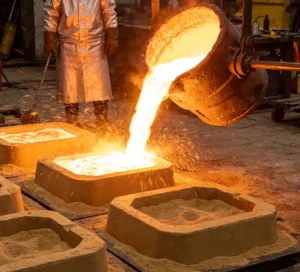
Casting procedure approval. Under Revision F this is an option the buyer can require. When required, the foundry submits its process — pattern and wax practice, shell system, melting and pouring practice, gating — for approval before production castings are made. It adds time at the front of the program and reduces the chance that the first article is scrap. It is usually worth requiring for a new part number, a part with a critical sealing or flow surface, or a part whose failure is expensive to discover downstream. It is usually not worth requiring for a repeat order with a documented history.
Radiographic inspection. Revision F added radiographic quality requirements. If a quote is silent on radiography, ask directly whether it is included, which areas are examined, and what acceptance basis applies. This is a real cost and lead-time item, and a quote that quietly omits it is not comparable to one that includes it.
Hardness. Hardness is specified, measured, and converted under rules that Revision F revised. Suppliers commonly quote a figure in the HRC 40 band for as-cast material of this family; treat such a number as an unverifiable claim until a test report ties it to the heat and to the specification’s hardness clause. A hardness value with no conversion basis and no sample identification is not evidence.
There is a structural reason cobalt quotes differ, too: material cost and scrap sensitivity. Cobalt-base alloy is expensive per kilogram, and a rejected casting carries that cost plus the lost processing time. A shop that has cast this alloy before prices the scrap risk accurately; a shop that has not prices it optimistically.
Documents to Request With the Order
Ask for the document package at RFQ stage, not at delivery. A supplier who cannot state at quotation which documents will accompany the lot is telling you something useful about its traceability.
| Document | Issued by | What it proves | Risk if missing |
| Material test report (chemistry, hardness, heat/lot ID) | Foundry or its lab | The lot matches the specification, and which lot | No basis for any later claim |
| Certificate of conformance citing the revision | Supplier | Which rule set was applied | “AMS 5387” with no version, no recourse |
| Casting procedure approval record | Foundry, approved by buyer | Process was fixed before production | First article becomes the process trial |
| Radiographic report | Foundry or third-party lab | Internal soundness in examined areas | Disputed castings with no shared record |
| First article inspection and dimensional report | Supplier | Geometry matches the drawing, including agreed allowance | Fit problems found at assembly |
| Origin statement, where required | Supplier | Ordering requirement satisfied | Customs or contract non-compliance |
A practical RFQ rule: require in writing that the test report identify the heat and the casting lot, and that the certificate cite the revision. Those two sentences remove most of the ambiguity that surfaces later.
Where Cobalt 6 Parts Are Used — Valve Seats, Pump Sleeves, Nozzles and Bushings
These parts share a working profile: hot or abrasive service, a wear surface that is hard to replace, and geometry that is awkward to produce any other way.
| Part | Dominant wear mode | Why a cast cobalt-base part fits |
| Valve seat | Repeated impact plus sliding contact, often hot | Retains hardness at temperature; sealing geometry can be cast close and finished in place |
| Pump sleeve | Abrasive solids in flow, plus corrosion | Uniform wear resistance through the wall, not only at the surface |
| Nozzle | High-velocity, particle-laden flow | Internal flow path that only casting shapes economically |
| Bushing | Slow rotation under load, galling risk | Cobalt-base matrix resists metal-to-metal pickup better than many steels |
The alternative routes explain the choice by contrast. Weld overlay puts a hard layer on a cheaper base: lower material cost, but dilution at the interface, cracking risk, and geometry limits — you cannot overlay an internal bore you cannot reach. Tungsten carbide is harder but brittle, behaves worse under impact and thermal cycling, and needs diamond grinding. Thin coatings fail at edges and bond lines once abrasion starts. Machining from wrought bar of the 6B family avoids casting porosity but restricts you to simple geometry and a different cost curve.
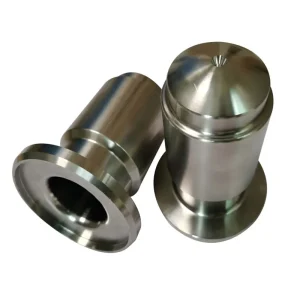
That is why, when a drawing calls for an AMS 5387 Stellite part, the geometry usually includes a seat, a bore, or a flow passage that bar stock cannot deliver. The casting is not a cheaper substitute for the wrought form — it is the only route to the shape.
Purchasing Checklist — From Material Certificate to Dimensional Verification
A cobalt 6 part moves through four checkpoints. Each has one or two actions that actually prevent problems; the rest is paperwork hygiene.
1. At RFQ
- State the alloy name, the specification number, the revision, and the delivered condition in the same line.
- State explicitly whether casting procedure approval is required and whether radiography is required — or state that they are not.
- Ask whether the test report will identify the heat and the casting lot. A “yes” is the minimum test of a serious supplier, and the answer determines whether this quote can be compared with the next one at all.
2. At first article
- Read the test report against the revision cited, not against the alloy name. Confirm carbon is reported and the sample is tied to the lot.
- Check the hardness value and the conversion basis used for it.
- Check the dimensional report against the drawing, including the agreed machining allowance on surfaces finished after casting.
3. At incoming inspection
- Run PMI on a sample. Positive material identification is the most realistic defense against mixed material, because the failure that actually happens in a foundry is a cobalt casting poured from the wrong melt, or a cobalt part swapped with a nickel-base one — not a subtle metallurgical shortfall.
- Know PMI’s limits: handheld analyzers reliably distinguish alloy families, less so light elements and fine composition differences. Use PMI to exclude wrong material, not to certify the specification.
- File the PMI result with the lot documentation. A recorded reading is what turns a later dispute into a documented fact.
- Confirm the document package is complete against the table above before the lot enters stock.
4. Before assembly
- Verify sealing and bearing surfaces dimensionally and geometrically — an as-cast seat inside nominal tolerance but out of flatness will leak.
- Agree in advance, in writing, the acceptance criteria for porosity and inclusions in the critical zone. Judging a casting visually at the bench, with no agreed criterion, reliably produces a dispute.
If a supplier can provide only one document, take the material test report that traces to the heat. It anchors every other judgement, including whether the hardness figure, the certificate, and the radiography report describe the same castings you are holding.
Common Misconceptions — A “Cobalt-Based” Label Is Not AMS 5387 Compliance
“The material block says Cobalt 6, so it meets AMS 5387.” The alloy name describes a composition family; compliance depends on condition, inspection, and documentation. Correct question: “Which revision of AMS 5387 will the certificate cite, and which tests does your price include?”
“Cobalt 6B is just a harder version of 6.” It is a separate designation with a different product form and carbon level, not interchangeable with as-cast Cobalt 6 under AMS 5387. Correct question: “Our drawing says Cobalt 6, AMS 5387 — please confirm you are quoting the cast alloy, not 6B bar.”
“They are ISO 9001 certified, so the material is fine.” A quality-system certificate says the process is controlled; it says nothing about conformance of this lot to this specification. Correct question: “Can you send a redacted example test report for this alloy, so we can see the format before we order?”
“They made this part before, so this order can skip inspection.” Revisions change inspection scope, and every heat is a new material fact. Correct question: “Has anything changed since the last lot — revision cited, foundry, or inspection scope?”
FAQ
Is Cobalt 6 the same as Stellite 6?
In purchasing practice they refer to the same alloy family. Stellite is a trade name, Cobalt 6 is the common industrial designation, and UNS R30006 is the composition reference laboratories use. None of the three tells you which acceptance rules apply to your casting.
Which AMS 5387 revision should the drawing cite?
The current revision is F, dated February 2022. Cite it explicitly. If your drawing cites an older revision, the specification permits use of prior revisions under stated conditions — but confirm in writing that you and the supplier are working to the same document.
Can AMS 5387 parts be supplied in wrought form?
The specification covers investment castings in the as-cast condition, so a wrought or bar-stock component cannot be certified to it. A similar composition in wrought form is governed by a different document; the specification number on the drawing has to match the product form you are buying.
Does every order need radiographic inspection?
Only if your order requires it — which is exactly what should be settled at RFQ. Revision F added radiographic quality requirements, so a quote that neither includes nor excludes radiography is incomplete rather than cheap.
What is the fastest way to catch a mixed lot?
PMI a sample on receipt and match it against the heat identification on the test report. It takes minutes and catches the failure that actually occurs: the wrong alloy, correctly documented as something else.
Ordering Cobalt 6 Castings
Send the drawing, and state three things: the alloy, the specification with its revision, and whether you need casting procedure approval and radiography. We produce investment cast cobalt-base wear parts and machine them to drawing. We will come back on what is castable as drawn, where the machining allowance needs adjusting, and which inspection steps belong in the price rather than in a later argument. If your drawing cites an older revision, say so — that is a five-minute conversation now and an expensive one after first article.











